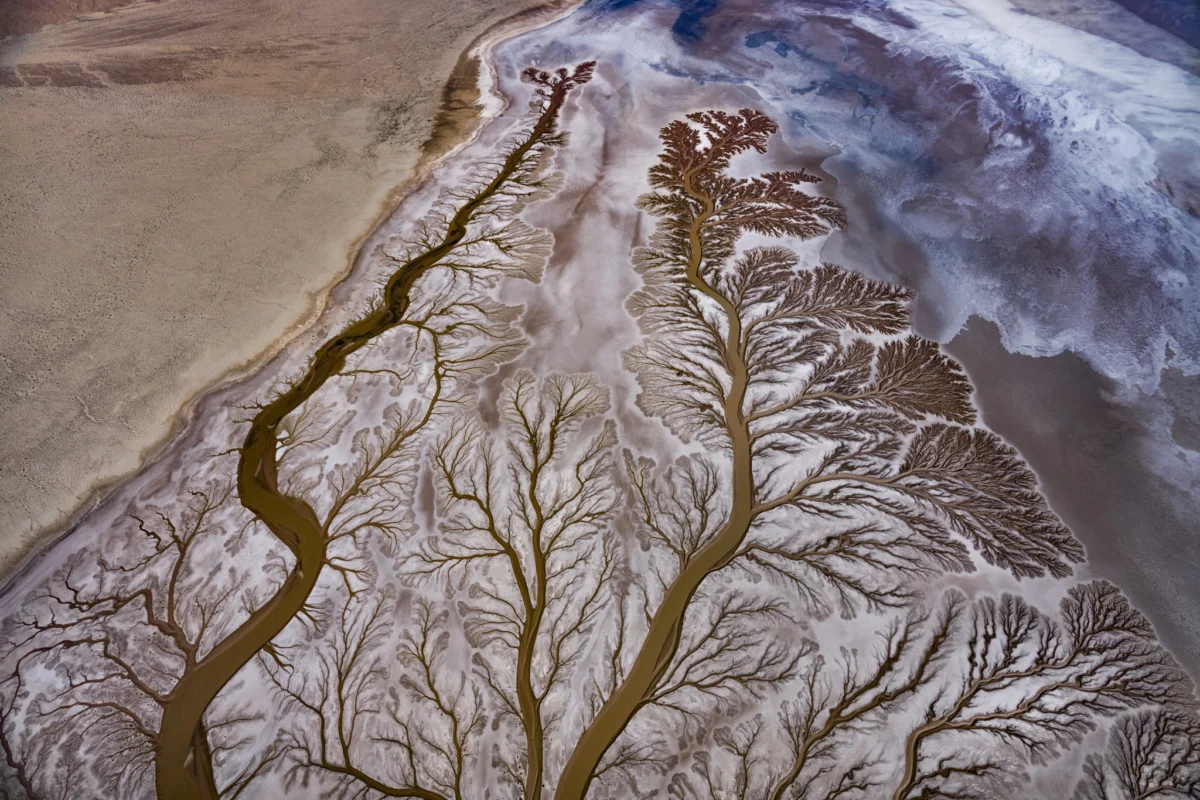
The vast, intricate patterns of the Colorado River Delta, as seen from above, evoke profound questions about existence and humanity’s place within the natural world. For photographer Paul Nicklen, this breathtaking vista, a stark contrast to his Canadian Arctic upbringing, presented not only an aesthetic challenge but a compelling narrative of life, loss, and emergent hope. His aerial explorations over this five-mile expanse of sheer beauty, captured from altitudes ranging from 200 to 1,000 feet, revealed a landscape that felt like a "three-dimensional canvas of poetry and art." The intricate network of silt and sediment, described as a "quilted mosaic" resembling "veins, capillaries, and branches woven intricately together," served as a powerful visual metaphor for the "lungs of the Earth." Yet, this profound beauty is intertwined with a "terrible beauty," a consequence of decades of human impact that has fundamentally altered the destiny of this once-mighty waterway.
The Long Thirst: Decades of Depletion
The story of the Colorado River is intrinsically linked to the burgeoning populations and industrial development of the American West and northwestern Mexico. Originating in the Rocky Mountains, the river’s journey spans over 1,500 miles, traversing seven U.S. states and culminating in Mexico, where it historically met the Sea of Cortez. This critical artery has been the lifeblood for agriculture, industry, and millions of people. However, the demands placed upon it have steadily increased since the mid-20th century.
The development of a complex system of dams and reservoirs, including the Hoover Dam and Glen Canyon Dam, was engineered to harness the river’s power and provide a reliable water supply for the arid Southwest. While these projects fueled unprecedented growth and transformed landscapes, they also fundamentally altered the river’s natural flow. By the late 20th century, the Colorado River, in most years, ceased to reach the sea, its waters largely consumed by irrigation, municipal use, and industrial processes before it could complete its natural course. This diversion had devastating consequences for the delta’s delicate ecosystem, which relied on the seasonal inundation of freshwater to sustain its biodiversity and ecological processes.
A Historic Drought and Ecological Crisis
Adding to the chronic depletion, the Colorado River Basin is currently grappling with a historic drought, described as the worst in 1,200 years. This extended period of significantly reduced precipitation and snowpack, exacerbated by rising global temperatures and increased evaporation rates, has pushed the river system to its limits. Reservoir levels, such as those at Lake Mead and Lake Powell, have plummeted to record lows, raising alarms about water security for the millions who depend on the river.
The ecological ramifications of this prolonged thirst have been severe. The delta, once a vibrant wetland teeming with life, has shrunk dramatically. The absence of regular freshwater flows has led to increased salinity, impacting native flora and fauna. Species that relied on the delta’s unique habitat have faced significant population declines, threatening biodiversity and the delicate balance of the regional ecosystem. The visual starkness of the diminished riverbed and the encroaching desert landscape serve as a potent reminder of the environmental crisis unfolding.
A Turning Point: Binational Restoration Efforts
Despite the grim realities, the narrative of the Colorado River Delta is not solely one of decline. A beacon of hope has emerged in recent years through an unprecedented binational restoration effort. This initiative, a testament to cooperative conservation, involves a complex interplay of international collaboration, scientific research, and community engagement.
The genesis of this renewed focus can be traced back to the signing of Minute 64 by the United States and Mexico in 2012. This landmark agreement, often referred to as the "drug of water," allowed for a temporary environmental flow of water into the delta. This "pulse flow" was a crucial experiment, designed to assess the ecological response of the delta to renewed inundation and to inform future restoration strategies.
The success of these initial pulse flows, which saw water once again reach the Sea of Cortez, provided tangible evidence of the delta’s capacity for recovery. These events were not merely symbolic; they fostered the growth of vegetation, provided critical habitat for migratory birds, and demonstrated the resilience of the delta’s ecosystems when provided with the necessary resources.
This binational cooperation has since evolved beyond episodic pulse flows. Ongoing efforts involve:
- Water Management Reforms: Both governments are exploring more sustainable water allocation strategies, seeking to balance human needs with ecological imperatives. This includes efforts to improve water efficiency in agriculture, a major consumer of Colorado River water.
- Habitat Restoration Projects: Conservation organizations and local communities are actively engaged in restoring degraded wetland areas, planting native vegetation, and creating habitats that can support a wider range of species.
- Scientific Monitoring and Research: Continuous monitoring of water quality, biodiversity, and ecological indicators is crucial for understanding the long-term impact of restoration efforts and for adapting strategies as needed.
- Community Engagement: Empowering local communities in the Mexicali Valley and other affected regions is vital for the success of restoration. Their traditional knowledge and active participation are integral to sustainable land and water management practices.
Data and Projections: Quantifying the Impact and the Promise
The impact of human intervention and climate change on the Colorado River system is quantifiable and stark. According to the U.S. Bureau of Reclamation, the average annual flow of the Colorado River has decreased by approximately 20% since the early 20th century. Reservoir storage levels have consistently declined, with Lake Mead and Lake Powell currently holding less than 40% of their total capacity.
The projected future of the Colorado River Basin is a subject of intense scientific scrutiny and policy debate. Climate models suggest that continued warming and altered precipitation patterns could lead to further reductions in the river’s flow, potentially by an additional 10% to 30% by mid-century if greenhouse gas emissions are not significantly curbed.
However, the restoration efforts in the delta offer a counterpoint to these projections. While the full extent of the river’s recovery remains contingent on broader climate action and sustained conservation efforts, the observed positive ecological responses to environmental flows are encouraging. Studies on the pulse flows have documented the germination of native plant species, increased bird activity, and improved soil moisture content in areas that had been parched for decades. These findings provide a data-driven basis for optimism and underscore the potential for significant ecological rehabilitation when water is strategically returned to the landscape.
Perspectives from Stakeholders
The success of the Colorado River Delta’s revitalization hinges on the continued commitment of diverse stakeholders. While direct quotes from every party are not available in the original text, the inferred actions and ongoing collaborations suggest a shared understanding of the need for action.
Environmental Conservation Groups: Organizations like the National Audubon Society and the Environmental Defense Fund have been instrumental in advocating for environmental flows and supporting restoration projects. Their work often involves scientific research, policy advocacy, and direct on-the-ground implementation of habitat restoration. They view the delta’s recovery as a critical step in preserving migratory bird flyways and protecting endangered species.
U.S. and Mexican Governments: The binational agreements, such as Minute 64, demonstrate a governmental recognition of the shared responsibility for managing the Colorado River. Their continued cooperation in water allocation, infrastructure management, and funding for restoration initiatives is paramount. Policy shifts towards water conservation and efficiency are being implemented, though challenges remain in balancing agricultural, industrial, and municipal demands.
Local Communities in the Mexicali Valley: For communities in the delta region, the return of water signifies more than just ecological restoration; it holds the potential for renewed agricultural opportunities and a healthier environment. Their involvement in water management decisions and restoration projects is crucial for ensuring that these efforts are culturally sensitive and economically sustainable for local populations.
Broader Implications: A Model for Arid Region Restoration
The story of the Colorado River Delta’s resurgence is more than a regional success story; it offers valuable lessons and a potential blueprint for arid region restoration globally. The challenges faced by the delta – water scarcity, ecosystem degradation, and the impact of human development – are mirrored in many other parts of the world.
The binational cooperation demonstrated in the Colorado River Basin is particularly noteworthy. It highlights that complex, transboundary environmental issues can be addressed through diplomatic engagement, scientific collaboration, and a shared commitment to long-term sustainability. The success of strategic environmental flows, even when limited in duration, proves that ecological recovery is possible when the fundamental needs of an ecosystem are met.
Furthermore, the integration of scientific research with community-based conservation efforts underscores a holistic approach to environmental management. The delta’s story is a powerful reminder that human well-being and ecological health are inextricably linked. As climate change continues to exert pressure on water resources worldwide, the innovative strategies and collaborative spirit exemplified by the Colorado River Delta’s ongoing restoration offer a vital message of hope and a practical pathway toward a more sustainable future. The intricate, life-affirming patterns captured from the sky are not just beautiful art; they are a testament to the enduring power of nature and the potential for human ingenuity to foster its renewal.