The burgeoning landscape of digital media has ushered in an era where video content reigns supreme, captivating audiences across platforms ranging from social media to broadcast television. As the tools for video creation become increasingly accessible, a growing number of individuals are embarking on journeys into videography, whether as a hobbyist pursuit or a burgeoning professional career. While the entry barrier for acquiring camera equipment has lowered significantly, the path to producing high-quality, impactful video footage remains fraught with common technical hurdles. Weeks prior, discussions focused on foundational photography errors and their remedies; however, the dynamic nature of video introduces its own distinct set of challenges. This analysis delves into the most prevalent issues encountered by new videographers and offers comprehensive, industry-aligned strategies for their resolution, ensuring that aspiring creators can elevate their craft from novice attempts to polished productions.
The Ubiquitous Challenge of Shaky Footage: Achieving Cinematic Stability
One of the most immediate and visually jarring problems encountered by individuals new to videography is the prevalence of shaky, unstable footage. The natural inclination to handhold a camera, particularly smaller mirrorless systems or smartphones, often leads to results far removed from the smooth, professional aesthetic viewers expect. Human physiology dictates that even the steadiest hands are susceptible to minute tremors, micro-movements, and general instability, especially during extended takes or when navigating dynamic environments. This inherent shakiness not only detracts significantly from the visual quality but can also induce viewer discomfort, leading to a sense of motion sickness and ultimately disengagement.
Historically, solutions for camera stabilization have evolved dramatically. Early filmmakers relied on cumbersome dollies, tracks, and cranes to achieve smooth motion. The advent of the Steadicam in the 1970s revolutionized handheld cinematography, offering unprecedented fluidity. Modern technology has further democratized stabilization, with in-camera image stabilization (IBIS) becoming a standard feature in many contemporary cameras. While IBIS systems, whether optical or digital, can mitigate minor jitters, they are often insufficient for significant camera movements or for achieving the sophisticated tracking shots characteristic of professional productions.
For truly stable and cinematic footage, investing in a dedicated gimbal system is widely recommended. Gimbals utilize brushless motors and advanced algorithms to counteract unwanted camera movements across three axes (pan, tilt, and roll), maintaining a level horizon and smooth motion regardless of the operator’s movement. The market for gimbals is robust, offering solutions tailored to a wide spectrum of camera systems and budgets. For videographers primarily utilizing smartphones, compact and user-friendly systems like the DJI Mobile series (e.g., DJI Mobile 7p) provide excellent entry-level stabilization, enabling fluid pans and tracking shots without substantial financial outlay. These devices often include intelligent tracking features and creative modes, further enhancing their utility for casual creators and social media content producers. The global smartphone gimbal market alone was valued at approximately USD 600 million in 2022 and is projected to grow significantly, underscoring the demand for enhanced mobile video capabilities.
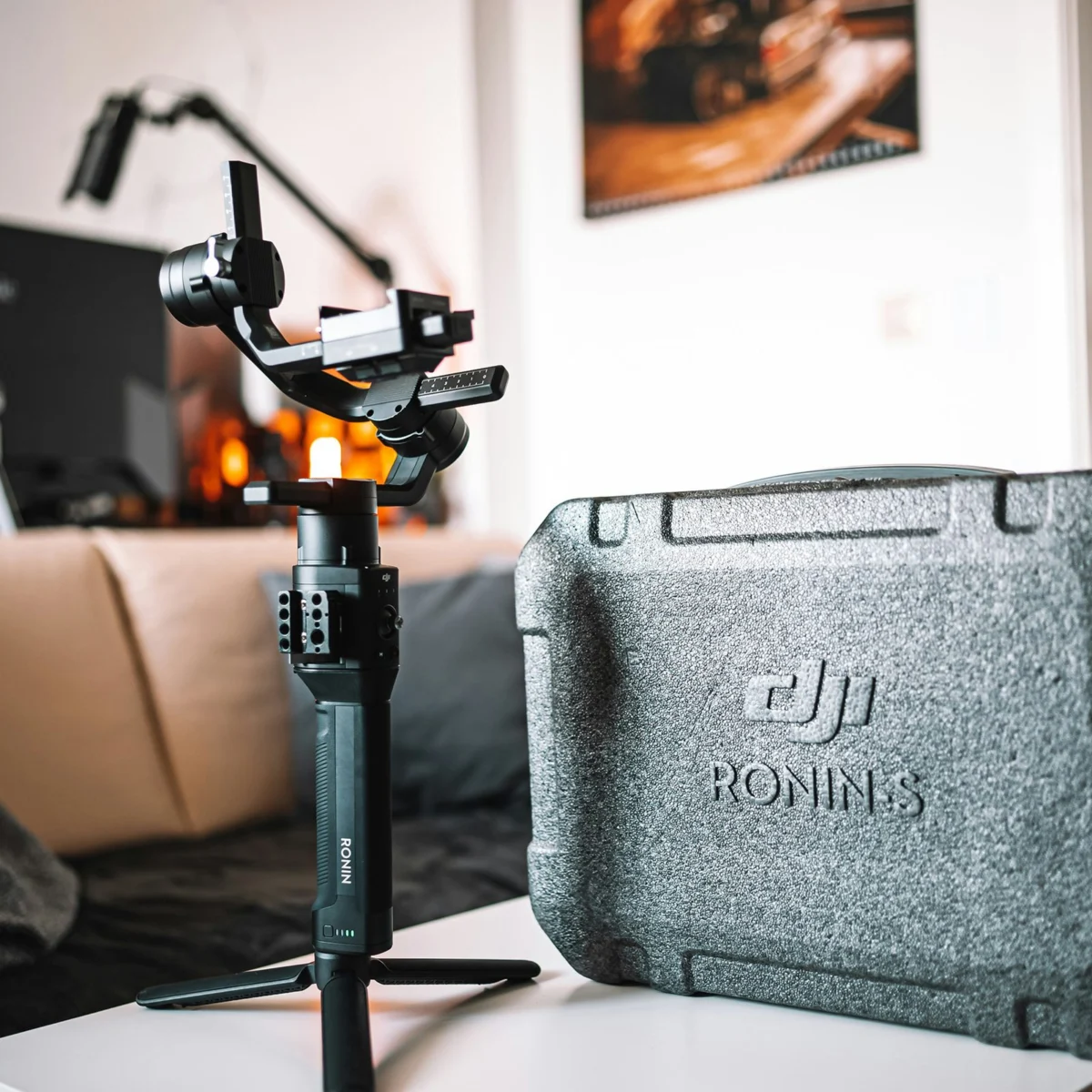
Stepping up in capability and supporting heavier payloads, gimbals designed for mirrorless cameras represent the next tier. The DJI Ronin-SC, for instance, offers an affordable yet highly capable solution for smaller mirrorless camera systems, providing robust stabilization for dynamic shots. Its lightweight design makes it suitable for extended use, a crucial factor for independent filmmakers and content creators. For professional setups involving heavier camera bodies, larger lenses, and accessories, systems such as the DJI Ronin-S (recommended for camera systems exceeding 4.5 pounds) become indispensable. These gimbals offer greater motor torque, more precise control, and compatibility with a broader range of professional camera setups. The broader camera gimbal market, encompassing solutions for DSLRs, mirrorless, and cinema cameras, continues to see innovation, with market analysts projecting sustained growth driven by the increasing demand for high-quality video content across diverse industries.
Beyond gimbals, specialized equipment addresses specific stabilization needs. For long shooting days or when operating heavier cinema camera rigs, support systems like the Easyrig Vario 5 redistribute the camera’s weight from the arms to the operator’s hips, back, and legs. This ergonomic solution significantly reduces fatigue, allowing for longer, more consistent takes. In scenarios where dynamic camera movement is not the primary objective, a high-quality tripod paired with a fluid-head or tilt-pan head remains a fundamental tool. A sturdy tripod provides a rock-solid base for static shots, interviews, or controlled pan and tilt movements, ensuring absolute stability without the complexities of motorized systems. Industry experts consistently emphasize that regardless of the chosen method, stable footage is a non-negotiable prerequisite for professional-grade video production, forming the bedrock upon which compelling visual narratives are built.
The Critical Imperative of Pristine Audio: Beyond the Built-In Mic
While visual fidelity often receives paramount attention, a common and often fatal oversight for new videographers is the neglect of audio quality. A visually stunning video can be utterly ruined by poor audio – muffled dialogue, distracting background noise, or inconsistent sound levels. This critical mistake frequently goes unnoticed until the post-production phase, leading to frustrating and often irreversible consequences. The built-in microphones found on most cameras, from smartphones to professional DSLRs and mirrorless systems, are inherently inadequate for capturing high-quality audio. They are typically omnidirectional, picking up ambient noise indiscriminately, lack sophisticated noise reduction, and offer limited dynamic range, resulting in thin, often unusable sound.
The fundamental principle for achieving professional audio is to record it separately from the camera’s internal microphone, utilizing dedicated external audio solutions. The choice of microphone system depends heavily on the specific audio requirements of the scene. For interview-style scenarios, where clear, isolated dialogue is paramount, lavalier microphone systems are indispensable. These small, discreet microphones clip directly onto the subject’s clothing, positioning the microphone close to the sound source and minimizing environmental interference. Wireless lavalier systems, such as the Sennheiser G4 or the DJI Mic 2, offer exceptional flexibility, allowing subjects to move freely without being tethered to the camera or a separate audio recorder. The Sennheiser G4 is renowned for its robust build quality and reliable transmission, a staple in professional broadcast and film productions, while the DJI Mic 2 offers a compact, user-friendly solution with built-in recording capabilities, catering to modern content creators.
When the objective is to capture the ambient sound of a scene or to record dialogue from a subject at a greater distance, a shotgun microphone is the ideal choice. These directional microphones are designed to pick up sound primarily from the direction they are pointed, effectively rejecting off-axis noise. On-camera shotgun microphones, like the RODE VideoMic Pro Plus, are popular choices for run-and-gun filmmaking and documentary work, offering improved audio quality over internal mics and the convenience of being mounted directly to the camera’s hot shoe. For more controlled environments or when precise audio capture is needed, professional boom-mounted shotgun microphones, often paired with a dedicated boom operator, provide superior isolation and sound quality.
Crucially, regardless of the microphone type, a dedicated audio recorder is a worthwhile investment. Devices like the Zoom H6 or Zoom H4n Handy Recorder offer multiple input channels, professional-grade preamps, and the ability to record high-resolution audio files independently of the camera. This "dual-system sound" approach provides a significant safeguard, allowing for precise synchronization in post-production and ensuring that even if one recording fails, a backup exists. The Zoom H6, with its modular input system, offers versatility for various recording scenarios, from interviews to ambient soundscapes. The global market for professional audio equipment, including microphones and recorders, has consistently shown growth, reflecting the industry’s unwavering commitment to high-fidelity sound.
Finally, the importance of real-time audio monitoring cannot be overstated. A high-quality pair of headphones should be an essential part of every videographer’s kit. Monitoring audio during recording allows for immediate detection of issues such as clipping, hums, dropouts, or unwanted background noise. This proactive approach prevents the disheartening discovery of unusable audio in post-production, saving valuable time and resources. Industry consensus dictates that sound quality is just as vital as image quality in creating an immersive and credible viewing experience; studies have even indicated that viewers are more tolerant of visual imperfections than of poor audio, often abandoning videos with unclear or irritating sound.
Decoding Log Footage: The ‘Gray Scale’ Conundrum and Dynamic Range
A perplexing issue often encountered by videographers transitioning from basic point-and-shoot cameras or automatic settings is the phenomenon of "grayed out" footage, characterized by low contrast, desaturated colors, and a seemingly flat appearance. This visual characteristic is typically not a mistake but rather an intentional feature: the camera is likely recording in a "logarithmic" (log) gamma profile. Major camera manufacturers have their proprietary versions of log formats, such as Sony’s S-Log, Canon’s C-Log, Panasonic’s V-Log, and Fujifilm’s F-Log, but the underlying principle across all is identical.
Logarithmic gamma curves are designed to capture the widest possible dynamic range from the camera’s sensor. Unlike standard video profiles (like Rec. 709, which is optimized for direct display), log profiles compress the tonal information into a flat-looking image, preserving detail in both the brightest highlights and the deepest shadows. This is achieved by stripping much of the color saturation and contrast during recording. The rationale behind this design is that while contrast and saturation can be easily and precisely added back in the post-production color grading process, lost highlight or shadow detail cannot be recovered. By capturing more luma (luminance) data, log footage offers significantly greater flexibility for colorists to manipulate the image, pull out details, and apply creative looks without introducing banding, clipping, or crushing. This makes it an invaluable tool for professional cinematographers and colorists seeking maximum control over the final image.
However, for videographers who are new to post-production workflows or who intend to use their footage directly out of the camera, shooting in log can be counterintuitive and lead to the "gray scale" surprise. The implication is that log footage requires color grading; it is not designed to look good straight out of the camera. The good news is that if log format was engaged inadvertently, the colors and contrast can be easily restored. The most common solution involves converting the log footage to Rec. 709, the standard color space for most displays and broadcast television. This can be done using Lookup Tables (LUTs), which are essentially mathematical formulas that transform the flat log image into a visually pleasing, corrected image. Many video editing software packages offer built-in LUTs for various log profiles, or specific LUTs can be downloaded from camera manufacturers.
The decision to shoot in log should align with the project’s post-production pipeline and the videographer’s skill set. While it provides unparalleled flexibility for cinematic projects, it may be overkill for simpler productions, such as quick social media updates or internal corporate communications, where a standard profile (like Rec. 709 or a similar "flat" but not full-log profile) might suffice, offering a good balance between image quality and ease of use. The proliferation of affordable cameras capable of shooting in log formats has necessitated a greater understanding of color science and post-production among emerging videographers, making the process of color grading an increasingly integral part of the modern video workflow. The increasing accessibility of advanced editing software further supports the widespread adoption of log shooting, empowering more creators to harness its benefits.
Smooth Operator: Eliminating Choppy Video and Ensuring Data Integrity
Another prevalent and frustrating issue that can plague new videographers is the appearance of choppy or stuttering footage. This problem typically stems from one of two primary technical deficiencies, both of which are readily diagnosable and rectifiable. Understanding these causes is critical for maintaining visual fluidity and ensuring a seamless viewing experience.
The first, and often most straightforward, culprit behind choppy video is an incorrect or insufficient frame rate. Frame rate, measured in frames per second (FPS), dictates how many individual images are captured by the camera each second to create the illusion of motion. A lower frame rate results in fewer images per second, leading to a less smooth, more disjointed visual flow. While some artistic choices may involve lower frame rates (e.g., 24 FPS for a cinematic look), generally, for smooth, natural-looking video, a frame rate of 30 FPS or higher is recommended. In regions adhering to the PAL standard, 25 FPS is common, while NTSC regions typically use 29.97 FPS (often rounded to 30 FPS). For slow-motion effects, significantly higher frame rates like 60 FPS, 120 FPS, or even 240 FPS are employed, which then play back at a standard rate (e.g., 30 FPS) to create the slow-motion illusion.
Many modern cameras default to acceptable frame rates, but it is imperative for videographers to consistently double-check and confirm their settings before commencing a shoot. Shooting at too low a frame rate, especially in scenarios with significant motion, will inevitably result in visually jarring, choppy footage that can detract from the content’s impact. For instance, a fast-pacing sports event recorded at 15 FPS would appear as a series of disconnected stills rather than fluid motion. The global standard for video transmission and display largely revolves around these specific frame rates, making adherence to them crucial for broad compatibility and viewer comfort.
The second, equally critical, reason for choppy footage relates to the speed of the recording media. Modern cameras, particularly those capable of capturing high-resolution video (e.g., 4K, 8K) or high frame rates, generate an enormous volume of data per second. If the memory card or external hard drive used for recording cannot process this data quickly enough, it leads to dropped frames, resulting in noticeable stuttering or choppiness in the footage. Memory cards and hard drives are rated by their read and write speeds, typically expressed in megabytes per second (MB/sec). For memory cards, these speeds are often indicated by class ratings (e.g., Class 10, UHS-I, UHS-II, V30, V60, V90). A V90 card, for example, guarantees a minimum write speed of 90 MB/sec, making it suitable for demanding video formats.
It is essential to ensure that the chosen storage media’s write speed meets or exceeds the data rate requirements of the camera’s recording settings. Camera manufacturers typically provide guidelines for compatible memory card speeds in their manuals. There is no practical disadvantage to purchasing the fastest memory cards or hard drives available; in fact, investing in high-speed storage offers significant benefits. Not only does it prevent dropped frames in current high-resolution, high-frame-rate shooting scenarios, but it also future-proofs the equipment as videographers scale up to even faster and higher-resolution settings in the future. The memory card market has seen rapid advancements, with increasing capacities and speeds becoming more affordable, reflecting the industry’s need to keep pace with evolving camera technology. A simple check of packaging for transfer speed specifications can avert countless hours of troubleshooting and re-shooting.
Broader Implications and the Path Forward for Creators
Mastering these fundamental aspects of videography – achieving stable footage, capturing pristine audio, understanding log profiles, and ensuring smooth playback – is not merely about technical proficiency; it is about elevating the craft of visual storytelling. In an increasingly saturated digital landscape, the quality of production directly correlates with audience engagement, professional credibility, and the overall impact of the message being conveyed. Poorly executed video can undermine even the most compelling narratives or innovative concepts, leading to viewer disinterest and a perception of amateurism.
For aspiring videographers, the journey involves continuous learning and adaptation. The rapid pace of technological innovation means that camera capabilities, stabilization systems, audio recording solutions, and post-production techniques are constantly evolving. Staying abreast of these advancements, while firmly grounding one’s practice in these core principles, is crucial for long-term success. Industry professionals universally agree that technical proficiency, particularly in these fundamental areas, forms the bedrock of compelling visual storytelling.
The demand for high-quality video content continues to surge across diverse sectors, from independent filmmaking and corporate marketing to educational resources and personal branding on social media. By addressing these common pitfalls proactively, emerging videographers can significantly enhance the production value of their work, differentiate themselves in a competitive market, and ultimately create more impactful and memorable visual experiences for their audiences. The investment in understanding these solutions transcends mere equipment purchases; it represents an investment in one’s craft and the future of their creative endeavors.