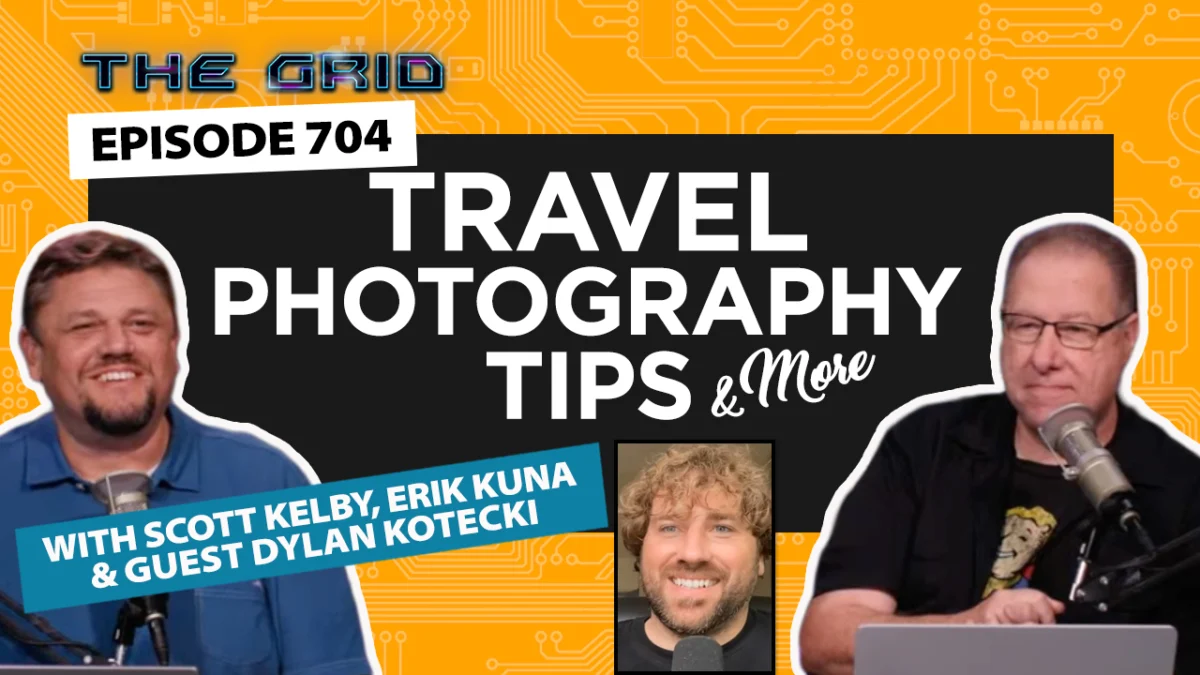
In a comprehensive and highly anticipated session this week on The Grid, KelbyOne luminaries Scott Kelby, Erik Kuna, and Dylan Kotecki delivered a wealth of practical travel photography tips, aiming to empower photographers to capture superior images without adding undue complexity to their journeys. The episode, numbered 704 in the long-running series, underscored the importance of meticulous planning, strategic timing, and advanced post-processing techniques in elevating travel imagery beyond mere snapshots. The expert panel’s insights covered everything from navigating travel logistics to harnessing the power of light and employing cutting-edge digital enhancements, providing a holistic guide for enthusiasts and professionals alike.
The Grid: A Beacon in Photography Education
The Grid serves as a flagship program for KelbyOne, a globally recognized online education platform dedicated to photography, Photoshop, and Lightroom training. Founded by Scott Kelby, a prolific author, educator, and editor-in-chief of Photoshop User magazine, KelbyOne has established itself as a premier resource for photographers seeking to refine their craft. The Grid itself is a weekly webcast/podcast, known for its engaging format, expert guests, and practical advice, reaching a vast audience of aspiring and seasoned photographers worldwide. The program typically features discussions on current trends, gear reviews, instructional segments, and Q&A sessions, making it an invaluable resource for continuous learning in the visual arts.
Episode 704 brought together this formidable trio, each contributing from their unique areas of expertise. Scott Kelby, with his extensive experience in both photography and the logistics of organizing educational events globally, focused on the practicalities of travel itself. Erik Kuna, celebrated for his mastery of landscape and astrophotography, provided insights into capturing breathtaking scenes through optimal light and composition. Dylan Kotecki, a rising talent known for his creative vision and proficiency in digital editing, showcased how modern software can transform images into artistic expressions. This collaborative approach ensured a well-rounded discussion, addressing both the challenges of being a photographer on the move and the artistic pursuit of compelling imagery.
Mastering Light and Perspective: Erik Kuna’s Strategic Approach
Erik Kuna’s segment emphasized the critical role of timing and perspective in travel photography, offering actionable advice to overcome common obstacles like crowds and flat lighting. His primary recommendation, getting up early, was highlighted as perhaps the "cheapest crowd-removal tool" available to photographers. This seemingly simple advice carries profound implications. Major tourist attractions, often teeming with visitors during standard operating hours, can be serene and visually stunning in the quiet hours of dawn. For instance, iconic locations like the Eiffel Tower in Paris, the Trevi Fountain in Rome, or Times Square in New York, which see millions of visitors annually, are transformed at sunrise. The absence of crowds not only allows for unobstructed shots but also fosters a more intimate connection with the subject, enabling photographers to capture the essence of a place without human interference. According to data from various tourism boards, many popular sites experience peak visitation between 10 AM and 4 PM, making the pre-8 AM window a golden opportunity for photographers seeking solitude and pristine views.
Beyond crowd avoidance, early mornings offer superior light quality. The "golden hour," occurring shortly after sunrise and before sunset, is renowned among photographers for its soft, warm, and directional light that creates long shadows and enhances textures, adding depth and drama to landscapes and architectural subjects. Kuna elaborated on planning locations around this optimal light, advising photographers to research sun paths and consider how light will interact with their chosen subjects at different times of day. This meticulous planning ensures that photographers are not merely present at a location but are strategically positioned to leverage the best natural illumination. He also introduced the concept of the "magic minute," a fleeting period when all elements—light, atmosphere, and subject—converge perfectly to create an extraordinary photographic opportunity. This often requires patience and an understanding of dynamic environmental conditions, underscoring that truly exceptional images are often the result of deliberate preparation and keen observation.
Kuna further delved into the creative potential of using longer lenses and telephoto compression. Telephoto lenses, with their narrower field of view, have the optical effect of compressing perspective, making distant objects appear closer to the foreground and background elements seem more tightly packed. This technique can dramatically alter the perception of a familiar scene, making mountains appear more imposing behind a city skyline or bringing elements within a street scene into a more cohesive composition. For example, capturing a bustling market street with a telephoto lens can create a sense of vibrant density, drawing the viewer’s eye through layers of activity. This contrasts sharply with wide-angle lenses, which exaggerate perspective and can make distant objects seem smaller, often leading to a sense of vastness but potentially diluting the impact of specific subjects. By employing telephoto compression, photographers can imbue their images with a distinct visual signature, transforming ordinary views into captivating narratives and offering fresh perspectives on oft-photographed locales.
Streamlining the Journey: Scott Kelby’s Travel Logistics
Scott Kelby’s segment shifted focus from the artistic to the practical, addressing the often-overlooked logistical challenges of travel that can significantly impact a photographer’s ability to create. His real-world tips aimed to minimize travel headaches, thereby maximizing time spent on making pictures. A key concern for international travelers is jet lag, a physiological condition resulting from disruptions to the body’s circadian rhythm. Kelby offered practical advice such as gradually adjusting sleep schedules before departure, staying hydrated throughout the flight, avoiding excessive caffeine and alcohol, and exposing oneself to natural light upon arrival to help reset the body clock. These strategies are supported by scientific research, which indicates that melatonin regulation and light exposure are crucial for overcoming jet lag more quickly. Studies have shown that travelers who proactively manage their sleep and light exposure can reduce jet lag symptoms by up to 50%.
Luggage management was another crucial point. For photographers, gear protection is paramount, making carry-on luggage for cameras, lenses, and sensitive electronics a non-negotiable rule. Kelby emphasized checking airline carry-on size and weight restrictions meticulously, as these vary widely and can lead to unexpected gate-check fees or even damage to valuable equipment. He also discussed the importance of travel insurance specifically covering photography gear, given the high value and vulnerability of professional equipment. According to reports from the Air Transport IT Summit, while overall mishandled baggage rates have decreased, a significant percentage of travelers still experience issues, highlighting the prudence of keeping essential gear close.
Navigating transportation in unfamiliar territories can be daunting. Kelby advised researching local public transport systems, understanding the availability and reliability of ride-sharing services, and being prepared for varying road conditions or traffic patterns. He also stressed the importance of personal safety, recommending reputable transport options and being aware of one’s surroundings, especially when carrying expensive equipment. For currency management, his advice included understanding local exchange rates, having a mix of local currency and credit cards, and notifying banks of travel plans to avoid card suspension. He also touched upon the necessity of budgeting for incidentals and unexpected costs, a common oversight that can derail a trip’s financial planning.
Finally, Kelby highlighted the strategic planning of the shooting day itself. This involves not just identifying locations but also considering travel time between them, allocating sufficient time for setup and creative exploration, and incorporating breaks for rest and meals. His goal was simple: spend less time dealing with travel complexities and more time immersed in the act of photography. This holistic approach to travel planning ensures that photographers arrive at their destinations refreshed, organized, and ready to capture compelling images, rather than exhausted and preoccupied with logistical woes.
Creative Expression: Dylan Kotecki’s Post-Processing Wizardry
Dylan Kotecki brought the discussion into the realm of post-processing, demonstrating how advanced software can unlock extraordinary creative potential. His focus was on ON1 Photo RAW MAX 2026, a comprehensive photo editing suite known for its robust features and non-destructive workflow. ON1 Photo RAW is positioned as an all-in-one solution for photographers, offering capabilities that rival those found in Adobe Lightroom and Photoshop, including raw processing, layers, effects, and local adjustments, all within a single application. Its appeal lies in its efficiency and the powerful tools it provides for both technical corrections and artistic manipulation.
Kotecki showcased several creative effects achievable within ON1 Photo RAW MAX 2026, starting with motion effects. These effects allow photographers to simulate movement in static images, adding dynamism and a sense of action. This can range from subtle blurs that suggest speed to more pronounced streaks that convey energetic motion, often used in sports, street, or even landscape photography to enhance the feeling of flow (e.g., blurring water in a waterfall). The software’s advanced masking and brush tools enable precise application of these effects, ensuring that only desired areas are affected while maintaining sharpness in key subjects.
Double exposures were another technique demonstrated by Kotecki. This classic photographic method, traditionally achieved by exposing the same film frame twice, can now be replicated and expanded upon digitally with far greater control and artistic flexibility. Digital double exposures involve layering two or more images, often blending portraits with landscapes, architectural elements, or abstract textures, to create surreal, dreamlike, or conceptual compositions. ON1 Photo RAW’s layer-based editing system makes this process intuitive, allowing for precise control over blend modes, opacity, and masks, enabling photographers to experiment with various combinations to achieve unique visual narratives. This technique has seen a resurgence in popularity, particularly in fine art and conceptual photography, offering a powerful way to convey complex emotions or ideas within a single frame.
Perhaps most impressive was Kotecki’s demonstration of depth-based lighting. Leveraging advancements in computational photography, modern cameras and smartphones often capture depth information alongside traditional image data. ON1 Photo RAW MAX 2026 can utilize this depth map to apply lighting effects selectively based on the distance of objects from the camera. This means photographers can realistically illuminate foreground elements while subtly darkening backgrounds, or vice-versa, creating a three-dimensional lighting effect that mimics professional studio lighting setups or natural light fall-off. This intelligent application of light adds incredible realism and depth to images, moving beyond flat, uniform lighting adjustments to create a more immersive and impactful visual experience. This feature represents a significant leap in post-processing capabilities, allowing for unprecedented control over light and shadow, and opening new avenues for creative expression that were previously difficult or impossible to achieve without extensive manual masking.
Broader Impact and Implications for Photographers
The insights shared by Scott Kelby, Erik Kuna, and Dylan Kotecki on The Grid Episode 704 collectively represent a powerful blueprint for contemporary travel photographers. The discussion highlights a crucial paradigm shift in photography: it’s no longer just about owning a good camera, but about integrating planning, technical skill, and creative vision. The implications of such comprehensive advice are far-reaching. For amateur photographers, these tips demystify complex concepts and provide a clear roadmap to improving their travel images, moving beyond the "postcard shot" to capture truly unique and personal perspectives. For professionals, the segment reinforces best practices and introduces advanced techniques, ensuring they remain at the forefront of their craft.
The emphasis on pre-visualization, strategic timing, and logistical preparation underscores that successful photography begins long before the shutter button is pressed. Erik Kuna’s advice on light and perspective helps photographers see the world with a more discerning eye, transforming ordinary scenes into extraordinary visual stories. Scott Kelby’s practical travel wisdom addresses the often-stressful realities of photography on the road, enabling a smoother, more enjoyable, and ultimately more productive experience. Dylan Kotecki’s demonstration of ON1 Photo RAW MAX 2026 showcases the indispensable role of post-processing in realizing a photographer’s artistic intent, proving that the creative journey extends well beyond the capture phase.
In an increasingly visual world, where billions of photos are shared daily across social media platforms, the demand for distinctive and high-quality imagery continues to grow. Educational platforms like KelbyOne and programs like The Grid play a vital role in equipping photographers with the skills and knowledge needed to stand out. By blending foundational principles with cutting-edge software applications, the episode empowers photographers to overcome common challenges, experiment with innovative techniques, and return from their travels with a collection of images that are not only technically proficient but also artistically compelling and deeply personal. The goal is clear: to plan smarter, find better light, and ultimately come home with something far more interesting and impactful than the ubiquitous, uninspired snapshot.
The replay of this insightful episode is available, offering a valuable resource for anyone looking to refine their travel photography skills and transform their next adventure into a visual masterpiece.