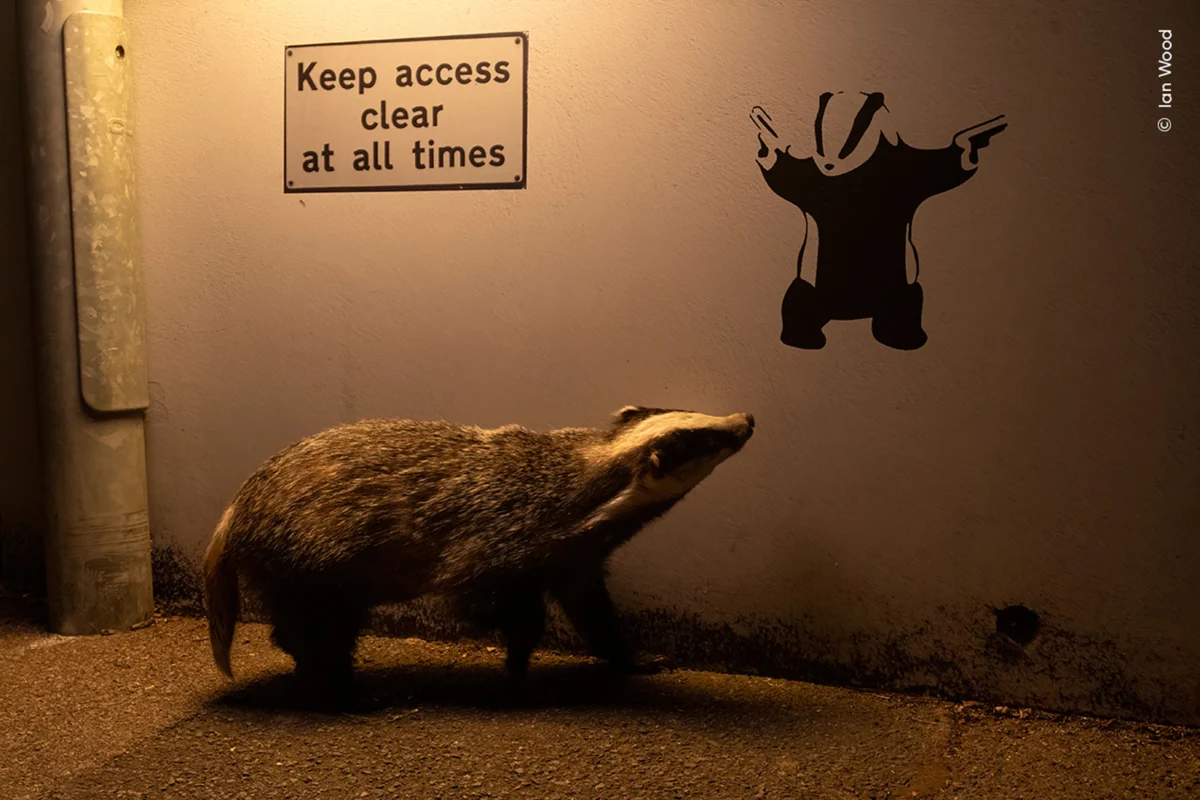
British photographer Ian Wood has captivated global audiences with his poignant photograph, "No Access," earning him the prestigious tenth edition of the Wildlife Photographer of the Year People’s Choice Award 2024. The winning image, a perfectly timed capture of a Eurasian badger pausing to gaze at familiar graffiti in St Leonards-on-Sea, England, resonated deeply with over 76,000 voters worldwide, setting a new record for public engagement in the competition. This victory not only celebrates exceptional photographic skill but also casts a spotlight on the complex relationship between urban development and wildlife, particularly the contentious issue of badger conservation in the UK.
The Wildlife Photographer of the Year People’s Choice Award, developed and produced by the Natural History Museum, London, stands as a testament to the power of public opinion in recognizing outstanding wildlife photography. This year’s competition saw an unprecedented level of participation, with fans from across the globe casting their votes for their favourite among 25 nominated images. These nominees were meticulously selected by an international judging panel from an astonishing nearly 60,000 entries submitted for the sixtieth annual Wildlife Photographer of the Year competition, underscoring the immense talent and diverse perspectives within the global wildlife photography community.
The Story Behind "No Access": A Glimpse into Urban Nocturnal Life
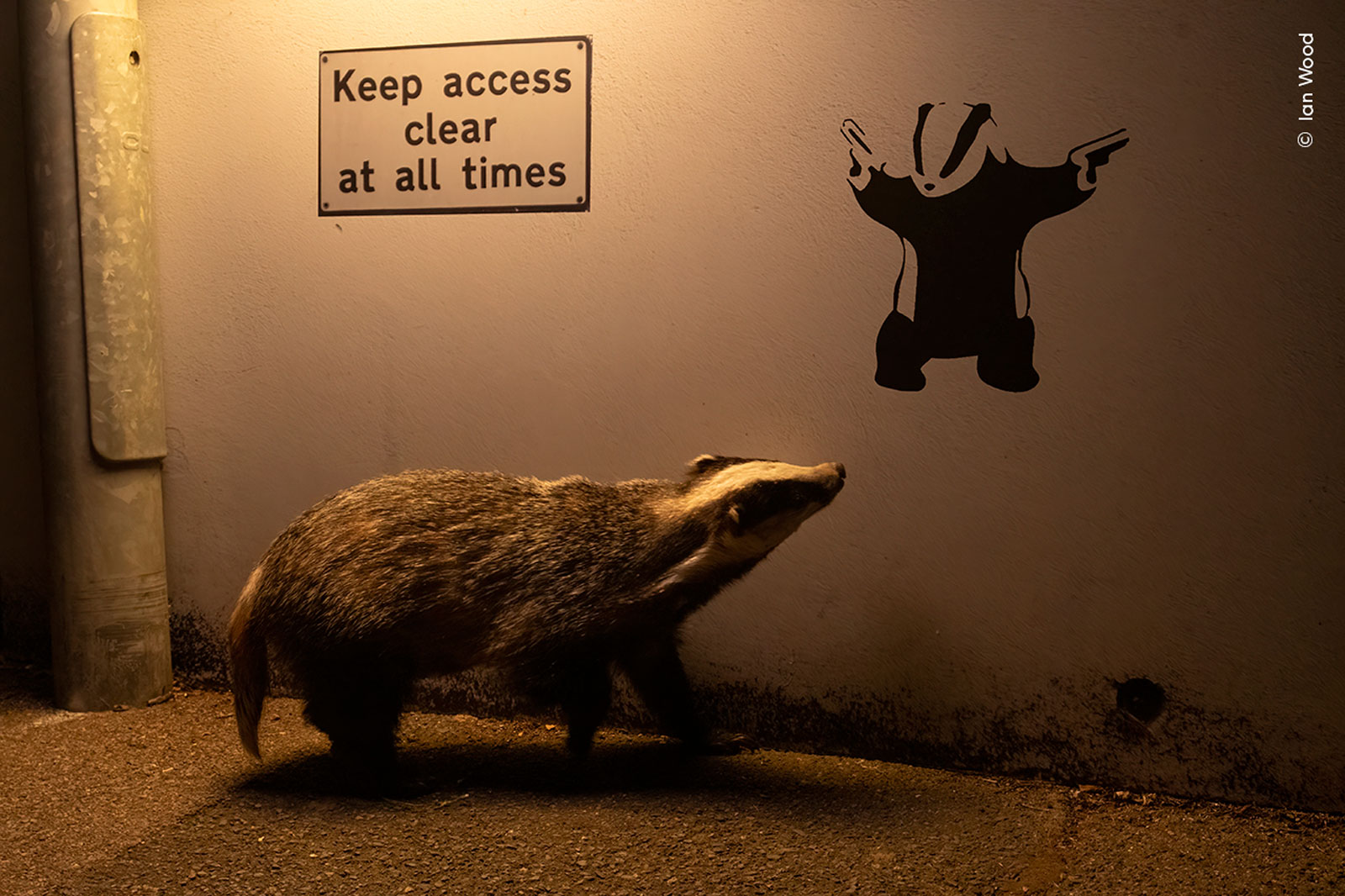
Ian Wood’s winning photograph is more than just an aesthetically pleasing image; it tells a compelling story of adaptation and survival in an increasingly human-dominated landscape. The scene unfolds in St Leonards-on-Sea, a coastal town in East Sussex, England, where the boundaries between human habitation and wild spaces often blur. Wood, an avid observer of local wildlife, noticed a particular pattern: residents, in an act of kindness, were leaving food scraps on pavements for urban foxes. This unintentional hospitality, however, also attracted other nocturnal foragers from nearby habitats – specifically, badgers from a local sett.
One late night, Wood witnessed a badger ambling along a pavement adjacent to a graffiti-adorned wall. Recognizing the unique photographic potential of this urban encounter, he meticulously planned his shot. Setting up a discreet hide at the edge of the road, he waited patiently. The only illumination available was the ambient glow from a solitary lamppost, casting long shadows and creating a dramatic, almost theatrical, atmosphere. The resulting image captures the badger in a moment of apparent contemplation, its distinctive striped face turned upwards towards the graffiti, the words "No Access" ironically mirroring its precarious existence in the urban periphery. The precision of Wood’s timing and his masterful use of available light transform a simple observation into a powerful narrative about coexistence.
A Deeper Message: The Plight of the British Badger
While the immediate charm of "No Access" lies in its depiction of an unexpected urban resident, Ian Wood himself emphasizes a more profound, and indeed darker, message embedded within his winning photograph. In his own words, "The outpouring of badger love since my photo was nominated for the People’s Choice Award has been beautifully overwhelming. Finding out that it has won is truly humbling." However, he quickly pivots to the critical issue that truly motivates him: the ongoing badger cull in England.

"I live in rural Dorset where I’m on a re-wilding mission to enhance habitats for a huge array of wildlife. The badger cull – which is still ongoing – has decimated their numbers and I fear that unless the cull is stopped, we’ll only see badgers in urban settings in several parts of England," Wood stated. His photograph, therefore, serves as a poignant plea, a visual argument against a controversial government policy. "My hope is for this image to raise awareness of the damaging effect of the badger cull and help push for change."
The Badger Cull Controversy: A National Debate
The badger cull in England is one of the most contentious wildlife management policies in recent British history. Initiated by the government in 2013, primarily in parts of the West Country, its stated aim is to control the spread of bovine tuberculosis (bTB) in cattle herds. Badgers (Meles meles) are a protected species under the Protection of Badgers Act 1992, but culling licenses are granted on the premise that badgers can act as a reservoir for bTB, transmitting the disease to livestock.
However, the scientific efficacy and ethical implications of the cull have been fiercely debated by scientists, conservationists, and animal welfare organizations. Critics argue that the evidence linking badgers to bTB transmission is inconclusive, and that the cull is ineffective, inhumane, and distracts from more effective measures such as cattle testing, biosecurity on farms, and badger vaccination programs. Organizations like The Badger Trust and numerous wildlife charities have consistently campaigned against the cull, citing concerns about its impact on badger populations and the broader ecosystem. They also highlight that badgers are often scapegoated for a problem largely driven by agricultural practices.
Ian Wood’s photograph, by depicting a badger forced into an urban environment, subtly reinforces the fears of conservationists: that the pressure on rural badger populations could lead to increased urbanization of the species, potentially exacerbating human-wildlife conflicts or indicating a decline in their traditional habitats. The People’s Choice Award provides a powerful platform for Wood to amplify this urgent conservation message, transforming an artistic triumph into a call for action.
Official Recognition and the Role of the Natural History Museum
Dr. Douglas Gurr, Director of the Natural History Museum, London, lauded Wood’s achievement, acknowledging the photograph’s dual impact. "Ian’s flawlessly timed image offers a unique glimpse of nature’s interaction with the human world, underscoring the importance of understanding urban wildlife," Dr. Gurr remarked. "His exceptional photograph serves as a powerful reminder that local nature and wildlife, often just outside our homes, can inspire and captivate us."
The Natural History Museum, as a leading global institution dedicated to understanding and advocating for the natural world, plays a crucial role in hosting and promoting the Wildlife Photographer of the Year competition. The People’s Choice Award, in particular, democratizes the judging process, allowing a vast international audience to connect directly with the narratives presented by these powerful images. This public engagement aligns perfectly with the Museum’s mission to create advocates for our planet, using the emotive power of photography to foster a deeper appreciation and understanding of nature.
A Showcase of Global Wildlife Photography Excellence
Beyond the winning image, the 2024 People’s Choice Award also celebrated four "Highly Commended" images, each a masterclass in wildlife photography and storytelling. These images, too, resonated strongly with the voting public, demonstrating the incredible diversity and emotional depth that characterize the competition:
- "Earth and Sky" by Francisco Negroni (Chile): An unforgettable capture of a double lenticular cloud, dramatically illuminated at nightfall by lava erupting from the Villarrica volcano in Chile. This image masterfully combines raw geological power with atmospheric beauty, showcasing nature’s grand spectacles.
- "Edge of Night" by Jess Findlay (Canada): A breathtaking action shot featuring a ghostly barn owl, captured in motion as it exits through the hayloft window of a derelict barn to commence its nightly hunt. The photograph evokes the silent grace and predatory efficiency of this nocturnal bird.
- "Whiteout" by Michel d’Oultremont (Belgium): Depicting a stoat sitting upright, perfectly camouflaged against a snowy Belgian landscape, observing its territory. The image highlights the animal’s remarkable adaptation to its environment and the challenges of survival in harsh conditions.
- "Spiked" by David Northall (South Africa): An intense and compelling capture showing a bloodied yet determined honey badger returning to finish off a Cape porcupine. The porcupine, in its earlier attempt to defend itself, had inflicted wounds on the badger. This photograph is a raw portrayal of the brutal realities of predator-prey dynamics in the wild.
These highly commended images, alongside "No Access," were chosen from a formidable pool of submissions for the 60th Wildlife Photographer of the Year competition. The rigorous judging process, involving an international panel of experts, ensures that only the most impactful, technically excellent, and ethically captured images make it to the final stages.
The Enduring Impact of Wildlife Photography

The Wildlife Photographer of the Year competition, in its six-decade history, has become an unparalleled platform for shining a light on inspiring and often challenging stories from the natural world. It connects people with nature on an emotional level, fostering a sense of wonder, urgency, and responsibility. Each photograph is a window into a different ecosystem, a different species, or a different aspect of the human-nature interface.
The competition encourages both amateur and professional photographers of all ages from around the world to submit their work, celebrating diverse talent and perspectives. This democratic approach ensures a rich tapestry of narratives, from the majestic and the beautiful to the stark and the concerning. By showcasing these images, the Natural History Museum and its partners aim to cultivate a global community of advocates for planetary conservation, recognizing that visual storytelling can be a potent catalyst for change.
Exhibition and Future of the Competition
"No Access" by Ian Wood and the four "Highly Commended" images are currently on display, both online and on interactive voting screens, as part of the flagship Wildlife Photographer of the Year exhibition at the Natural History Museum, London. The exhibition offers visitors a chance to experience these powerful images firsthand and will run until June 29, 2025. This extended viewing period allows a broad audience to engage with the stories and messages embedded within each photograph.

Looking ahead, the next chapter of this celebrated competition is already in motion. Images entered into the sixty-first Wildlife Photographer of the Year competition are currently undergoing evaluation by an international panel of experts. The anticipation will build towards the next annual awards ceremony, which is scheduled to take place at the Natural History Museum, London, in October 2025, where a new cohort of winners will be unveiled, continuing the legacy of inspiring conservation through the art of photography. Ian Wood’s victory serves as a potent reminder of the critical role that art plays in raising awareness and driving discourse on pressing environmental issues, urging humanity to reflect on its impact and rethink its relationship with the wild world that often exists just beyond our doorstep.