Southwestern Alaska’s rugged coastline and glacier-carved river valleys become a stage for one of nature’s most profound and vital dramas each year: the annual salmon run. This extraordinary event draws brown bears from their mountain sanctuaries, transforming the serene landscape into a bustling feeding ground. The migration, a testament to nature’s resilience and intricate design, sees an astonishing 30 million salmon battling upstream to their ancestral spawning grounds, a journey crucial not only for the continuation of their species but for the entire Alaskan ecosystem.
The Five-Month Frenzy: A Bear’s Feast
The salmon run is not a monolithic event but a sequential procession of species, each with its own timing and ecological significance. The sockeye salmon are typically the vanguard, followed by pink salmon, then coho, chum, and finally, the mighty chinook. This multi-species migration unfolds over a remarkable five-month period, commencing in late May and extending through mid-October. For the brown bears of Alaska, this extended period represents their most critical feeding window. It is during these months that they must amass the substantial fat reserves and nutritional stores necessary to survive the lean, unforgiving Alaskan winter. This intensified feeding behavior, known as hyperphagia, drives bears to consume hundreds of thousands of calories daily, a relentless pursuit of sustenance.
A Hierarchy of Hunger: Bear Strategies at the Riverbank
Within the dynamic environment of the salmon run, a distinct social hierarchy governs the bears’ feeding strategies. The dominant alpha males, formidable figures that can weigh up to 1,500 pounds (approximately 680 kilograms), are the first to claim the most advantageous fishing locations along the rivers. Their sheer mass and strength allow them to stand firm against powerful currents, effectively intercepting the abundant salmon.
In contrast, younger, more agile bears, including sub-adult males and females, often adopt different tactics. They are known to retreat to the dense cover of tall grasses, using their speed and nimbleness to snatch fish opportunistically. This strategy allows them to feed without directly confronting the larger, more aggressive males.
A particularly poignant aspect of the salmon run is the role of mother bears and their cubs. These matriarchs exhibit an unwavering vigilance, their every moment dedicated to providing for their young and ensuring their safety. The riverbanks, while teeming with food, also present significant dangers.
The Shadow of Infanticide: A Stark Reality of the Wild
The challenges faced by mother bears are multifaceted and often harrowing. Among the most profound threats is infanticide, a brutal reality of the wild where male bears, including sometimes their own offspring, kill cubs. While the precise motivations behind this behavior remain a subject of ongoing scientific research and observation, theories suggest a complex interplay of factors. These may include reducing competition for scarce food resources, a form of sexual selection, or even cubs being viewed as a supplemental food source. Regardless of the underlying causes, the immediate concern for a mother bear is the stark danger posed by larger, dominant males, necessitating a constant state of alert to protect her young.
Cubs, particularly at five to six months of age, are highly vulnerable. They are still dependent on their mothers for sustenance and protection. Even as they begin to acquire a taste for nutrient-rich grasses, their primary survival hinges on their mother’s ability to navigate the perilous environment of the salmon run.
A Moment of Serendipity: An Encounter on the Riverbank
One late August evening, at the zenith of the salmon run, the author found themselves on a tranquil stretch of Alaskan riverbank. The air was filled with the rhythmic splash of salmon, yet an overarching stillness prevailed. Upstream, several large bears were engaged in their focused hunt. It was in this serene yet primal setting that a subtle movement in the underbrush, approximately eight feet away, drew attention.

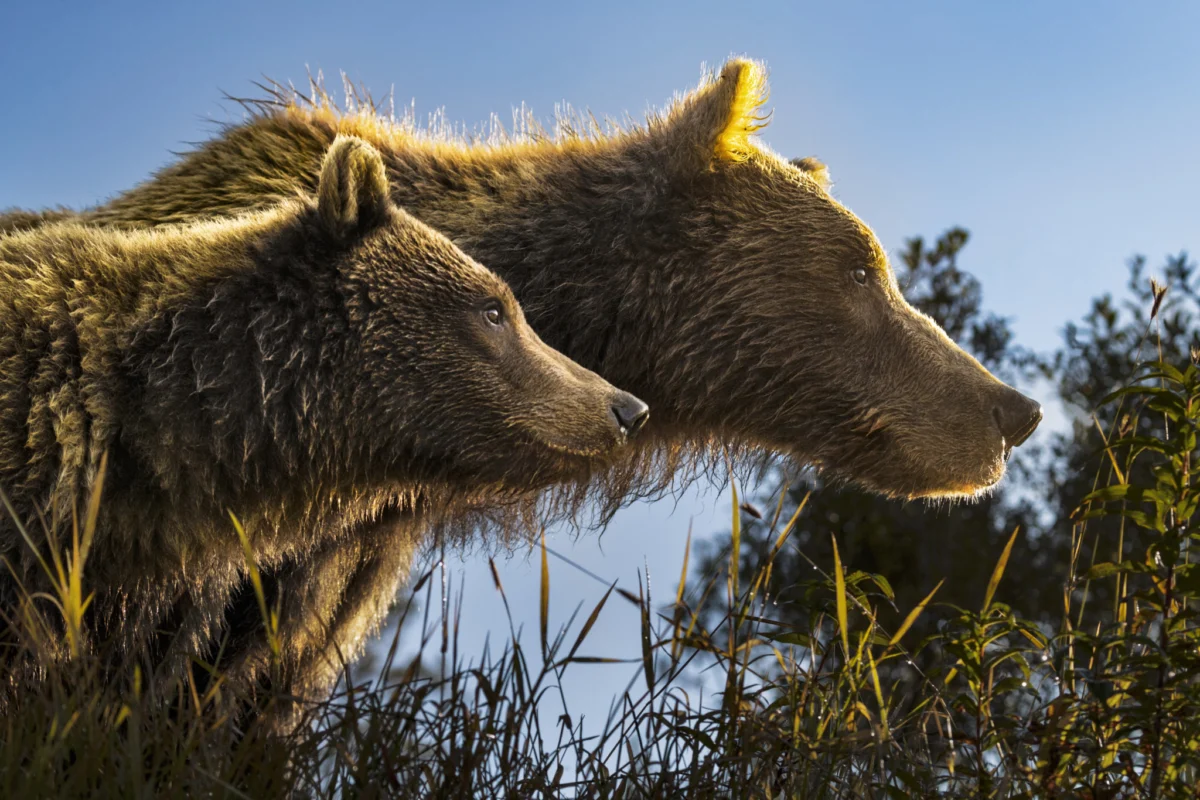
Emerging from the thicket were a mother bear and her cub, the latter appearing no older than eight months. In such close proximity, the protocol for encountering these apex predators dictates a deliberate calm. Slowing breathing, avoiding direct eye contact, and adopting a posture of humility are crucial to de-escalating potential conflict. The photographer’s equipment, limited to a wide-angle zoom lens, suggested an intimate rather than distant observation.
The mother bear, ears erect and eyes keenly observant, stepped into the open. Her immediate focus was not on the human observer but on a large male bear fishing upstream. He appeared oblivious to their presence, a testament to his singular dedication to the hunt. The mother bear, however, remained hyper-aware, her gaze, her listening, and her learning demonstrating a profound understanding of the dangers lurking in their environment.
The Art of Observation: Capturing the Unseen
The experience underscored the delicate dance of coexistence in the wild. The observer’s movements were deliberately slow and gentle, a practice honed through years of experience and emphasized in training. The principle is to move with the grace and deliberation of Tai Chi, even in moments of urgency. This approach minimizes disruption and allows for the observation of natural behaviors without undue influence.
With extreme care, the camera was raised, the intention to capture the moment without shattering its delicate equilibrium. Two quick shots were taken, a testament to the photographer’s instinct and experience. One of these images, captured in the fading twilight, has since become a deeply cherished photograph, a rare and perfect encapsulation of a fleeting moment.
This encounter was a profound reminder of the trust that can be forged in the wild. The bears, mother and cub, acknowledged the human presence but did not perceive it as a threat. Their true apprehension was directed towards the formidable male bear upstream. The photographer was merely a fortuitous observer, present in a rare intersection of luck, timing, and circumstance, to document this poignant tableau as the last rays of daylight receded behind the majestic Alaskan mountains.
Ecological Significance and Broader Implications
The annual salmon run is far more than a dramatic wildlife spectacle; it is a cornerstone of the Alaskan ecosystem. The immense biomass of salmon returning to their freshwater origins provides a critical pulse of energy and nutrients. This influx supports not only bears but also a diverse array of other species, including wolves, eagles, otters, and even the terrestrial vegetation through the nutrient-rich carcasses left behind. The health of the salmon runs is intrinsically linked to the health of the marine environments where they spend their adult lives and the freshwater habitats where they are born.
Supporting Data and Context
- Salmon Population: Estimates suggest that approximately 30 million salmon undertake the annual migration to Alaskan waters.
- Bear Nutritional Needs: During hyperphagia, brown bears can consume up to 30,000 calories per day, a significant increase from their typical diet.
- Economic Impact: The salmon fishing industry is a vital component of Alaska’s economy, supporting numerous jobs and communities.
- Conservation Efforts: Various state and federal agencies, along with non-profit organizations, are involved in monitoring salmon populations and protecting their habitats. Challenges include climate change impacting water temperatures and ice cover, habitat degradation, and unsustainable fishing practices in some areas.
Expert Analysis and Future Outlook
Dr. Evelyn Reed, a leading wildlife biologist specializing in Alaskan ecosystems, commented on the significance of the salmon run: "The annual migration is a linchpin event. The energy transfer from the ocean to the terrestrial environment via the salmon is immense. Disruptions to this cycle, whether through environmental changes or human activity, have cascading effects throughout the food web."
The increasing impacts of climate change present a significant concern for the future of the salmon run. Warmer ocean temperatures can affect salmon physiology and the availability of their prey. Changes in river flows and snowmelt patterns can alter spawning conditions and the survival rates of young salmon. Furthermore, human development and resource extraction in coastal and riverine areas pose ongoing threats to critical salmon habitats.
The continued health and vitality of southwestern Alaska’s salmon runs are paramount for maintaining the region’s unique biodiversity and ecological integrity. Protecting these vital waterways and the ocean environments that sustain them is not only an ecological imperative but also crucial for the cultural and economic well-being of the communities that depend on this natural bounty. The images captured on that serene riverbank serve as a potent reminder of the wild beauty that hangs in the balance.