The traditional concept of the "blank canvas" is undergoing a fundamental transformation as commercial marketing departments grapple with an unprecedented demand for high-velocity content. While the blank canvas has long symbolized artistic purity and the limitlessness of human imagination, in the context of modern enterprise, it often represents a bottleneck of cost, time, and logistical complexity. As digital ecosystems expand, the creative industry is pivoting away from the "zero-start" model toward a hybrid approach: leveraging professional stock media as a foundation and using artificial intelligence (AI) to accelerate the final production phases.
The Hidden Costs of Starting From Zero
In a professional marketing environment, the path from a conceptual brief to a finished asset is rarely linear. A single campaign for a modern brand may require dozens, or even hundreds, of variations to satisfy the requirements of diverse platforms, including desktop website headers, mobile app banners, Instagram Stories, LinkedIn graphics, YouTube thumbnails, and localized email assets.
According to industry data from the Content Marketing Institute, over 70% of marketers reported an increase in content demand over the past year, yet few have seen a proportional increase in headcount or budget. This "content gap" has exposed the inefficiencies of traditional workflows. When a designer starts from scratch, they are responsible for every variable: lighting, composition, subject matter, and technical specifications. Much of this work—such as rebuilding backgrounds or manually resizing assets for nine different aspect ratios—does not add high-level creative value. It is administrative production work that consumes time better spent on strategy and art direction.
A Chronology of Creative Sourcing: From Archives to AI
The shift toward AI-enhanced stock media is the latest chapter in a century-long evolution of how visual assets are sourced. Understanding this timeline provides essential context for the current technological shift:
- The 1920s – The Birth of Stock: H. Armstrong Roberts founded one of the first major stock photography agencies, realizing that advertisers often needed generic scenes (families at dinner, workers in factories) more quickly than a custom shoot could provide.
- The 1980s and 90s – Consolidating the Archives: The rise of agencies like Getty Images and Corbis centralized millions of physical transparencies and negatives, moving the industry toward a catalog-based licensing model.
- The Early 2000s – The Microstock Revolution: Platforms like Shutterstock disrupted the market by making professional photography accessible via digital subscriptions and searchable databases, drastically lowering the barrier to entry for small-to-medium businesses.
- 2022 to Present – The Generative AI Integration: The current era is defined by the integration of Generative AI directly into stock libraries. Instead of merely downloading a static file, users can now use AI to expand backgrounds (outpainting), remove objects, or alter lighting within a professionally shot framework.
The Power of the Foundation: Why "Pure" Generation Isn’t Enough
While pure text-to-image generation tools have gained significant attention, they often struggle with the precision required for brand consistency. Issues such as "hallucinations"—where the AI creates distorted limbs or illogical textures—and the difficulty of maintaining a specific aesthetic across multiple prompts make pure generation risky for high-stakes campaigns.

This is where AI-enhanced stock media offers a strategic advantage. By starting with a professionally captured photograph or video clip, the "ground truth" of the image is established by a human professional. The lighting is deliberate, the subjects are anatomically correct, and the technical quality is guaranteed. The AI is then used as a surgical tool to adapt that high-quality foundation.
For example, a designer may find a horizontal image of a global team in a modern office that perfectly captures the brand’s tone. In the past, if the campaign required a vertical format with more "copy space" at the top, that image would have been discarded. Today, AI-powered generative expansion can "grow" the top of the image, seamlessly creating more of the office ceiling and background to accommodate text, without losing the authenticity of the original human subjects.
Supporting Data: The Efficiency Gains of Hybrid Workflows
The economic argument for this hybrid model is supported by emerging metrics in creative operations. A report by Gartner suggests that by 2026, 60% of CMOs will rely on generative AI to automate repetitive content tasks. The efficiency gains are found in three primary areas:

- Search Velocity: AI-enhanced search algorithms now understand "mood" and "intent" rather than just keywords. A search for "authentic collaboration" yields better results than "people in office," reducing the time spent in the discovery phase by an estimated 30-40%.
- Production Cycles: By using AI to automate the "resizing and retouching" phase, creative teams can reduce the time-to-market for multi-platform campaigns from weeks to days.
- Testing and Optimization: Performance marketers can now generate five different backgrounds for the same stock subject to see which version drives higher click-through rates (CTR). This level of A/B testing was previously cost-prohibitive for all but the largest brands.
Official Responses and Industry Sentiment
The shift has prompted various reactions from the creative community. Leading stock platforms, including Shutterstock, have emphasized "Responsible AI" frameworks, ensuring that the human contributors who provided the original source material are compensated when their work is used to train these AI models or serves as a foundation for AI-assisted edits.
"The goal is not to replace the photographer, but to make their work more versatile," noted a representative from a leading creative agency. "When a photographer uploads a high-quality asset, AI allows that one asset to be used in 50 different ways. That increases the value of the original work while solving the production nightmare for the brand."
Conversely, some creative purists argue that the ease of AI adaptation could lead to a "homogenization" of visual culture. However, most industry analysts suggest that the market is moving too fast for traditional methods to keep up, making these tools a necessity rather than an option.

Global Localization and Modular Production
One of the most significant implications of AI-enhanced stock media is in international marketing. A global product launch requires visual cues that resonate with local cultures while maintaining a unified brand identity.
In a modular production workflow, a brand can select a "core" visual style and use AI-assisted tools to swap out background elements or adjust color palettes to suit regional preferences. Because they are starting with a professional stock foundation that already exists in a global library, they can ensure that the "quality floor" remains high across all markets. This eliminates the need for expensive, separate photo shoots in every major territory, saving companies millions in annual production costs.
The Shift from Execution to Creative Direction
As AI takes over the "heavy lifting" of production, the role of the human designer is evolving. The industry is seeing a shift from "execution-based" roles to "direction-based" roles.
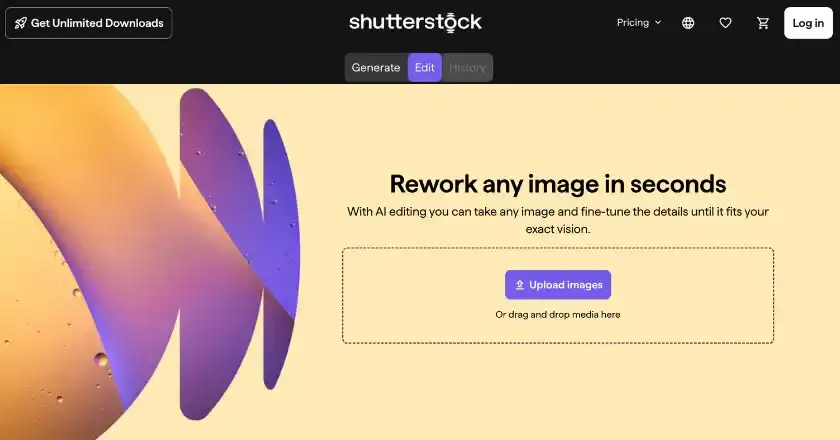
In this new paradigm, the designer’s value is found in their ability to select the right foundation, prompt the AI for the correct adaptations, and apply the final layer of human judgment to ensure the asset feels "human." Strategy, brand voice, and emotional resonance remain uniquely human domains. The "blank canvas" may be disappearing, but the need for a visionary to decide what goes on the canvas is stronger than ever.
Broader Implications for the Creative Economy
The rise of AI-enhanced stock media signals a broader trend toward the democratization of high-end production. Small businesses can now produce content that rivals the quality of global corporations because they have access to the same professional foundations and AI acceleration tools.
However, this transition also requires a new set of skills. "AI Literacy" is becoming as fundamental to the modern designer as proficiency in the Adobe Creative Suite was in the 2000s. Educational institutions and corporate training programs are increasingly focusing on how to manage AI workflows, emphasizing the ethical use of source material and the technical nuances of generative editing.

Ultimately, the move away from the blank canvas is an admission that in the digital age, speed is a creative requirement. By bridging the gap between professional human artistry and algorithmic efficiency, AI-enhanced stock media is providing a roadmap for a more productive, scalable, and ultimately more creative future for the marketing industry. The goal is a world with less "unnecessary work" and more room for the big ideas that truly move the needle.