The profound beauty of the Earth offers reserves of strength that endure as long as life lasts, a sentiment echoed by Rachel Carson and deeply felt by those who choose to immerse themselves in the natural world. For one photographer, this philosophy transformed a childhood move from the Canadian heartland to the remote Arctic into a lifelong dedication to capturing the essence of Earth’s most magnificent creatures. This journey, from the stark beauty of the polar north to the vibrant mysteries of the ocean’s depths, has consistently revealed that the most profound gifts are often found in the wild, far from the comforts of conventional life.
The author’s early life in Saskatchewan, steeped in the work ethic of farming families, provided a foundation of resilience. However, the family’s bold decision to relocate to the Arctic marked a significant departure, trading familiar comforts like easy access to family and predictable seasonal cycles for the unknown. This transition, initially perceived as a sacrifice, quickly revealed itself as an unparalleled opportunity. The author found that the benefits of living in close proximity to nature far surpassed what was left behind. This formative experience instilled a deep appreciation for the natural world, setting the stage for a career dedicated to its preservation and understanding.
The Genesis of a Wildlife Photographer
Following this early immersion in the wild, the author’s path as a photographer naturally evolved. The camera became an extension of their eyes, a tool to forge closer connections with "our wild kin." Subjects ranged from the iconic wolves and penguins to the elusive spirit bears and formidable sharks. This pursuit wasn’t merely about documentation; it was about bearing witness to the unparalleled diversity and beauty of life on Earth. The author posits that there is no greater privilege than to spend each day on a planet brimming with more species and wonders than humanity can ever fully comprehend.
Among the myriad of encounters with wildlife across the globe, the experiences with whales, described as the "true giants of Earth," stand out as particularly significant gifts. These encounters have shaped the author’s perspective, challenging preconceived notions and fostering a profound respect for these magnificent marine mammals.
Beyond the Myths: The Gentle Intelligence of Whales
Creatures like orcas and sperm whales, much like the Arctic wildlife of the author’s childhood, often inspire a complex blend of fear and awe. Their immense size and their apex predator status in the ocean can fuel perceptions of danger. However, a closer examination, supported by scientific understanding and personal experience, reveals a different narrative. Despite their formidable presence, there are no definitive records of orcas or sperm whales ever having intentionally killed a human. In fact, the author’s own interactions have consistently highlighted their gentle nature and profound intelligence, aspects often overshadowed by sensationalized myths and misconceptions.
Sperm whales, in particular, have a complex reputation, partly shaped by fictional narratives and folklore. These tales, often emphasizing their power and mystique, can overshadow the reality of their behavior. The author’s encounter off the coast of Dominica, however, proved to be a singularly wholesome and eye-opening experience, directly challenging these long-held perceptions.
A Close Encounter with "Ariel"
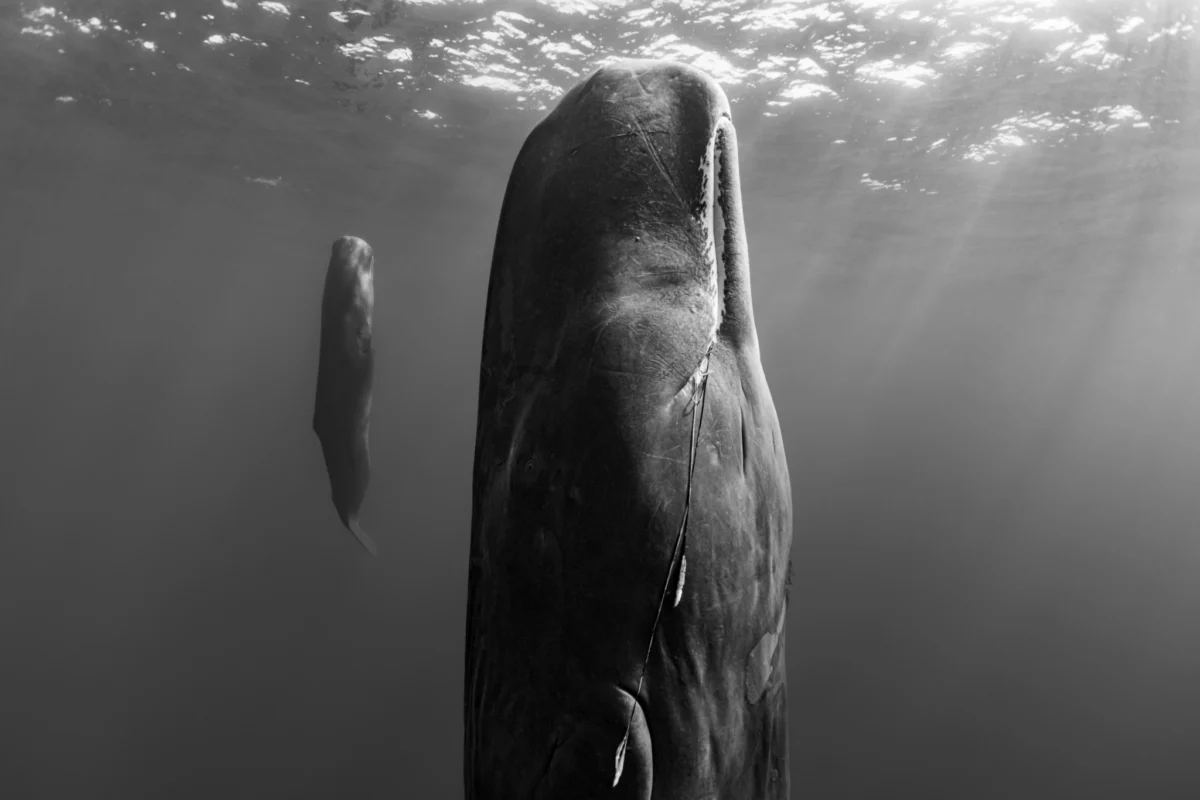
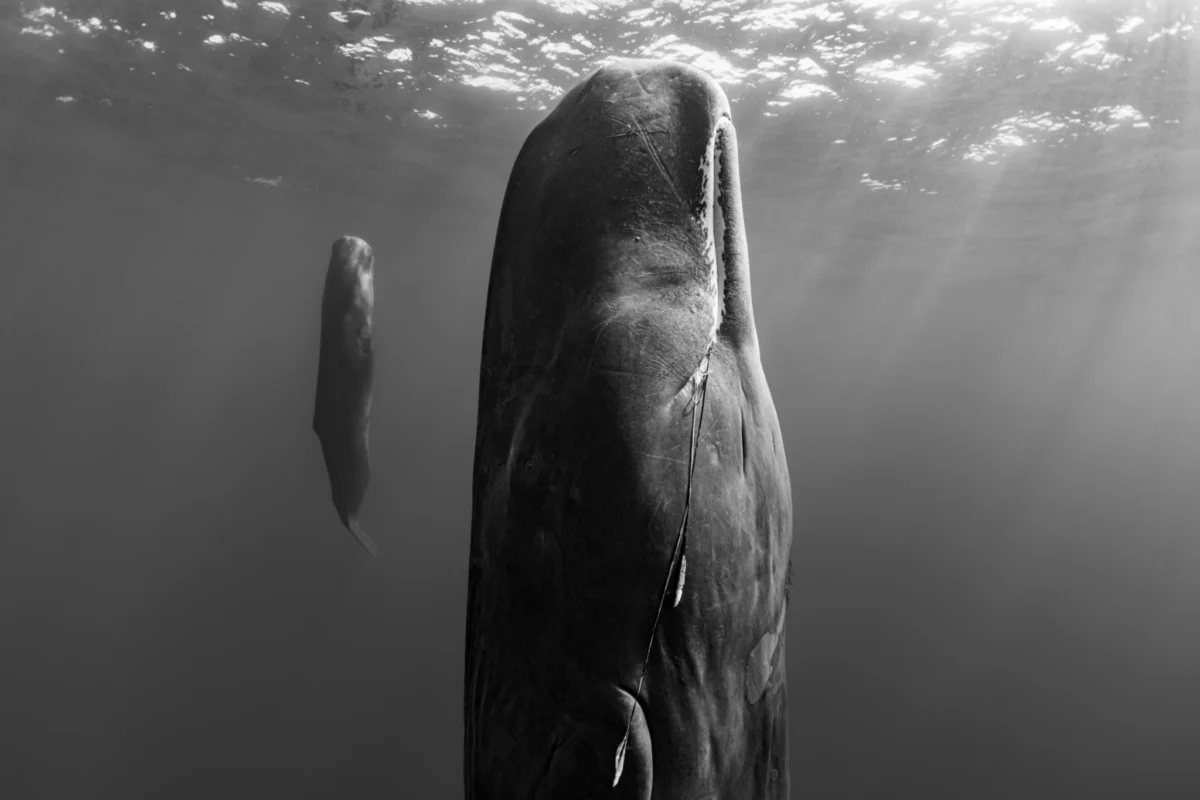
The author recounts a specific free-diving expedition off the coast of Dominica, where they had the extraordinary opportunity to swim with a pod of sperm whales. These majestic creatures spend the majority of their lives in the deep ocean, surfacing primarily to breathe and rest. During these periods, they often suspend themselves vertically in the water column, with their heads pointed towards the surface, a state of rest that can appear almost ethereal.
During this particular encounter, the author was able to approach the resting pod with a snorkel, maintaining a respectful distance. The matriarch and the rest of the group were evidently aware of the photographer’s presence and appeared comfortable, a testament to the respectful approach adopted.
The tranquil scene was unexpectedly interrupted when the youngest member of the pod, a calf affectionately nicknamed "Ariel" by local communities, became curious. Bored with napping, Ariel broke away from her mother and made a direct course towards the photographer. The author describes the moment as confronting a "20-foot baby whale charging at full speed." Bracing for impact, the author was met not with aggression, but with a surprisingly gentle interaction. Ariel, with her mouth open, proceeded to "gum" the camera housing, an action likened to an "overgrown toddler" playfully engaging with a toy.
This experience was pivotal. Years of experience navigating interactions with large, unpredictable wildlife allowed the author to remain calm. Instead of panic, there was an opportunity to observe and appreciate. Ariel’s behavior was far removed from the monstrous image of the sea creature often depicted in literature, such as Captain Ahab’s obsession with Moby Dick. Instead, Ariel embodied a bubbly, curious, and remarkably gentle spirit.
This encounter with Ariel, the young sperm whale, was captured in a photograph that has since become iconic. The image shows Ariel emitting a playful stream of bubbles as she barrels past the photographer. This visual narrative powerfully encapsulates the unexpected gentleness and playful nature of these magnificent animals, offering a counterpoint to their more fearsome popular imagery.
The Enduring Gift of Nature
Reflecting on a life spent in close proximity to the wild, the author draws a clear line between their formative years in the Arctic and their subsequent encounters with creatures like Ariel and her pod. The early experiences of following bears and foxes laid the groundwork for a deeper connection with Earth’s wildest inhabitants. This connection, the author argues, is amplified by spending time immersed in natural environments. The more time one dedicates to nature, the more the world reveals itself, offering new experiences and profound insights.

Beyond the material comforts and conveniences of modern, fast-paced society, nature offers something far more valuable: genuine connection. This connection is not merely observational; it is experiential, fostering empathy and understanding. The author concludes that this profound sense of connection, forged through direct engagement with the natural world, is the greatest gift of all.
Broader Implications: Conservation and Human-Nature Relationship
The experiences recounted by the photographer underscore a critical aspect of wildlife conservation: the importance of challenging anthropocentric views and recognizing the intrinsic value of other species. The prevalent fear and awe surrounding large marine animals like sperm whales and orcas can, unfortunately, contribute to their exploitation or endangerment, fueled by a lack of understanding.
Supporting Data and Scientific Context:
Sperm whales ( Physeter macrocephalus) are the largest toothed whales and the deepest diving mammals, capable of reaching depths of over 2,000 meters. Their diet primarily consists of giant squid, a fact that has contributed to their mystique. Research into sperm whale communication and social structures, particularly the complex click-based language known as "codas," continues to reveal their sophisticated cognitive abilities. Studies have documented distinct cultural traditions passed down through generations within sperm whale populations, further highlighting their intelligence and social complexity.
Orcas (Orcinus orca), while also apex predators, exhibit diverse hunting strategies and social behaviors that vary significantly between ecotypes. Resident orcas, for instance, are known for their fish-based diets and complex family pods, while transient orcas are marine mammal hunters. This diversity in behavior and diet underscores the need for nuanced understanding rather than generalized fear.
Background and Timeline of Understanding:
Historically, large marine mammals have been subjects of both fascination and fear. Whaling, driven by economic interests and a lack of ecological understanding, significantly impacted whale populations for centuries. The International Whaling Commission (IWC), established in 1946, played a crucial role in regulating whaling and, eventually, in advocating for whale conservation. Scientific research in the latter half of the 20th century and into the 21st century has been instrumental in shifting perceptions, revealing the intelligence, social complexity, and ecological importance of whales. Expeditions like the one described by the author contribute directly to this evolving understanding by providing direct, personal encounters that can challenge long-held stereotypes.
Analysis of Implications:
The author’s narrative serves as a powerful reminder of the disconnect that can exist between human perception and the reality of animal behavior. The contrast between the fictional portrayal of whales as monstrous threats and the observed gentleness and curiosity of individuals like Ariel highlights the need for education and empathy in human-wildlife interactions.
The implications for conservation are significant. When humans view wildlife with fear or as mere objects of spectacle, conservation efforts can falter. Conversely, fostering a sense of connection and respect, as inspired by such encounters, can cultivate a powerful drive for protection. The photographic evidence, coupled with the personal narrative, can serve as a compelling tool for conservation organizations to advocate for protected marine areas, responsible ecotourism, and policies that safeguard whale populations from threats such as pollution, entanglement in fishing gear, and ship strikes.
Official and Expert Reactions (Inferred):
While specific official reactions to this particular encounter are not provided, conservation scientists and marine biologists frequently emphasize the importance of personal experiences in fostering a deeper commitment to conservation. Organizations such as the World Wildlife Fund (WWF) and the Ocean Conservancy consistently highlight the role of citizen science and wildlife photography in raising public awareness and driving support for marine protection initiatives. Experts often point to the need for responsible wildlife tourism that prioritizes animal welfare and minimizes human impact, aligning with the author’s evident respect for the sperm whale pod.
The author’s journey, from the Arctic wilderness to the ocean’s embrace, is a testament to the enduring power of nature to inspire, educate, and connect. By sharing these intimate encounters, the photographer not only offers a glimpse into the lives of magnificent creatures but also advocates for a more profound and respectful relationship between humanity and the natural world. The true giants of Earth, as revealed through such lenses, are not monsters to be feared, but fellow inhabitants deserving of our deepest respect and unwavering protection.