The remote western shores of Oahu, often marked by the cautionary advice to avoid its "end of the road," hold a profound repository of Hawaiian culture, a living testament to resilience and tradition. For photographers Cristina Mittermeier and Paul Nicklen, heeding this local lore was precisely the impetus to venture into this often-overlooked region. Their initial journey, driven by a National Geographic assignment and a desire to capture the essence of a community fiercely protective of its heritage, unveiled an experience that transcended their expectations, forging lifelong connections rooted in the genuine spirit of aloha.
The Allure of the Forbidden and the Promise of Authenticity
The directive to avoid the western side of Oahu, a sentiment echoed by many, served as a powerful magnet for Mittermeier and Nicklen. As visual storytellers, they understood that true narratives often reside in places less trodden, away from the well-worn tourist paths. Armed with high-value camera equipment and a pressing deadline, they embarked on a mission to document what they believed to be one of the last significant bastions of authentic Hawaiian culture. The anticipated reception was one of suspicion and wariness, a natural defense mechanism born from a history of exploitation and misunderstanding. However, the reality they encountered was a stark contrast: an outpouring of generosity, warmth, and unparalleled hospitality that would redefine their perception of the community and forge bonds of "ohana," or family.

Dawn on the West Side: A Community Awakens
Mornings in Makaha, on Oahu’s western coast, begin in the pre-dawn stillness, a time when the island’s nascent light has yet to kiss the horizon. This is the hour when surfers, drawn by the promise of the ocean’s power, gather on the shores. As they paddle out to the legendary breaks, the rest of the island slowly awakens. The air fills with the aroma of freshly brewed coffee, the pulsating rhythms of island music, and the rumble of vehicles navigating the single, often imperfectly maintained, road that serves as the lifeline for locals commuting to work and school. Along the coastline, makeshift tent communities stir to life, their residents roused by the insistent crowing of roosters. It was in this evocative setting, nestled in the shade, that Mittermeier and Nicklen found themselves in conversation with Brian Keaulana. A figure of celebrity status in the surfing world, a seasoned stuntman, and a scion of one of Hawaii’s most esteemed families, Keaulana served as their crucial guide into the heart of Makaha.
Preserving Tradition in the Face of Modernity
Makaha stands as a bulwark against the tide of mass production. Here, surfboard shapers meticulously carry forward the ancestral art of crafting boards, a tradition passed down through generations, stubbornly resisting the uniformity churned out by factories. Wayfinders, embracing ancient knowledge, are learning to navigate by the stars, mirroring the skills of their forebears. For the people of Makaha, surfing is far more than a sport or a lifestyle; it is an intrinsic part of their being, a connection etched into their very bloodline. The community is predominantly composed of Polynesian descendants and highly respected watermen and women whose profound connection to the land and sea transcends verbal articulation. This deep-rooted heritage is the bedrock upon which their identity is built and fiercely defended.
Encounters with Guardians of Culture
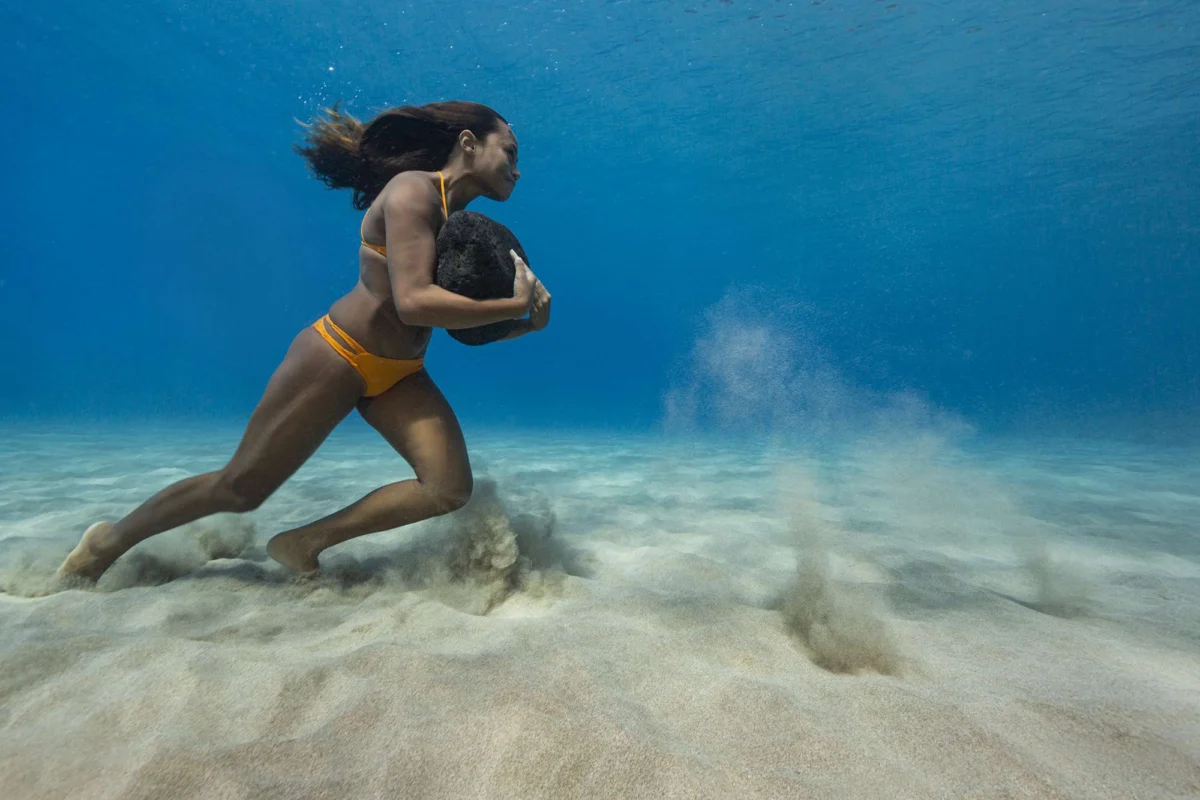
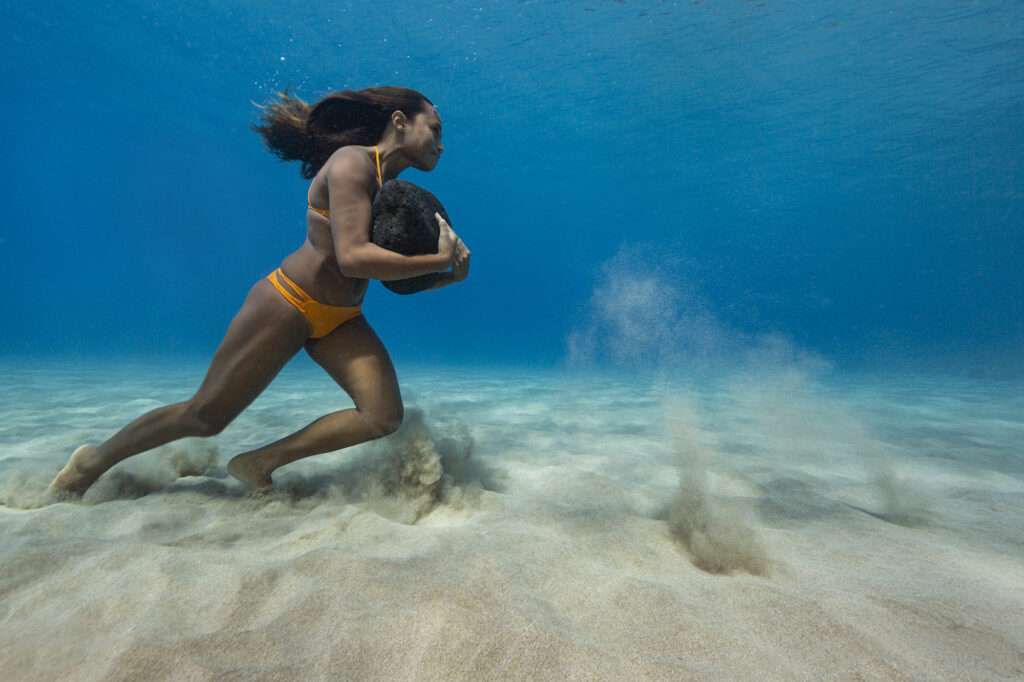
With the invaluable assistance of Brian Keaulana, Mittermeier and Nicklen were granted privileged access to individuals who are considered heroes within the Makaha community. They spent time with Ha’a Keaulana, Brian’s daughter, a prodigious surfing talent and the granddaughter of the legendary Buffalo Keaulana. Her rigorous training regimen included carrying a 50-pound boulder underwater, with her fellow surfers clinging to her as she navigated the ocean floor – a testament to the extraordinary physical and mental fortitude cultivated within this community. They also met Sulu’ape Keone Nunes, a traditional tattoo artist of great renown, who patiently elucidated the profound symbolism embedded in each design. Nunes explained how Hawaiians proudly bear their stories, their histories, and their lineage on their skin, a living tapestry of cultural continuity. The deeper Mittermeier and Nicklen delved into the community’s rich history, the more they understood the fierce protectiveness it exhibited towards outsiders.

Historical Context: Resilience in the Aftermath of Dispossession
The historical trajectory of Hawaii provides critical context for understanding the guarded nature of communities like Makaha. Following the annexation of Hawaii in 1898, the indigenous population plummeted dramatically. By the close of the 19th century, only an estimated 40,000 Hawaiians remained, their communities decimated by the introduction of foreign diseases to which they had no immunity, and by periods of intense conflict. Over the ensuing century, the survivors and their descendants have painstakingly worked to preserve the fragile links to their ancestors and their ancestral lands, meticulously passing this legacy down through each successive generation. The Makaha communities, in particular, have weathered immense hardship. The pervasive challenges of addiction, violence, and homelessness have tragically fractured many families. Yet, at the core of their narrative lies an unwavering connection to the rhythm of the ocean. Their outward reserve is not a sign of animosity, but rather a deeply ingrained instinct to safeguard that which is invaluable and irreplaceable.
A Decade Later: The Enduring Embrace of Aloha
Weeks later, as Mittermeier and Nicklen departed the island, they carried with them a profound sense of connection and a heartfelt promise to their newfound family to return. This promise was recently fulfilled, marking a decade since their initial immersion into Makaha life. The drive across the bridge and the approach to the iconic beach felt like a journey back in time. The coastline once again teemed with local surfers and beachgoers, the air alive with the cheerful melodies of island music carried on the golden breeze. Nicklen recounted to Mittermeier how, in their previous visit, the locals seemed to possess an uncanny intuition, often anticipating their arrival and ensuring a parking space was reserved for them. As if on cue, Moki, a dear friend and a longtime resident of Makaha, emerged onto the road, his baby stroller strategically placed to guard a parking spot for their vehicle. Ten years had passed, yet the gesture of inclusion and welcome remained. The moment they stepped out of their car, they were enveloped in a cascade of "Alohas," warm embraces, hearty laughter, and genuine smiles, all unfolding beneath the familiar landmark of lifeguard station 47B.
The Aloha Spirit: Generosity Amidst Adversity
The experience in Makaha serves as a powerful illustration of the aloha spirit in its purest form. It is a spirit characterized by profound care and compassion, a depth of human connection rarely found elsewhere in the Pacific. The courage and strength of heart displayed by the residents of Makaha, their unwavering generosity even in the face of significant hardship, and their commitment to ensuring that everyone has a place to park and a shaded spot to rest, exemplify this cherished cultural value. The aloha spirit is not merely a greeting; it is a way of life, a philosophy of interconnectedness and mutual support that has allowed this vibrant community to endure and thrive.
Broader Implications and the Future of Cultural Preservation
The story of Makaha offers a critical lens through which to examine the broader challenges and triumphs of cultural preservation in the face of globalization and modernization. The community’s success in maintaining its traditions and fostering a strong sense of identity, despite historical dispossession and ongoing socio-economic pressures, underscores the importance of community-led initiatives and the safeguarding of ancestral knowledge. The willingness of the Makaha residents to share their culture, albeit with a degree of initial caution, with those who approach with respect and genuine interest, provides a model for cross-cultural understanding. The enduring bonds formed by Mittermeier and Nicklen highlight the power of authentic human connection to bridge divides and foster mutual appreciation. As Hawaii continues to navigate the complexities of tourism and development, the resilience and cultural integrity of communities like Makaha serve as vital reminders of the invaluable heritage that must be protected and celebrated. The future of Hawaiian culture is intrinsically linked to the ability of such communities to maintain their traditions, their connection to the land and sea, and their unwavering spirit of aloha.
Mahalo,
Paul Nicklen