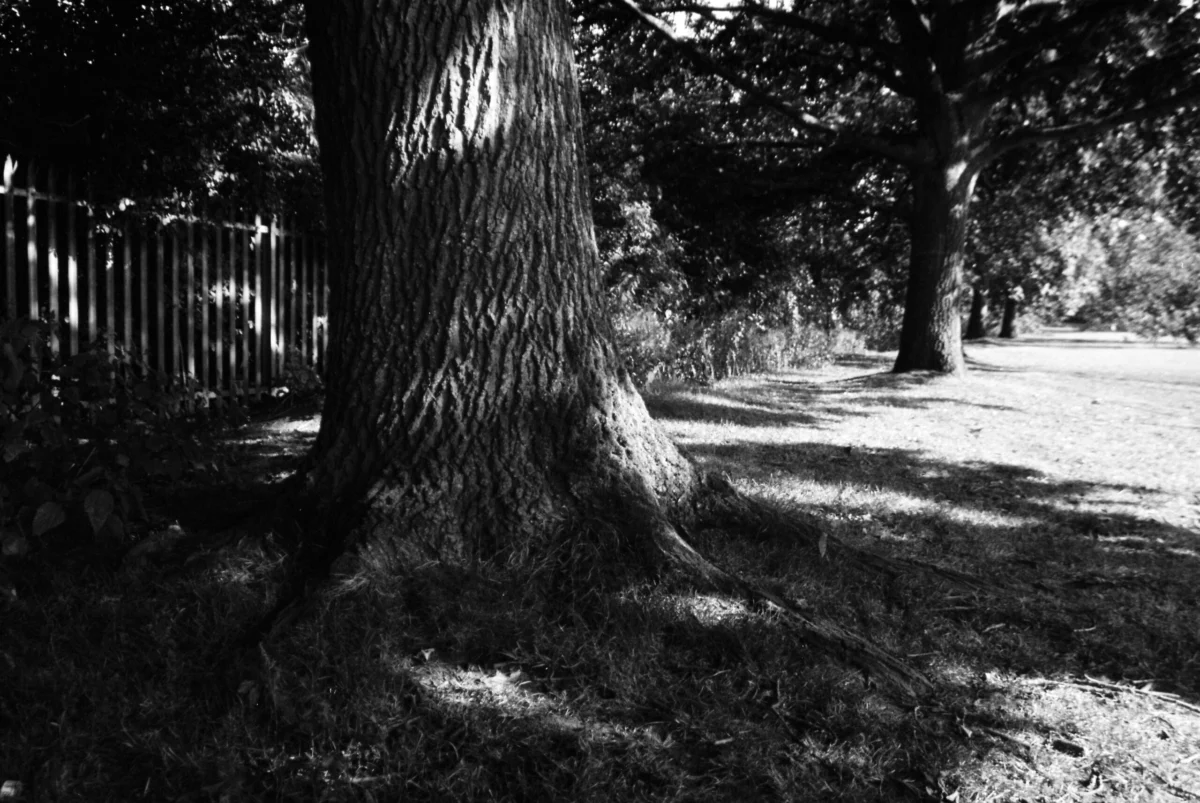
In the evolving landscape of digital imaging, a long-standing fundamental principle of photography—the reciprocal rule for handheld shooting—is being fundamentally challenged by rapid advancements in In-Body Image Stabilization (IBIS). For decades, photographers have adhered to the guideline that the minimum shutter speed for a sharp handheld photograph should be the reciprocal of the lens’s focal length. However, recent field tests and technological developments, particularly within the Sony Alpha ecosystem, suggest that this boundary is no longer a fixed constraint, allowing for multi-second exposures without the traditional requirement of a tripod.
The Reciprocal Rule and the Traditional Photography Paradigm
The "handheld rule" has served as a foundational teaching in photography since the era of 35mm film. The logic is rooted in human physiology: the minute, involuntary tremors of the human hand are magnified by the focal length of the lens. On a standard 50mm lens, a shutter speed of 1/50th of a second was considered the threshold for acceptable sharpness. On a 200mm telephoto lens, that threshold jumped to 1/200th of a second.
For many years, this physical limitation dictated the creative possibilities of photography. To capture the silky motion of a waterfall or the ghostly blur of a crowded street, a tripod was an indispensable piece of equipment. This necessity birthed a specific archetype in the photography world, particularly visible in Japan, known as the "Camera Ojisan" (camera uncle). These enthusiasts, often seen carrying high-end digital gear and heavy tripods, frequently frequent scenic locations to replicate the iconic landscapes of masters like Shinzo Maeda. Maeda, a pioneer of Japanese landscape photography, was renowned for his meticulous compositions of the hills of Biei, often requiring absolute stability to capture the intricate details of the terrain.
The Technological Shift: The Rise of In-Body Image Stabilization (IBIS)
The transition from film to digital sensors initially made the problem of camera shake more pronounced. High-resolution sensors, such as those found in the Sony A7R series, possess such high pixel density that even the slightest vibration is recorded as blur at the pixel level. To combat this, manufacturers began integrating sophisticated stabilization systems directly into the camera body.

Modern stabilization works through a series of gyroscopic sensors that detect motion across five axes: pitch, yaw, roll, and X/Y translation. These sensors communicate with a floating sensor assembly held in place by magnetic actuators, which move the sensor in real-time to compensate for the photographer’s hand movement.
The efficacy of these systems is measured in "stops." A stop represents a doubling or halving of light. In the context of stabilization, each stop allows the photographer to use a shutter speed twice as slow as the reciprocal rule would suggest.
Comparative Data of Stabilization Systems
- Sony A7RII (Released 2015): Offered approximately 4.5 stops of stabilization.
- Sony A7RIII (Released 2017): Improved the algorithm to offer 5.5 stops.
- Sony A7RV (Released 2022/2023): Introduced an AI-driven processing unit that pushed the stabilization to a staggering 8 stops.
Mathematically, the new rule for handheld photography under these conditions can be expressed as $2^S / textfocal length$, where $S$ represents the stops of stabilization. For a photographer using a 50mm lens on a system with 5.5 stops of stabilization, the theoretical limit for a sharp shot moves from 1/50th of a second to approximately 0.9 seconds.
Empirical Field Analysis: The Sapporo and Museum Trials
To test the practical limits of these systems, experimental trials were conducted by photographer Geoff Chaplin, focusing on the Sony A7RII and A7RIII platforms. These trials aimed to determine the "success rate" of extreme handheld exposures in real-world environments, such as the underground pedestrian streets of Sapporo and museum interiors.
The Museum Trial (A7RIII)
Using a 55mm lens at f/8 and ISO 100, the experimenter attempted exposures of 1.6 seconds. According to the 5.5-stop stabilization rule, the theoretical limit for this focal length is approximately 0.8 seconds. By doubling the theoretical limit, the trial resulted in a 50% success rate, with three out of six images retaining critical sharpness in static elements. This suggests that while the manufacturer’s ratings are conservative, the probability of failure increases exponentially as one pushes past the 1-second mark.
The Sapporo Underground Trial (A7RII)
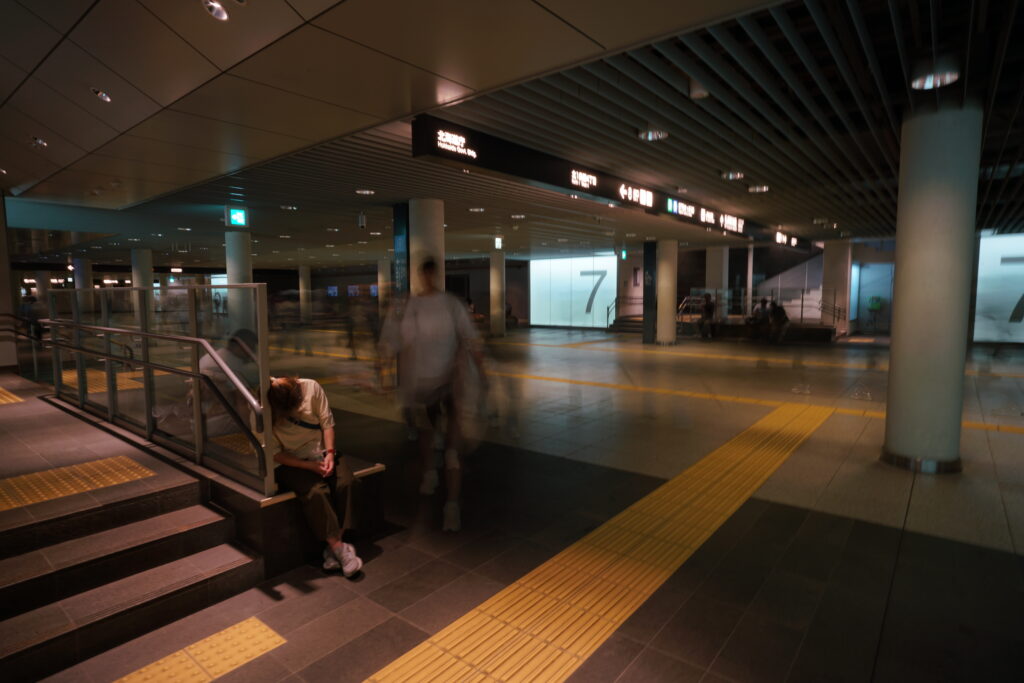
In the controlled environment of an underground walkway in Sapporo, a 20mm lens was utilized on an A7RII (4.5 stops). The reciprocal rule suggests a 1/20th of a second shutter speed. With stabilization, the adjusted expectation is roughly 1 second.
The trial pushed the equipment to a 2-second exposure at f/22. To achieve stability, the photographer employed "environmental bracing," leaning against a structural pillar. The results demonstrated that while the static architecture remained sharp, the f/22 aperture introduced "diffraction softening"—a secondary optical issue where light waves interfere with each other when passing through a tiny opening, reducing overall contrast and fine detail. Despite this, the experiment successfully rendered moving pedestrians as ethereal blurs, achieving a long-exposure aesthetic without a tripod.
Accessibility and the Human Factor
One of the most significant implications of advancing IBIS technology is the democratization of photography for individuals with physical limitations. The author of the trials, Geoff Chaplin, noted a lifelong tremor in his right hand. Traditionally, such a physiological condition would make handheld photography nearly impossible at speeds slower than 1/100th of a second.
The integration of 8-stop stabilization systems represents a "assistive technology" breakthrough. For photographers with essential tremors or age-related instability, IBIS acts as a corrective layer, neutralizing high-frequency vibrations that would otherwise ruin an image. This shift allows a broader demographic of enthusiasts to engage in street and landscape photography without the physical burden of carrying and setting up a tripod, which can be cumbersome and, in many urban environments, prohibited.
The "Blank Screen" Effect and Psychological Adaptation
A secondary finding of the field trials was the psychological impact on the photographer. When taking a one- or two-second handheld exposure, the digital viewfinder or LCD screen goes blank for the duration of the capture. For photographers accustomed to the near-instantaneous feedback of high-speed digital shooting, this "blackout" can trigger an instinctive physical reaction or a premature movement of the camera, assuming the shot is finished.
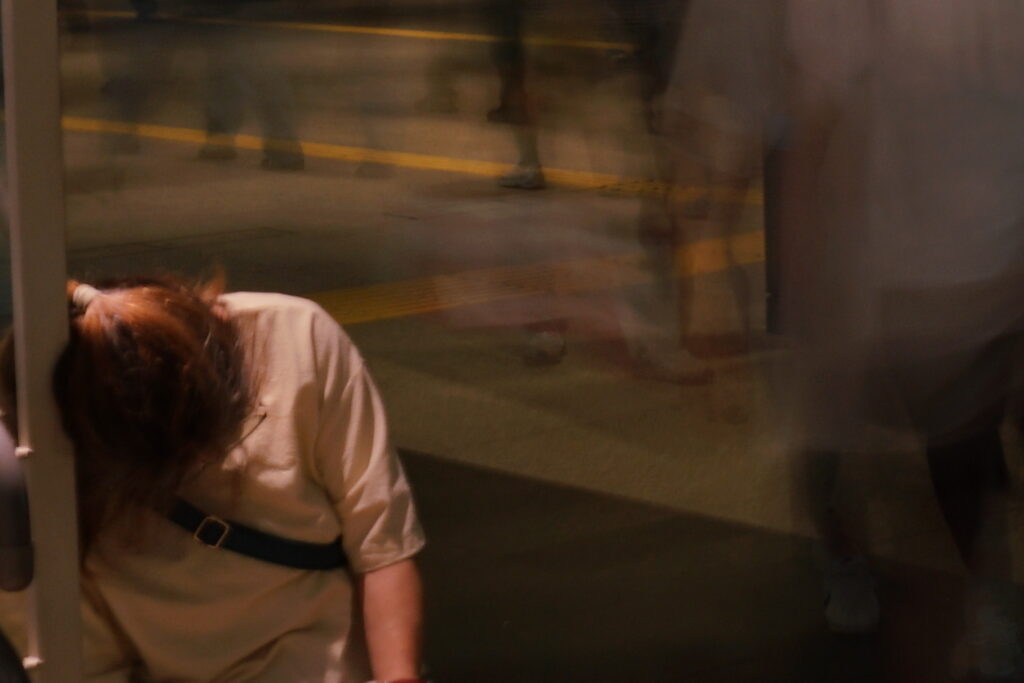
Mastering ultra-slow handheld photography requires a period of "re-training." Photographers must learn to follow through with their stance, maintaining a statue-like pose even after the shutter click is heard, until the image preview reappears. This technique, borrowed from marksmen and archers, emphasizes breath control and skeletal support over muscular tension.
Broader Industry Implications and Future Outlook
The move toward 8-stop and potentially 10-stop stabilization is forcing a re-evaluation of lens design and camera utility. Industry analysts suggest that as IBIS becomes more effective, the need for bulky, stabilized lenses (Optical SteadyShot or Vibration Reduction) may diminish for wide and standard focal lengths. This allows for smaller, lighter lens designs with larger apertures.
Furthermore, the ability to shoot multi-second exposures handheld opens up new creative avenues in "Intentional Camera Movement" (ICM) and urban motion studies. In the Sapporo trials, a 1-second exposure at f/11 effectively "erased" 15 people from the frame, rendering them as barely visible wisps of light, while the stationary signs remained legible. This technique, once the exclusive domain of the tripod-bound landscape photographer, is now available to the spontaneous street photographer.
However, the industry faces a plateau of diminishing returns. While 8 stops of stabilization is revolutionary, it cannot compensate for the movement of the subject itself. If a photographer is shooting a portrait in low light, the subject’s own micro-movements (breathing, blinking) will cause blur, regardless of how stable the camera sensor remains. Consequently, the future of stabilization may shift from purely mechanical movement to "computational stabilization," where AI identifies moving subjects and applies different levels of sharpening and alignment to different parts of the frame.
Conclusion
The evolution of image stabilization has effectively rewritten the physics of handheld photography. By moving the threshold of stability from 1/50th of a second to 2 full seconds, technology has granted photographers a new level of freedom. While the "Camera Ojisan" may still prefer the ritual and guaranteed precision of a tripod and pixel-shifting for 2-meter-wide prints, the average enthusiast is no longer tethered to such equipment. As systems like the Sony A7RV become the new standard, the "rule" of handheld photography will continue to drift further from the reciprocal of the focal length and closer to the limits of human patience and atmospheric conditions. The trials in Sapporo and beyond prove that with a steady lean and a modern sensor, the world of long-exposure photography is now firmly in the palm of the hand.