Raja Ampat, an archipelago located off the northwest tip of the Bird’s Head Peninsula in West Papua, Indonesia, stands as an unparalleled global benchmark for marine biodiversity and the ultimate destination for underwater photography. This remote haven, often dubbed "The Last Paradise," presents an almost unbelievable spectacle of lush, jungle-covered islands rising from crystal-clear waters, fringed by vibrant coral reefs teeming with an abundance of wildlife that would take a lifetime to fully appreciate. Its strategic position within the Coral Triangle, a marine region recognized as the global epicenter of marine biodiversity, underpins its extraordinary ecological significance and its draw for naturalists, scientists, and photographers worldwide.
Ecological Significance: The Heart of the Coral Triangle
The profound ecological importance of Raja Ampat stems directly from its location at the intersection of the Pacific and Indian Oceans, within the apex of the Coral Triangle. This region, spanning six countries, is a marine biological hotspot, often compared to the Amazon rainforest in terms of terrestrial biodiversity. Raja Ampat itself comprises over 1,500 islands, islets, and cays, surrounding the four main islands of Waigeo, Batanta, Salawati, and Misool. Scientific studies consistently show that this archipelago hosts over 75% of the world’s known coral species and more than 1,000 species of reef fish, far surpassing any other marine area on Earth. This astounding diversity, combined with its pristine condition, firmly establishes Raja Ampat as a mecca for scuba diving and underwater photography.

Beyond the sheer numbers, the area boasts a prolific repertoire of marine life, including 540 different strains of hard and soft corals, an estimated 700 types of mollusks, and iconic megafauna such as oceanic manta rays, reef manta rays, dugongs, and even saltwater crocodiles in certain brackish areas. These rich, nutrient-dense waters serve as a vital nursery for marine species across the Indo-Pacific, making every dive an unpredictable and exhilarating encounter with nature’s grandeur. The region’s unique geological formations, characterized by dramatic karst limestone islands, contribute to a diverse range of habitats, from shallow lagoons to deep oceanic trenches, further fostering this incredible biodiversity.
A Photographer’s Dream: Capturing Raja Ampat’s Wonders

For underwater photographers, Raja Ampat offers an unmatched spectrum of opportunities, catering to every specialization from wide-angle reefscapes to intricate macro life. The sheer health and scale of the reef systems are a constant source of inspiration; vast gardens of hard and soft corals grow and flourish with unimaginable size and vibrant colors, creating true natural masterpieces.
These majestic coral cosmoses set the perfect stage for wide-angle photography, capturing expansive shots of schooling fish – such as barracuda, batfish, and snappers – alongside encounters with graceful manta rays, endemic wobbegong sharks, and various species of sea turtles. Photographers typically find a 16-35mm lens ideal for these shots, though opportunities for Close Focus Wide Angle (CFWA) photography abound, allowing for dramatic perspectives that highlight both the subject and its environment.

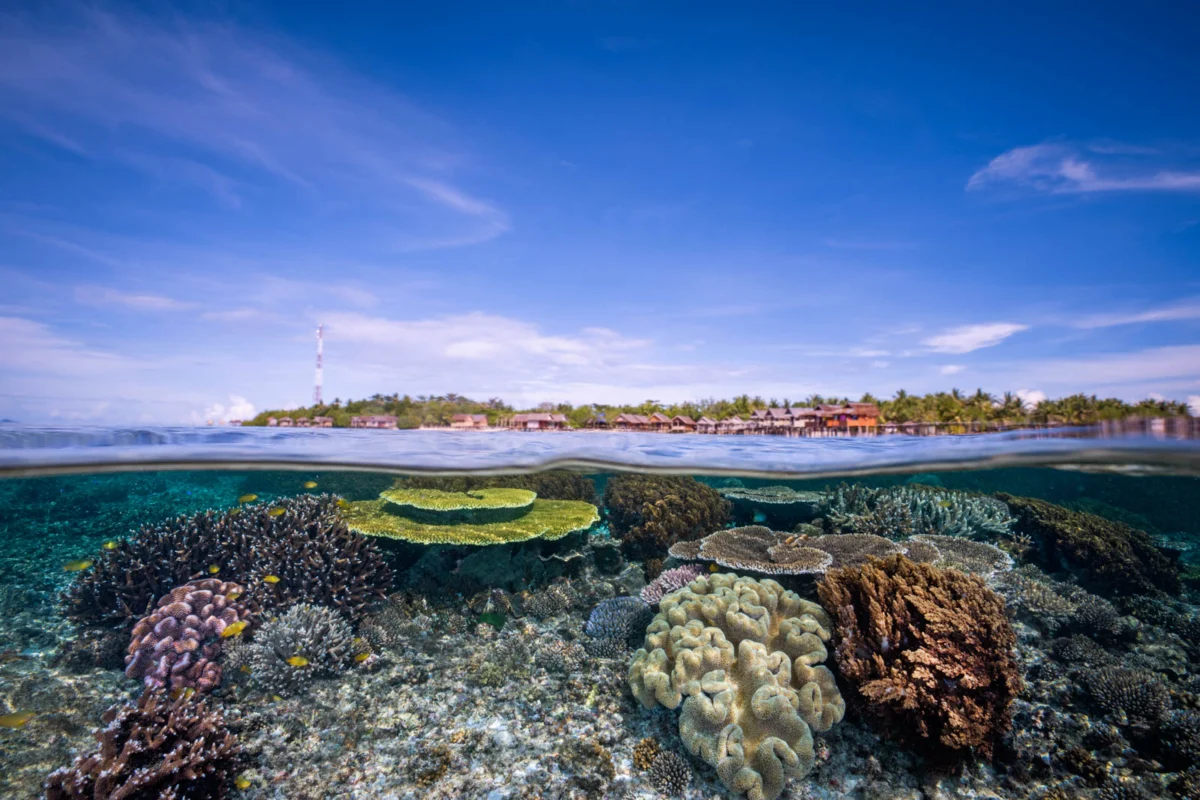
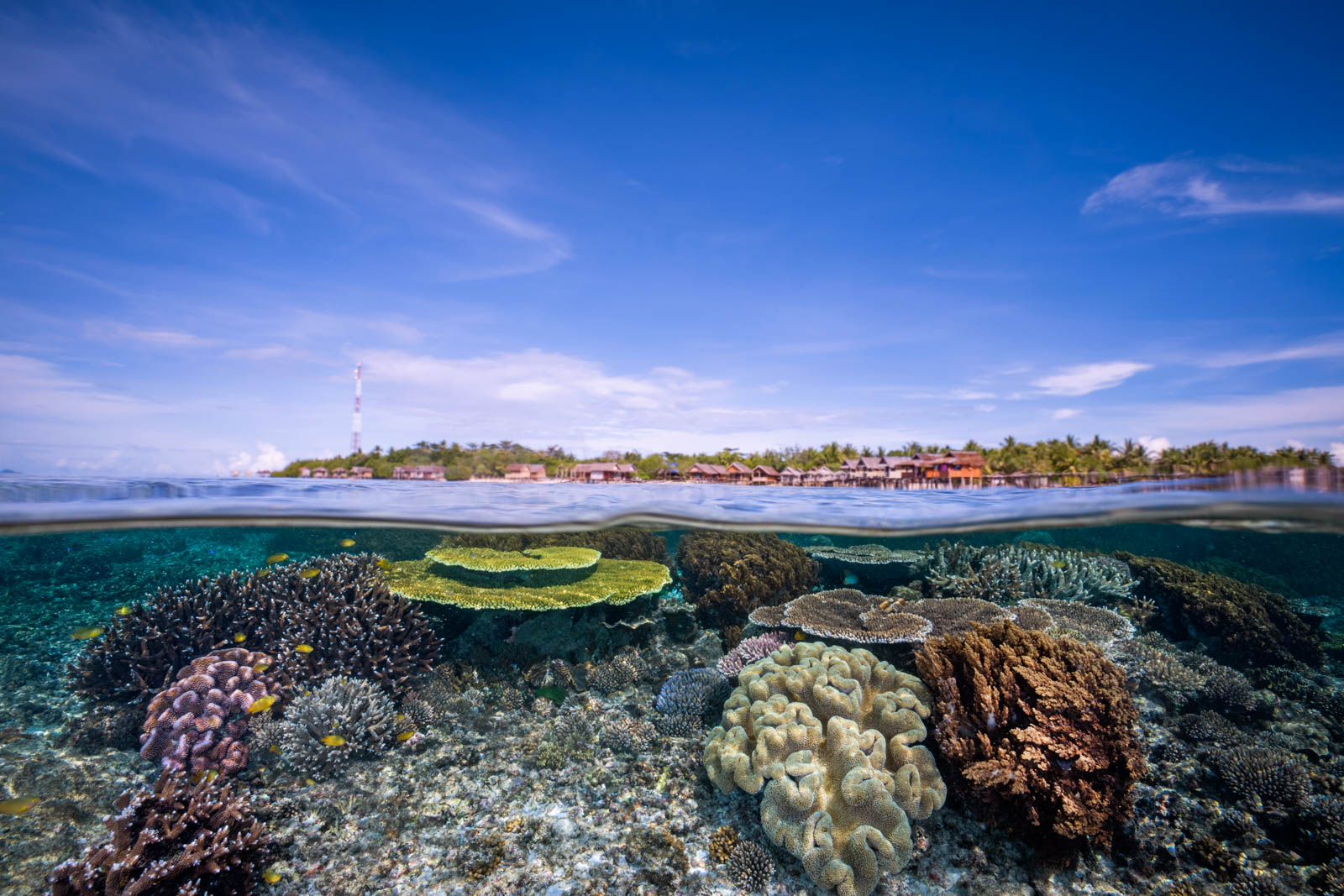
The archipelago is also renowned for its "split shots" or over-unders, where both the underwater and surface worlds are captured in a single frame. The clear, calm waters around many of the islands, particularly in the vicinity of homestay house reefs, provide accessible locations for capturing these striking images. The region’s breathtaking sunrises and sunsets further enhance these compositions, bathing the iconic limestone formations and calm waters in golden hues.
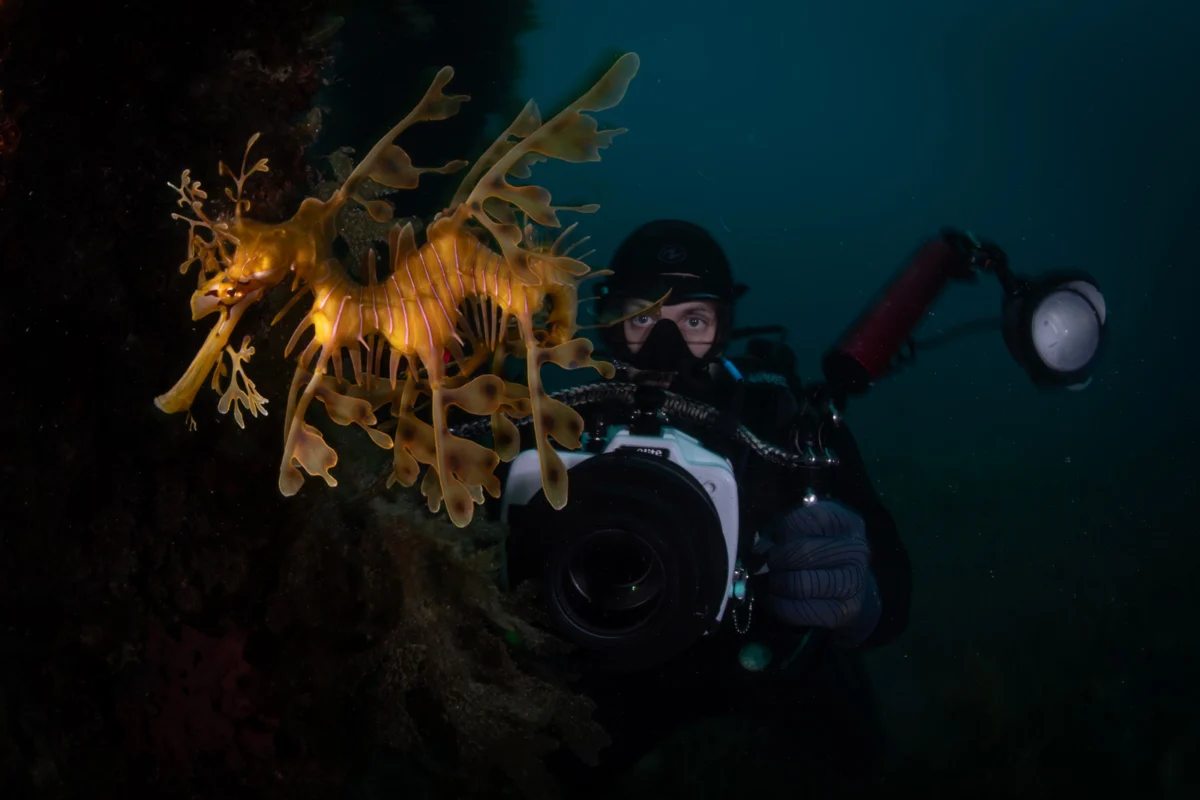
However, the major draw for many photographers gravitates towards the bizarre and beautiful macro critters that meticulously hide within the cracks and crevices of these breathtaking reef systems. Raja Ampat is a macro photographer’s paradise, offering encounters with elusive pygmy pipehorses, formidable mantis shrimps, camouflaged leaf scorpionfish, various species of frogfish, a dazzling array of cephalopods (octopuses, cuttlefish, squids), ghost pipefish, garden eels, blennies, and a myriad of soft coral denizens. For these subjects, a mid-range macro lens like a 60mm is a good starting point, but a more powerful lens such as a 90mm or 120mm is essential for truly tiny subjects. An external diopter is also highly recommended for capturing the minutiae of these miniature marvels. It is always advisable for photographers to consult their dive guide before each dive to anticipate potential sightings and select the most appropriate gear setup.

Navigating the "Last Paradise": Travel Logistics and Planning
Reaching this pristine salty wonderland requires a commitment, reflecting its remote and well-preserved nature. International travelers typically fly into major Indonesian hubs like Jakarta (CGK) or Bali (DPS), then take a domestic flight to Sorong (SOQ) in West Papua. From Sorong, the journey continues with a ferry ride to Waisai, the capital of Raja Ampat, which can take approximately two hours. From Waisai, further boat transfers or car journeys are required to reach specific islands or liveaboard departure points.

For comprehensive exploration, particularly for photographers keen to maximize their opportunities, a liveaboard dive cruise is often the preferred option. These vessels allow access to the most remote and biodiverse sites across the vast archipelago, covering significant ground in a single trip. Liveaboards that include the southern island group of Misool in their itinerary are particularly sought after, as this area is celebrated for its exceptionally pristine reefs, where biodiversity is actively improving due to robust conservation efforts. For those seeking a more immersive local experience or wishing to decompress after a liveaboard, staying in a local homestay on one of the main islands offers access to stunning house reefs and a chance to experience the local culture.
The best time to visit Raja Ampat for optimal diving conditions is generally from October to April, avoiding the stronger winds and heavier rainfall of the off-season. However, diving is possible year-round, with specific microclimates influencing conditions in different areas.

Challenges and Considerations for Underwater Photographers
While Raja Ampat offers unparalleled rewards, photographers must also be prepared for certain challenges. The nutrient-rich waters, responsible for the region’s incredible diversity, can sometimes lead to less-than-ideal visibility, especially in certain areas or during particular tidal flows. This can make capturing wide-angle shots challenging, emphasizing the need for excellent strobe positioning and lighting techniques to cut through particulate matter and bring out vibrant colors.

Furthermore, these rich waters are often the product of incredibly intricate systems of strong currents, particularly through the Dampier Strait. While these currents deliver essential nutrients and attract large schools of fish and pelagic species, they can also pose a significant burden when handling heavy and delicate underwater photography equipment. Divers must be proficient in current diving techniques, often relying on reef hooks to maintain position. If a dive guide indicates "strong" or "very strong" currents, it may be prudent to leave the camera behind, as maintaining control of equipment and ensuring safety can become the primary focus. Always ensure your camera rig is securely attached to you, and a comprehensive dive insurance policy, including equipment coverage, is highly recommended.
Premier Dive Sites: A Glimpse into Raja Ampat’s Underwater Treasures

Raja Ampat is dotted with countless world-class dive sites, each offering unique photographic opportunities. Here are some of the most celebrated:
-
Melissa’s Garden: A jewel for coral enthusiasts, this wide-angle site plunges divers into an expanse of coral plates stretching as far as the eye can see. The site’s elegant topography and vibrant ecosystem provide the perfect backdrop for schooling batfish, barracuda, snappers, lionfish, and angelfish, creating a visual symphony of marine life. It exemplifies the extraordinary reef health found throughout Raja Ampat.

-
Batu Rufus: Near the Fam Islands, Batu Rufus is a crystal-clear emerald lagoon enclosed by towering limestone formations. While its outer reefs offer opportunities for manta ray and shark sightings, the true photographic magic lies within its shallow lagoon. The dive often begins with a swim-through lined with towering coral fans, leading into a natural pool of startling visibility at just 5 meters deep. Here, natural light can be utilized to its fullest, making it an ideal location for stunning split shots that capture the dramatic limestone karsts above and the flourishing reefs below. Some divers even opt to freedive this site to fully embrace its serene beauty and capture unique perspectives without the encumbrance of a tank.
-
Cape Kri: Perhaps Raja Ampat’s most famous dive site, Cape Kri once held the world record for the highest number of fish species recorded on a single dive. Its prolific biodiversity ensures an overwhelming choice of marine life for photographers. With sloping reefs descending to 40 meters and strong, intersecting currents, it offers fantastic wide-angle opportunities to photograph schooling barracuda, turtles, manta rays, and various pelagic species. Simultaneously, Cape Kri is an exceptional macro dive, saturated with exotic tiny critters. The site is particularly known for its pygmy seahorses, often found expertly camouflaged within the branches of Muricella gorgonian fans. Other macro subjects include various species of octopus, flatworms, nudibranchs, and shrimps, making a multi-dive approach (one wide-angle, one macro) highly rewarding.

-
Manta Ridge: Located between Mansuar and Airborei Islands, Manta Ridge is a renowned cleaning station and feeding ground for schooling manta rays. While encounters can sometimes be hit-or-miss, when the oceanic gods are favorable, divers are immersed in a whirlwind of mantas gracefully gliding and feeding. Photographers must be mindful of the often-strong currents and respect the potential for powerful down currents, prioritizing safety and responsible interaction with these majestic creatures. Ethical photography practices, ensuring minimal disturbance to the mantas, are paramount here.
-
Citrus Ridge: Situated near the Gam Islands, Citrus Ridge is a T-shaped dive site celebrated for its incredibly colorful reef systems, making it a favorite for wide-angle photography that captures the vibrant coral tapestry. However, this site is also a biodiversity hotspot for macro life. Divers can engage in underwater detective work, peering into every rock and crevice to discover unique bottom dwellers. The vivid coral backdrop enhances macro images, providing rich context for subjects like wobbegong sharks, various crustaceans, and an astonishing array of nudibranchs. The site truly offers a microcosm of Raja Ampat’s overall marine richness, from large pelagics to the smallest invertebrates.

Conservation and Community Impact: Safeguarding a Global Treasure
Raja Ampat’s pristine condition is not accidental; it is the result of dedicated, long-term conservation efforts. Designated as a Marine Protected Area (MPA), the region benefits from collaborative initiatives involving the Indonesian government, international NGOs such as Conservation International and WWF, and, crucially, local communities. These efforts focus on sustainable tourism, combating illegal fishing, and promoting marine education. The traditional sasi system, a local wisdom practice of resource management, has been integrated into modern conservation strategies, empowering indigenous communities to protect their marine heritage.

The Raja Ampat Marine Park Entrance Tag, a mandatory permit for all visitors, directly contributes to these conservation funds, supporting patrol efforts, community programs, and scientific research. This integrated approach ensures that the economic benefits of tourism are shared with local populations, providing incentives for ongoing protection. The success of these initiatives is evident in areas like Misool, where scientific reports confirm an increase in fish biomass and coral cover, a rare and hopeful trend in a world facing widespread marine degradation.
The Future of Raja Ampat

Raja Ampat stands as a beacon of hope for marine conservation and a testament to the power of protected areas. The photographic possibilities are truly endless, catering to every passion and skill level. Divers and photographers become completely immersed in the true definition of island life, enjoying perfectly manicured reefs, an abundance of ocean creatures, and infinite archipelago structures that offer stunning vistas during surface intervals.
The greatest challenge for a photographer visiting Raja Ampat might be the difficult choice between focusing on wide-angle reefscapes or the intricate world of macro life, as opportunities for both are equally compelling and rich. Regardless of the choice, visitors are urged to respect the strong ocean currents, the fragile underwater ecosystems, and the local communities who are the custodians of this extraordinary natural wonder. Raja Ampat is not just a destination; it is a vital global asset, a living laboratory, and a profound reminder of the ocean’s boundless beauty, offering an experience that transcends mere travel to become a profound connection with the wild heart of our planet.