The landscape of industrial unmanned aerial vehicle (UAV) operations is undergoing a transformative shift as safety technologies bridge the gap between regulatory restrictions and operational necessity. Central to this evolution is the DJI Matrice 30 (M30) series, which has recently solidified its position as a primary tool for urban operations through the integration of the PRS-M30 parachute system developed by Aerial Vehicle Safety Solutions (AVSS). This technological synergy allows the DJI M30 to fly over crowds and populated areas, a feat previously restricted by aviation authorities due to the inherent risks of hardware failure. By combining DJI’s sophisticated flight controllers with AVSS’s autonomous recovery hardware, the industry is witnessing a new standard for public safety, infrastructure inspection, and emergency response.
The Evolution of the DJI Matrice 30 Platform
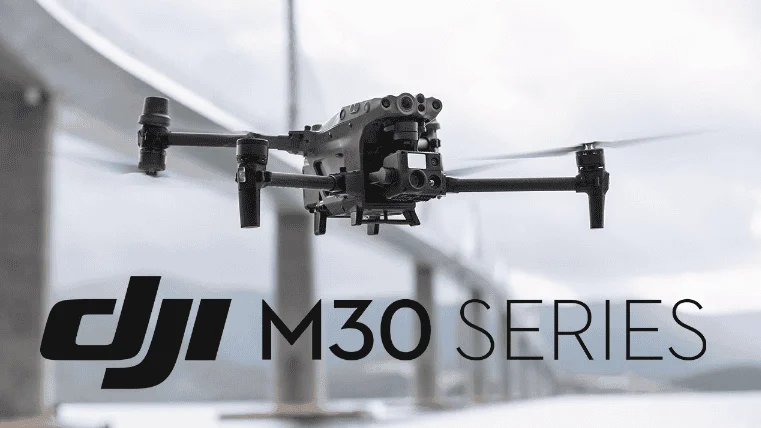
Launched as a versatile, weather-resistant mid-sized enterprise drone, the DJI M30 was designed to fill the gap between the compact Mavic 3 Enterprise and the heavy-lift Matrice 300 RTK. With an IP55 rating and the ability to operate in temperatures ranging from -20°C to 50°C, the M30 was built for rugged environments. However, despite its redundant flight systems and six-directional obstacle sensing, the risk of a "kinetic event"—a free-fall resulting from total power loss—remained a barrier to obtaining flight permits over densely populated areas.
The integration of the AVSS PRS-M30 parachute system addresses this specific vulnerability. Unlike standard consumer drones, the M30 equipped with this system meets the rigorous ASTM F3322-18 standard, which requires 45 successful test deployments under various failure scenarios. This certification is the "gold standard" recognized by the Federal Aviation Administration (FAA) in the United States and Civil Aviation Safety Authority (CASA) in Australia, providing a clear pathway for operators to secure waivers for Operations Over People (OOP).
Technical Analysis of the PRS-M30 Parachute System
The PRS-M30 is not merely a passive safety device; it is an intelligent, integrated peripheral that communicates directly with the drone’s internal architecture. The system consists of three primary components: the electronic module, the parachute pod, and the flight termination system (FTS).
The FTS is arguably the most critical element for urban safety. In the event of a critical malfunction, the FTS instantly cuts power to the drone’s motors. This prevents the parachute lines from becoming entangled in spinning propellers and ensures that the drone does not continue to fly uncontrollably into structures or people. Once the power is terminated, the parachute is deployed via a high-energy spring mechanism in less than a fraction of a second.
Furthermore, the PRS-M30 features an independent power source. This ensures that even if the drone’s main intelligent flight batteries fail or suffer a catastrophic short circuit, the parachute system remains operational. The system also includes a manual trigger on the pilot’s remote controller, allowing the operator to initiate a deployment if they perceive a threat that the autonomous sensors have not yet flagged.
Navigating the Regulatory Landscape
The ability to fly over crowds is governed by strict kinetic energy thresholds. In the United States, the FAA’s Part 107 rules categorize drones based on the risk they pose to people on the ground. A drone the size of the M30, which weighs approximately 3.7 kg (8.1 lbs), falls into a category that requires significant mitigation measures to be allowed near or over unprotected persons.
By utilizing the AVSS parachute, agencies can provide documented proof that the descent energy of a failing drone is reduced to a level that minimizes the probability of a fatality. This data is essential for the "Beyond Visual Line of Sight" (BVLOS) waivers and "Operations Over Moving Vehicles" permits that are becoming increasingly necessary for modern urban planning and law enforcement.
Industry analysts suggest that the adoption of these safety systems is a prerequisite for the "Drone as a First Responder" (DFR) programs currently being trialed by major metropolitan police departments. In a DFR scenario, a drone is launched from a rooftop station to arrive at a 911 call scene before ground units. Since these flight paths inevitably cross public roads and crowds, the parachute system serves as the primary insurance policy for the municipality.
Applications in Public Safety and Emergency Response
The practical implications of the DJI M30 flying over crowds are most visible in the sector of public safety. During large-scale events such as marathons, festivals, or political rallies, situational awareness is paramount. Traditionally, this required expensive manned helicopter overwatch. The M30, equipped with a 16x optical zoom and thermal imaging (in the M30T variant), can provide the same level of detail at a fraction of the cost.
With the parachute system, police departments can hover the M30 over a crowd to identify bottlenecks, locate missing persons, or spot potential security threats without violating safety protocols. In fire services, the M30T’s thermal camera can identify heat signatures through smoke. If a building in a dense neighborhood is on fire, the drone can be positioned directly above the scene to provide a "God’s eye view" to the incident commander, with the parachute ensuring that a drone failure doesn’t create a secondary emergency on the crowded street below.
Infrastructure and Urban Inspection
Beyond emergency services, the M30’s enhanced safety profile benefits the commercial sector, particularly in the inspection of critical infrastructure. In cities, inspecting bridges, high-rise facades, and telecommunications towers often requires drones to operate in close proximity to pedestrians and traffic.
The PRS-M30 integration allows engineering firms to conduct these inspections during normal business hours rather than waiting for low-traffic windows at night or on weekends. This increases operational efficiency and reduces the need for extensive ground-level cordons, which can be costly and disruptive to urban mobility. The high-resolution sensors of the M30 allow for the detection of hairline cracks or bolt corrosion from a safe distance, while the parachute provides the necessary safety buffer for the high-risk environment.
Data and Performance Metrics
The impact of the parachute system on the M30’s performance is minimal, which is a significant factor in its widespread adoption. The PRS-M30 weighs approximately 300 grams. Given the M30’s robust payload capacity, this results in a negligible reduction in flight time—typically less than two minutes of the total 41-minute maximum flight duration.
Descent rates are also a critical metric. When deployed, the AVSS parachute reduces the M30’s descent speed to approximately 3.2 to 3.5 meters per second. This reduction in velocity dramatically lowers the impact force, transforming a potentially lethal fall into a recoverable incident that is likely to result in only minor damage to the aircraft and no significant injury to persons on the ground.
Industry Reactions and Future Outlook
The drone industry has reacted positively to the standardization of these safety kits. Insurance providers, in particular, are beginning to offer lower premiums for operators who utilize ASTM-certified parachute systems. "Safety is not just a regulatory hurdle; it is a business enabler," says one industry consultant. "When you can prove that your operation is safe, you open up contracts that were previously off-limits."
The trend toward integrated safety is expected to continue. As DJI and other manufacturers move toward more autonomous systems, the role of independent safety auditors like AVSS will become even more prominent. There is ongoing discussion within the European Union Aviation Safety Agency (EASA) regarding the mandate of such systems for all drones operating in "Specific" category missions in urban environments.
Conclusion
The DJI M30, bolstered by the AVSS PRS-M30 parachute system, represents the current pinnacle of industrial drone safety. By addressing the fundamental fear of hardware failure over populated areas, this technology has unlocked the full potential of the M30 platform. It moves the conversation away from whether drones should be in our skies to how they can be there safely.
As more agencies and corporations adopt this integrated solution, the sight of a drone over a crowded city street will transition from a novelty or a concern to a standard component of modern governance and utility. The M30 is no longer just a flying camera; it is a certified, reliable, and safe aerial workstation capable of operating where the need is greatest, regardless of the density of the world below. Through rigorous testing, technical innovation, and a commitment to safety standards, the era of routine urban drone operations has officially arrived.