The commercial fleet industry is currently witnessing a significant paradigm shift in mobile advertising, moving beyond simple color changes and basic branding toward a sophisticated integration of material science and visual psychology. In 2026, the dominant trend in vehicle wrap design has moved away from the binary choice of high-gloss or ultra-matte finishes, favoring instead a "hybrid surface" approach that leverages the unique properties of both. This transition is driven not merely by aesthetic preferences but by a growing body of data suggesting that multi-textured surfaces significantly improve brand legibility, reduce environmental glare, and extend the functional life of the wrap. As urban environments become more saturated with visual stimuli, the ability of a fleet vehicle to remain legible under varying lighting conditions has become the primary metric of design success.
The Evolution of Vehicle Wrap Technology
The trajectory of the vehicle wrap industry has been marked by distinct eras of material dominance. In the early 2010s, high-gloss cast vinyl was the industry standard, prized for its ability to mimic factory paint and provide vibrant color saturation. However, as the market became crowded, the late 2010s saw the rise of matte and satin finishes, which offered a "stealth" aesthetic that stood out precisely because it lacked reflection. While matte finishes were popular for luxury personal vehicles, they presented challenges for commercial fleets, specifically a tendency to "flatten" brand colors and a higher susceptibility to showing scratches and fingerprints.
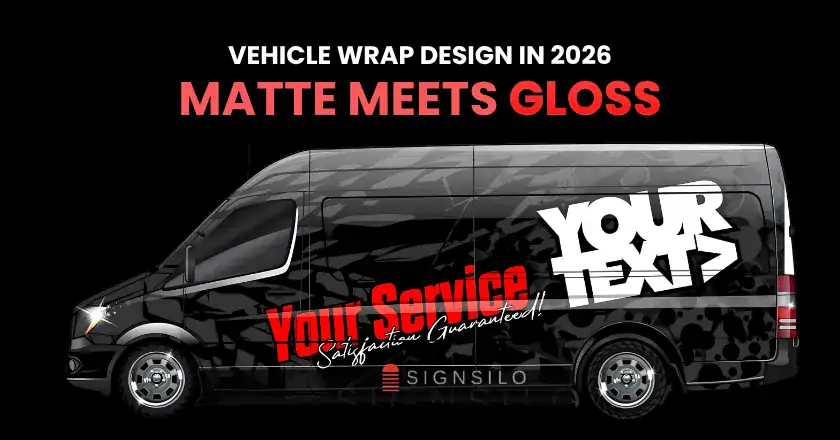
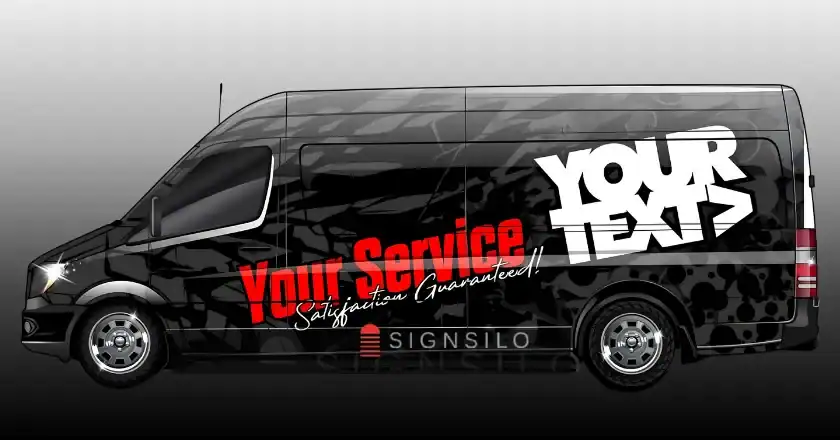
By 2024, manufacturers began experimenting with layering techniques, but it is in 2026 that the hybrid approach has been perfected. Modern hybrid wraps utilize a strategic application of different laminate finishes over a single printed graphic. This allows designers to assign specific textures to different elements of the design—for instance, using a matte base for the vehicle’s body to eliminate sun glare while applying a spot-gloss laminate to the company logo and contact information to make them "pop" against the non-reflective background.
The Practical Science of Readability and Glare
The move toward hybrid surfaces is deeply rooted in the physics of light and human ocular perception. Standard gloss wraps operate on the principle of specular reflection, where light hits the surface and reflects at a consistent angle. In direct midday sunlight or under bright LED streetlighting, this creates "hot spots" of glare that can completely obscure text and phone numbers. For a delivery van or service truck, a three-second window of visibility is often all that is available to a pedestrian or another driver; if that window is interrupted by glare, the advertising ROI drops to zero.
Conversely, matte surfaces utilize diffuse reflection, scattering light in many directions. While this eliminates glare, it also reduces the contrast between colors, which can make fine print difficult to read from a distance. The 2026 hybrid model solves this by using matte finishes for the "information zones"—where addresses, services, and fine print are located—and gloss finishes for "brand anchors" like icons or bold logos. This creates a tactile depth that guides the viewer’s eye naturally toward the most important information.

Industry data from late 2025 indicated that vehicles using hybrid texturing saw a 22% increase in brand recall compared to traditional single-finish wraps. This is attributed to the "visual friction" created by the contrast in textures, which triggers a higher level of cognitive engagement from observers.
Technical Challenges and the Necessity of Precision Templates
Executing a hybrid wrap is significantly more complex than a standard installation. It requires precise alignment between the printed graphic and the varying laminate layers. If a gloss element is misaligned by even a few millimeters against its matte background, the visual effect is ruined, and the professional image of the brand is compromised. This technical demand has placed a renewed emphasis on the quality of design assets and vehicle templates.
To meet these requirements, wrap shops are increasingly relying on high-fidelity vector resources. The shift toward hybrid design has necessitated a move away from generic "mockups" toward millimeter-accurate vehicle templates. These templates allow designers to map out the exact contours of a vehicle—accounting for door handles, fuel doors, and complex curves—ensuring that the transition between matte and gloss textures occurs at logical architectural points on the vehicle’s body.
SignSilo and the Democratization of Advanced Design
As the technical barrier to entry for high-end fleet branding rises, the role of specialized resource providers has become more prominent. SignSilo has emerged as a critical infrastructure component for the vehicle graphics industry, providing the foundational assets required to execute complex 2026-era designs. Their library, which now exceeds 39,000 vehicle templates and over 250,000 high-resolution images and vectors, serves as the primary toolkit for shops transitioning to hybrid workflows.
The availability of "wrap-ready" files is a significant factor in the economic viability of these advanced designs. By providing files that are already scaled and optimized for large-format printing, these resources allow small-to-medium-sized print shops to compete with large national agencies. The integration of high-resolution stock photography—specifically images optimized for the massive scale of a semi-trailer or a transit bus—ensures that even when a designer chooses a matte finish, the underlying image remains crisp and professional.
Economic Analysis of Subscription-Based Design Models
The economics of fleet branding in 2026 favor efficiency and scalability. The cost of raw materials—vinyl, laminates, and inks—has risen due to global supply chain adjustments, making "do-overs" due to design errors prohibitively expensive. Consequently, the industry has shifted toward subscription-based models for design assets, which provide a predictable overhead cost for wrap shops.

SignSilo’s pricing structure reflects this industry-wide move toward tiered accessibility:
- The Single Plan: Priced at $39, this allows for a one-time project focus, ideal for independent contractors or boutique shops handling a single high-end vehicle.
- The Core Plan: At $99 per year, this plan is designed for high-volume shops, offering 200 downloads per month. This supports the "fleet refresh" cycles common in the logistics and delivery sectors.
- The Pro Plan: At $199 per year, this provides 500 downloads per month, catering to large-scale print houses that manage national accounts and require constant access to the latest vehicle models, including the rapidly expanding fleet of electric delivery vehicles (EVs).
This tiered approach ensures that the "hybrid surface" trend is not restricted to luxury brands but can be applied to local service fleets, from HVAC companies to plumbing contractors, who benefit most from high-visibility, high-readability branding.
Broader Industry Implications and Future Outlook
The rise of hybrid surfaces is also intersecting with the automotive industry’s shift toward electrification. Electric vehicles often feature smoother, more aerodynamic body panels with fewer "break points" like grilles or exhaust ports. This provides a larger, uninterrupted canvas for wrap designers but also increases the risk of massive glare zones. The 2026 trend of matte-gloss layering is, in many ways, a direct response to the changing silhouette of the modern fleet vehicle.

Furthermore, there is a growing environmental consideration. Precision templates, such as those provided by SignSilo, allow for more efficient nesting of graphics on the vinyl roll. By accurately predicting how a graphic will wrap around a fender or bumper, installers can reduce material waste by up to 15%. In an era where corporate sustainability is a key performance indicator, the ability to deliver a high-impact visual with less physical waste is a significant selling point for wrap providers.
As we look toward the latter half of the decade, the industry is likely to see further innovation in "functional finishes." Experiments are already underway with light-reflective matte laminates for emergency vehicles and heat-dissipating finishes for refrigerated transport. However, the hybrid matte-meets-gloss approach remains the most significant advancement in commercial visibility to date.
Conclusion
The evolution of vehicle wrap design in 2026 represents a mature stage of the industry where form and function have reached a calculated equilibrium. By moving beyond the aesthetic novelty of matte or gloss and embracing a hybrid methodology, fleet managers are transforming their vehicles into more than just moving billboards; they are creating high-performance communication tools. Supported by robust design platforms and precision assets, the hybrid surface trend is setting a new standard for how brands occupy physical space in an increasingly digital world. For the wrap installer, the designer, and the business owner, the message is clear: in the race for consumer attention, contrast is the ultimate vehicle for clarity.