The landscape of modern warfare is undergoing a radical transformation in Eastern Europe, characterized by the unprecedented scaling of First-Person View (FPV) drone manufacturing within Ukraine. Since the onset of the full-scale invasion in February 2022, the Ukrainian defense sector has transitioned from a reliance on conventional heavy weaponry to a highly decentralized, technologically driven approach to attrition and precision strikes. This industrial pivot has not only altered the tactical reality on the front lines but has also established Ukraine as a global laboratory for unmanned aerial system (UAS) innovation. With the Ukrainian government allocating over $2.6 billion for drone procurement and setting an ambitious production target of 4.5 million units by the end of 2025, the FPV drone has evolved from a niche hobbyist tool into a cornerstone of national defense strategy.
The Strategic Evolution of Ukraine’s Unmanned Aerial Systems
The emergence of FPV drones as a dominant force on the battlefield was born out of necessity. In the early stages of the conflict, Ukraine utilized commercial drones for reconnaissance and artillery spotting. However, as Russian electronic warfare (EW) capabilities matured, the need for more specialized, agile, and cost-effective strike platforms became apparent. FPV drones, which allow pilots to see a real-time video feed from the drone’s perspective via goggles, provide a level of maneuverability and precision that traditional loitering munitions often lack.
The strategic value of these systems lies in their asymmetric nature. A standard FPV drone, often costing between $400 and $600 to produce, is capable of neutralizing main battle tanks, armored personnel carriers, and supply trucks worth millions of dollars. This cost-to-kill ratio has allowed Ukraine to maintain a high rate of attrition against a numerically superior adversary, effectively democratizing precision air support for individual infantry units.
A Chronology of Transformation: From Commercial Tools to Sovereign Defense
The trajectory of Ukraine’s drone industry can be categorized into three distinct phases, each marked by increasing sophistication and government integration.
2022: The Volunteer and Commercial Phase
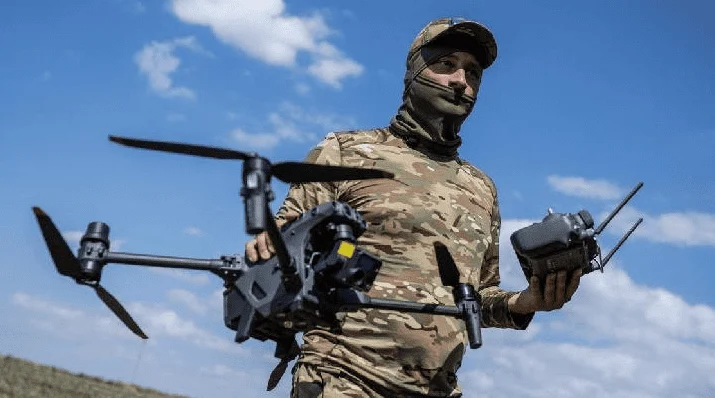
In the months following the invasion, Ukraine relied heavily on the "Army of Drones" initiative, a fundraising campaign launched by the Ministry of Digital Transformation. During this period, the majority of drones were commercial off-the-shelf (COTS) models, such as the DJI Mavic series. These were modified in "garage workshops" to carry improvised explosive devices (IEDs).
2023: The Rise of Indigenous FPV Production
By mid-2023, the Ukrainian government began to deregulate the defense industry, removing bureaucratic hurdles for private drone manufacturers. This led to the birth of hundreds of small-scale enterprises and startups. The "Brave1" defense tech cluster was established to provide a platform for collaboration between the military, government, and private developers, facilitating the rapid testing and certification of new FPV designs.
2024-2025: Industrialization and AI Integration
Currently, the industry is entering a phase of mass industrialization. Production is moving from small workshops to large-scale manufacturing facilities. Furthermore, there is a significant shift toward integrating Artificial Intelligence (AI) for autonomous terminal guidance, which allows drones to strike targets even if the pilot’s connection is severed by electronic warfare.
Quantifying the Surge: Budgets, Targets, and Economic Incentives
The scale of Ukraine’s commitment to unmanned technology is reflected in its fiscal planning. For the 2024-2025 period, the Ukrainian government has prioritized the "Drone Coalition," an international and domestic effort to ensure a steady supply of UAS to the front lines.
- Production Targets: While the initial goal for 2024 was one million drones, recent projections from the Ministry of Strategic Industries suggest that the total capacity, including FPVs, "Baba Yaga" heavy bombers, and long-range reconnaissance drones, will exceed 4.5 million units by 2025.
- Fiscal Allocation: The $2.6 billion investment is not merely for purchase but also for Research and Development (R&D). This includes the development of domestic flight controllers, motors, and communication modules to reduce dependency on foreign components.
- Operational Intensity: Reports from February 2025 indicate a 22% month-over-month increase in successful FPV strikes. This surge correlates directly with the increased throughput of domestic manufacturing lines and improved pilot training programs.
Technical Superiority and the Tactical Advantage of FPV Systems
The efficacy of Ukrainian FPV drones is rooted in several technical advantages that have been refined through constant feedback from the front lines.
- High Precision and Maneuverability: FPV drones can fly into open hatches of tanks, basement windows, or trench entrances. This level of precision minimizes collateral damage and ensures high lethality.
- Electronic Warfare Resilience: Ukrainian engineers are pioneered "frequency-hopping" technology and the use of non-standard radio frequencies to bypass Russian signal jammers.
- Modular Payload Systems: Modern Ukrainian FPVs are designed with modularity in mind, allowing them to carry various types of munitions—from anti-tank (HEAT) warheads to antipersonnel fragmentation charges—depending on the mission requirements.
- Operational Security: By utilizing digital signals and encrypted links, newer models reduce the risk of the pilot’s location being triangulated by enemy signals intelligence (SIGINT).
Key Players and the Ecosystem of Innovation
The Ukrainian drone ecosystem is unique in its decentralized nature. Unlike traditional defense contractors in the West, the Ukrainian sector comprises over 200 companies varying in size.
- State Initiatives: The Ministry of Digital Transformation, led by Mykhailo Fedorov, has been the primary architect of the drone strategy, focusing on removing taxes on drone components and streamlining the "admission to operation" process.
- Private Innovators: Companies such as Wild Hornets and various volunteer groups have become household names within the defense community. Wild Hornets, for instance, focuses on high-speed, low-cost FPV interceptors designed specifically to hunt enemy reconnaissance drones.
- International Cooperation: Ukraine has established joint ventures with Baltic and Central European nations, sharing real-time combat data in exchange for manufacturing components and financial support.
Overcoming Structural Challenges: Supply Chains and Electronic Warfare
Despite the rapid growth, the Ukrainian drone industry faces significant hurdles. The most pressing of these is the global supply chain for microelectronics and motors. Currently, a large percentage of drone components are sourced from China. Recent Chinese export restrictions on drone-related hardware have forced Ukrainian manufacturers to seek alternative suppliers in Taiwan, South Korea, and the West, or to develop domestic manufacturing capabilities for critical components like flight controllers and brushless motors.
Electronic Warfare (EW) remains a constant threat. The "cat and mouse" game between drone operators and EW technicians is relentless. As Russia deploys more sophisticated "trench EW" systems, Ukrainian developers must constantly iterate on their communication protocols. This has led to the rapid adoption of "computer vision" and autonomous target locking, which mitigates the impact of signal jamming during the final, most critical phase of an attack.
Global Implications: A New Doctrine for Modern Warfare
The Ukrainian experience with FPV drones is being closely watched by military analysts worldwide. The conflict has proven that expensive, high-end military platforms are increasingly vulnerable to low-cost, expendable technologies.
- Obsolescence of Traditional Armor: The vulnerability of modern tanks to $500 drones has sparked a debate in NATO circles regarding the future of heavy armor.
- Democratization of Air Power: Small nations or non-state actors can now achieve precision strike capabilities that were previously reserved for superpowers with advanced air forces.
- Economic Shifts: The success of the Ukrainian model suggests that a decentralized, agile defense industry may be more resilient in a prolonged high-intensity conflict than a centralized, traditional industrial base.
Future Outlook: Artificial Intelligence and Autonomous Swarms
Looking toward 2025 and beyond, the focus of Ukrainian production is shifting toward "swarm" technology and full autonomy. The goal is to deploy groups of drones that can communicate with each other, identifying and prioritizing targets without human intervention. This would allow a single operator to manage dozens of drones simultaneously, overwhelming enemy defenses through sheer volume and coordinated maneuvers.
Furthermore, the integration of thermal imaging into standard FPV builds is becoming more common, enabling 24/7 strike capabilities. As the cost of thermal sensors continues to drop, the nighttime advantage traditionally held by well-equipped professional armies is being eroded.
Conclusion
The production of FPV drones in Ukraine has evolved from an emergency measure into a sophisticated industrial pillar that defines the nation’s defense posture. Through a combination of government deregulation, private sector innovation, and unprecedented levels of international cooperation, Ukraine has created a blueprint for 21st-century warfare. While challenges in supply chain security and electronic warfare persist, the trajectory of the industry suggests that the FPV drone will remain a decisive factor in the conflict.
The implications of this technological surge extend far beyond the borders of Ukraine. By demonstrating the efficacy of mass-produced, low-cost autonomous systems, Ukraine is forcing a global reassessment of military doctrine, procurement, and the very nature of tactical engagement. As production nears the 4.5 million unit mark, the FPV drone stands as a testament to the power of rapid innovation in the face of existential threat, cementing its role as a primary weapon in the era of digitalized conflict.