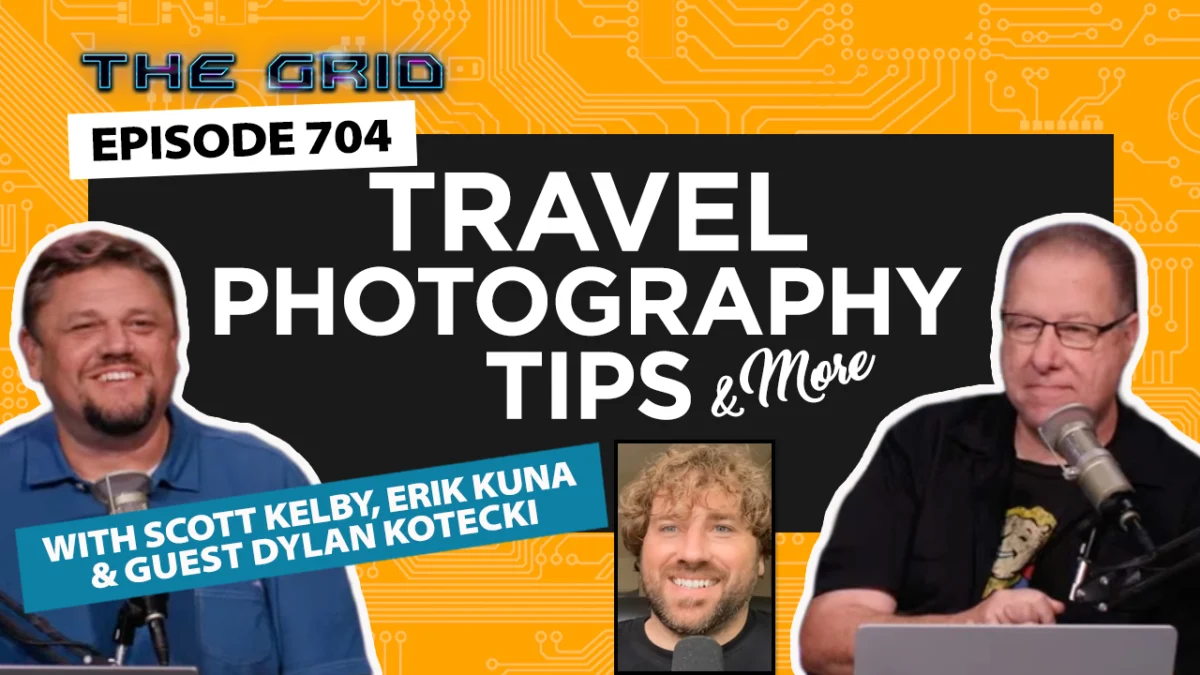
This week, the popular online photography program The Grid delivered a comprehensive masterclass in travel photography, featuring insights from industry stalwarts Scott Kelby, Erik Kuna, and emerging talent Dylan Kotecki. Episode 704, broadcast from the studios of KelbyOne, focused on equipping photographers with practical strategies to capture superior images during their travels without succumbing to common logistical and creative hurdles. The overarching goal, as articulated by the panel, was to simplify the travel photography process, allowing enthusiasts and professionals alike to spend more time capturing moments and less time grappling with travel complexities or technical challenges.
The Enduring Legacy of The Grid and KelbyOne
The Grid is a long-running weekly webcast produced by KelbyOne, a leading online education platform for photographers and creatives. Launched over a decade ago, The Grid has become a cornerstone of the photography community, offering free, accessible education, interviews, and live Q&A sessions. Its format typically involves discussions among a panel of experts on a specific photographic topic, often including live demonstrations and practical advice. The consistent delivery of high-quality, relevant content, as evidenced by its 704th episode, underscores KelbyOne’s commitment to fostering a knowledgeable and skilled photographic community. KelbyOne itself, founded by Scott Kelby, stands as a testament to the power of online learning, providing a vast library of courses, tutorials, and resources that cater to photographers of all skill levels, from absolute beginners to seasoned professionals looking to refine their craft. The platform’s mission centers on demystifying complex photographic techniques and making them accessible through engaging, practical instruction.
The Esteemed Panel of Experts
The episode brought together a trio of distinct yet complementary photographic voices. Scott Kelby, a prolific author, educator, and the CEO of KelbyOne, is renowned for his ability to break down complex topics into easily digestible, actionable advice. His expertise spans a wide range of photographic disciplines, and his contributions to the episode primarily addressed the often-overlooked logistical aspects of travel. Erik Kuna, a prominent educator and astrophotographer, is celebrated for his technical acumen and his profound understanding of light and composition. His segment delved into the artistic and strategic elements of capturing compelling travel imagery. Rounding out the panel was Dylan Kotecki, a dynamic young photographer and educator, whose segment showcased the transformative power of post-processing, demonstrating how creative software can elevate an image beyond its initial capture. This blend of logistical expertise, compositional mastery, and post-production artistry provided viewers with a holistic view of successful travel photography.
Mastering Light and Composition: Erik Kuna’s Insights
Erik Kuna’s segment emphasized the critical role of strategic planning and understanding natural light in travel photography. His advice began with a simple yet profoundly effective technique: "getting up early." This strategy, often dubbed the "cheapest crowd-removal tool," allows photographers to capture iconic landmarks and scenic vistas devoid of tourists, offering a pristine canvas for their work. Beyond crowd management, early mornings typically provide the coveted "golden hour" light—a period shortly after sunrise characterized by soft, warm, directional light that adds depth, dimension, and a flattering glow to subjects. This contrasts sharply with the harsh, overhead light of midday, which can create strong, unflattering shadows and blown-out highlights.
Kuna further elaborated on the importance of "planning your locations around the best light." This involves researching the orientation of landmarks relative to the sun’s path at different times of day. For instance, a west-facing monument will be beautifully lit during sunset, while an east-facing structure will shine during sunrise. This meticulous planning ensures that photographers are present at the right place at the right time to capitalize on optimal lighting conditions. He also introduced the concept of the "magic minute"—a fleeting moment when all elements, from light and weather to subject placement and mood, align perfectly to create an extraordinary photographic opportunity. Recognizing and being prepared for this minute requires patience, observation, and readiness to act swiftly.
A particularly insightful tip from Kuna involved leveraging a longer lens and "telephoto compression." This optical phenomenon, where distant objects appear closer to foreground elements due to the narrow angle of view of a telephoto lens, can dramatically alter the perspective of familiar locations. By compressing the scene, photographers can make backgrounds appear larger and more impactful relative to their subjects, creating a sense of grandeur and intimacy that wide-angle lenses cannot achieve. This technique allows for a fresh, unique interpretation of often-photographed sites, moving beyond the typical wide-shot postcard aesthetic to create something distinctively artistic. The strategic use of lenses, therefore, becomes a powerful tool in a travel photographer’s arsenal, allowing for creative manipulation of perspective and depth.
Navigating the Journey: Scott Kelby’s Practical Travel Wisdom
Scott Kelby’s segment brought a grounded, real-world perspective to the discussion, focusing on the often-overlooked practicalities of travel that can significantly impact a photographer’s ability to capture images. His goal was clear: minimize travel headaches to maximize creative time.
One of the most pervasive challenges for international travelers is jet lag. Kelby’s inferred advice centered on proactive management, suggesting strategies such as adjusting sleep schedules gradually before departure, staying hydrated during flights, and exposing oneself to natural light upon arrival to help reset the body’s circadian rhythm. Minimizing the debilitating effects of jet lag is crucial, as it directly impacts energy levels, concentration, and creative output during the initial days of a trip.
Luggage management was another key area. Kelby emphasized smart packing strategies, particularly regarding photographic equipment. This involves prioritizing essential gear, utilizing protective inserts and specialized camera bags, and understanding airline regulations for carry-on versus checked luggage. The goal is to ensure valuable equipment is both safe and easily accessible, avoiding unnecessary delays or damage. For instance, keeping critical items like cameras, lenses, and memory cards in carry-on luggage is standard practice for many seasoned travelers, mitigating the risk of loss or damage by airlines.
Effective transportation planning was also highlighted. Navigating unfamiliar cities and regions efficiently can save precious shooting time. This includes researching local public transport options, understanding ride-sharing services, and considering rental cars where appropriate. Knowledge of local customs regarding taxis or private drivers can also prevent misunderstandings and ensure smooth transit.
Managing currency in foreign countries can be a source of stress. Kelby’s practical tips likely included advice on using credit cards with no foreign transaction fees, carrying a small amount of local currency for immediate needs, avoiding airport exchange kiosks for their unfavorable rates, and understanding tipping etiquette. These financial considerations, though seemingly minor, contribute to a seamless travel experience, allowing photographers to focus on their craft rather than monetary logistics.
Finally, planning your shooting day was presented as a critical organizational tool. This involves more than just identifying locations; it means structuring the day to align with optimal light conditions (as discussed by Erik Kuna), accounting for travel time between sites, building in breaks for meals and rest, and remaining flexible enough to adapt to unexpected opportunities or challenges. A well-planned itinerary minimizes wasted time and maximizes photographic potential, ensuring that every day offers ample opportunities for capturing memorable images. Kelby’s insights underscored that a successful travel photography trip is as much about meticulous preparation and practical execution as it is about artistic vision.
Unlocking Creativity: Dylan Kotecki’s Post-Processing Demonstrations
Dylan Kotecki’s segment provided a vibrant demonstration of how contemporary post-processing software can transform and elevate travel photographs. Utilizing ON1 Photo RAW MAX 2026, a powerful non-destructive photo editor known for its comprehensive suite of tools, Kotecki showcased several creative effects that push beyond basic adjustments.
The demonstration included motion effects, which can infuse static images with a dynamic sense of movement. This technique, often achieved through radial or linear blur tools, can be particularly effective for capturing busy cityscapes, flowing water, or moving vehicles, creating an artistic blur that emphasizes speed and energy while keeping key elements sharp. Such effects add a unique dimension that might not be fully achievable in-camera, especially without specialized equipment or advanced techniques.
Double exposures were another creative technique highlighted. Traditionally achieved by exposing a single frame of film twice, digital double exposures offer immense creative freedom. Kotecki likely demonstrated how to blend two distinct images—perhaps a portrait superimposed on a landscape, or two different scenes merged—to create surreal, evocative, and thought-provoking compositions. This technique allows photographers to tell a more complex story or convey a particular mood, adding layers of meaning to their work.
Finally, depth-based lighting showcased the sophisticated capabilities of modern photo editing software. Leveraging depth information often captured by modern cameras (or simulated by AI), ON1 Photo RAW MAX 2026 allows for precise adjustments to lighting based on an image’s perceived depth. This means photographers can selectively brighten or darken foregrounds, midgrounds, or backgrounds, creating a more pronounced sense of three-dimensionality, enhancing atmospheric perspective, and guiding the viewer’s eye through the scene. This level of control over light and shadow, previously requiring complex masking, now becomes more intuitive, empowering photographers to sculpt the light in their images with unprecedented accuracy. Kotecki’s demonstrations reinforced that post-processing is not merely about correction but is an integral part of the creative photographic process, allowing artists to fully realize their vision.
Broader Implications for the Photography Community
The insights shared on The Grid Episode 704 carry significant implications for the broader photography community. In an era where travel photography is increasingly democratized by accessible technology and social media platforms, the demand for high-quality, distinctive imagery has never been greater. The practical advice on display caters to a wide audience, from casual vacationers aiming for better personal memories to aspiring professional travel bloggers and content creators.
Erik Kuna’s emphasis on pre-visualization and mastery of light underscores the timeless principles of photography, reminding viewers that technical prowess must be paired with an understanding of natural elements. Scott Kelby’s segment highlights the often-underestimated importance of meticulous planning and logistical acumen, demonstrating that a successful photographic journey begins long before the shutter clicks. Dylan Kotecki’s demonstration, in turn, showcases the transformative power of digital tools, proving that the creative process extends well beyond the initial capture, offering endless possibilities for artistic expression in the digital darkroom.
This episode collectively reinforces the idea that exceptional travel photography is a confluence of careful planning, astute observation, technical skill, and creative post-processing. By addressing these diverse facets, KelbyOne continues its mission to elevate the standard of photographic education, empowering individuals to move beyond mere snapshots and create truly compelling visual narratives of their journeys. The value proposition of such programs is clear: they offer actionable advice that can save photographers time, reduce frustration, and ultimately lead to more rewarding creative outcomes, ensuring that every trip yields not just memories, but stunning photographic masterpieces.
The Evolving Landscape of Travel Photography
The advice presented in Episode 704 also reflects the evolving landscape of travel photography itself. With the advent of mirrorless cameras, sophisticated smartphone cameras, and powerful editing software like ON1 Photo RAW MAX 2026, the barriers to entry for high-quality photography have significantly lowered. This accessibility, however, has also led to an oversaturation of similar imagery. The tips shared by Kelby, Kuna, and Kotecki are crucial for photographers seeking to differentiate their work. Strategies like early morning shoots for unique perspectives, telephoto compression for artistic depth, and creative post-processing effects are no longer niche techniques but essential tools for standing out in a crowded visual world. The integration of travel logistics with photographic technique highlights a holistic approach, acknowledging that the act of travel and the act of photography are intrinsically linked. This comprehensive perspective is vital for modern photographers who need to be not just artists, but also efficient travelers and skilled digital artisans.
Accessing the Replay and Future Learning
For those who missed the live broadcast, the full replay of The Grid Episode 704 is readily available below. This resource serves as an invaluable guide for anyone planning a photographic adventure, offering a wealth of information designed to help plan smarter, find better light, and return home with a collection of images that far surpass the standard postcard fare. KelbyOne continues to provide a platform for continuous learning, and this episode is a prime example of their dedication to enriching the skills and experiences of photographers worldwide.