The Lençóis Maranhenses National Park, a sprawling 600-square-mile expanse in Brazil’s northeast corner, has long been recognized for its unique ecological tapestry. This recently declared World Heritage Site, characterized by vast, undulating sand dunes interspersed with seasonal rainwater lagoons, presents a breathtaking landscape that has captivated photographers and nature enthusiasts alike. While typically focusing on intimate wildlife portraits, this article delves into an extraordinary encounter with the park’s monumental beauty, exploring how advanced aerial photography, particularly through the use of drones, has unlocked new perspectives on its dynamic and ethereal environment. The experience, initially intended as a brief stopover en route to Patagonia, transformed into a profound artistic exploration of one of the planet’s most extraordinary ecosystems.
A Unique Landscape of Shifting Sands and Pristine Waters
Located in the state of Maranhão, Lençóis Maranhenses is an ecosystem unlike any other. The park’s defining feature is its immense field of pure white sand dunes, sculpted by wind into a constantly shifting topography. During the rainy season, typically from January to June, these dunes become interspersed with thousands of crystal-clear freshwater lagoons, their vibrant turquoise and jade hues offering a stark and stunning contrast to the surrounding white sands. This seasonal transformation creates a dynamic canvas, where the stark beauty of the desert landscape is temporarily softened by life-giving waters.
The park’s eastern border stretches over 40 miles along the Atlantic coast, a stretch punctuated by small fishing villages that have coexisted with this unique environment for generations. Winding, tannin-colored river systems, such as the Parnaíba River, snake their way through the dunes, their dark waters a testament to the decaying vegetation from which they draw their color. These rivers carve sinuous paths toward the sea, adding another layer of visual complexity to the landscape. To the west, the desert and wetland mosaic gradually transitions into the native Brazilian cerrado (savanna grasslands) and then into denser forest, before finally giving way to agricultural lands. This transition highlights the ecological diversity within and surrounding the park, underscoring its importance as a biodiversity hotspot.
The Evolution of Aerial Photography: Drones Unlock New Vistas
For photographers seeking to capture the sheer scale and grandeur of landscapes like Lençóis Maranhenses, aerial perspectives have always been the most effective. Historically, this meant utilizing cramped ultralight aircraft or small Cessnas, often with doors removed to allow for unobstructed shooting. These methods, while providing elevated views, were limited by accessibility, cost, and the inherent restrictions of piloted aircraft.
The advent of advanced drone technology and unmanned aerial vehicles (UAVs) has revolutionized aerial photography, democratizing access to breathtaking perspectives and expanding creative possibilities exponentially. Drones offer unparalleled maneuverability, allowing photographers to hover at precise altitudes, capture intricate details, and frame expansive vistas with a fluidity previously unimaginable. This technology enables shots that can simultaneously capture the delicate texture of the sand, the shimmer of the lagoons, and the vast sweep of the dunes stretching to the horizon.
In Lençóis Maranhenses, the photographer utilized a drone to its full potential. By carefully controlling the drone’s altitude, it was possible to maintain a close proximity to the ground, capturing the subtle nuances of the wind-sculpted sand formations, while simultaneously encompassing the immense scale of the park within the frame. This technique allowed for the creation of images that were both intimate in their detail and epic in their scope, mirroring the duality of the landscape itself.
Nature’s Artistry: A Constant State of Flux
The dynamic nature of Lençóis Maranhenses is a direct consequence of natural forces. The relentless sun beats down on the vast dune fields, while prevailing winds constantly reshape the sand. Every shift in the wind acts as a brushstroke, altering the landscape in real-time. Delicate sandy peaks are toppled, and the glassy surfaces of the lagoons are stirred, creating mesmerizing patterns and refractions.
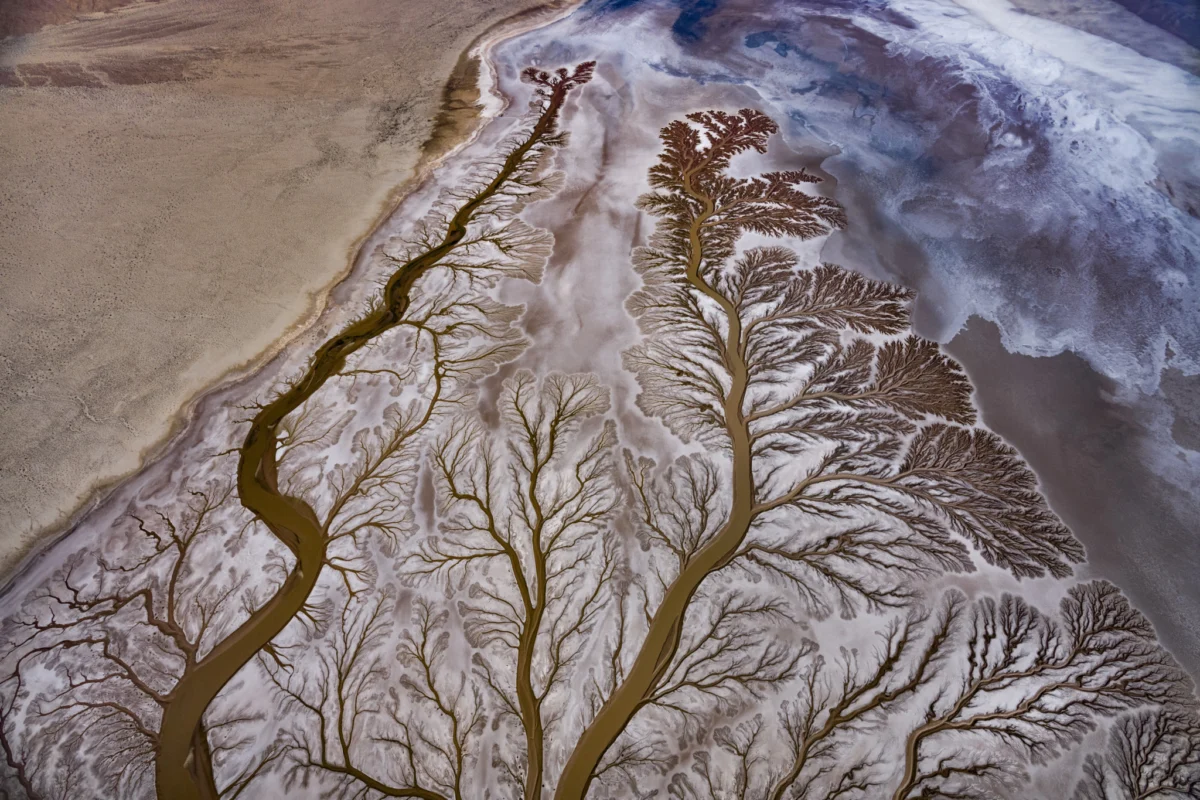
The colors of the landscape are a testament to its geological and biological processes. The white of the silica-rich sand is a dominant feature, but it is interwoven with the rich hues of the water. The tannins leaching from decaying vegetation, a natural process occurring in the humid conditions, dye the rivers and some of the lagoons a deep, inky brown or a reddish-brown. These dark waterways weave through the white dunes, resembling arteries carrying lifeblood across the parched earth. Scattered pools of turquoise and jade, fed by rainfall, add vibrant splashes of color, creating a constantly evolving mosaic that defies static representation.

The Black River, a significant waterway in the region, exemplifies this dynamic interplay. Its dark, tannin-rich waters snake through the coastal lowlands, eventually merging with the Parnaíba River. Observing these natural patterns from above evokes a sense of awe, prompting a reflection on the sheer artistry inherent in natural processes. The photographer describes the experience as "almost too beautiful to look at directly," a sentiment that speaks to the overwhelming visual impact of the landscape. Each change in angle or altitude revealed a new "natural masterpiece," a complex latticework etched onto the Earth’s surface, leaving the observer in a state of profound admiration.
Historical Parallels: Humanity’s Enduring Quest to Capture Nature’s Beauty
The human impulse to replicate and interpret the beauty of the natural world is ancient, dating back to the earliest forms of artistic expression. Cave paintings, such as those found in the Chauvet Cave in France, dating back approximately 30,000 years, provide tangible evidence of this enduring fascination. These prehistoric artworks depict animals with remarkable detail and accuracy, demonstrating an early human commitment to observing and documenting the natural world.
Throughout history, artists across diverse cultures and eras have dedicated their lives to studying nature’s forms, textures, and phenomena. From the detailed botanical illustrations of the Renaissance to the Impressionists’ attempts to capture fleeting light, the pursuit of accurately and evocatively representing nature has been a constant theme in art. Even with the advanced technological capabilities of modern digital photography, the photographer expresses a sentiment shared by many artists: the inherent difficulty in fully capturing the essence of nature’s beauty.
The question of how a two-dimensional image can convey the full depth of a vast planet or the intricate complexity of a microscopic biological structure remains a profound artistic challenge. The grandeur of Lençóis Maranhenses, with its immense scale and ephemeral beauty, serves as a powerful reminder of the limitations of any single medium in fully encapsulating the richness of the natural world.
The Unquantifiable Value of Nature’s Artistry
Nature’s artistry permeates all aspects of life on Earth, a complex and interwoven tapestry that defies complete translation into a tangible format. While a photograph can capture a moment in time, a specific composition, and a particular play of light, it can only offer a partial glimpse into the dynamic, living processes that shape our planet. The ever-changing nature of the dunes, the seasonal flux of the lagoons, and the intricate biological systems at play are elements that are inherently difficult to freeze in a single frame.
Despite these inherent limitations, the pursuit of capturing nature’s beauty through photography remains a deeply rewarding endeavor. It is a process of intense observation, of deep engagement with the subject, and of a lifelong learning curve. For the photographer, the opportunity to document and share these extraordinary landscapes is described as "the greatest privilege of my life." This sentiment underscores the profound connection between artistic endeavor and the natural world, highlighting the role of photography in fostering appreciation, understanding, and conservation.
Broader Implications and Future Conservation
The designation of Lençóis Maranhenses National Park as a UNESCO World Heritage Site in 2024 is a significant development, bringing international recognition to its outstanding universal value. This designation is expected to bolster conservation efforts, increase tourism potential, and encourage further research into the park’s unique ecosystems. However, with increased attention comes increased responsibility.
The delicate balance of the Lençóis Maranhenses ecosystem is susceptible to environmental changes and human impact. Climate change, with its potential to alter rainfall patterns and increase temperatures, poses a significant threat to the seasonal lagoons, which are crucial for the park’s biodiversity. Furthermore, the growing popularity of the park, while economically beneficial, necessitates careful management to prevent damage to the fragile dune systems and surrounding habitats.
The use of advanced technologies like drones, while offering unprecedented opportunities for documentation and artistic expression, also raises questions about responsible tourism and environmental impact. Striking a balance between showcasing the park’s beauty and preserving its pristine condition will be paramount. Future conservation strategies will likely involve a multi-faceted approach, integrating scientific research, community engagement, sustainable tourism practices, and continued efforts to educate the public about the ecological significance of this remarkable natural wonder. The ongoing visual documentation of such landscapes, through the lens of photographers like the one featured, plays a vital role in raising awareness and fostering a global commitment to protecting these irreplaceable natural treasures for generations to come.