In the contemporary landscape of out-of-home (OOH) advertising, the vehicle wrap industry has transitioned from a niche customization market into a multi-billion dollar pillar of mobile marketing. As commercial enterprises seek higher returns on investment for their advertising spend, the precision of these wraps has become paramount, leading to the emergence of specialized digital blueprints known as vehicle templates. These technical assets serve as the indispensable bridge between a graphic designer’s creative vision and the physical reality of a vehicle’s complex, three-dimensional geometry.
The effectiveness of a vehicle wrap—often cited as having the lowest cost-per-impression of any advertising medium—depends entirely on the accuracy of the initial design. If a logo is severed by a door handle or a phone number is distorted by a wheel arch, the marketing message is compromised. Consequently, professional services like SignSilo have become critical infrastructure for sign makers and wrap installers, providing the high-precision vector files necessary to ensure that digital designs translate flawlessly to the vinyl application stage.
The Evolution of Vehicle Branding: From Paint to Precision Vinyl
The history of vehicle graphics has undergone a radical transformation over the last four decades. In the mid-20th century, commercial branding was primarily achieved through hand-painted lettering, a process that was time-consuming, expensive, and difficult to replicate across a fleet of vehicles. The introduction of vinyl cutting technology in the 1980s allowed for more consistent lettering, but it wasn’t until the 1990s that the first full-color digital print wraps began to appear.
A pivotal moment in this chronology occurred in Germany in 1993, when vinyl manufacturer Kay Premium Marking Films (KPMF) developed a way to wrap a vehicle in its entirety to comply with local taxi color regulations without the need for a permanent paint job. This sparked a revolution in the advertising world. As large-format digital printing technology improved in the early 2000s, the demand for complex, high-resolution graphics grew. However, designers quickly realized that designing for a three-dimensional object using two-dimensional software required a level of mathematical precision that manual measurements could rarely provide. This necessity gave birth to the modern vehicle template industry.
Technical Specifications and the 3D-to-2D Challenge
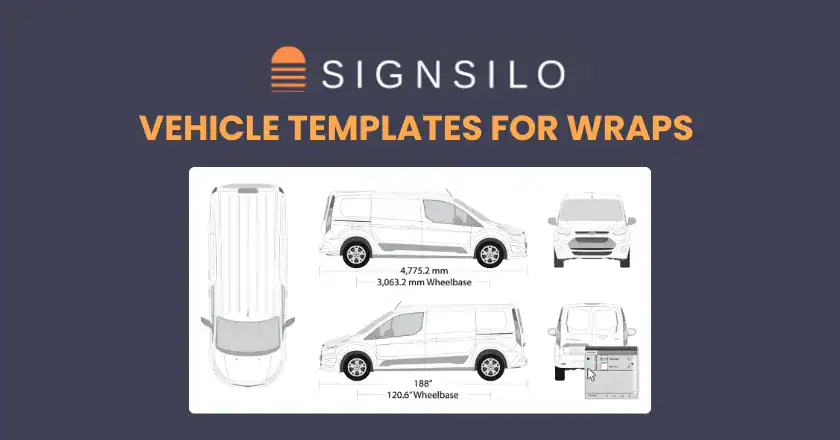
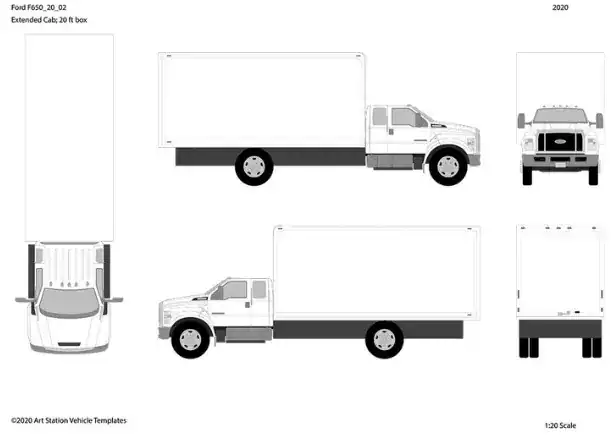
Designing a vehicle wrap is a unique challenge because it requires the designer to account for "non-printable" areas and extreme curves. A standard vehicle template, such as those provided by SignSilo, is typically delivered in a 1:20 or 1:30 scale. These templates are not mere photographs but sophisticated vector drawings that include multiple perspectives: the front, rear, driver’s side, passenger’s side, and the roof.
The technical complexity lies in the "flattening" of the vehicle’s surface. Professional templates must account for:
- Body Lines and Contours: Where the vinyl will stretch or shrink during installation.
- Obstructions: Detailed placements of door handles, mirrors, fuel doors, and emblems that can break up a design.
- Safety Zones: Areas where critical information, such as web addresses or regulatory DOT numbers, must be placed to ensure they remain legible and are not cut off during the trimming process.
For designers using industry-standard software like Adobe Illustrator or CorelDRAW, the ability to scale these templates is vital. As noted in technical guidelines, a 1:20 scale template must be increased by 2,000% to reach its 1:1 real-world size. Because some design software has a maximum canvas size, many professionals perform their design work at scale and only increase the output size during the final RIP (Raster Image Processor) stage prior to printing.

Market Data: The Economic Impact of Mobile Advertising
The surge in demand for vehicle templates is driven by the robust growth of the vehicle wrap market. According to industry reports, the global automotive wrap market was valued at approximately $5.8 billion in 2022 and is projected to expand at a compound annual growth rate (CAGR) of over 20% through 2030.
The economic justification for this growth is found in the "Cost Per Thousand" (CPM) metrics. Comparative studies in the advertising sector show that:
- Television Advertising: Can cost upwards of $20.00 per 1,000 impressions.
- Newspaper Ads: Often average around $10.00 to $12.00 per 1,000 impressions.
- Vehicle Wraps: Typically cost between $0.15 and $0.50 per 1,000 impressions, depending on the local population density and the vehicle’s daily mileage.
A single intra-city truck can generate between 30,000 and 70,000 impressions per day. For a small business owner, a one-time investment of $3,000 to $5,000 in a professional wrap that lasts five to seven years represents an unparalleled marketing value. However, this value is only realized if the wrap is professional and legible, which reinforces the necessity of using accurate templates during the design phase.
SignSilo and the Consolidation of Design Resources
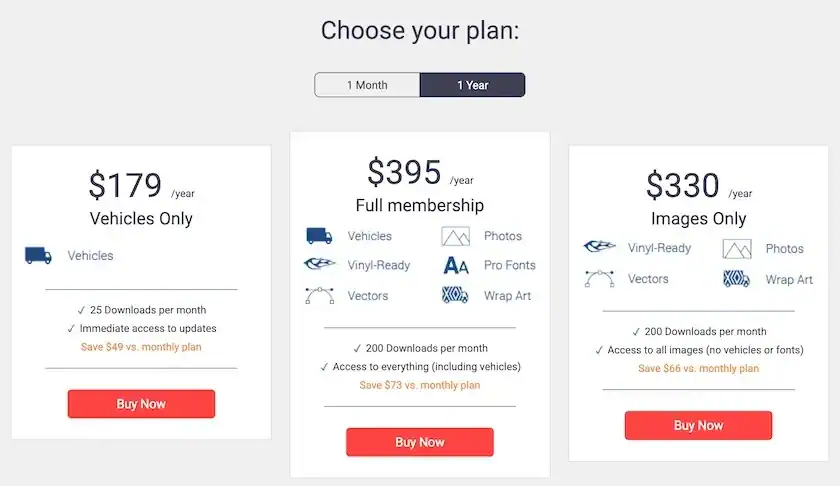
In response to the increasing pace of the sign-making industry, SignSilo has positioned itself as a comprehensive ecosystem for graphics professionals. The platform addresses a common pain point in the industry: the fragmentation of resources. Historically, a sign shop might have needed one subscription for vehicle outlines, another for high-resolution stock photography, and a third for vector illustrations.

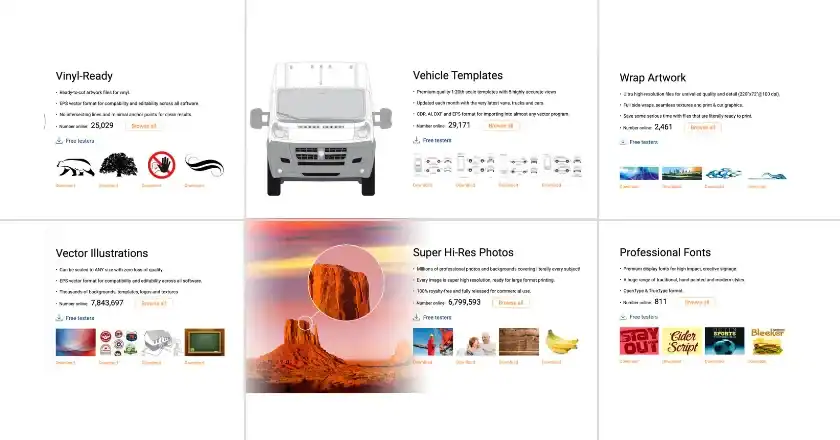
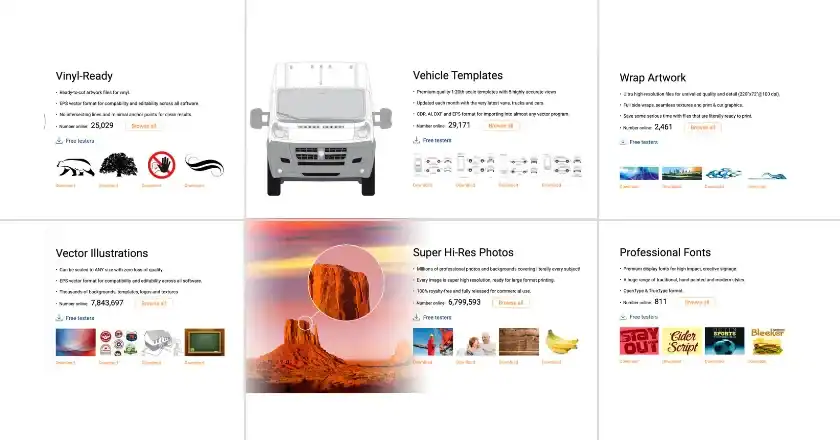
SignSilo’s library includes over 24,000 vehicle templates, covering a vast range of makes and models, from compact cars and delivery vans to heavy-duty trucks and specialty trailers. By offering these in formats like AI, CDR, DXF, and EPS, the platform ensures compatibility with the diverse array of plotters and printers used in the field.
Beyond templates, the inclusion of "wrap-ready" high-resolution images is a significant development. These are images specifically curated to be printed at large scales without pixelation, a common failure point for amateur designers who attempt to use low-resolution web images for large-format printing.
Operational Efficiency and the "Cost of Error"
For a commercial sign shop, time is the most valuable commodity. The design-to-installation pipeline is fraught with potential delays. If a wrap is printed and the installer discovers that a key design element lands in a deep door recess or is cut off by a window seal, the entire project must be reprinted.
The cost of error in the vehicle wrap industry is high. A standard roll of high-quality cast vinyl (such as 3M IJ180Cv3 or Avery Dennison MPI 1105) can cost several hundred dollars, not including the cost of the over-laminate, ink, and the labor hours required for printing and weeding. Using an inaccurate template can result in "waste" that erodes the profit margins of a project. Professional templates act as an insurance policy, allowing for a "virtual fitting" before a single inch of vinyl is fed into the printer.
Industry reactions from installers emphasize that a well-designed file, based on an accurate template, can reduce installation time by up to 20%. When a design is pre-aligned to the vehicle’s features, the installer spends less time repositioning panels and more time ensuring a bubble-free, durable finish.
Broader Implications: Fleet Consistency and Brand Integrity
For large-scale commercial fleets, such as delivery services or utility companies, the stakes are even higher. Brand integrity relies on consistency. A fleet of 500 vans must look identical regardless of whether they were wrapped in New York or Los Angeles.
Vehicle templates enable this level of standardization. They allow corporate marketing departments to create "master files" that can be distributed to various regional wrap shops with the confidence that the branding will remain uniform. This also simplifies the process of "panel replacement." If a fleet vehicle is involved in a minor collision and a single door needs to be re-wrapped, the shop can use the original template-based design to print a perfectly matching replacement panel, ensuring the vehicle is back on the road quickly.
Future Outlook: Digital Twins and AI Integration
As the industry moves forward, the nature of vehicle templates is expected to evolve alongside advancements in 3D modeling and augmented reality (AR). We are beginning to see the integration of "digital twins," where 3D models of vehicles allow designers to see how light reflects off the vinyl and how the design looks from every possible angle in a virtual environment.
Furthermore, the rise of Artificial Intelligence in design software is likely to automate some of the more tedious aspects of wrap design, such as automatically adjusting layouts for different wheelbases of the same van model. However, the foundational need for an accurate, human-verified template will remain. As long as physical vehicles have curves, handles, and hinges, the vector template will remain the essential blueprint of the professional graphics industry.
In conclusion, the sophisticated vehicle templates provided by platforms like SignSilo are more than just design aids; they are the technical foundation upon which the modern mobile advertising industry is built. By ensuring accuracy, reducing waste, and streamlining the creative process, these templates enable businesses to turn their fleets into high-impact, professional-grade marketing assets that stand the test of time and travel.