The anticipation of this peak movement is grounded in the deep-seated cultural importance of Lebaran, where families gather across the thousands of islands that comprise Indonesia. As the most efficient mode of transport for long-distance travel in an archipelagic nation, aviation becomes the primary choice for those seeking to maximize their holiday time. Consequently, the two specific dates—March 22 for the departure surge and March 28 for the return flow—have been identified as the windows of highest operational intensity, requiring unprecedented coordination between stakeholders.
Chronology and Strategic Projections for the 2025 Peak Season
The timeline for the Puncak Pergerakan Pesawat Lebaran 2025 is dictated by the lunar calendar and the official public holiday schedule set by the Indonesian government. Historically, the exodus begins approximately one week before the Eid al-Fitr prayers, with a gradual build-up starting around mid-March. However, the data indicates that March 22 will serve as the primary departure peak, as travelers look to utilize the weekend preceding the holiday to secure their presence in their hometowns.
Following the week-long celebration, the return flow is expected to be more concentrated. March 28 has been highlighted as the return peak, as employees and students prepare to resume their professional and academic obligations. This concentration of travel into two distinct 24-hour windows places immense pressure on air traffic control systems and terminal facilities. Unlike the departure phase, which is often spread over several days, the return phase tends to be more abrupt, leading to potential bottlenecks if not managed with surgical precision.
Aviation Infrastructure and the Hub at Soekarno-Hatta International Airport
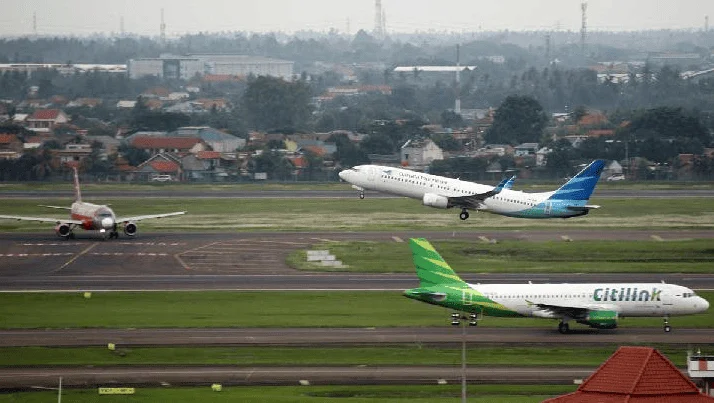
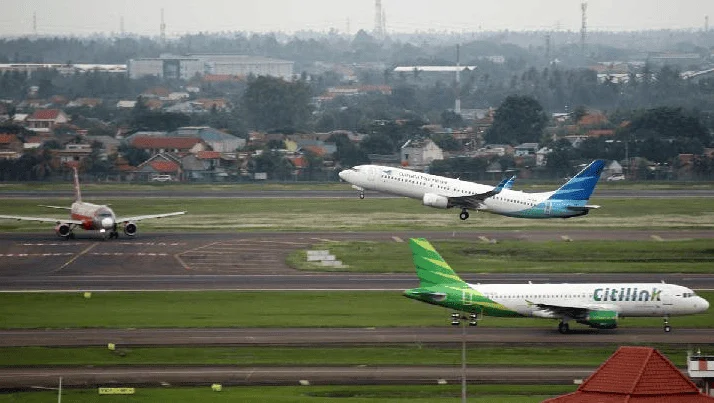
At the heart of this logistical operation is the Soekarno-Hatta International Airport (CGK) in Tangerang, which serves as the primary gateway for the nation. Projections for the Puncak Pergerakan Pesawat Lebaran 2025 suggest that this airport alone will facilitate over 23,000 aircraft movements during the broader holiday period. On the peak dates of March 22 and 28, the airport is expected to handle between 1,100 and 1,200 flights per day, pushing the facility toward its maximum hourly capacity.
To accommodate this volume, Angkasa Pura as the airport operator, in collaboration with AirNav Indonesia, has implemented several infrastructure optimizations. These include the maximization of runway occupancy times and the streamlining of ground handling processes. Furthermore, Terminal 1, 2, and 3 will operate at 24-hour peak capacity, with additional seating and temporary rest areas installed to manage the overflow of passengers during transit. The integration of the "Airport Operation Control Center" (AOCC) will be vital in monitoring real-time data to prevent aircraft taxiing delays and gate congestion.
Airline Operational Readiness and the Deployment of Extra Flights
In response to the surge, major Indonesian carriers including Garuda Indonesia, Citilink, and the Lion Air Group have finalized their fleet readiness programs. To address the discrepancy between standard seat supply and holiday demand, the Ministry of Transportation has authorized thousands of "extra flights." These additional slots are strategically allocated to high-demand routes such as Jakarta to Surabaya, Medan, Makassar, and Yogyakarta.
Airlines are also focusing on "wide-body" deployment on domestic routes that are traditionally served by narrow-body aircraft. By utilizing larger planes like the Airbus A330 or Boeing 777 on short-haul domestic legs, airlines can increase passenger throughput without significantly increasing the number of take-off and landing slots, thereby easing the burden on air traffic controllers. However, this strategy requires meticulous maintenance scheduling to ensure that the entire fleet is airworthy and available during the critical March 22–28 window.
Regulatory Oversight and Safety Protocols
Safety remains the non-negotiable priority for the Directorate General of Civil Aviation (DGCA) during the Puncak Pergerakan Pesawat Lebaran 2025. The Ministry of Transportation has mandated rigorous "ramp checks" for all aircraft operating during this period. These inspections ensure that every plane, particularly those being brought out of storage or increased rotation, meets the highest international safety standards.
Beyond mechanical safety, the government is also monitoring tariff regulations. To protect consumers from predatory pricing during the peak period, the government enforces the "Upper Limit Price" (Tarif Batas Atas) and "Lower Limit Price" (Tarif Batas Bawah) policy. Officials have warned that any airline found violating these price caps during the March 22 and 28 surges will face severe administrative sanctions. This regulatory balance is essential to ensure that air travel remains accessible to the middle class while allowing airlines to remain commercially viable during high-cost operational periods.
Economic Implications and Regional Connectivity
The surge in aircraft movements during Lebaran 2025 is a significant driver of national economic activity. The "Mudik" phenomenon facilitates a massive transfer of wealth from urban centers like Jakarta to rural provinces. Increased flight frequencies to regional airports—such as those in Solo, Padang, and Banjarmasin—stimulate local hospitality, transport, and retail sectors.
Furthermore, the Puncak Pergerakan Pesawat Lebaran 2025 highlights the importance of regional airport development. Airports that have recently undergone expansion, such as Yogyakarta International Airport (YIA) and Kediri’s Dhoho Airport, will play a crucial role in decompressing the traffic that would otherwise overwhelm older, smaller facilities. This distributed network of aviation hubs is a testament to Indonesia’s long-term strategy of improving connectivity to foster equitable economic growth across its various regions.
Technological Integration and the Passenger Experience
To mitigate the stress associated with the Puncak Pergerakan Pesawat Lebaran 2025, technology is being leveraged more than ever before. Digital check-in systems, biometric boarding gates, and mobile application alerts are now standard features designed to reduce physical queues. Airport operators are encouraging passengers to utilize "Online Check-in" 24 hours in advance to bypass crowded terminal counters.
Moreover, the use of Artificial Intelligence (AI) in predicting baggage flow and passenger wait times allows airport management to deploy staff dynamically to areas experiencing the highest density. For the passenger, this means a more predictable journey despite the record-breaking numbers. The emphasis has shifted from merely moving people to managing the "quality of movement," ensuring that the festive spirit of Lebaran is not overshadowed by the frustrations of travel delays.
Challenges: Weather and Fuel Logistics
While logistical preparations are extensive, external factors such as weather and fuel supply remain variables that require constant monitoring. March in Indonesia often marks the transition between seasons, which can bring unpredictable heavy rainfall and thunderstorms. AirNav Indonesia has prepared contingency plans for weather-related diversions, ensuring that if a primary hub like Soekarno-Hatta is affected by a storm, traffic can be safely rerouted to nearby alternates like Halim Perdanakusuma or Juanda in Surabaya.
On the logistics side, Pertamina Patra Niaga has increased its Avtur (aviation fuel) stocks at major airports by an average of 15-20% to support the Puncak Pergerakan Pesawat Lebaran 2025. Ensuring a steady supply of fuel is critical, as any disruption in the supply chain could lead to cascading delays across the entire domestic flight network. Dedicated "task forces" have been established to oversee the fuel distribution to remote airports, ensuring that even the most distant corners of the country are serviced during the peak.
Advice for Travelers During the Peak Windows
For those traveling on March 22 or March 28, industry experts and authorities offer several critical recommendations to ensure a smooth journey. First, passengers are urged to arrive at the airport at least three to four hours before their scheduled departure. The increased volume of vehicles on airport access roads and longer security screening times can easily consume the traditional two-hour window.
Second, travelers should be mindful of baggage allowances. During the Lebaran period, many passengers carry gifts and traditional food items, leading to a higher frequency of overweight luggage. Pre-purchasing extra baggage allowance online is significantly more cost-effective than paying at the counter and helps speed up the check-in process for everyone. Lastly, maintaining health and patience is vital; the sheer scale of the Puncak Pergerakan Pesawat Lebaran 2025 means that while systems are optimized, the sheer density of people requires a cooperative attitude from all participants.
Conclusion: A Benchmark for National Aviation
The Puncak Pergerakan Pesawat Lebaran 2025 is more than just a seasonal spike in travel; it is a comprehensive test of Indonesia’s aviation infrastructure, regulatory resilience, and technological prowess. By successfully managing the predicted 23,000+ movements and the specific peaks on March 22 and 28, the nation demonstrates its capability to handle complex, large-scale logistical events.
As the industry looks toward the future, the lessons learned from the 2025 peak will undoubtedly inform the next decade of aviation policy. From the necessity of runway expansions to the vital role of digital transformation, the Lebaran period serves as an annual benchmark for excellence. For the millions of passengers returning to their families, the seamless operation of these flights is the bridge that connects their modern professional lives with their traditional roots, proving that even in an age of rapid technological change, the human desire for connection remains the most powerful driver of the aviation industry.