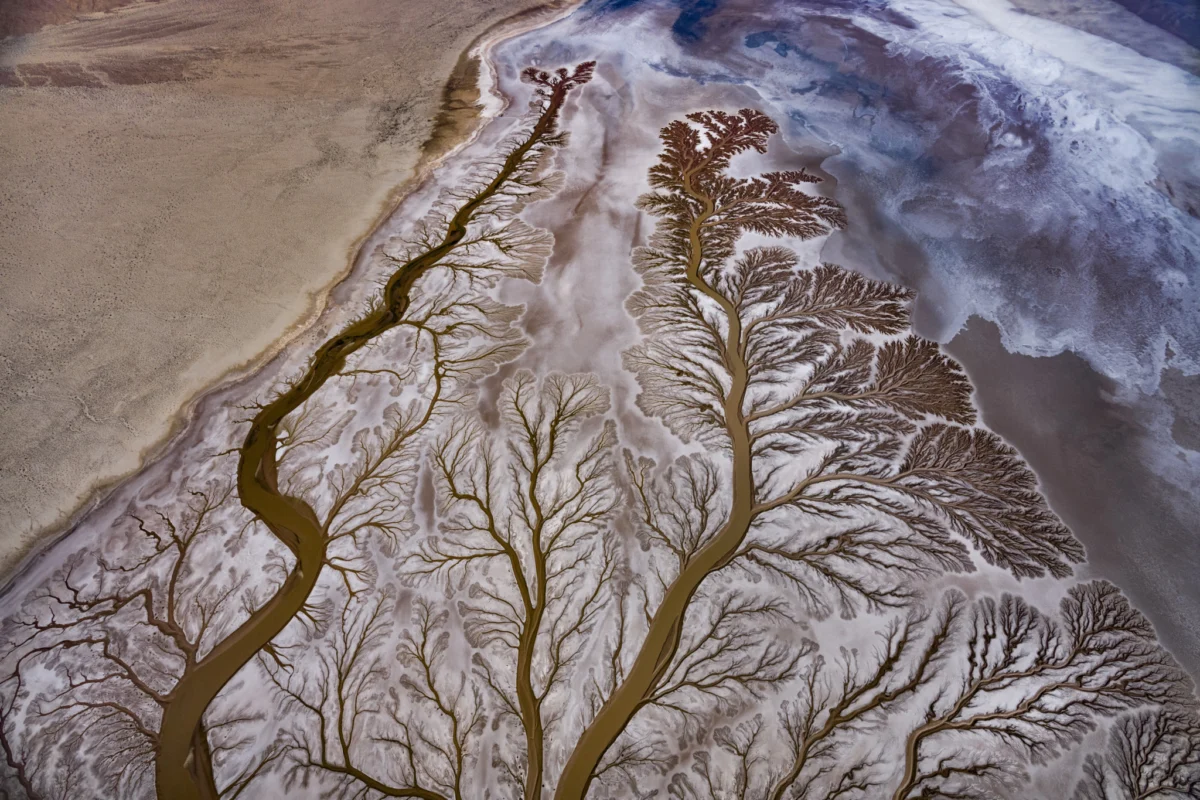
The profound questions of human existence—our identity, our purpose, and our place in the vast tapestry of life—often find their most potent echoes in the natural world. For photographer Paul Nicklen, these existential ponderings coalesced into a visceral experience as he soared over the Colorado River Delta. What he anticipated as delicate, finger-like formations extending from the river transformed into a breathtaking panorama of sheer beauty, a landscape so immense and intricate it initially defied photographic capture. Tasked with translating this awe-inspiring scene into images that conveyed a message of life and renewal, Nicklen embarked on a journey that mirrored the river’s own complex narrative.
His formative years in Canada’s far north, where at the tender age of nine he was entrusted with operating a snowmobile alone, instilled in him a profound connection to the wild. This early independence fostered an intimate understanding of wildlife and their vast habitats, igniting a lifelong passion for exploration and a deep appreciation for the interconnectedness of life. This profound awakening, a love affair with the intricate weave of the natural world, provided the emotional and philosophical bedrock for his later work in the Colorado River Delta.
A Landscape of Miraculous Patterns
Flying at varying altitudes with his pilot Rodrigo, from a mere 200 feet to a thousand, Nicklen began to perceive the delta not just as a landscape, but as a living, breathing entity. The lower they descended, the more it felt like navigating a three-dimensional canvas of poetry and art. The patterns revealed were nothing short of astonishing: a "quilted mosaic of silt and sediment," as he described it, reminiscent of the "tree of life." These intricate formations, resembling veins, capillaries, and branches, were a stark reminder of the Earth’s vital systems, akin to the planet’s lungs. Yet, within this resplendent beauty lay a profound sadness.
The River’s Long Silence: A History of Depletion
The Colorado River, a vital artery stretching over 1,500 miles from its headwaters in the Rocky Mountains through seven U.S. states and into northwestern Mexico, has a history far removed from the vibrant life now tentatively returning to its delta. Since the 1950s, the river’s narrative has been one of escalating human demand, leading to its effective demise as a force reaching the sea. Massive infrastructure, including Hoover Dam and Glen Canyon Dam, coupled with extensive agricultural and industrial water diversions, have transformed a once-mighty river into a shadow of its former self.
This over-allocation of water resources has exacerbated the impact of natural climate variability. The region is currently grappling with the most severe drought in 1,200 years, a phenomenon amplified by the historical overuse of the Colorado River’s water. Human population growth and the relentless demands of heavy industry have systematically denuded, drained, and decayed one of North America’s most significant natural waterways, leaving its delta parched and its ecosystem on the brink of collapse. For decades, the Sea of Cortez remained largely untouched by the lifeblood of the Colorado, a stark symbol of environmental degradation.
A Turning Tide: The Binational Restoration Effort
Despite this bleak history, a remarkable shift has begun to unfold in the Colorado River Delta. In a testament to the power of international cooperation and dedicated conservation efforts, water has once again begun to flow into the delta in significant quantities. This resurgence is the direct result of an unprecedented binational restoration initiative, a collaborative undertaking that has brought together a diverse array of stakeholders.
The effort, which gained significant momentum in the early 2010s, involved a concerted push by environmental organizations, the governments of both the United States and Mexico, and crucially, the local communities within the Mexicali Valley. This broad coalition recognized the ecological and cultural significance of restoring the delta and worked tirelessly to implement strategies that would allow water to reach its historical terminus.
Key Milestones in the Restoration Journey
The journey towards rehydrating the delta has been a multi-faceted process, marked by key agreements and tangible actions:
- 2012 Minute 319 Agreement: This landmark binational agreement between the United States and Mexico, facilitated by the International Boundary and Water Commission (IBWC), established a framework for managing the Colorado River’s water resources. Crucially, it included provisions for environmental flows, allowing a controlled release of water specifically for ecological purposes in the delta. This agreement was a pivotal moment, signaling a shared commitment to the river’s health beyond human consumption and agricultural needs.
- "Pulse Flow" Experiment (2014): Building on Minute 319, a historic "pulse flow" was released in March-April 2014. This coordinated release of approximately 100,000 acre-feet of water, mimicking natural flood events, marked the first time in over a decade that water had reached the Sea of Cortez in a meaningful quantity. The event, meticulously monitored by scientists and conservationists, saw the river channel fill, the groundwater table rise, and nascent signs of vegetation recovery.
- Subsequent Environmental Flows: Following the success of the 2014 pulse flow, subsequent agreements and continued efforts have facilitated further environmental flows. While the volume and frequency of these releases can be influenced by drought conditions and water availability throughout the Colorado River Basin, the commitment to maintaining some level of ecological flow has persisted.
- On-the-Ground Restoration: Beyond engineered water releases, the restoration effort has involved extensive on-the-ground work. Conservation groups and local communities have been actively engaged in planting native vegetation, restoring degraded riparian habitats, and monitoring the return of wildlife. These initiatives are crucial for ensuring that the water reaching the delta translates into sustainable ecological recovery.
Data and Evidence of Renewal
The impact of these restoration efforts is not merely anecdotal; it is supported by scientific data and observable ecological changes. Studies conducted in the delta reveal:
- Increased Groundwater Levels: Following the pulse flows and ongoing environmental releases, groundwater levels in the delta have shown a marked increase. This rehydration is critical for supporting the root systems of native vegetation and creating a more resilient ecosystem.
- Vegetation Recovery: Areas that were once barren or dominated by invasive species are now showing signs of recovery, with native cottonwood and willow trees beginning to establish themselves. This vegetation is vital for providing habitat and food sources for a wide range of wildlife.
- Return of Wildlife: Bird populations, in particular, have shown a positive response to the returning water. Surveys have documented increased sightings of migratory birds, waterfowl, and resident species that rely on the delta’s wetlands for breeding and foraging. Amphibians and fish species are also beginning to re-establish a presence in the revitalized areas.
- Soil Salinity Reduction: The influx of freshwater is helping to leach salts from the soil, creating more favorable conditions for plant growth and improving the overall health of the deltaic soils.
Official Responses and Future Outlook
The success of the binational restoration effort has garnered praise and attention from environmental agencies and policymakers. Representatives from the U.S. Bureau of Reclamation and Mexico’s National Water Commission (CONAGUA) have acknowledged the vital role of collaboration in achieving these positive outcomes. While the challenges posed by the ongoing drought and the long-term water demands on the Colorado River Basin remain significant, the restoration of the delta offers a beacon of hope.
The implications of this revival extend far beyond the immediate ecological benefits. The Colorado River Delta’s story is a powerful demonstration that even in the face of severe environmental degradation and climatic challenges, concerted, collaborative action can lead to meaningful restoration. It underscores the importance of integrated water management, where ecological needs are considered alongside human demands.
Broader Impact and Implications
The implications of this revitalized delta are multifaceted:
- Ecological Resilience: The return of water and vegetation enhances the delta’s resilience to future droughts and climate change impacts, providing a critical buffer for biodiversity.
- Community Empowerment: Local communities in the Mexicali Valley, who have long lived with the consequences of the delta’s desiccation, are experiencing renewed hope and engagement through their participation in restoration activities. This can lead to increased stewardship and economic opportunities related to ecotourism and sustainable land management.
- Conservation Model: The Colorado River Delta restoration serves as a compelling case study for other degraded river systems worldwide. It demonstrates the feasibility and effectiveness of binational cooperation, innovative water management, and community-based conservation in achieving significant environmental recovery.
- Aesthetic and Spiritual Value: For individuals like Paul Nicklen, the visual spectacle of a living delta—a vibrant mosaic of life against the backdrop of a historically parched landscape—reignites a profound appreciation for the planet’s regenerative capacity. It serves as a potent reminder of what can be achieved when humanity chooses to work in harmony with nature, transforming scenes of "terrible beauty" into emblems of enduring hope.
While the Colorado River Basin faces an uncertain future, the resurgence of its delta offers a vital narrative of possibility. It is a story that begins with deep questions about our existence and finds its answer not in abstract philosophy, but in the tangible, breathtaking reality of life returning to a place that had been silenced for far too long. The intricate patterns Nicklen captured from the sky are not just artistic renderings; they are living proof that even after decades of neglect, the Earth, with a helping hand, can reclaim its vibrant essence.