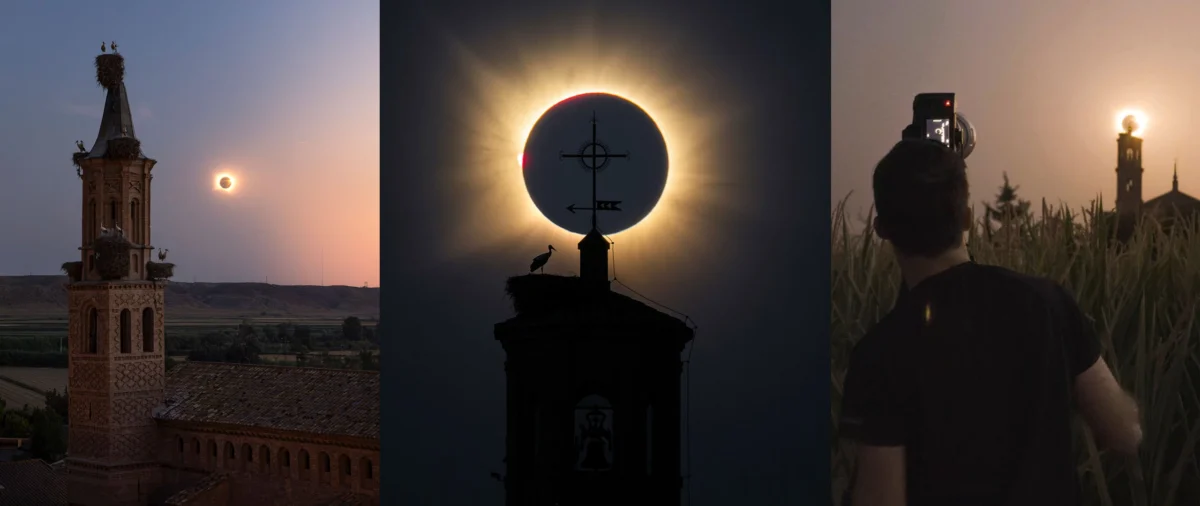
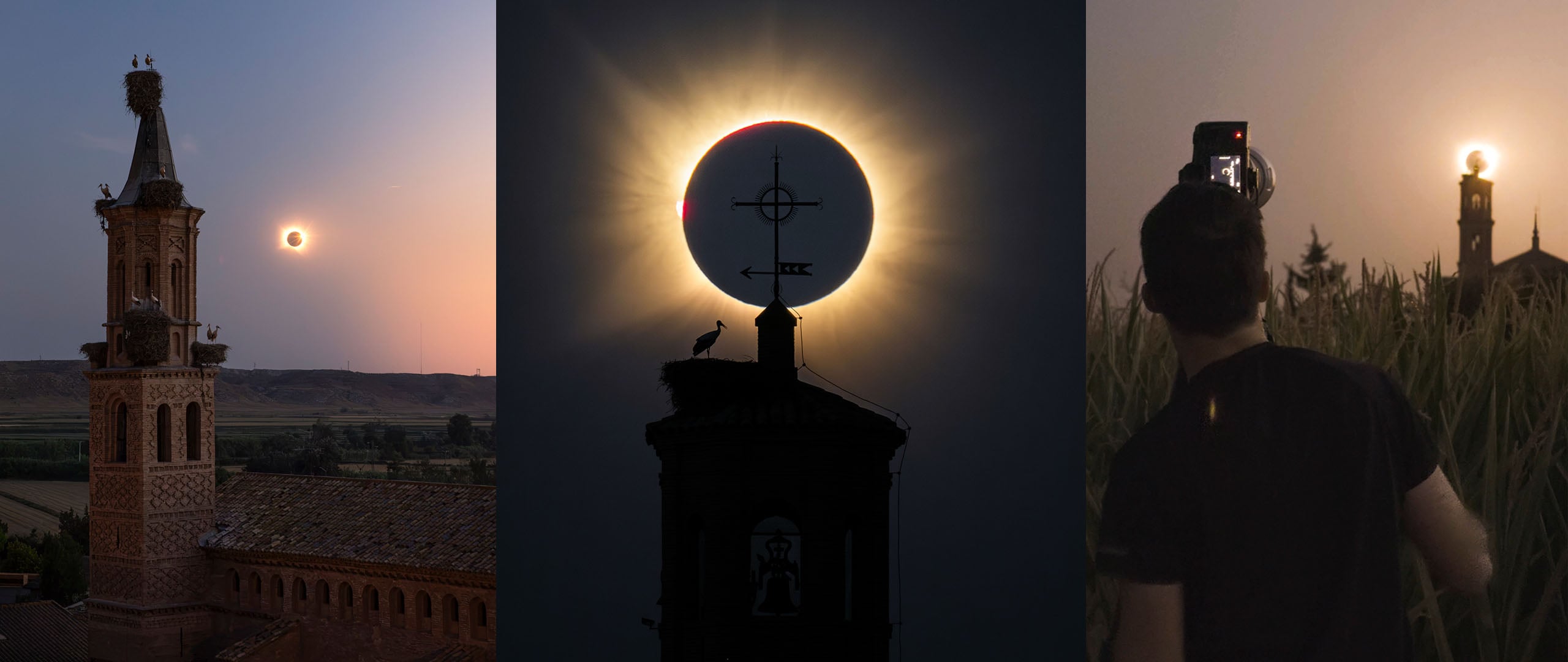
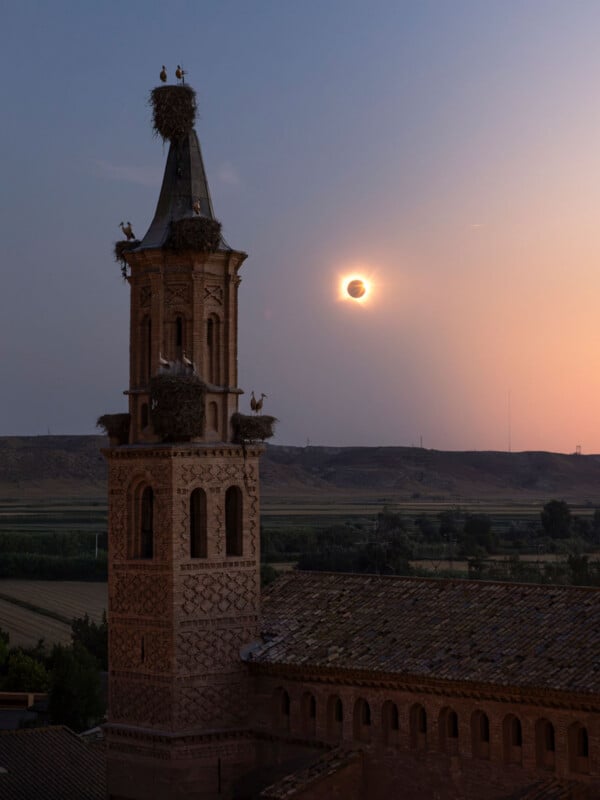
In an extraordinary convergence of meticulous planning, cutting-edge technology, and a stroke of profound luck, Canadian photographer Liron Gertsman and Texas-based bird photographer Tobias Yoder successfully captured a truly unique image: a white stork silhouetted against the awe-inspiring spectacle of a total solar eclipse in Spain. This ambitious project, years in the making, culminated in a dramatic, last-minute success that pushed the boundaries of both astrophotography and wildlife photography, setting a new benchmark for collaborative artistic endeavor.
The Genesis of a Vision: From Solo Success to Collaborative Pursuit
The foundation for this remarkable partnership was laid during the Great North American Total Solar Eclipse of April 8, 2024. This celestial event, which captivated millions across Mexico, the United States, and Canada, became the backdrop for an unforeseen synchronicity between Gertsman and Yoder. Independently, and thousands of miles apart, both photographers achieved remarkably similar, award-winning shots of birds in flight against the "diamond ring" effect of the eclipse.
Liron Gertsman, already a celebrated name in wildlife photography, garnered significant acclaim for his image, The Frigatebird and the Diamond Ring. This iconic photograph, which earned him the prestigious title of Bird Photographer of the Year, showcased a frigatebird soaring precisely through the solar corona during totality. Gertsman later detailed his intricate planning and the technical challenges overcome to achieve this "once-in-a-lifetime" shot in an interview with PetaPixel, revealing the immense dedication required for such a capture.
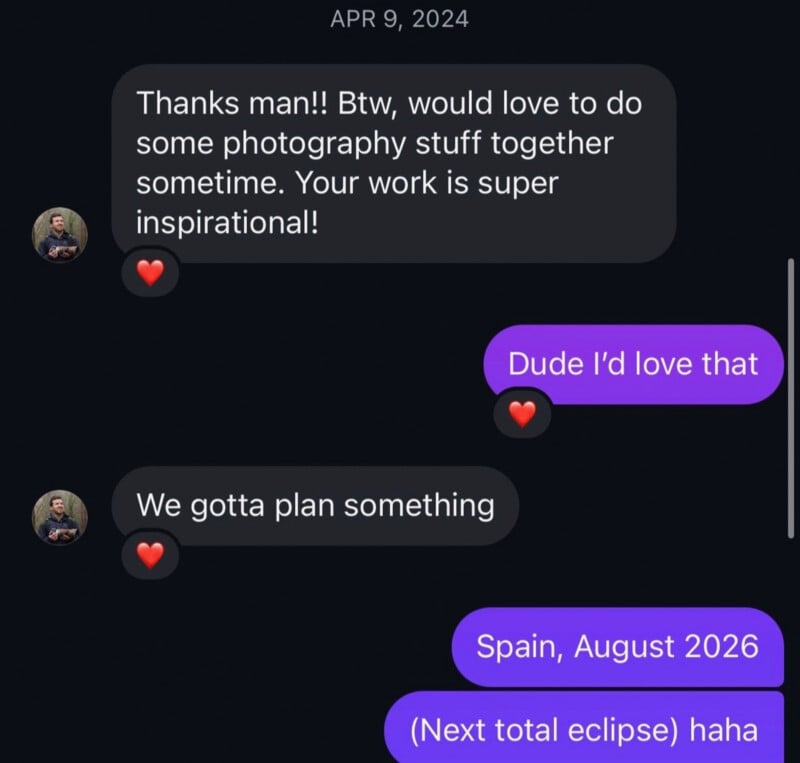
Concurrently, Tobias Yoder, operating in a different segment of the eclipse path, coincidentally secured a strikingly similar image. While the two had exchanged a few preliminary messages on social media, their professional paths had not deeply converged until their individual eclipse triumphs became public. The shared experience of capturing such a rare and technically demanding image fostered an immediate kinship. "Me and Liron, we both shot birds with eclipses in 2024, and it was the next day that we were like, ‘We should do something together in the future,’" Yoder recounted to PetaPixel. This initial spark quickly ignited into a concrete plan: to unite their unique talents for the next major total solar eclipse in 2026, set to grace the skies over Spain.
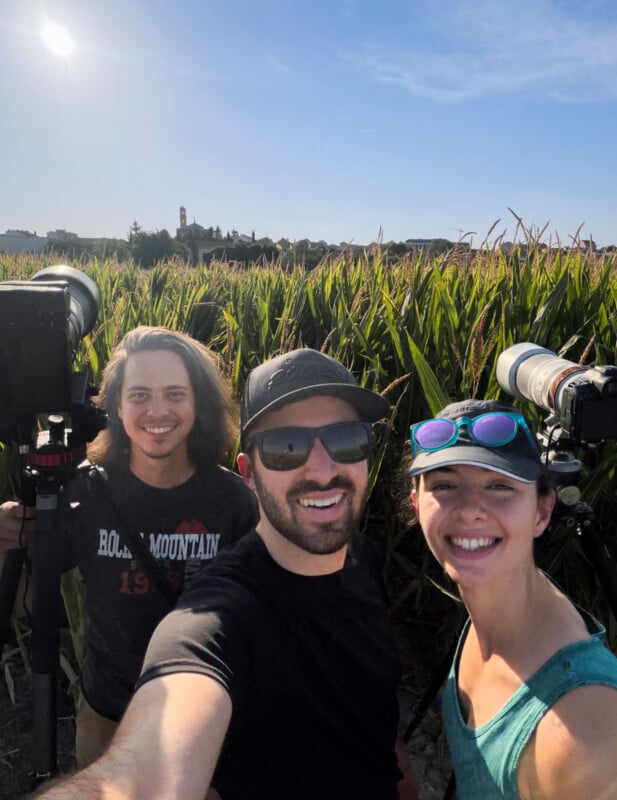
The decision to collaborate marked a significant departure from the typically solitary nature of professional photography. In a field often characterized by individual pursuit and sometimes competitive spirit, Gertsman and Yoder recognized a shared vision and complementary skill sets. "As far as I’m aware, we’re the only two bird photographers to have done that [eclipse shot] in 2024," Yoder noted, underscoring the rarity of their individual achievements and the natural progression towards a joint venture. Gertsman, equally admiring, affirmed, "He’s a really great photographer. We both got a shot [in 2024] and became friends through this eclipse-chasing phenomenon after that." Since their initial collaboration conceptualization, their partnership has flourished, leading to multiple successful photography expeditions to diverse locations like the Pacific Northwest and Hawaii, further solidifying their teamwork and mutual understanding.
Strategic Planning: A Year-Long Quest for Celestial Alignment
The target was the total solar eclipse of August 12, 2026, a highly anticipated astronomical event with a path of totality sweeping across parts of Greenland, Iceland, and the Iberian Peninsula. For Gertsman and Yoder, Spain presented an unparalleled opportunity to blend their love for avian subjects with the celestial drama. The eclipse was projected to occur around 8:30 PM local time in Spain, coinciding with the late evening activity of many bird species, especially those returning to their roosts.
The planning for this Spanish endeavor began almost immediately after the 2024 eclipse, evolving into a meticulous, year-long research project. Their primary objective was clear: to capture a majestic white stork (Ciconia ciconia) against the backdrop of the eclipsed sun, ideally perched atop an iconic Spanish landmark. "Tobias and I have been doing research for literally a year, maybe more," Gertsman explained. "The main thing we were doing was looking at maps of Spain and online databases for wildlife and birds to pin the locations of as many stork nests as we possibly could in the path of totality of the eclipse."
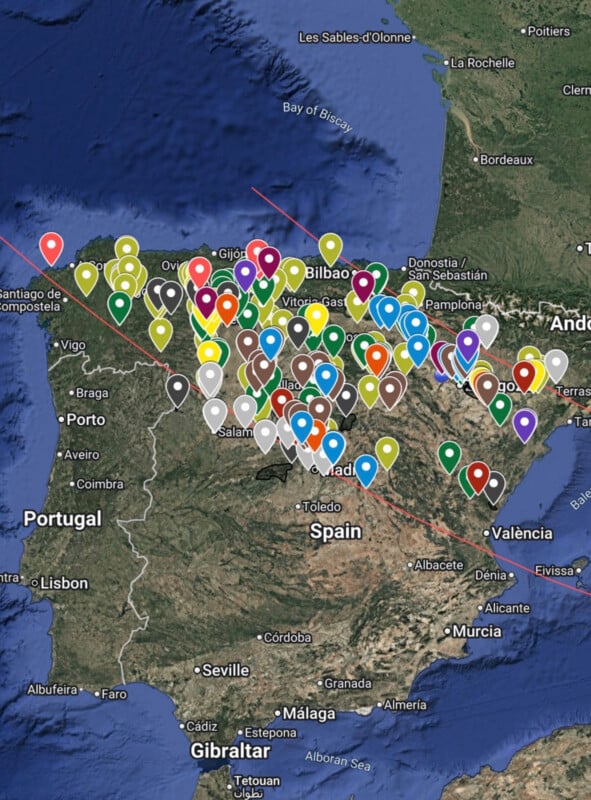
Spain is renowned for its vibrant white stork population, boasting the largest breeding numbers in Europe, with over 50,000 breeding pairs. These magnificent birds are an integral part of the Spanish landscape and culture, their massive nests often adorning church bell towers, castle turrets, and electricity pylons. This provided the perfect natural canvas for the photographers’ ambitious vision. The aesthetic appeal of combining an ancient, iconic structure with the symbolic presence of a stork and the cosmic event was irresistible. The duo systematically plotted hundreds, if not thousands, of potential nesting sites within the narrow corridor of totality, focusing predominantly on storks but also noting other large nesting birds.
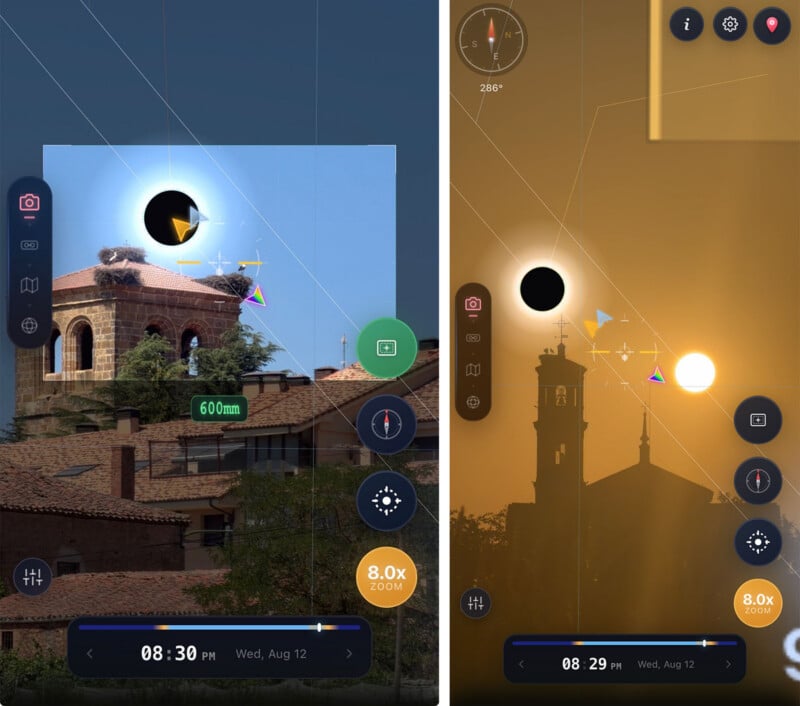
To aid in this monumental scouting task, Yoder leveraged his background in software development. He developed a bespoke web application specifically designed for eclipse planning, offering a level of precision that commercial tools like PhotoPills could not match for their unique requirements. "I can get more exact compositions lined up," Yoder stated, highlighting the app’s capability to virtually overlay the sun and eclipse to scale within a frame, allowing for hyper-accurate alignment predictions. This technological advantage proved indispensable in narrowing down the vast array of potential locations to a select few that promised the perfect shot.
The Crucial Week: On-Ground Reconnaissance and Final Selection
With their digital map densely populated with potential sites, Gertsman and Yoder arrived in Spain over a week before the eclipse. They rented separate cars and embarked on an intensive, real-world scouting mission, dividing the map and meticulously traversing the Spanish countryside. Their reconnaissance involved a multi-faceted assessment of each pinned location. "We split up and each took half of the map, and then we just drove nest to nest," Gertsman described. The criteria were stringent: "Checking for one, does it align with the eclipse nicely and is there somewhere we can stand that would align with the eclipse? And two, are there storks present?"
The second question, concerning the storks, proved far more complex than a simple visual check. It wasn’t enough for a nest to exist or to have been active during the peak breeding season months prior. The critical factor was whether the storks would be present and, crucially, in their nest at precisely 8:30 PM on the evening of the eclipse. The sheer scale of the search, likened to finding a "proverbial needle in a haystack" spread across hundreds of miles, meant that countless promising locations on paper failed to meet the rigorous on-ground requirements. Many bell towers, though picturesque, did not offer the perfect profile or accessible vantage point for the desired alignment.
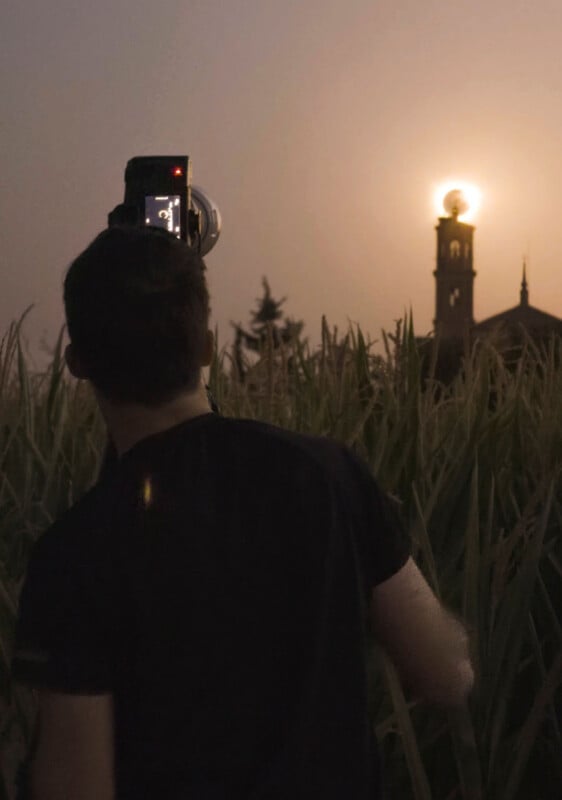
The breakthrough came when Yoder, using his custom app to verify alignments, stumbled upon a location that was, by all accounts, "perfect." A magnificent church bell tower, ideally situated, with a prominent stork nest, presented itself as the prime candidate. Yoder’s app immediately confirmed the impeccable alignment of the tower with the eclipse path. "When checking his composition and the size of the Sun in his app, Yoder quickly realized that it was ‘gonna be good,’" the original report states. He promptly shared the discovery with Gertsman, who swiftly concurred. "The alignment was perfect," Gertsman echoed. "It wasn’t just that it was a tall church belltower with a stork nest, but the church was perfectly aligned."
Despite identifying a few backup locations with a higher density of stork nests, the duo made a conscious decision to commit fully to this single, ideal spot. This choice reflected their ambitious nature and their confidence derived from past successes. "We were willing to take a riskier position for this one, mostly because we’ve done it before and we wanted to set the bar high," Gertsman explained. While Gertsman maintained a philosophical acceptance of potential failure, valuing the experience regardless of the photographic outcome, Yoder admitted to possessing "more optimism than I had any right to have." This calculated gamble underscored their dedication to achieving an extraordinary, rather than merely good, result.
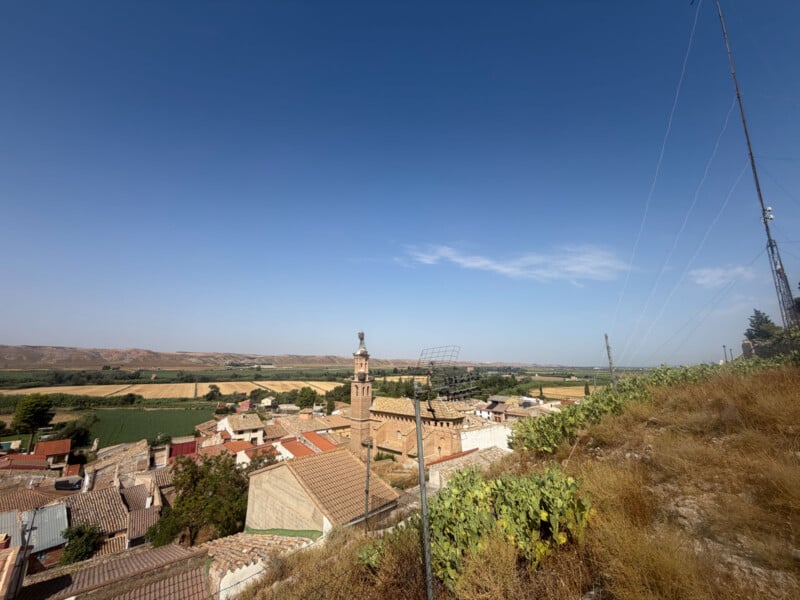
The Eleventh Hour: A Stork’s Dramatic Entrance
Even with a year of planning and an ideal location secured, many critical factors remained beyond their control, primarily the weather and, most dramatically, the unpredictable behavior of a wild animal. The question of whether the stork would be in its nest at the precise moment of totality loomed large.
In the days leading up to the eclipse, Gertsman and Yoder visited the chosen nest three times. On two occasions, the stork was already nestled in its roost before 8:30 PM. However, on one crucial visit, it was late. Gertsman theorized that the darkening skies during the partial eclipse would likely prompt the bird to return earlier on the big day, but uncertainty persisted.
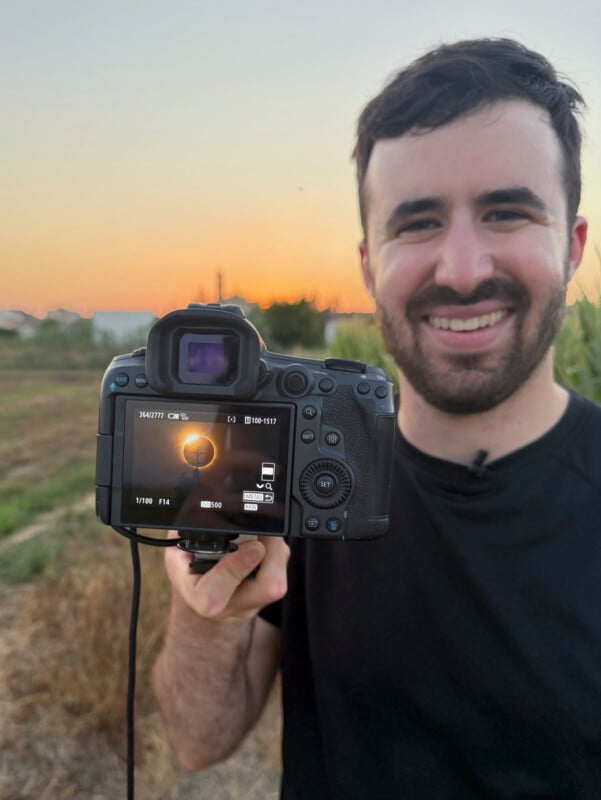
The suspense built palpably as totality approached. The photographers, poised with their advanced equipment, scanned the darkening sky. Minutes turned into seconds, and still, the stork was nowhere in sight. "Two minutes out, I was starting to feel really iffy," Yoder confessed, the meticulous planning seemingly unraveling at the last moment. Gertsman, too, began to doubt: "Once we were just a couple of minutes out and our bird was nowhere to be seen, I started thinking, ‘Okay, we probably flew too close to the Sun here. This isn’t going to happen.’"
Then, in a breathtaking sequence that seemed almost scripted, fate intervened. "We spotted the bird flying in about 90 seconds before totality," Gertsman recalled. The distant silhouette grew clearer, heading directly for the tower. "It landed on its nest about 30 seconds before totality." The relief was immense, almost physical. "By the time it landed, we could already see the outline of the corona. I mean, it was that close. It was crazy!" Yoder exclaimed, still marveling at the improbable timing. This last-minute arrival transformed a highly challenging endeavor into a truly "magical moment," as Yoder described, one that felt like "cheesy fiction" had he not lived it himself.
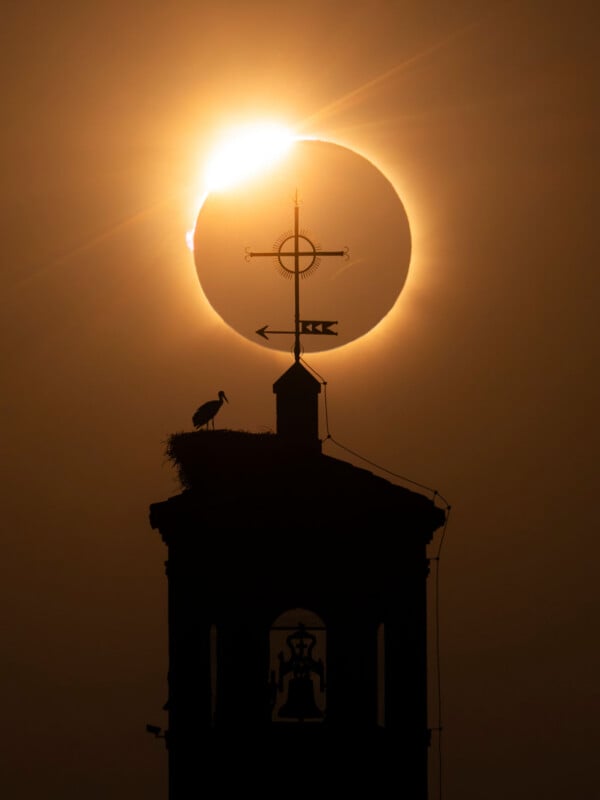
Beyond the Main Shot: Strategic Redundancy and Technical Precision
While fully committed to their primary location, Gertsman and Yoder also implemented a shrewd backup strategy, demonstrating their foresight and pragmatic approach to such high-stakes photography. During their initial days in Spain, they identified a secondary location about a hundred miles away, featuring multiple stork nests that could yield compelling wide-angle shots, complementing their telephoto goal.
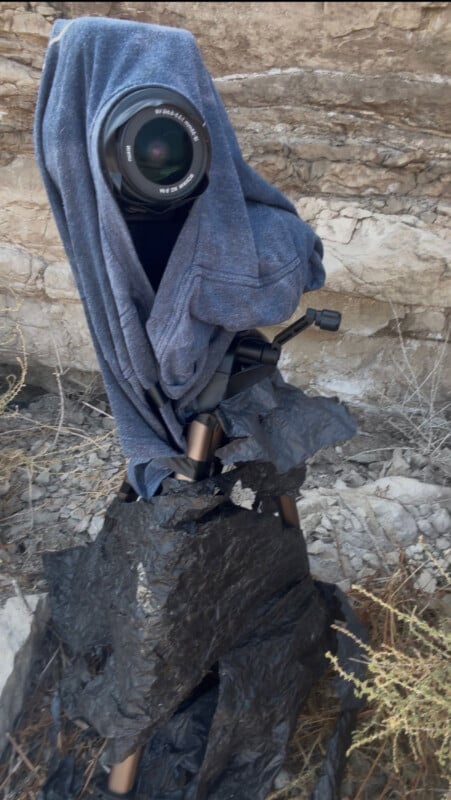
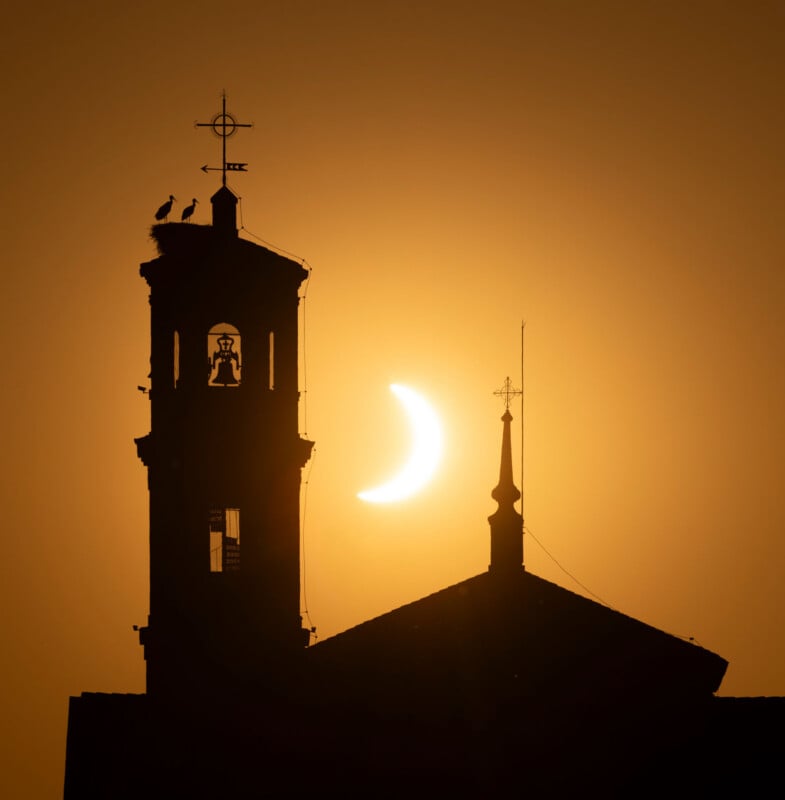
To manage this, they embarked on a mission to a used camera store, acquiring older Nikon DSLR cameras equipped with built-in intervalometers. These cameras were then discreetly set up at the backup site, hidden within bushes and covered for protection. The idea was to program them to automatically capture bracketed photos every few seconds, starting about 15 minutes before the eclipse, effectively creating a hands-free record of the event from a different perspective. This provided a safety net, ensuring some form of successful capture even if unforeseen circumstances (like uncooperative weather or a missing stork) foiled their main attempt. As it turned out, these backup cameras functioned flawlessly, yielding several "really nice shots," one of which Gertsman later processed and shared. "I was a little afraid of leaving expensive camera equipment unattended," Gertsman chuckled, "but I also wanted a second camera with me in case something happened with my main camera."
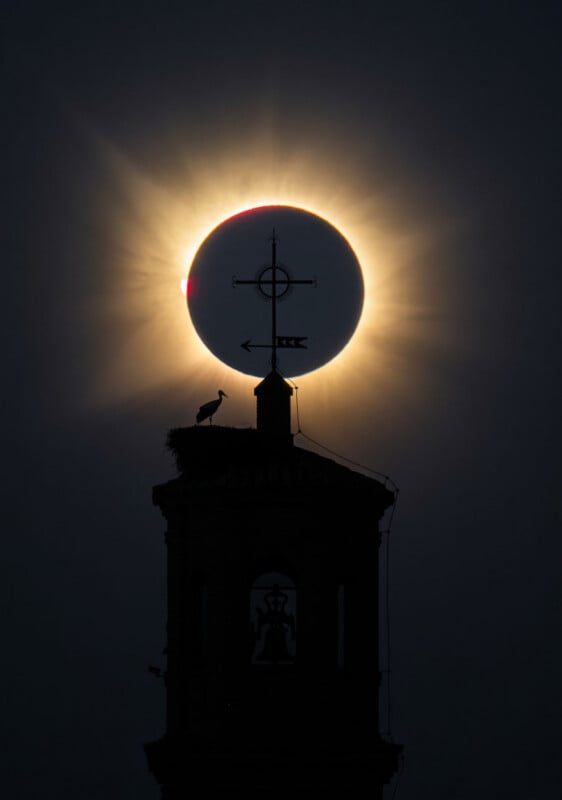
For their primary shots, both photographers relied on their professional-grade mirrorless systems. Gertsman utilized his Canon EOS R5 II paired with the Canon RF 100-500mm f/4.5-7.1 L IS USM lens, shooting near the 500mm mark. He opted for the R5 II over his R5 specifically for its superior electronic shutter image quality, which allowed for continuous shooting without the risk of shutter shock, ensuring sharp, uncompromised images during the fleeting totality. Yoder, a dedicated Nikon user, employed his Nikon Z8 with the Nikkor Z 180-600mm f/5.6-6.3 VR lens, also set at 500mm. Their deep familiarity and mastery of their respective equipment were crucial, allowing them to operate instinctively under immense pressure during the chaotic, brief window of totality.
The Fleeting Spectacle: Mastering the 76-Second Window
The total solar eclipse in their chosen Spanish location offered a mere 76 seconds of totality – a fleeting window for capturing their meticulously planned images. Despite extensive rehearsals with timers, both photographers noted how rapidly the moment passed. "It goes by so fast. Even though we had done rehearsals with timers, to measure exactly how long everything would take, it felt like it went by three times faster," Yoder observed.
Adding to the challenge, the apparent movement of the sun across the sky, particularly when shooting at 500mm, necessitated continuous adjustments to maintain composition. To maximize their chances, Gertsman and Yoder devised a unique, practiced maneuver: "One of us is lined up shooting, and then while they’re shooting, the next one of us kind of goes to their other shoulder, and then by the time they’re not lined up, the next person is lined up and shooting, and then while you’re shooting, the other person goes around to your other shoulder. So that way we maximize the amount of time between the two of us that we would be perfectly aligned with the church," Gertsman detailed.
This intricate, synchronized dance was practiced "dozens and dozens of times beforehand." However, the actual experience presented an unforeseen difficulty: the profound darkness of totality. "One thing I think we didn’t quite anticipate is that during the eclipse, it got so dark that it actually became quite hard to see whether or not you were centered with the church in the eclipse," Gertsman revealed. This unexpected variable added another layer of complexity to an already high-pressure situation, relying even more on their practiced muscle memory and intuition. For Yoder, the entire experience was almost surreal: "It was so much of a blur, and I was really focused on the shots. It almost feels like a dream thinking back on the eclipse." He expressed a common sentiment among eclipse chasers, "It would have been nice to have a little bit more time to just take it in."
Legacy and Implications: Redefining Nature and Astrophotography
Ultimately, the confluence of exhaustive planning, innovative technology, unwavering commitment, and a remarkable slice of luck converged to deliver the Spanish eclipse dream shot for Liron Gertsman and Tobias Yoder. Their stunning photographs of the stork silhouetted against the eclipsed sun are not merely aesthetically captivating; they represent a significant achievement in the specialized fields of nature and astrophotography.
This collaborative success sets a new benchmark, demonstrating how interdisciplinary approaches and partnerships can yield results that might be unattainable for individual photographers. Their story underscores the value of blending scientific precision (in celestial mechanics and wildlife behavior) with artistic vision and technical mastery. It also highlights the growing sophistication of planning tools, from custom software to meticulous on-ground scouting, that now define the pursuit of such ambitious photographic goals.
For Gertsman, the profound satisfaction came from seeing a monumental vision materialize. "It was a lot of work. It was a lot of fun," he reflected. "There are no words to describe how spectacular a total solar eclipse is, and how special it is to see your plan come to fruition." Yoder, still processing the sheer improbability of their success, articulated the deeper magic inherent in their art: "For me, much of the magic in art and photography lies in what feels just beyond my understanding and control, and for that reason, the shots that barely happened are my favorites."
Their work stands as an inspiration, not just for photographers, but for anyone seeking to combine passion with meticulous execution against formidable odds. The images serve as powerful reminders of the breathtaking beauty of our natural world and the cosmos, urging greater appreciation and understanding of both. The successful collaboration of Gertsman and Yoder exemplifies how shared ambition, mutual respect, and a willingness to embrace risk can lead to extraordinary accomplishments, pushing the boundaries of what is photographically possible and leaving an indelible mark on the landscape of visual storytelling.