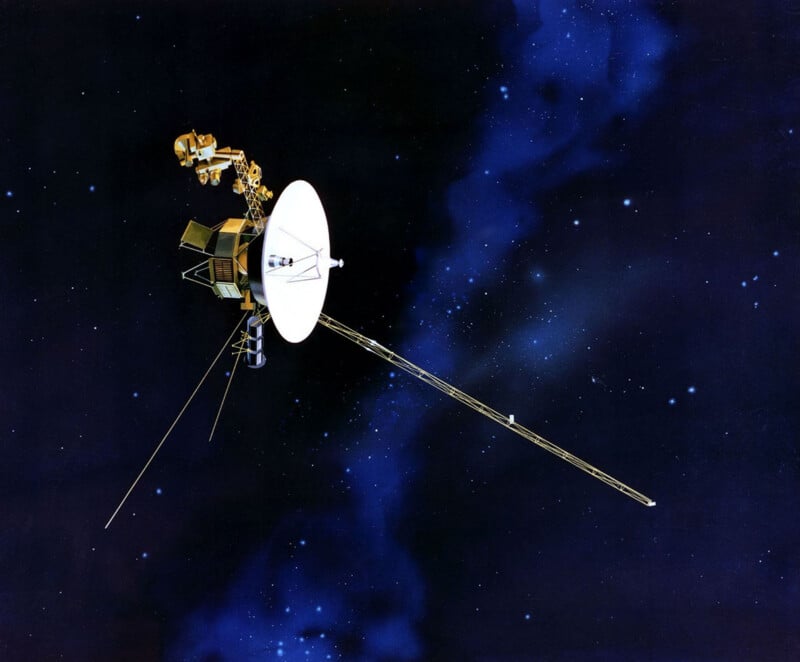
Nearly 49 years after its launch aboard a powerful Titan IIIE-Centaur rocket, NASA’s venerable Voyager 2 space probe has received yet another critical software update, a testament to the enduring ingenuity of its mission control team and the robust engineering of the spacecraft itself. This latest command, traveling an astonishing 13.3 billion miles (almost 21.4 billion kilometers) across the cosmos, aims to further prolong the probe’s scientific operations as its power supply dwindles, pushing the boundaries of humanity’s longest-running space exploration mission.
The "Big Bang" Software Update: A Lifeline in Deep Space
The recent software patch, affectionately nicknamed the "Big Bang" by the mission team, represents a sophisticated approach to power management. Unlike previous updates that primarily involved switching off individual scientific instruments to conserve energy, this new directive is more nuanced. It simultaneously disabled certain power-intensive devices onboard Voyager 2 while activating lower-power alternatives designed to perform similar functions. This strategic substitution is crucial, not merely for extending the operational life of its scientific instruments, but also for maintaining the spacecraft’s core functionality by ensuring it remains warm enough in the frigid, near-absolute-zero temperatures of interstellar space.
The successful implementation of the "Big Bang" update is projected to provide sufficient power to keep Voyager 2’s three remaining scientific instruments operational for at least an additional year. This extension is a significant victory for a mission that has already far exceeded its wildest expectations, initially designed for a mere five-year lifespan. Without this innovative power-saving measure, NASA engineers confirm that they would have been forced to permanently decommission another valuable instrument, further limiting the probe’s ability to gather unprecedented data from beyond our solar system. The communication lag for these commands is immense; it takes over 19 hours for a signal from Earth to reach Voyager 2, and another 19 hours for its confirmation to return, highlighting the precision and foresight required for every command sent.
The Enduring Power Challenge: Radioisotope Thermoelectric Generators (RTGs)
The Voyagers, both 1 and 2, are powered by radioisotope thermoelectric generators (RTGs). These remarkable devices convert heat generated by the natural radioactive decay of plutonium-238 into electricity. While incredibly reliable and long-lasting, the supply of plutonium-238 is finite and constantly decaying, meaning the heat output, and consequently the electrical power generated, steadily diminishes over time. Each Voyager probe loses approximately four watts of power annually.
After nearly half a century of continuous operation in the harsh environment of deep space, Voyager 2’s power margins are, as NASA engineers describe them, "razor thin." This critical energy deficit necessitates a continuous and ingenious effort from the mission team to identify and implement power conservation strategies. Since the 1990s, the mission has systematically powered down various non-essential heaters and components, and more recently, scientific instruments, to extend the probes’ operational lives. The "Big Bang" update is the latest, and perhaps one of the most sophisticated, iterations of this ongoing power management saga, showcasing the team’s commitment to wringing every last bit of data from these iconic explorers.
Voyager 2’s Unprecedented Grand Tour of the Outer Solar System
Launched on August 20, 1977, Voyager 2 embarked on what would become an unparalleled journey through our solar system, capitalizing on a rare planetary alignment that occurs only once every 175 years. This alignment allowed for a "grand tour" strategy, using the gravitational pull of each successive giant planet to slingshot the spacecraft towards the next, conserving fuel and dramatically shortening travel times.
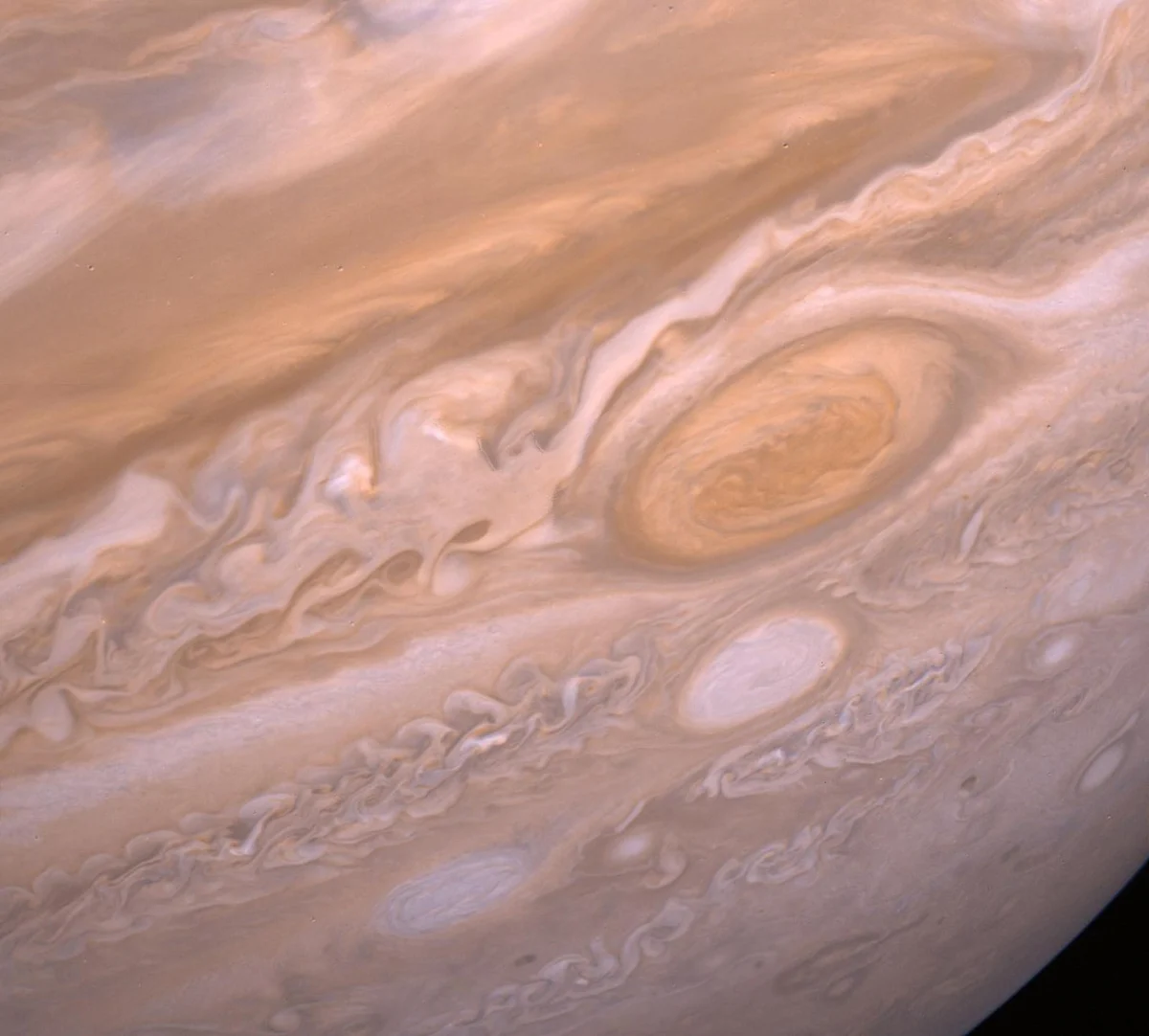
- Jupiter (July 9, 1979): Voyager 2 flew within 357,000 miles (570,000 kilometers) of Jupiter, providing breathtaking images and crucial data. It confirmed the existence of active volcanoes on Jupiter’s moon Io, a phenomenon previously unknown, and discovered three new moons: Adrastea, Metis, and Thebe. Its observations of Jupiter’s Great Red Spot provided unprecedented details about its complex atmospheric dynamics.
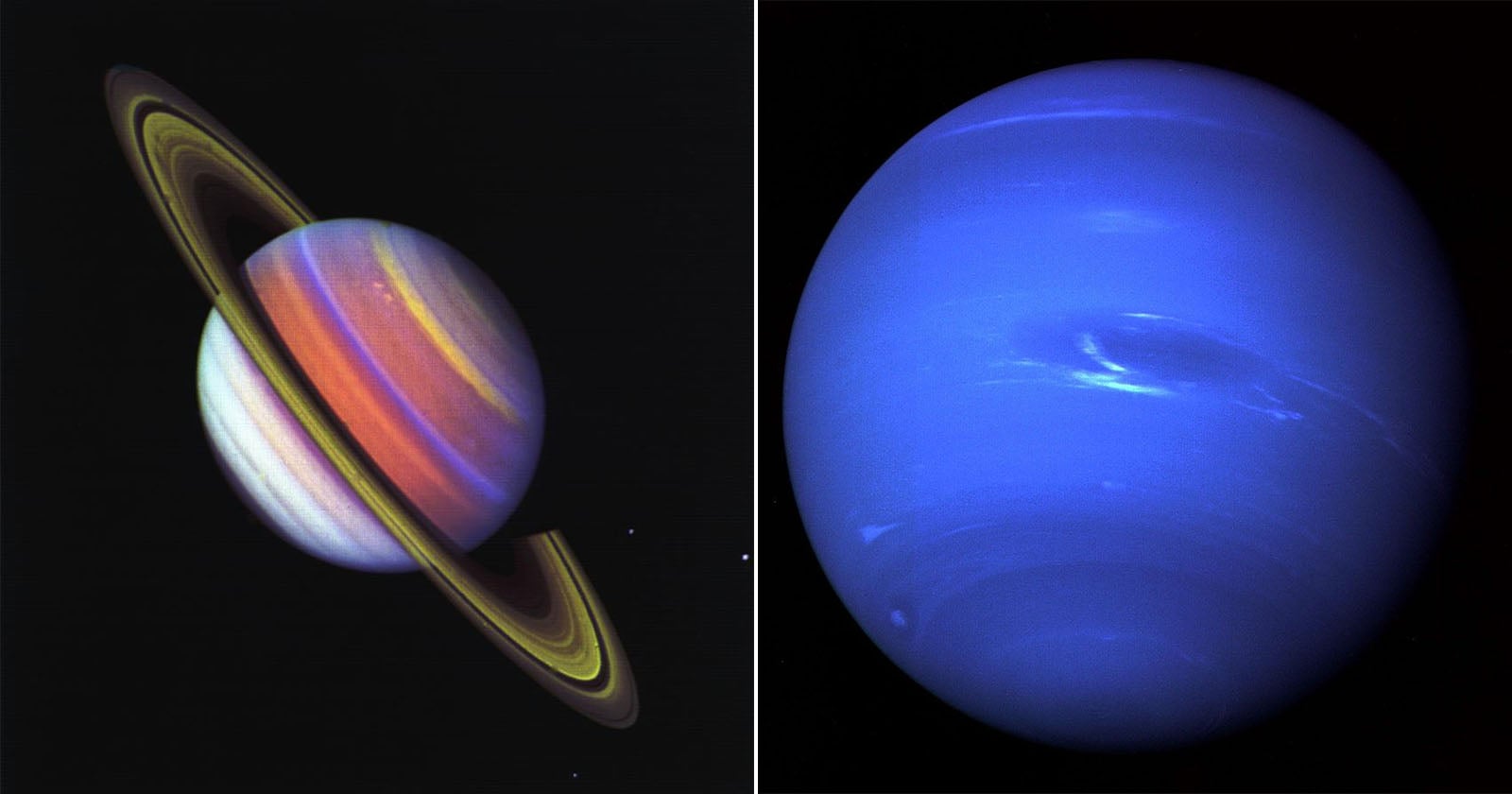
- Saturn (August 25, 1981): Passing within 63,000 miles (101,000 kilometers) of Saturn’s cloud tops, Voyager 2 captured stunning close-ups of its intricate ring system, revealing spokes and kinks, and discovered several new moons and a pair of new rings. It also provided detailed atmospheric profiles, shedding light on Saturn’s powerful winds and aurorae.
- Uranus (January 24, 1986): In a historic first, Voyager 2 became the only spacecraft ever to visit Uranus. It flew within 50,600 miles (81,500 kilometers) of the planet, discovering 10 new moons, two new rings, and a peculiar magnetic field tilted at an unusual 59 degrees from its rotational axis. The probe revealed Uranus’s unique featureless blue-green atmosphere and extreme axial tilt, causing dramatic seasonal changes.
- Neptune (August 25, 1989): Continuing its trailblazing journey, Voyager 2 became the first and only spacecraft to visit Neptune, passing within 3,000 miles (4,950 kilometers) of its north pole. It discovered six new moons (including Proteus, Larissa, Despina, Galatea, Thalassa, and Naiad), four new rings, and a colossal storm system dubbed the "Great Dark Spot," reminiscent of Jupiter’s Great Red Spot. Its closest approach to Neptune’s largest moon, Triton, revealed active geysers erupting nitrogen gas, indicating cryovolcanic activity.
Voyager 2’s Imaging Science System (ISS), a sophisticated television-style camera system, was instrumental in these discoveries, capturing thousands of images that redefined our understanding of the outer solar system. Its data fundamentally reshaped planetary science, providing the first close-up views of Uranus and Neptune and their complex systems of moons and rings.
Venturing Beyond: The Journey into Interstellar Space
After completing its grand tour of the gas giants, Voyager 2 continued its journey outward, eventually crossing the heliopause – the boundary where the Sun’s protective bubble of solar wind ends and the vast expanse of interstellar space begins. On December 10, 2018, Voyager 2 officially joined its sister probe, Voyager 1, as only the second human-made object to enter this uncharted territory, approximately 11 billion miles (17.7 billion kilometers) from the Sun.
This crossing was confirmed by the detection of a clear jump in plasma density, as measured by its Plasma Science Experiment (PLS) instrument, which had been inoperable on Voyager 1 during its crossing. This unique data from Voyager 2 provided invaluable insights into the characteristics of the interstellar medium and the heliosheath, the outermost layer of the heliosphere. The probes are now immersed in a region where the dominant influence comes from stars in our Milky Way galaxy, rather than our Sun, collecting data on cosmic rays, magnetic fields, and plasma density that are crucial for understanding the heliosphere’s interaction with the broader galactic environment.
The Sister Ship: Voyager 1 and its Parallel Mission
Voyager 1, launched a few weeks later on September 5, 1977, followed a different trajectory. While it visited Jupiter and Saturn, its path was optimized for a closer flyby of Saturn’s moon Titan, sacrificing the opportunity to visit Uranus and Neptune. This trajectory, however, provided a greater gravitational boost from Jupiter and Saturn, propelling Voyager 1 to a faster speed and a slightly different outbound direction, making it the most distant human-made object from Earth. Voyager 1 entered interstellar space in August 2012, six years before its twin.
Despite the differences in their planetary encounters, both probes are now exploring the same cosmic frontier. NASA plans to implement a similar "Big Bang" power-saving update on Voyager 1 in the near future, aiming to extend its operational life and ensure it continues to transmit vital data from even farther reaches of space. Voyager 1 is also famously known for capturing the iconic "Pale Blue Dot" photograph, a distant portrait of Earth from over 3.7 billion miles away, a poignant reminder of our planet’s fragility in the vastness of space.
The Enduring Scientific Value of the Voyager Program
The scientific value of the Voyager mission, nearly five decades on, remains immense and irreplaceable. The data transmitted from both probes provides a unique, direct sampling of the interstellar medium, allowing scientists to study its composition, magnetic fields, and cosmic ray environment in ways no other mission can. This information is critical for understanding the nature of the heliosphere, how it protects our solar system from galactic cosmic radiation, and how it interacts with the local interstellar cloud.
By continuing to monitor conditions beyond the heliopause, the Voyagers offer a singular perspective on our place in the galaxy. Their observations inform models of stellar winds, planetary magnetospheres, and the origins of cosmic rays, which have implications for astrobiology and the potential for life elsewhere. Furthermore, the longevity of these missions provides a rare opportunity for long-term studies of phenomena that unfold over decades, impossible to replicate with shorter-duration missions.
Beyond their scientific instruments, each Voyager probe carries a "Golden Record" – a 12-inch gold-plated copper phonograph record containing sounds and images selected to portray the diversity of life and culture on Earth. Intended for any intelligent extraterrestrial life form that might encounter them, these records are a symbolic message in a bottle, a testament to humanity’s curiosity and desire to connect with the cosmos.
An Unparalleled Engineering Feat and the Human Element
The continued operation of the Voyager probes is an unparalleled triumph of engineering and human dedication. Designed with 1970s technology for a primary mission of five years, their resilience in the face of extreme radiation, micrometeoroid impacts, and the harsh vacuum of space is extraordinary. The mission team, comprised of engineers and scientists, many of whom have worked on the program for decades, has consistently overcome unforeseen challenges through innovative problem-solving and meticulous care.
Operating spacecraft billions of miles away presents immense technical hurdles. The faint radio signals from Voyager 2, which arrive at Earth with a power of about one-quintillionth of a watt, require the most sensitive antennas of the Deep Space Network (DSN) to detect. Every command, every diagnostic check, and every software update is a monumental task, demanding precise timing and an intimate understanding of the spacecraft’s aging systems. The "Big Bang" update is a prime example of this ingenuity, requiring the team to essentially rewrite parts of the probe’s operating system remotely, adapting to dwindling resources with creative solutions.
The Future Horizon: When the Voyagers Will Fall Silent
Despite the heroic efforts to extend their operational lives, the Voyagers’ journeys are finite. The plutonium-238 fuel in their RTGs will eventually decay to a point where they can no longer generate enough power to keep their remaining instruments and essential heaters running. Scientists project that the last scientific instrument on Voyager 2 could cease operations sometime in the late 2020s, potentially extending into the early 2030s with continued optimization.
Once the power levels drop below a critical threshold, the remaining instruments will gradually be shut down. Eventually, the last operational component, likely the radio transmitter, will fall silent. At that point, the Voyagers will become silent, drifting ambassadors of Earth, continuing their interstellar journeys indefinitely, long after humanity has forgotten their original purpose. They will continue to travel outward from the Sun, eventually escaping the gravitational influence of our solar system entirely, becoming interstellar objects themselves, perhaps for billions of years.
Conclusion: A Testament to Human Ingenuity and Curiosity
The latest software update for Voyager 2 is more than just a technical adjustment; it is a profound symbol of humanity’s enduring quest for knowledge and our capacity for innovation. The Voyager program has redefined our understanding of the solar system, provided the first direct glimpse into interstellar space, and continues to push the boundaries of exploration.
These two spacecraft, launched nearly five decades ago, have not only delivered unprecedented scientific data but have also captured the imagination of generations. They stand as a testament to the power of human ingenuity, perseverance, and the insatiable curiosity that drives us to reach for the stars. As Voyager 2 continues its silent, lonely voyage, each byte of data it transmits reminds us of the extraordinary achievements possible when we dare to explore the unknown, leaving an indelible legacy that will inspire future generations of space explorers.