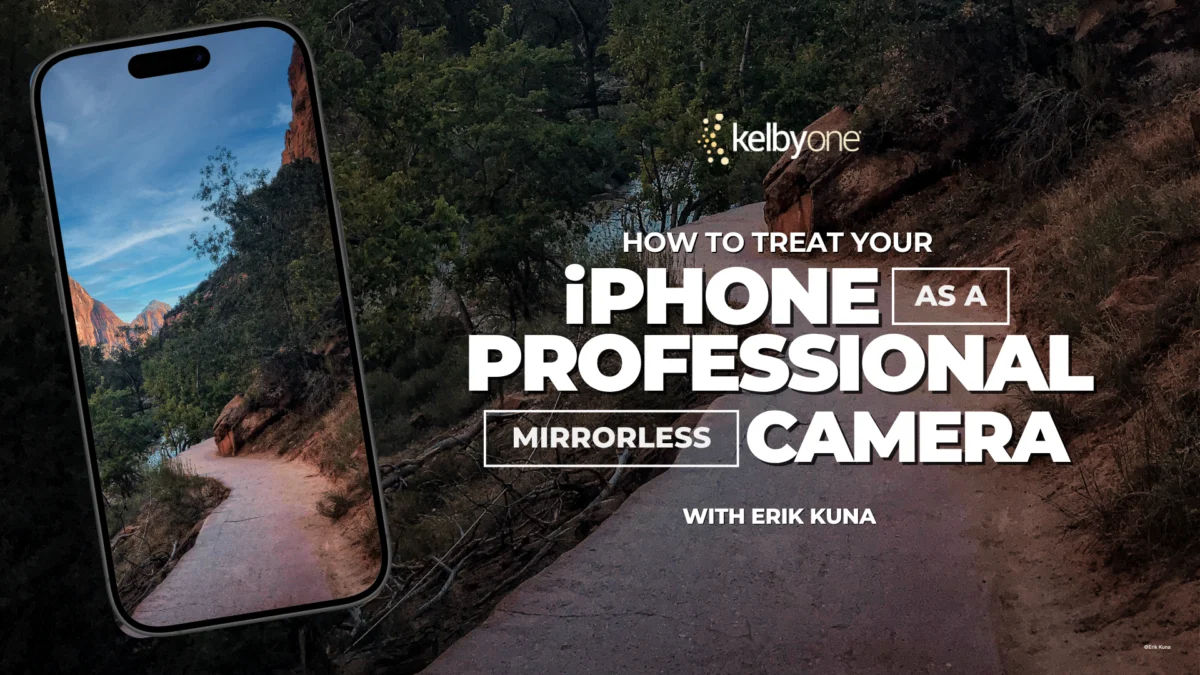
A new educational offering from KelbyOne, featuring renowned photographer Erik Kuna, aims to fundamentally shift how users approach their iPhone cameras, elevating them from simple point-and-shoot devices to sophisticated photographic instruments capable of professional-grade results. Titled "Treating Your iPhone Like a Mirrorless Camera," the class endeavors to empower iPhone users to take deliberate control over their image-making process, moving beyond automated settings to craft photographs with intention and precision. This initiative underscores a broader trend in the photography industry, where the capabilities of smartphone cameras are increasingly recognized and leveraged by both amateur enthusiasts and seasoned professionals.
The Evolution of Mobile Photography and its Educational Demands
The journey of smartphone photography has been nothing short of revolutionary. From rudimentary lenses and low-resolution sensors in the early 2000s, mobile phone cameras have evolved into complex imaging systems, often rivaling entry-level dedicated cameras. Apple’s iPhone series, in particular, has consistently been at the forefront of this evolution, introducing features like multiple lenses (ultrawide, wide, telephoto), advanced computational photography algorithms, Night mode, Cinematic mode, Macro photography, and the professional-grade ProRAW format. These advancements have democratized high-quality photography, putting powerful tools into the pockets of billions globally.
This rapid technological progression, however, has also created a knowledge gap. While the hardware is sophisticated, many users remain unaware of the full potential locked within their devices, often relying on the default automatic settings. The sheer convenience of a smartphone, always present and connected, has made it the primary camera for most people. Data consistently shows that iPhones frequently top lists of the most used cameras on popular photo-sharing platforms like Flickr, indicating their widespread adoption for capturing everyday moments and significant events alike. This pervasive use, coupled with advanced features, has fueled a growing demand for specialized education that helps users bridge the gap between casual snapshots and intentional photography.
Erik Kuna’s Vision: Bridging the Gap Between Smartphone and Professional Camera
Erik Kuna, an acclaimed photographer and educator known for his clear, practical teaching style, steps into this educational void with his new KelbyOne class. Kuna’s core philosophy, as presented in the course, is that the iPhone, when understood and operated strategically, can replicate many of the manual controls and creative decisions traditionally associated with high-end mirrorless cameras. He emphasizes that the "trick is learning to treat it like one," implying a shift in mindset from passive capture to active creation.
This approach is particularly relevant in an era where computational photography plays a significant role. While algorithms intelligently optimize many aspects of an image, Kuna’s class teaches users when and how to override these defaults, ensuring the final image aligns with the photographer’s artistic vision rather than simply the phone’s interpretation. This hands-on, decision-making emphasis is a hallmark of professional photography and is precisely what Kuna aims to instill in iPhone users. He understands that while the hardware is critical, it is the user’s informed choices that truly elevate a photograph.
Key Learnings: Mastering iPhone’s Advanced Capabilities
The curriculum of Kuna’s class is comprehensive, designed to equip students with a robust skill set for advanced iPhone photography. It systematically breaks down complex functionalities into digestible lessons, focusing on practical application.
-
Precision Control: Locking Focus and Exposure: One of the foundational lessons addresses the critical importance of controlling focus and exposure. While iPhones automatically detect subjects and adjust light levels, professionals often need to precisely dictate where the camera focuses and how bright or dark specific areas of the image should be. Kuna teaches techniques to "lock" these settings, preventing the camera from re-adjusting mid-shot and allowing for creative control over depth of field and dynamic range, much like one would use manual settings on a mirrorless camera. This is crucial for achieving sharp subjects and properly exposed scenes, especially in challenging lighting conditions.
-
Optimized Optics: Beyond Digital Zoom: The class delves into the strategic use of the iPhone’s multiple lenses. Modern iPhones typically feature an ultrawide, wide, and telephoto lens. Kuna educates users on when to choose each lens for optimal composition and image quality, strongly advocating against the common habit of "pinching to zoom." Digital zoom, he explains, often degrades image quality by simply cropping and enlarging pixels, whereas switching to the dedicated telephoto lens (where available) provides true optical zoom, preserving detail and clarity. This fundamental understanding helps users maximize the optical capabilities of their device.
-
ProRAW and Computational Photography: A significant portion of the course is dedicated to Apple’s ProRAW format. Introduced with iPhone 12 Pro models, ProRAW combines the computational benefits of Apple’s image processing with the flexibility of a standard RAW file. Kuna demystifies ProRAW, explaining when its larger file size is justified by the enhanced dynamic range and greater latitude for post-processing adjustments. He provides practical scenarios where shooting in ProRAW can save an otherwise challenging shot, offering more control over highlights, shadows, and color in editing. This is a powerful feature that truly bridges the gap between smartphone and professional camera capabilities.
-
Specialized Modes: Night, Macro, and Long Exposures: The class further explores the iPhone’s specialized photographic modes. Night mode, which leverages computational photography to capture bright, detailed images in low light, is taught not just as an automatic function but as a tool to be controlled for specific creative effects. Similarly, macro photography, allowing for extreme close-ups, and long exposure techniques—often achieved through Live Photos or third-party apps—are covered. Kuna shows how to harness these modes to create stunning images that go beyond standard snapshots, adding artistic flair and technical proficiency to the user’s repertoire.
-
Streamlined Workflow: Shortcuts and Editing: Beyond capture, Kuna addresses the essential post-processing workflow. He shares useful shortcuts that enhance efficiency in the field and guides students through a straightforward editing process, moving from initial adjustments in Apple Photos to more advanced refinements in Lightroom Mobile. This comprehensive approach ensures that students not only learn to capture better images but also to refine them into polished, shareable masterpieces, completing the full photographic cycle within the mobile ecosystem. The integration of Apple Photos and Lightroom Mobile reflects the contemporary reality of mobile-first content creation, where editing on the go is often a necessity.
The Broader Landscape of Photography Education and KelbyOne’s Strategic Offering
The launch of Erik Kuna’s class is indicative of a broader trend in photography education. As smartphone capabilities expand, so does the market for specialized courses. Online platforms like KelbyOne have become pivotal in delivering accessible, high-quality instruction to a global audience. KelbyOne, known for its extensive library of photography and Photoshop tutorials taught by industry experts, has consistently adapted its offerings to meet evolving technological landscapes and user demands. This new class is a direct response to the increasing sophistication of mobile cameras and the desire of users to unlock their full potential.
Industry analysts suggest that the demand for mobile photography education will only continue to grow. With billions of smartphones in circulation and new generations of devices continually pushing the boundaries of what’s possible, the need for skilled guidance in navigating these features is paramount. Educational initiatives like Kuna’s class empower users to maximize the investment they’ve already made in their devices, transforming a ubiquitous tool into a potent creative instrument. This also benefits the broader photography community by fostering a deeper appreciation for photographic principles, regardless of the camera used.
Implications for the Modern Photographer
The implications of such specialized mobile photography education are significant. For amateur photographers, it lowers the barrier to entry for achieving high-quality images without the substantial financial outlay often associated with traditional camera gear. It encourages experimentation and learning foundational photographic concepts (composition, light, exposure) using a device they already own and are comfortable with.
For professional photographers, understanding and mastering the iPhone as a secondary or even primary camera can offer unparalleled flexibility and stealth in certain shooting scenarios. It provides a portable, always-ready option for capturing behind-the-scenes content, quick reference shots, or even client-ready images in situations where a larger camera might be impractical or intrusive.
Furthermore, this class contributes to the ongoing convergence of traditional and mobile photography. It challenges the notion that "real" photography can only be done with dedicated cameras, asserting that the artistry lies in the photographer’s vision and control, irrespective of the equipment. This perspective enriches the photographic dialogue and encourages innovation across the spectrum of imaging technologies.
Accessibility and Investment
KelbyOne has made this valuable educational resource highly accessible. The class can be purchased individually for $39, offering a focused investment for those specifically interested in mastering their iPhone. Alternatively, students can opt for a KelbyOne subscription at $19.99 per month, which grants unlimited access not only to Erik Kuna’s iPhone class but also to the entire extensive library of courses covering a vast array of photography and creative topics. This subscription model provides excellent value for those looking for continuous learning and skill development across different photographic disciplines. The platform further underscores its commitment to student satisfaction with a 100% money-back guarantee, allowing prospective students to try the course risk-free. This commitment to accessibility and value reflects KelbyOne’s mission to make professional photography education attainable for a wide audience.
In conclusion, Erik Kuna’s "Treating Your iPhone Like a Mirrorless Camera" class on KelbyOne represents a timely and crucial offering in the evolving landscape of digital photography. By empowering iPhone users with the knowledge and techniques to take deliberate control over their device’s advanced capabilities, the course not only enhances individual photographic skills but also contributes to a broader appreciation for the iPhone as a sophisticated and versatile creative tool. It’s a testament to the idea that the best camera is truly the one you have with you, especially when you know how to wield its full potential.