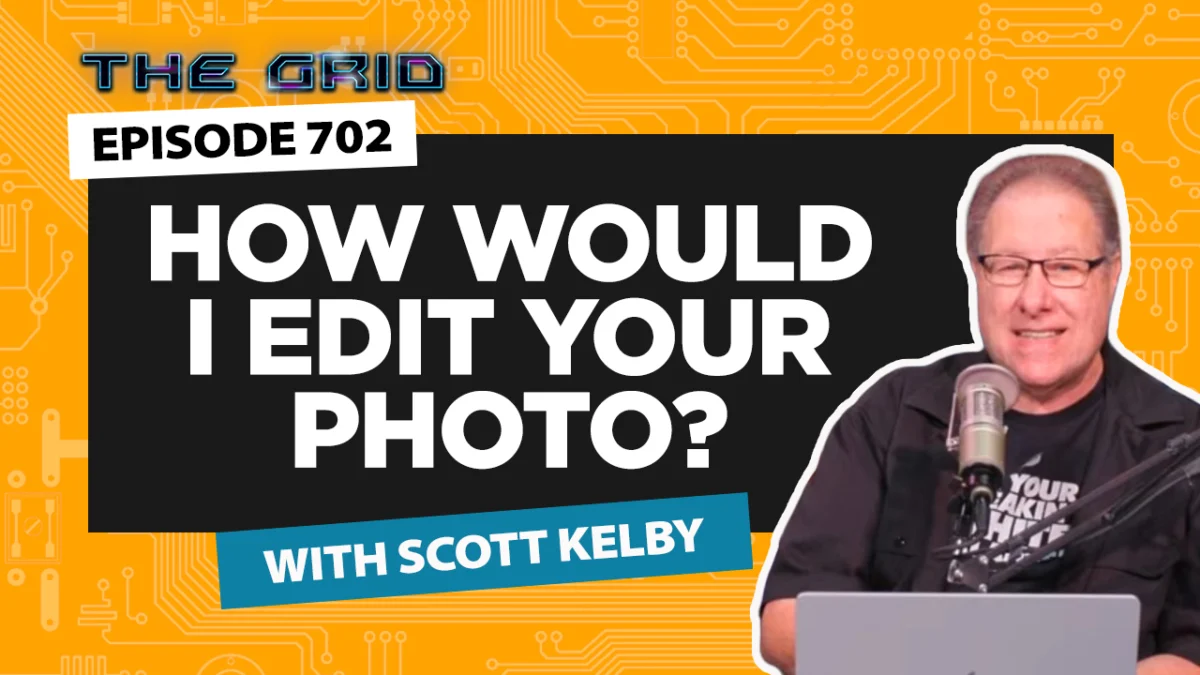
In a highly anticipated installment of "The Grid," the widely acclaimed online photography show, host Scott Kelby delivered a masterclass in digital image post-processing, dedicating its 702nd episode to a comprehensive, viewer-centric editing session. Eschewing the prevalent trend of superficial "one-click fixes," Kelby meticulously demonstrated his intricate workflow across Adobe Lightroom, Camera Raw, and Photoshop, providing an unprecedented look into the thought processes that underpin professional-grade image refinement. This episode, which swiftly garnered significant attention within the global photography community, served not merely as a tutorial but as a foundational course in critical editing decisions, spanning a vast array of photographic genres.
The Enduring Legacy of "The Grid" and KelbyOne
"The Grid," produced by KelbyOne, has long stood as a cornerstone of online photography education. Launched over a decade ago, the show quickly established itself as a vibrant forum for photographers of all skill levels, offering a mix of practical tips, industry news, gear reviews, and engaging interviews with leading professionals. With over 700 episodes under its belt, its longevity is a testament to its consistent quality and its ability to adapt to the rapidly evolving landscape of digital imaging. Scott Kelby, a towering figure in photography education, author of numerous best-selling books on Photoshop and Lightroom, and CEO of KelbyOne, has cultivated a reputation for distilling complex technical concepts into accessible, actionable advice. His pedagogical approach, characterized by clear explanations and real-world applicability, has resonated with millions of aspiring and professional photographers worldwide. This particular episode, focusing on viewer-submitted images, underscores "The Grid’s" commitment to direct engagement with its audience, transforming theoretical concepts into tangible improvements on actual photographic challenges faced by its community.
The decision to dedicate an entire episode to detailed, multi-software editing reflects a growing demand within the photography community for more profound insights into post-processing. As digital cameras become increasingly sophisticated, producing RAW files with immense data, the art of editing has transitioned from an optional enhancement to an integral part of the photographic process. Industry analysts estimate that the global market for photo editing software continues to expand, driven by both professional demand and the explosion of content creation among amateur enthusiasts. Platforms like KelbyOne, with their subscription-based models offering extensive libraries of courses, have become indispensable resources for those seeking to master these complex tools.
A Deep Dive into the Editing Workflow: The "Why" Behind the "How"
The core philosophy espoused by Kelby in this episode was the paramount importance of understanding the "why" behind each editing decision. Rather than presenting a series of isolated adjustments, he articulated a strategic approach, beginning with foundational choices like cropping and extending to nuanced refinements. This emphasis on critical thinking over rote application of techniques resonated strongly, addressing a common pitfall among photographers who often apply edits without fully grasping their ultimate impact on the narrative or aesthetic of an image.
Kelby’s demonstrations traversed a comprehensive spectrum of digital darkroom techniques, showcasing the complementary strengths of Lightroom, Camera Raw, and Photoshop. Lightroom, often the starting point for its robust cataloging and non-destructive global adjustments, was utilized for initial culling, exposure balancing, and basic color correction. Camera Raw, essentially the RAW processing engine shared by Photoshop and Lightroom, allowed for precise control over the raw image data, crucial for recovering highlights, lifting shadows, and fine-tuning white balance with maximum fidelity. Finally, Photoshop entered the workflow for advanced manipulations, including intricate masking, selective sharpening, perspective corrections that demand pixel-level precision, and the creation of simulated effects like shallow depth of field. This multi-application approach highlighted the professional reality that often, no single software provides all the answers, and a fluid transition between them is key to achieving optimal results.
Key Techniques Unpacked: From Global Adjustments to Local Refinements
Several specific techniques were highlighted, each serving a critical function in the post-processing pipeline:
- Adaptive Color: Kelby demonstrated how intelligent color adjustments can quickly bring life and vibrancy to an image without over-saturation. This involved understanding color relationships and using tools that adjust hues, saturations, and luminances in a balanced manner, often leveraging presets or AI-driven suggestions as a starting point, but always refined manually.
- Refining White Balance: Beyond auto white balance, Kelby delved into the artistic and corrective aspects of this fundamental adjustment. Correcting color casts to achieve a neutral baseline is crucial, but he also showed how intentionally warming or cooling an image can evoke specific moods or enhance storytelling, especially in travel or landscape photography.
- Correcting Perspective: A common issue in architectural and urban photography, distorted perspective can detract significantly from an image’s professionalism. Kelby meticulously demonstrated how to use transform tools in Photoshop and Lightroom to straighten converging lines and correct lens distortions, ensuring structures appear true to life.
- Sharpening Selectively: indiscriminate sharpening can introduce noise and artifacts. Kelby emphasized the importance of selective sharpening, applying it only to areas that benefit from enhanced detail (e.g., eyes in a portrait, textures in a landscape) while leaving smoother areas untouched. This often involves masking techniques to isolate specific regions.
- Masking Specific Areas: Perhaps one of the most powerful tools in a photographer’s arsenal, masking allows for localized adjustments without affecting the entire image. Kelby showcased various masking techniques, from brush masks to luminosity masks and AI-powered selections, to precisely target areas for exposure changes, color shifts, or applying effects like dodging and burning.
- Simulating Shallow Depth of Field: While traditionally achieved in-camera with wide apertures, Kelby illustrated how to digitally create or enhance the look of a shallow depth of field. This advanced technique involves meticulous subject selection and background blurring using tools like Gaussian Blur and sophisticated masking, offering a powerful way to isolate subjects and direct viewer attention when the original capture lacked this characteristic.
These demonstrations were not merely about executing steps; they were about integrating these techniques into a cohesive workflow, always with the final image and its intended impact in mind.
The AI Frontier: When to Embrace, When to Restrain
A particularly salient discussion point in the episode revolved around the burgeoning role of Artificial Intelligence (AI) in photo editing. Kelby offered practical, nuanced advice on when AI-powered tools, now integrated into major editing software, can genuinely save time and enhance workflow, and when a more traditional, manual approach still yields superior results.
The rapid advancements in AI have introduced capabilities such as intelligent subject selection, sky replacement, content-aware fill, and even automated noise reduction and upscaling. These tools have revolutionized certain aspects of editing, significantly reducing the time required for tasks that were once labor-intensive and highly skilled. For instance, AI-driven subject masking can isolate a person or object with remarkable accuracy in seconds, a task that previously demanded painstaking manual selection.
However, Kelby cautioned against over-reliance on AI, particularly when artistic intent and subtle nuances are paramount. He underscored that while AI can be incredibly efficient for repetitive or technically complex tasks, it often produces generic results that lack the distinct artistic touch of a human editor. For critical adjustments where creative vision dictates the outcome, or when dealing with highly complex or ambiguous image elements, manual precision remains irreplaceable. The analysis suggested that AI should be viewed as a powerful assistant, accelerating the initial stages of editing or tackling specific technical challenges, but the ultimate creative control and final judgment must reside with the photographer. This balanced perspective is crucial for photographers navigating the rapidly evolving technological landscape, ensuring they leverage innovation without sacrificing artistic integrity.
Diverse Genres, Universal Principles
The strength of this "How Would I Edit Your Photo?" episode lay in its broad applicability. By selecting viewer-submitted images across a multitude of genres—sports, landscapes, architecture, wildlife, and travel photography—Kelby effectively demonstrated that while the subject matter changes, many core editing principles remain universal.
- Sports Photography: Often characterized by high-speed action and challenging lighting, sports images frequently require aggressive noise reduction, precise sharpening to freeze motion, and dynamic adjustments to enhance impact. Kelby showed how to bring out the intensity of a moment while maintaining clarity.
- Landscape Photography: Emphasizing expansive scenes, landscape editing often focuses on dynamic range recovery (taming bright skies and deep shadows), color grading to evoke mood, and meticulous sharpening of distant details. Perspective correction can also be vital for ensuring natural horizons.
- Architecture Photography: Precision is key here. Straightening lines, correcting lens distortions, and carefully managing highlights and shadows to reveal structural details are paramount. Kelby demonstrated how careful masking can illuminate specific architectural features.
- Wildlife Photography: Detail and texture are crucial in wildlife. Editors often focus on enhancing the sharpness of fur or feathers, refining eye contact, and often isolating the subject from a distracting background, sometimes through selective blurring.
- Travel Photography: This genre often benefits from evocative color grading, mood enhancement, and subtle compositional tweaks. White balance adjustments to reflect local light and atmosphere, along with targeted exposure boosts to highlight cultural elements, are common.
Across all these genres, Kelby’s consistent message was that editing is not about transforming an image into something it’s not, but rather about realizing its full potential, enhancing the story it tells, and bringing the photographer’s vision to fruition.
Broader Impact and Implications for the Photography Community
The comprehensive nature of "The Grid" Episode 702 carries significant implications for the broader photography community and the landscape of digital education. For aspiring photographers, such in-depth, practical demonstrations are invaluable. They offer a tangible roadmap for developing essential post-processing skills, bridging the gap between theoretical knowledge and practical application. The confidence gained from understanding a seasoned professional’s workflow can significantly accelerate a learner’s progress, reducing frustration and fostering a deeper appreciation for the craft.
For established professionals, the episode serves as a refresher and an opportunity to observe new techniques or refine existing workflows. The constant evolution of software and the emergence of new tools necessitate continuous learning, and insights from industry leaders like Scott Kelby are critical for staying competitive. Moreover, the episode reinforces the value of investing time in mastering post-processing, recognizing it as a distinct and crucial skill set within the photographic discipline, on par with mastery of camera techniques.
Industry observers note that the demand for high-quality, practical online education continues to surge. Platforms that can deliver content combining expert instruction with real-world examples, such as KelbyOne, are increasingly central to the professional development of creatives. This episode of "The Grid" is a prime example of how such platforms empower individuals globally, democratizing access to education that was once confined to expensive workshops or specialized university programs.
In conclusion, Scott Kelby’s "How Would I Edit Your Photo?" episode on "The Grid" transcends a mere tutorial. It stands as a significant educational event, offering a meticulously detailed, philosophically grounded, and technologically comprehensive guide to modern digital image post-processing. By emphasizing critical thinking, showcasing a multi-software approach, and offering practical wisdom on integrating AI tools, Kelby has once again reinforced his position as a leading educator, empowering photographers to become faster, more confident, and ultimately, more artistic in their pursuit of photographic excellence. The episode serves as a powerful reminder that while technology evolves, the foundational principles of visual storytelling and the artistry of the human touch remain paramount.