The global aviation community remains in a state of profound shock following the catastrophic loss of Air India flight AI-171, which crashed on June 12, 2025, during its final approach to Sardar Vallabhbhai Patel International Airport in Ahmedabad. The aircraft, a Boeing 787-8 Dreamliner, was completing a long-haul journey from London Heathrow when the incident occurred, resulting in the deaths of 244 of the 245 people on board. As the wreckage is meticulously scoured for evidence, the primary focus of the investigation has shifted to the aircraft’s Flight Data Recorder (FDR) and Cockpit Voice Recorder (CVR)—collectively known as the black boxes—which have been recovered and transported to a specialized laboratory in New Delhi for exhaustive analysis.
The recovery of these devices marks a critical juncture in what is expected to be one of the most complex aviation investigations in recent Indian history. Under the oversight of the Aircraft Accident Investigation Bureau (AAIB) of India, and with technical assistance from the United States National Transportation Safety Board (NTSB) and Boeing’s engineering team, investigators are working to reconstruct the final moments of the flight. The tragedy has sent ripples through the international travel sector, raising urgent questions regarding the mechanical integrity of the Dreamliner fleet and the specific circumstances surrounding the approach to Ahmedabad.
Detailed Chronology of Flight AI-171
Flight AI-171 departed London Heathrow (LHR) on the evening of June 11, 2025, scheduled for a routine nine-hour flight to Ahmedabad (AMD). The aircraft was carrying 232 passengers and 13 crew members. According to preliminary radar data and air traffic control (ATC) logs, the flight proceeded without incident across European and Middle Eastern airspace. The Boeing 787, known for its advanced composite materials and fuel efficiency, was operating at its standard cruising altitude of 37,000 feet for the majority of the journey.
As the aircraft entered Indian airspace in the early hours of June 12, the flight crew initiated a standard descent. Weather reports at the time of the approach indicated visibility was within acceptable limits, though local observers noted the presence of seasonal pre-monsoon turbulence. At approximately 04:15 AM local time, the aircraft was cleared for an ILS (Instrument Landing System) approach to Runway 23.
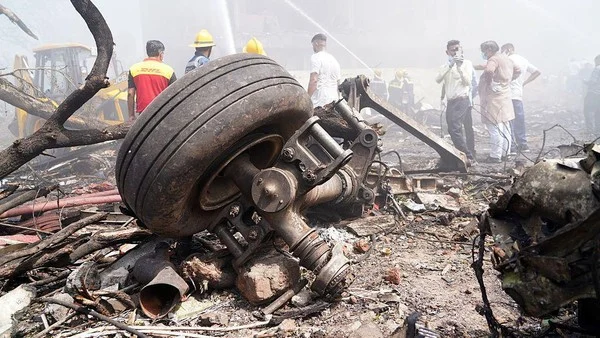
The situation deteriorated rapidly within the final four miles of the approach. Radar telemetry suggests the aircraft experienced a sudden and unexplained loss of altitude accompanied by a sharp deviation from the glide path. Witnesses near the airport perimeter reported hearing a change in engine pitch followed by a massive fireball as the aircraft impacted a vacant industrial zone approximately two kilometers from the runway threshold. Emergency services reached the scene within minutes, but the intensity of the post-crash fire limited rescue operations. The sole survivor, a passenger seated in the rear section of the fuselage, remains in critical condition at a specialized trauma center in Ahmedabad.
The Role and Analysis of the Black Boxes
The primary objective of the current investigative phase is the extraction and interpretation of data from the two hardened recording devices. Despite the name, black boxes are painted bright international orange to facilitate recovery from wreckage or the seabed.
The Flight Data Recorder (FDR) is designed to record at least 25 hours of flight data, tracking thousands of parameters simultaneously. In the case of the AI-171 investigation, the FDR will provide a second-by-second account of the aircraft’s airspeed, altitude, vertical acceleration, engine thrust, and the position of flight control surfaces, including the flaps and slats. Investigators are particularly interested in the "state of health" of the aircraft’s fly-by-wire systems during the final descent.
The Cockpit Voice Recorder (CVR) captures all audio signals in the cockpit, including conversations between the pilots, radio transmissions to air traffic control, and ambient sounds such as mechanical clicks or automated alarms. The CVR is expected to reveal the crew’s workload and their response to any perceived emergencies. Analysts will listen for "master caution" warnings or specific verbalizations regarding flight control difficulties.
The analysis process in New Delhi is being conducted in a "clean room" environment to prevent any data corruption. The process involves four distinct stages:

- Decontamination and Assessment: The units are cleaned of debris and checked for structural integrity.
- Data Extraction: Specialized software is used to download the raw binary data from the solid-state memory chips.
- Transcription and Synchronization: The audio from the CVR is transcribed and synchronized with the technical data from the FDR to create a unified timeline.
- Simulation: The data will eventually be used to recreate the flight in a high-fidelity simulator to see if test pilots can replicate the aircraft’s behavior.
Preliminary Theories: The Flap System Hypothesis
While the AAIB has cautioned against premature conclusions, early evidence points toward a potential failure in the aircraft’s flap system. Flaps are movable panels on the trailing edge of the wings that increase lift and drag, allowing an aircraft to fly at the lower speeds required for landing.
Initial reports suggest that the crew may have encountered a "flap asymmetry" or a total failure of the flap actuation system as they configured the aircraft for landing. If one side’s flaps extend while the other side’s remain retracted, it can induce a violent and uncontrollable roll, especially at low altitudes where there is little room for recovery. The investigation will scrutinize the 787’s electronic flap controllers and hydraulic actuators to determine if a mechanical or software glitch prevented the system from functioning correctly.
Official Responses and International Cooperation
The Indian Ministry of Civil Aviation has vowed a transparent and thorough investigation. "Our thoughts are with the families who have lost their loved ones in this unimaginable tragedy," stated the Union Minister for Civil Aviation. "We are working in close coordination with international experts to ensure that no stone is left unturned. The integrity of our aviation safety system depends on finding the truth behind AI-171."
Boeing issued a formal statement expressing deep regret and confirming that a technical team is on-site in India to assist the AAIB. Under the International Civil Aviation Organization’s (ICAO) Annex 13, the NTSB is also participating because the aircraft was manufactured in the United States. This tripartite cooperation ensures that the investigation adheres to global standards and that any findings are shared with the broader aviation community to prevent future occurrences.
Air India, which has been undergoing a massive transformation under the ownership of the Tata Group, has grounded the specific maintenance crew responsible for the aircraft’s last scheduled check as a standard precautionary measure. The airline has also set up a 24-hour crisis support center for the families of the victims.
Broader Industry Implications and Safety Scrutiny
The crash of AI-171 has significant implications for the global aviation industry, particularly regarding the Boeing 787 Dreamliner. Since its entry into service, the 787 has been lauded for its innovation, but it has also faced scrutiny over various technical issues, including battery fires in its early years and more recent concerns regarding manufacturing quality at certain production facilities.
If the investigation confirms a systemic flaw in the 787’s flight control systems or flap actuators, it could lead to a global Airworthiness Directive (AD), requiring hundreds of aircraft to undergo immediate inspections or modifications. This would result in massive operational disruptions for major carriers worldwide who rely on the Dreamliner for their long-haul networks.
Furthermore, the incident raises questions about pilot training for "upset recovery" in highly automated aircraft. As planes become more reliant on software, the ability of pilots to manually intervene during a complex system failure remains a focal point of safety training. The CVR data will be instrumental in determining if the crew of AI-171 had the necessary information to diagnose the problem in the few seconds they had before impact.
Conclusion and Path Forward
The investigation into Air India flight AI-171 is expected to span several months, with a preliminary report likely to be released within 30 to 60 days. The final report, which will contain the definitive cause and safety recommendations, may take over a year to complete.
For the families of the 244 victims, the opening of the black boxes represents the first step toward closure. For the aviation world, it is a sobering reminder that despite the industry’s extraordinary safety record, the margin for error remains razor-thin. The findings from the New Delhi laboratory will not only explain why AI-171 fell from the sky but will also dictate the safety protocols for the next generation of air travel, ensuring that the lessons learned from this tragedy are etched into the future of flight safety.