The predawn chill of the Pacific Ocean offered little respite from the palpable excitement permeating the SeaLegacy 1. For the crew and myself, this particular morning marked the culmination of a long journey, the anticipation for our most anticipated dive of the trip to the Fakarava atoll reaching a fever pitch. Beneath a sky ablaze with a full moon and a canopy of stars, we donned our masks and descended into the inky blackness, preparing to witness one of the ocean’s most profound natural spectacles.
The Fakarava Atoll: A Sanctuary Under Threat
Fakarava, an island commune in French Polynesia, lies approximately 700 nautical miles northeast of Tahiti. It is renowned for its UNESCO Biosphere Reserve status, a testament to its pristine lagoons, idyllic beaches, and vibrant coral reefs. This remote paradise serves as a crucial habitat for an astonishing array of marine life, including countless fish species, seabirds, sea turtles, manta rays, and a significant population of sharks. For much of the year, these ecosystems thrive in a delicate equilibrium, largely undisturbed. However, the warmer months herald a dramatic shift as thousands of resident groupers congregate for their annual spawning event, transforming the atoll’s waters into a vibrant, albeit precarious, arena of life and survival.
The Annual Spawning: A Biological Imperative
The grouper spawning season in Fakarava is a precisely timed biological imperative, a critical event for the perpetuation of these species. Over several weeks, females, laden with eggs, and males, eager to fertilize them, migrate towards the mouth of the atoll’s channel. This channel, spanning roughly 10 by 30 nautical miles, acts as a crucial nexus between the sheltered lagoon and the open sea. The rhythmic ebb and flow of the tides, a cycle of six hours in and six hours out, play a vital role. This tidal movement not only facilitates nutrient dispersal into the ocean but also provides the perfect mechanism for the distribution of fertilized grouper eggs. As the tide reaches its zenith around the full moon, the stage is set for this extraordinary biological ballet to commence.

A Fleet of Sharks: Guardians of the Ecosystem
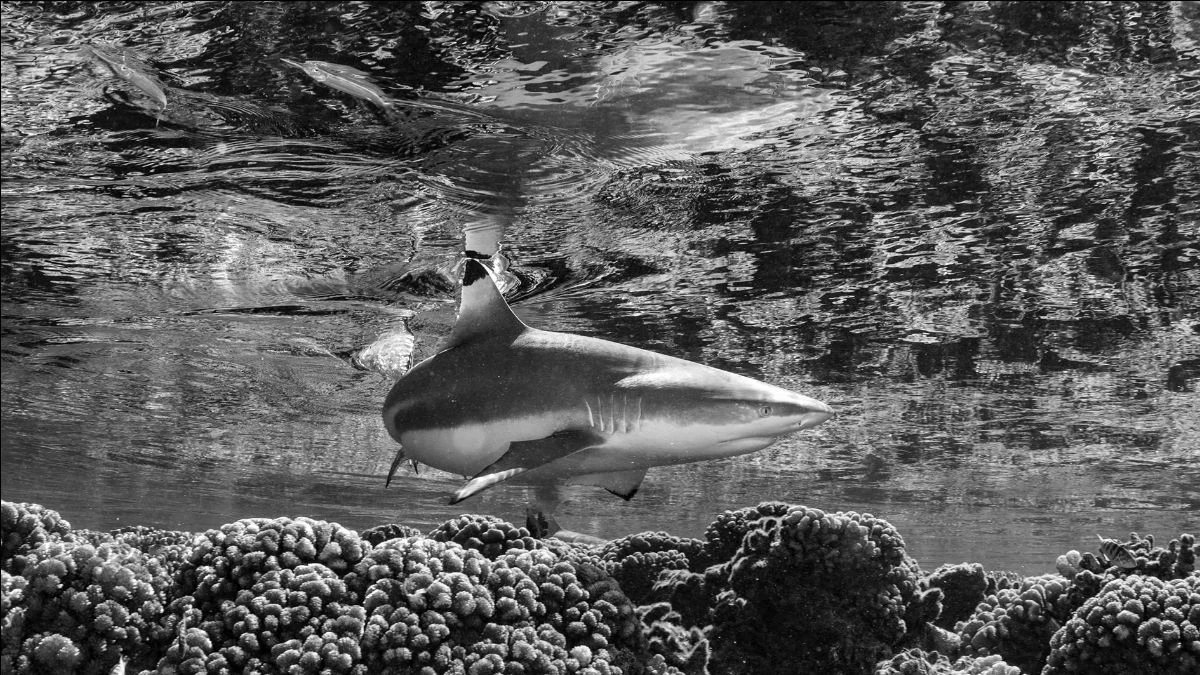
As the groupers gather, a formidable contingent of predators follows in their wake. Hundreds of sharks, a diverse array of species including tiger sharks and various reef sharks, transform the area into a dynamic hunting ground. These apex predators, often maligned and misunderstood, play an indispensable role in maintaining the health and balance of the reef ecosystem. Their presence is not a threat to the natural order but rather an integral component of it. The iconic quote by Eugenie Clark, "When you see a shark underwater, you should say, ‘How lucky I am to see this beautiful animal in his environment,’" encapsulates this profound perspective. Witnessing sharks in their natural habitat is, in fact, an indicator of a thriving and balanced ecosystem.
The Spectacle Unfolds: Descent into the Frenzy
Positioned strategically at the atoll’s edge, my team and I commenced our descent along the dramatic drop-off at the channel’s mouth. Initially, the underwater world was deceptively serene. However, as we moved deeper, the waters began to stir, signaling the imminent start of one of the ocean’s most awe-inspiring events. Thousands of groupers, their bodies perfectly camouflaged against the coral heads, were observed maintaining a remarkable stillness, a testament to their survival instincts. Their large eyes tracked the movements of the patrolling sharks, a silent acknowledgment of the impending danger. The quiet was periodically shattered by the guttural crunch of a successful hunt, followed by the chaotic thrashing of numerous sharks, momentarily disrupting the underwater tranquility.
The Climax: A Cascade of Life and Predation
Around 100 feet below the surface, the synchronized release of eggs by the female groupers marked the apex of the event. The surrounding waters erupted in a frenzy of activity. With each upward surge of a female releasing her precious cargo, dozens of males converged, fertilizing the eggs with milt. This synchronized release, a testament to millions of years of evolutionary adaptation, saw thousands of groupers actively participating in the perpetuation of their species. They then swiftly dispersed, evading the swift descent of the sharks, orchestrating a spectacle that only nature could command. The scene was both breathtakingly beautiful and profoundly poignant, a powerful reminder of the relentless cycle of life and death that defines the marine world. The entire dramatic event, from the initial gathering to the spawning and the subsequent predatory surge, unfolded in a matter of mere moments, leaving observers with an indelible impression.
Ecological Equilibrium: The Interconnectedness of Marine Life
The seemingly chaotic and at times violent interactions observed in nature can often lead to human questioning of their purpose. However, a deeper understanding reveals the intricate web of life that has evolved over millennia to achieve a precarious state of equilibrium. Every element, from the subtle coloration of a grouper’s scales to the fate of each individual egg, plays a crucial role in this delicate balance. Predators like sharks are not mere agents of destruction; they are vital contributors to the ecosystem, distributing essential nutrients across the reef and influencing the behavior and populations of other marine species.

The scientific community has long recognized the importance of apex predators in maintaining marine biodiversity. Studies have shown that the presence of sharks can lead to healthier fish populations by culling weaker individuals, thereby improving the overall genetic fitness of prey species. Furthermore, their feeding patterns can influence the distribution of nutrients, benefiting sessile organisms like corals and algae. The absence of sharks can lead to trophic cascades, where imbalances at the top of the food chain ripple down, negatively impacting entire ecosystems.
The Imperative of Conservation: Protecting Our Ocean’s Vital Role
The notion of "learning to live" with sharks and other wildlife is fundamentally flawed. The truth is far more profound: we live because of them. These creatures have sustained our oceans for millennia, long before human intervention began to impact these environments. The vital role they play in maintaining the health and resilience of marine ecosystems is undeniable.
The Fakarava atoll, as a UNESCO Biosphere Reserve, serves as a critical sanctuary. However, even these protected areas face mounting pressures from climate change, pollution, and unsustainable fishing practices. The spectacular events witnessed during the grouper spawning underscore the urgent need for robust conservation efforts. Protecting these wild and vital ecosystems is not merely an environmental concern; it is an imperative for the future of our planet and for humanity itself.
My intention in capturing the wonder, drama, and inherent beauty of places like Fakarava is to foster a deeper appreciation for these natural marvels and to inspire concerted local and global efforts towards their preservation. By sharing these stories and the scientific understanding behind them, we aim to galvanize support for initiatives that safeguard these critical marine habitats for generations to come. The health of our oceans is intrinsically linked to our own well-being, and the continued flourishing of species like the grouper and the sharks that prey upon them is a bellwether for the planet’s ecological future.

The data collected by organizations such as the Paul Nicklen Foundation and its partners consistently highlight the decline in marine megafauna populations globally. For instance, estimates suggest that the global shark population has plummeted by over 70% in the last 50 years due to overfishing and habitat destruction. The Fakarava atoll, with its exceptional biodiversity and successful conservation measures, represents a beacon of hope, demonstrating that concerted efforts can indeed make a difference. However, the vulnerability of such events to external pressures remains a significant concern. Climate change, with its associated ocean acidification and rising temperatures, poses a long-term threat to coral reef health and the reproductive success of species like the grouper.
Broader Implications and Future Outlook
The Fakarava spawning event is a microcosm of the complex ecological processes occurring in oceans worldwide. Understanding and protecting these natural phenomena is paramount for maintaining global marine biodiversity and the invaluable ecosystem services that oceans provide, including climate regulation and food security. The success of conservation initiatives in Fakarava offers a valuable model for other regions facing similar ecological challenges. Continued research, community engagement, and international cooperation are essential to ensure that such breathtaking displays of nature’s power and beauty are not relegated to history. The hope is that by illuminating these critical ecological interactions, a greater sense of responsibility and urgency will be fostered, leading to decisive actions that protect our planet’s precious marine heritage.
With gratitude and a profound hope for the future,
Paul Nicklen