The intersection of vintage hardware restoration and chemical experimentation has yielded a significant case study in the longevity of analog photographic materials. Chris Giles, a specialist in the collection and repair of legacy imaging equipment, recently documented the successful retrieval of images from a roll of 35mm Kodak Ektachrome Elite 100 that had been expired for over three decades. The project, which utilized non-standard "cross-processing" techniques and aging chemical reagents, provides a technical benchmark for the resilience of slide film when subjected to environmental degradation and unorthodox laboratory conditions.
The film in question, part of a "job lot" acquisition of vintage camera gear, carried an expiration date of 1995. Given the unknown storage conditions—factors such as humidity and temperature fluctuations that typically accelerate the decay of silver halide emulsions—the experiment served as a test of the latent image stability and the versatility of the C41 color negative process when applied to E6 reversal film.
Historical Context and Technical Specifications of Kodak Ektachrome Elite 100
To understand the significance of the results, it is necessary to examine the lineage of the medium. Kodak Ektachrome Elite 100 was a consumer-grade transparency (slide) film designed for the E6 development process. Introduced during the peak of the analog era, the Elite series was marketed to enthusiast photographers who required the high saturation and fine grain characteristic of professional Ektachrome stocks but at a more accessible price point.
The E6 process, the standard for color reversal film, involves a complex six-bath sequence including a first developer, reversal bath, color developer, pre-bleach, bleach-fix, and stabilizer. In contrast, the C41 process is a shorter, three-part sequence designed for color negative film. When E6 film is processed in C41 chemistry—a technique known as "cross-processing" or "X-pro"—the resulting images are negatives rather than slides. This usually results in extreme contrast shifts, increased grain, and unpredictable color casts, often leaning toward heavy greens or yellows.
The choice to cross-process the 1995-expired roll was driven by both economic and technical pragmatism. Standard E6 processing is increasingly expensive and less accessible in the current market, whereas C41 home-processing kits, such as the Cinestill Cs41 used in this instance, have become the standard for the modern analog revival.
Methodology and Chronology of the Experiment
The experiment followed a structured timeline, beginning with the acquisition of the film and concluding with high-resolution digital scanning.
Acquisition and Preparation (July 2026)
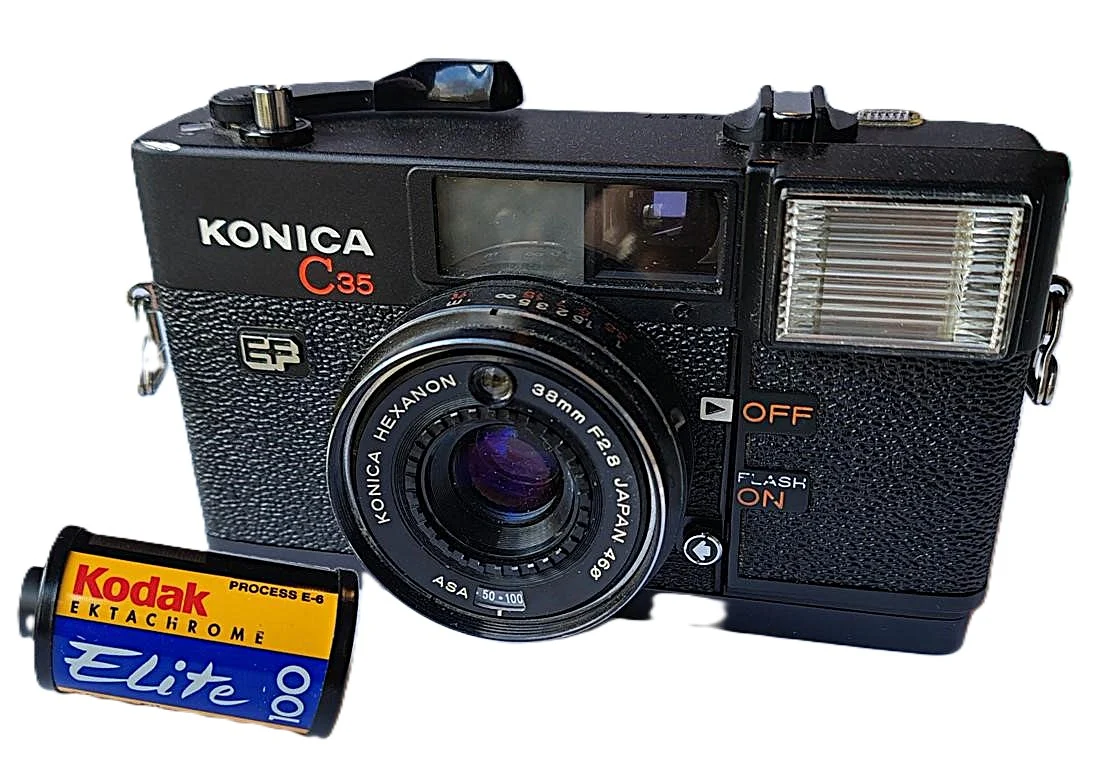
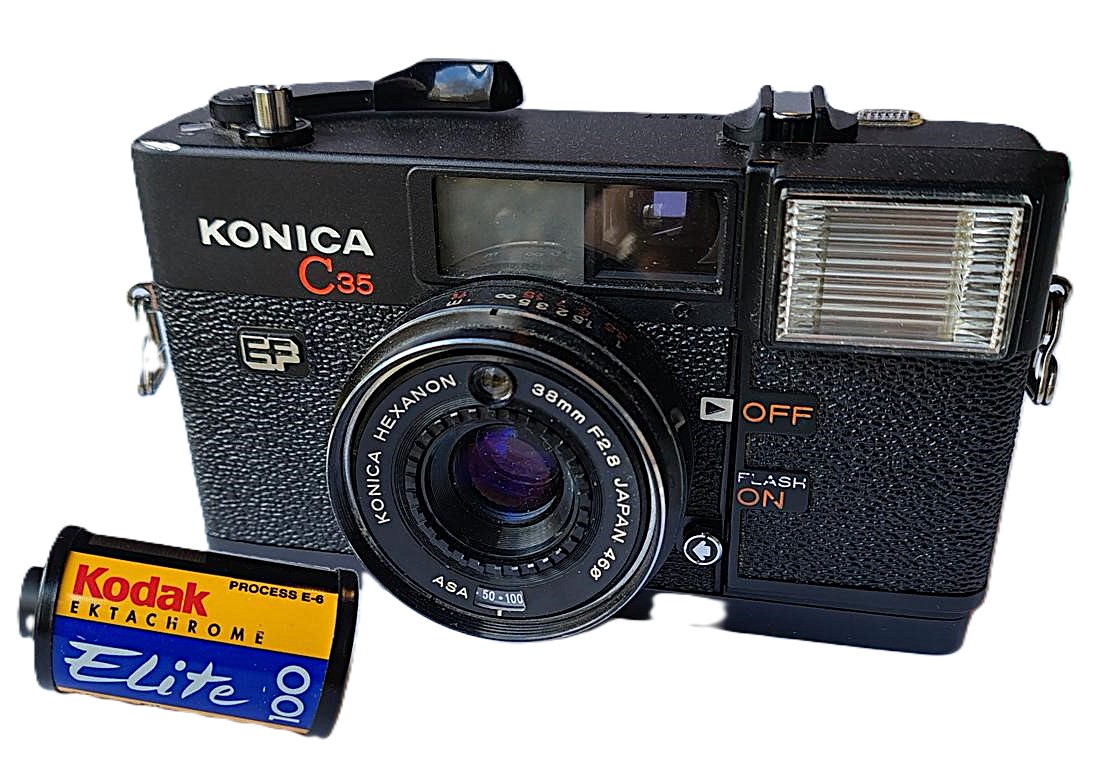
Upon acquiring the unused roll, Giles opted to use a Konica C35 for the exposure phase. The Konica C35, a compact rangefinder introduced in the late 1960s, is noted for its Hexanon 38mm f/2.8 lens and its reliance on a programmed shutter system. This choice of hardware was intentional; the camera’s reputation for reliability and optical sharpness provided a stable variable in an experiment otherwise defined by unpredictable factors.

Exposure Phase
A critical decision in shooting expired film is the adjustment of the ISO (film speed). A common industry "rule of thumb" suggests overexposing expired film by one stop for every decade past its expiration date to compensate for the loss of sensitivity. For a film expired in 1995 being shot in 2026, this would have required setting the ISO at approximately 12. However, due to the practical limitations of the Konica C35 and the desire to test the film’s native resilience, Giles elected to shoot at the "box speed" of ISO 100. The frames were captured over a period of several days in varied lighting conditions.
Chemical Processing and Development
The development phase utilized a Cinestill Cs41 kit that was nearing the end of its chemical viability. To account for both the expiration of the film and the depletion of the developer’s potency, Giles implemented a 50% increase in development time. This "push" processing is a standard technique used to increase density in underexposed or aged emulsions, though its effects on cross-processed slide film are often volatile.
Technical Analysis of Visual Results
The results of the development yielded images that defied typical expectations for 30-year-old cross-processed film. While cross-processing usually produces wild color shifts, the scans from this roll exhibited remarkably accurate color reproduction.
Contrast and Density
The images demonstrated a high level of contrast, a known byproduct of the C41-on-E6 method. The blacks were deep and the highlights sharp, though the increased development time likely contributed to a compression of the dynamic range. Despite this, the "Elite" emulsion retained enough detail in the mid-tones to produce viable, high-quality images.

Atmospheric and Emulsion Degradation
The most prominent signs of the film’s age appeared in areas of uniform color, such as the sky. These regions exhibited a "grainy, blotchy effect." In technical terms, this is often attributed to "base fog" or the uneven decay of the dye couplers within the film layers. Over decades, cosmic radiation and heat can cause the silver halide crystals to sensitize spontaneously, leading to a mottled appearance upon development. The fact that these artifacts were localized primarily in the highlights suggests that the film’s base remained relatively stable, but the chemical integrity of the top emulsion layers had begun to fracture.
Digitization and Post-Processing
The negatives were digitized using a Canon 9000F flatbed scanner. The scanning process treated the strips as standard C41 negatives. The ability of the scanner’s software to interpret the cross-processed colors without requiring extensive manual correction further underscores the surprising stability of the 1995 Ektachrome batch.
Expert Perspectives and Industry Implications
While the experiment was conducted on an individual basis, it reflects broader trends currently observed in the analog photography industry. Analysts note that the market for "expired" film has surged as the cost of fresh stock rises.
"The resilience of silver halide technology is often underestimated," says a spokesperson for a prominent film preservation society. "While digital storage media can suffer from bit rot or hardware obsolescence, a physical roll of film is a robust chemical storage device. As long as the base—be it acetate or polyester—does not undergo ‘vinegar syndrome’ or extreme warping, the latent image or the potential for an image remains remarkably durable."

The success of the Giles experiment highlights several key implications for the field:
- Chemical Versatility: The ability of aging C41 chemistry to produce usable results from E6 stock suggests a wider "margin of error" for home processors than previously documented.
- The Aesthetic of Imperfection: The "blotchy" effects noted in the sky are increasingly sought after by contemporary photographers who view these artifacts not as defects, but as unique "analog signatures" that cannot be easily replicated by digital filters.
- Sustainability of Old Stock: The project proves that film "job lots" often found in estate sales or second-hand markets represent a viable resource for photographers, provided they are willing to adapt their processing techniques.
Conclusion and Future Outlook
The cross-processing of the 1995 Kodak Ektachrome Elite 100 serves as a testament to the engineering standards of 20th-century photographic manufacturing. Despite three decades of unknown storage and the use of near-exhausted chemistry, the medium delivered images characterized by high contrast and surprising chromatic fidelity.
As the analog revival continues into the late 2020s, experiments of this nature are essential for mapping the boundaries of film’s longevity. The "hit and miss" nature of the approach, as described by Giles, remains a central appeal of the medium. It suggests that while digital imaging offers certainty, analog imaging offers a form of chemical archaeology—where every roll of old film is a potential time capsule waiting to be unlocked by the right combination of temperature, time, and light.
The data gathered from this experiment will likely encourage other enthusiasts to bypass the "one stop per decade" rule in favor of testing box speeds and extended development times, further refining the collective knowledge of the film-using community. For now, the images captured on a Konica C35 in 2026 stand as a bridge between the chemical triumphs of the 1990s and the persistent curiosity of the modern age.