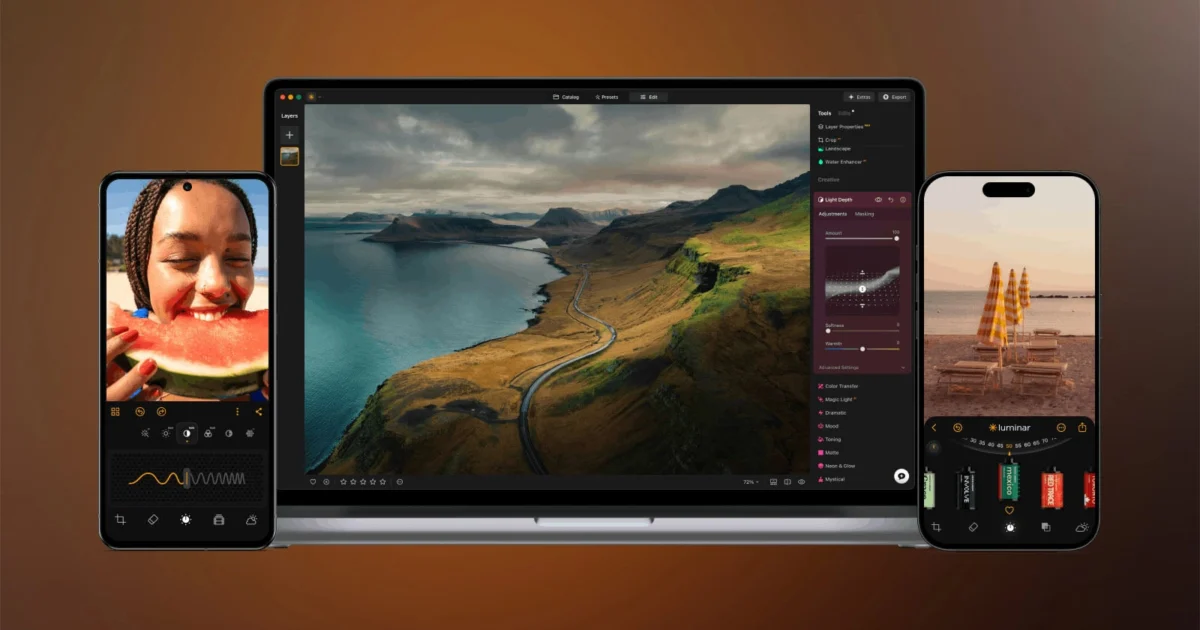
Skylum, the developer behind the popular AI-powered photo editing software Luminar, is strategically recalibrating its public messaging to underscore human creativity, a direct response to the escalating negative sentiment surrounding artificial intelligence across various creative industries. This shift comes as the company continues to integrate advanced AI capabilities, including generative AI, into its flagship product, presenting a delicate balancing act between technological advancement and user perception. The move highlights a broader industry challenge: how to leverage powerful AI tools without alienating a core audience increasingly wary of AI’s potential to diminish human artistry and livelihoods.
Skylum’s Evolution and Early AI Innovations
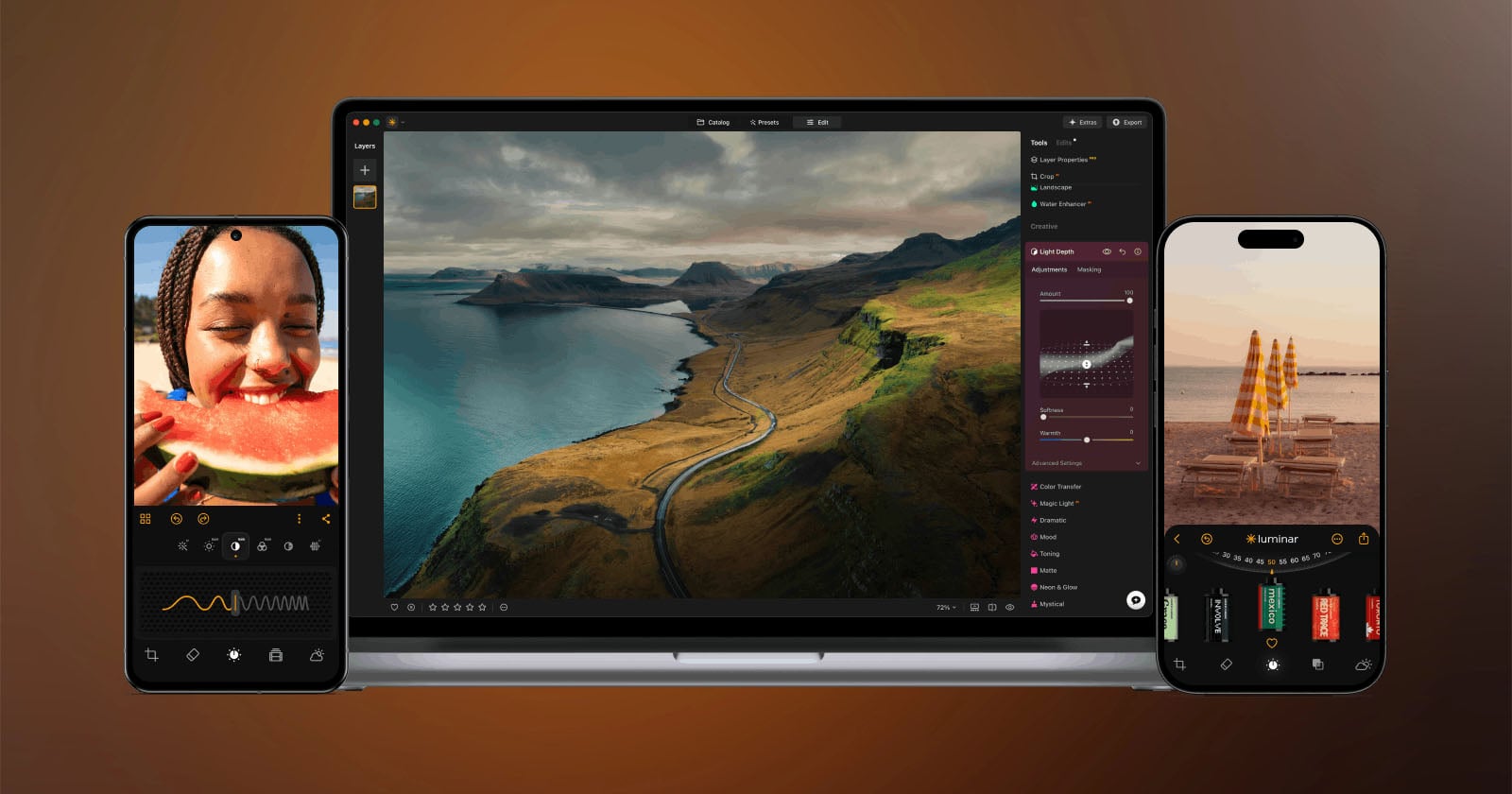
Founded in Ukraine in 2008 under its original name, Macphun, Skylum has long been a pioneer in integrating artificial intelligence into photo editing workflows. The company’s trajectory has been marked by a consistent drive to simplify complex editing tasks through intelligent automation. One of its most notable early achievements was the introduction of AI-powered Sky Replacement technology, a groundbreaking feature that allowed users to seamlessly alter skies in photographs with remarkable realism. This innovation notably predated the availability of similar sophisticated tools in rival software, including offerings from industry behemoth Adobe, solidifying Skylum’s reputation as an innovator in the AI-driven photo editing space.
Over the years, as Macphun rebranded to Skylum and its product line evolved, AI became increasingly central to the Luminar experience. Successive iterations of Luminar introduced a suite of AI-driven functionalities designed to streamline and enhance the editing process. These included features such as automatic portrait enhancement, which intelligently recognized and improved facial features; scene relighting, capable of adjusting lighting conditions dynamically within an image; and advanced AI masking, which enabled precise selections of subjects and backgrounds with minimal manual input. These tools, while powerful, were largely framed as assistive technologies, intended to accelerate workflows and enable users to achieve professional-grade results more efficiently, rather than replacing the fundamental creative input of the photographer.
The Generative AI Explosion and Shifting Public Sentiment
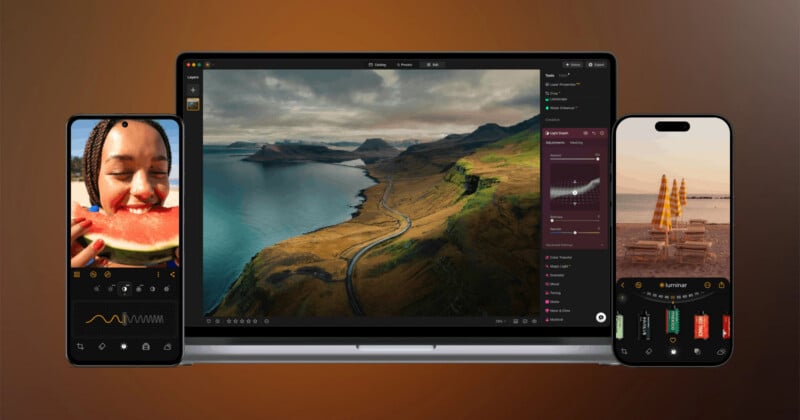
The landscape of artificial intelligence underwent a dramatic transformation in the mid-2020s with the widespread emergence and popularization of generative AI technologies. Tools like OpenAI’s DALL-E and ChatGPT, along with Midjourney, brought AI’s creative potential – and its contentious implications – into the mainstream consciousness. Unlike the earlier assistive AI tools that primarily enhanced existing photographs, generative AI could create entirely new images, text, and other content from simple text prompts, blurring the lines between human and machine-generated art.
This rapid advancement, while promising in terms of efficiency and creative exploration, simultaneously ignited a firestorm of debate and concern, particularly within the creative community. For photographers, artists, and illustrators, the rise of generative AI presented a complex set of challenges. Data from various surveys and industry reports began to paint a picture of significant disruption. One such survey revealed that as much as 58% of photographers reported having lost work directly to generative AI, indicating a tangible economic impact on professionals whose livelihoods depend on their unique creative output. The nature of this displacement often involved clients opting for AI-generated images as cheaper, faster alternatives to commissioning human photographers for certain projects, particularly in stock photography, commercial advertising, and illustrative content.
Beyond economic concerns, intellectual property rights became a contentious battleground. Instances like a dog photographer losing a copyright case over an AI-generated comic version of her image highlighted the legal ambiguities and vulnerabilities artists faced when their work was used as training data for AI models, or when AI produced derivative works. This raised profound questions about originality, authorship, and the protection of creative assets in the digital age. Furthermore, a broader sense of "irritation" and anxiety permeated the creative community, fueled by concerns that AI was not merely assisting but actively replacing, or even devaluing, human creative effort. The sentiment often articulated was a fear that AI could "rob their beloved artistic medium of its soul," reducing art to a series of algorithmic calculations rather than a deeply human expression.
Even as a significant portion of working photographers (nearly 90% in some surveys) acknowledged using AI in some capacity within their workflow, whether for editing, business operations, or content creation, a palpable unease persisted regarding the ethical implications and the long-term impact of generative AI on their profession. This dual reality—embracing AI for efficiency while simultaneously fearing its disruptive potential—underscored the complex relationship between creatives and emerging technologies.
Skylum’s Strategic Rebranding Amidst AI Scrutiny
In this charged environment, Skylum appears to be acutely aware of the shifting public perception, leading to a noticeable defensive posture in its recent communications. The company’s Global PR and Communications Manager, Yuliia Davydova, explicitly addressed the prevailing anxieties: "The release comes as the industry struggles with fears that AI might overshadow human talent and put an end to the 200-year-old craft." She emphasized Skylum’s new narrative, stating, "With the release, Luminar offers a fresh perspective where tech lets human creativity shine – not overshadow it." This statement marks a clear attempt to reframe AI from a potential threat to an empowering partner for artists.

Despite this pronounced shift in messaging, a closer examination of Luminar’s upcoming updates reveals a continued, and in some aspects, deepened integration of AI, particularly generative AI. This creates a fascinating paradox: the company is actively pushing the boundaries of AI capabilities within its software while simultaneously reassuring users that human creativity remains paramount. This strategic communication pivot is designed to mitigate the growing skepticism, positioning Luminar’s AI as an invisible assistant rather than a dominant force.
Ivan Kutanin, Luminar’s CEO, further articulated this philosophy: "With growing concerns around tech affecting human talent, Luminar takes a different perspective – one where technology helps photographers realize their creative potential, rather than overshadow it. This upgrade serves that same purpose: high-end technology powering photo editing tools that amplify the creative flow while staying invisible. Creative vision comes first; technology is here only to let it shine." The emphasis on "invisible" technology and the subservience of AI to human vision is a cornerstone of Skylum’s revised brand narrative.
Luminar’s Latest Developments: A Two-Phase Rollout
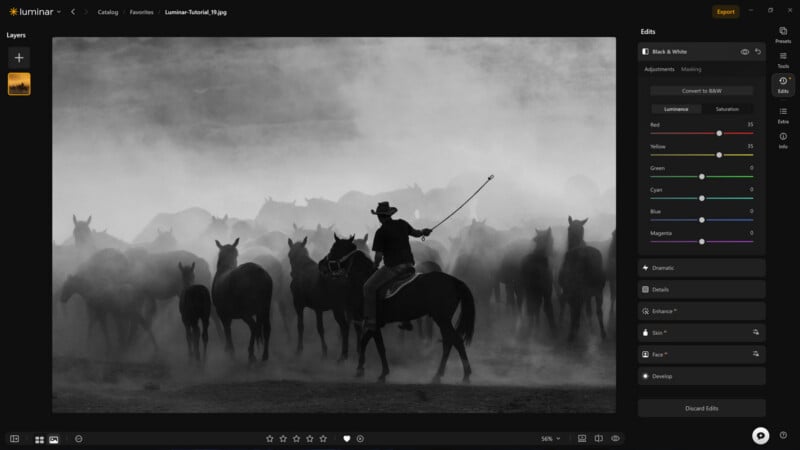
Skylum’s commitment to enhancing Luminar with advanced AI is evident in its meticulously planned two-phase update schedule for the current year. The first phase, rolling out immediately, focuses on foundational improvements alongside significant AI enhancements. Users can expect better navigation and overall improved performance, which are standard iterative updates for any modern software. Crucially, this phase also introduces upgraded AI tools, including sophisticated generative AI capabilities. Specifically, this generative AI is designed to create "assets that blend naturally into the original photograph." This means users will be able to add elements, extend backgrounds, or introduce new objects into their images, with the AI intelligently ensuring that these additions seamlessly integrate with the existing lighting, perspective, and stylistic qualities of the original photo. This feature, while powerful for creative enhancement, squarely places generative AI at the core of Luminar’s immediate offerings, despite the messaging emphasizing human control.
The second phase of updates, slated for release in the fall, promises an even more extensive integration of generative AI technology, further challenging the perception of AI as merely an "invisible" assistant. Key features planned for this phase include:
- Suggested "Intelligent" Cropping Tools: These AI-powered tools will analyze the composition of a photograph and suggest optimal framing options, aiming to improve visual balance and impact. While offering convenience, this feature delves into an area traditionally reserved for human aesthetic judgment.
- AI-Generated Fog: This generative capability will allow photographers to add realistic atmospheric effects like fog to their images, offering creative control over mood and depth without needing external assets or complex manual blending.
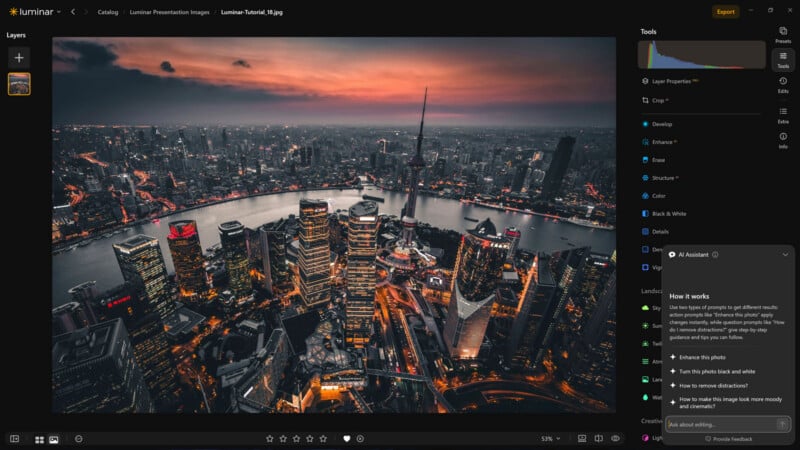
- AI Assistant: Positioned as a tool that "helps photographers edit faster without taking creative control away," this assistant likely provides automated suggestions and one-click enhancements, guiding users through the editing process. The challenge for Skylum will be to demonstrate that this guidance remains within the bounds of assistance, rather than dictating the creative outcome.
- Better Automatic AI-Based Photo Editing: This is a general enhancement to Luminar’s existing auto-editing features, making them more sophisticated and precise in tasks like exposure correction, color grading, and detail enhancement.
- Web-Based Photo Editor: While not directly related to AI, the introduction of a web-based photo editor signifies Skylum’s broader strategy to expand Luminar’s accessibility and platform reach, moving beyond traditional desktop applications to cater to a wider user base and more flexible workflows.
Implications and The Blurry Line of Creativity
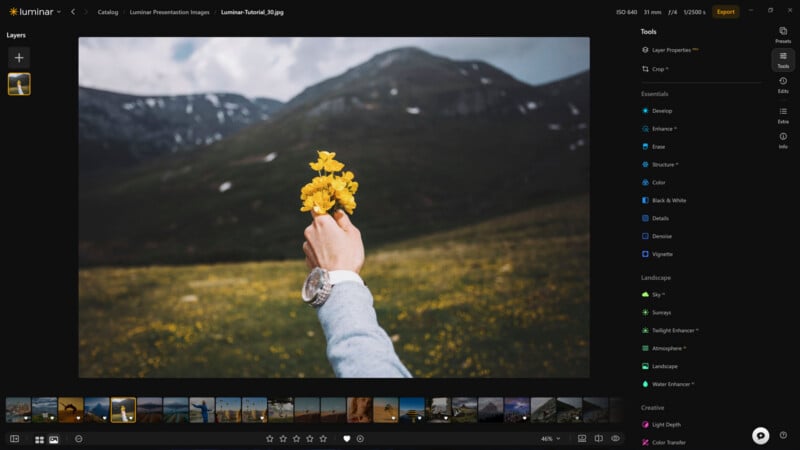
Skylum’s updated messaging, particularly the emphasis on AI helping photographers "realize their creative potential" and "amplifying the creative flow while staying invisible," represents a deliberate attempt to navigate the fraught waters of public opinion. Historically, Skylum’s focus has been on the quality of results and the speed of AI-driven processes. Now, the narrative pivots to empower the artist, positioning AI as a tool that serves, rather than supplants, the human imagination.
However, this rhetorical shift confronts a fundamental conceptual challenge. As the original article astutely points out, "if a feature is doing something like changing the sky in a scene, adding fog, or generating assets that weren’t there when the photo was taken, the line between helping photographers realize their creative potential and overshadowing it gets quite blurry." Generative AI, by its very nature, creates something new that did not exist in the original capture. While a photographer still directs the AI and makes final decisions, the act of creation itself involves an algorithmic component that some purists argue fundamentally alters the artistic process and the authenticity of the image.
Skylum is far from alone in grappling with this intricate dilemma. Major industry players, including Adobe with its Firefly generative AI suite and Photoshop’s Generative Fill feature, are also contending with how to integrate these powerful tools into their ecosystems without alienating their core user base. Adobe, for instance, has attempted to address concerns by emphasizing ethical data sourcing for its Firefly models and providing transparency features for AI-generated content. The success of companies like Skylum and Adobe will depend heavily on their ability to convince users that AI is truly a collaborative partner, enhancing human capabilities rather than eroding them.

The broader implications for the photography industry are profound. As AI tools become more sophisticated and accessible, the definition of "photography" itself continues to evolve. Will the craft increasingly involve directing AI, curating AI outputs, and blending human-captured elements with AI-generated ones? Or will a distinct segment of the industry emerge that champions "pure" photography, free from generative AI interventions? Skylum’s strategy represents a calculated risk: by embracing more generative AI while simultaneously championing human creativity, it aims to position itself at the forefront of this evolving landscape, offering tools that are both cutting-edge and, ideally, user-affirming. The ongoing debate, and how photographers ultimately respond to these innovations, will shape the future trajectory of digital image creation.