The Lençóis Maranhenses National Park, a UNESCO World Heritage site and a jewel of Brazil’s northeastern coast, presents a landscape of unparalleled natural artistry. This vast expanse, covering approximately 600 square miles, is a dynamic mosaic of towering white sand dunes, crystalline freshwater lagoons that appear and disappear with the seasons, and intricate river systems. What was initially conceived as a brief stopover en route to Patagonia for photographer Paul Nicklen transformed into an immersive artistic exploration of one of the planet’s most singular ecosystems. The park’s unique geological formations and the interplay of light and water have captivated visitors and scientists alike, prompting a deeper examination of its ecological significance and the human endeavor to capture its ephemeral beauty.
A Landscape Forged by Nature’s Hand
Located in the state of Maranhão, in the northeast corner of Brazil, the Lençóis Maranhenses is renowned for its striking topography. The defining characteristic is its immense, undulating fields of pure white sand dunes, which stretch as far as the eye can see. These dunes are not static geological features; they are constantly reshaped by the prevailing winds, creating a perpetually shifting panorama. Interspersed within this sandy desert are over 120 freshwater lagoons, formed by the seasonal accumulation of rainwater during the wet season, typically from January to June. These lagoons, often a vibrant turquoise or emerald green, offer a stark and breathtaking contrast to the pristine white of the surrounding dunes.
The park’s eastern border is defined by more than 40 miles of coastline, dotted with traditional fishing villages that have sustained their livelihoods from the ocean for generations. This edge of the park slopes gently towards the open expanse of the Atlantic Ocean. Winding through the dunes are tannin-colored river systems, their waters darkened by the decomposition of vegetation. These rivers, such as the Parnaíba River which forms part of the park’s northeastern boundary, snake their way towards the sea, their inky currents weaving through the lighter sands. To the west, the landscape transitions from this desert-wetland mosaic into more arid cerrado (savannas) and dense forests before giving way to agricultural lands, showcasing a remarkable ecological gradient.
The sheer scale and unique composition of the Lençóis Maranhenses have drawn international attention. In 2014, it was officially designated a UNESCO World Heritage Site, a recognition that underscores its global importance and the need for its preservation. This designation acknowledges the park’s exceptional universal value, particularly its geological uniqueness and the delicate balance of its ecosystem, which supports a specialized array of flora and fauna adapted to its challenging conditions.
The Evolution of Perspective: Aerial Photography in the Lençóis
Historically, capturing the grandeur of such expansive and dynamic landscapes posed significant challenges. For photographers like Paul Nicklen, documenting the intricate details of wildlife within their natural settings has been a primary focus. However, the overwhelming scale of the Lençóis Maranhenses demanded a different approach. Nicklen’s experience highlights a broader evolution in how natural wonders are documented and appreciated.
"Overwhelmed by the sheer scale of the park’s beauty, I decided the only way to fully appreciate its grandeur was from a bird’s eye view," Nicklen reflected, underscoring the limitations of ground-level observation for such a vista.
Traditionally, aerial photography of remote and vast areas often involved the use of cramped aircraft like Ultralights or Cessnas, sometimes with doors removed to allow for unobstructed shooting. These methods, while effective, were often physically demanding and offered limited maneuverability. The advent and widespread adoption of Unmanned Aerial Vehicles (UAVs), commonly known as drones, have revolutionized the possibilities for aerial photography and videography.
Drones offer unprecedented agility and precision, allowing photographers to navigate complex terrains at various altitudes with remarkable ease. This technological advancement has enabled Nicklen and others to capture images that were previously unattainable. By operating drones at low altitudes, it’s possible to capture both the minute details of the shifting sands and water patterns, as well as the sweeping, panoramic vistas that define the park. This ability to maintain a low altitude while still encompassing the full expanse of the landscape allows for an intimate yet comprehensive portrayal of the environment.
A Canvas in Constant Motion
The dynamic nature of the Lençóis Maranhenses is a key element of its allure. The constant interplay of wind and water ensures that the landscape is never the same from one day to the next. "Every shift in the wind swept the ever-changing canvas in a new direction, toppling delicate sandy peaks and stirring the glassy, blue-green waters," Nicklen observed. This ephemeral quality makes the park a living work of art.
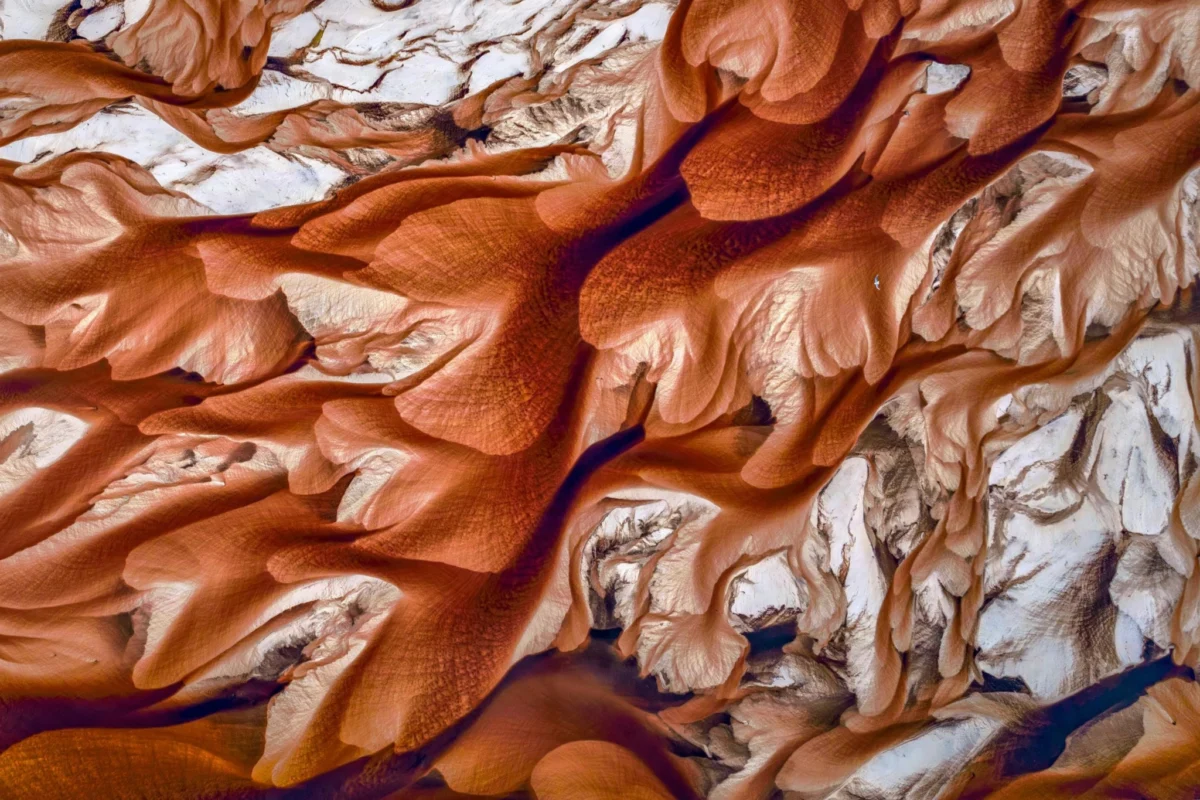
The colors within the park are particularly striking. The white sand dunes, composed of fine quartz grains, reflect the intense equatorial sun, creating a dazzling effect. The lagoons, fed by rainwater, are tinged with hues of turquoise and jade due to the minerals and the clarity of the water. The tannin-rich rivers, however, introduce deeper, earthy tones of red, deep brown, and rust, staining the water as they leach tannins from decaying vegetation in their upstream sources. These colored rivers, like the Black River and the Parnaíba River, carve serpentine paths through the dunes, their dark waters contrasting dramatically with the surrounding white sand and the vibrant blues and greens of the lagoons.

The visual experience from the air is one of astonishing complexity and beauty. The patterns formed by the wind on the dunes, the sinuous lines of the rivers, and the scattered jewels of the lagoons create a natural tapestry of immense scale. Nicklen describes the effort to frame these vistas as almost dizzying: "Each change in angle or altitude revealed another natural masterpiece latticing the crust of the Earth from horizon to horizon, leaving me dizzy from the effort of trying to frame it." This sentiment speaks to the overwhelming abundance of visual information and the challenge of selecting and capturing a single, representative image of such a vast and intricate environment.
The Enduring Human Quest to Replicate Nature’s Artistry
The impulse to capture and interpret the beauty of nature is a deeply ingrained aspect of the human experience, stretching back to the earliest days of our existence. Nicklen’s reflections on the Lençóis Maranhenses connect this modern endeavor to a long and rich history of artistic and scientific observation.
"For thousands of years, humans have sought to replicate what they see in nature through every imaginable medium," he noted. This pursuit is evidenced by prehistoric cave paintings, such as those found in the Chauvet Cave in France, dating back approximately 30,000 years. These early artworks, depicting animals with remarkable accuracy, demonstrate a profound connection to and desire to understand the natural world.
Throughout history, artists, from the Upper Paleolithic to the Renaissance and beyond, have dedicated their lives to studying and depicting nature. They have meticulously observed the forms, textures, and behaviors of the natural world, striving to translate their observations into tangible works of art. This dedication to capturing nature’s details has been a driving force in the development of various artistic techniques and scientific disciplines.
Even with the advanced capabilities of modern digital photography and aerial technologies, the inherent challenge of fully representing nature’s complexity remains. Nicklen articulates this persistent artistic struggle: "Even with the advanced technology of my digital camera, I still feel that I can never quite do her beauty justice. How can an image capture the full depth of something as vast as our planet and as minuscule as the structure of a cell’s nucleus?" This question highlights the profound gap between the reality of the natural world and its representation, regardless of the sophistication of the tools employed.
The sheer dimensionality, the sensory richness, and the intricate interconnectedness of natural phenomena are difficult, if not impossible, to fully encapsulate in a two-dimensional image or even a three-dimensional model. The dynamic processes, the subtle shifts in light and shadow, the ambient sounds, and the intangible feelings evoked by a landscape like the Lençóis Maranhenses are elements that transcend the visual medium.
Preservation and the Future of Lençóis Maranhenses
The designation of Lençóis Maranhenses National Park as a UNESCO World Heritage site brings with it a responsibility for its long-term preservation. The park’s unique ecosystem is vulnerable to environmental changes and human impact. Climate change, for instance, could alter rainfall patterns, affecting the formation and longevity of the lagoons, which are crucial for the park’s biodiversity. Increased tourism, while economically beneficial, also requires careful management to prevent degradation of the fragile dune systems and surrounding habitats.
Conservation efforts in the park focus on several key areas:
- Sustainable Tourism Management: Implementing guidelines and infrastructure to manage visitor numbers, protect sensitive areas, and educate tourists about responsible practices. This includes designated trails, waste management systems, and restrictions on off-road vehicle use in fragile dune zones.
- Ecological Monitoring: Continuously studying the park’s biodiversity, water resources, and dune dynamics to understand environmental changes and inform conservation strategies. This involves tracking the health of endemic species and the impact of seasonal variations.
- Community Engagement: Working with local communities, particularly the fishing villages, to ensure that conservation efforts are integrated with their livelihoods and that they benefit from sustainable tourism. This fosters a sense of ownership and shared responsibility for the park’s protection.
- Research and Education: Supporting scientific research into the unique geology and ecology of the Lençóis Maranhenses and promoting educational programs to raise awareness about its importance among Brazilians and the international community.
The efforts to document and share the beauty of the Lençóis Maranhenses, through the lens of photographers like Paul Nicklen, play a vital role in raising global awareness and appreciation for such natural wonders. By showcasing the park’s breathtaking landscapes and the delicate balance of its ecosystem, these visual narratives serve as powerful advocacy tools for conservation.
A Personal Reflection on Nature’s Grandeur
Nicklen’s closing sentiment encapsulates the profound impact of experiencing and attempting to capture the essence of the natural world: "Nature’s artistry permeates all life on Earth in a way we can never truly translate into a print – but it has been the greatest privilege of my life to try." This statement acknowledges both the inherent limitations of human representation and the immense value of the attempt. The pursuit of understanding and sharing nature’s beauty, even if imperfectly translated, enriches human lives and fosters a deeper connection to the planet we inhabit. The Lençóis Maranhenses, with its ethereal beauty and dynamic character, stands as a testament to the enduring power and artistry of the natural world, a spectacle that continues to inspire awe and a profound commitment to its preservation.