Modern event videography increasingly demands unparalleled flexibility and technical prowess from production teams, often requiring rapid adaptation to evolving client requests. A recent case at a major industry convention exemplified this challenge, where seasoned videographer Tony Kim successfully pivoted midway through a scheduled shoot to deliver two distinct, high-production-value content types: cinematic "Glambot"-style high-speed captures and spontaneous "person-on-the-street" interviews. This successful execution underscores the critical importance of resourcefulness, advanced technical understanding, and efficient equipment utilization in today’s fast-paced media landscape.
The Evolving Landscape of Event Content Creation
Conventions and corporate events have transformed from mere information-sharing platforms into comprehensive content generation hubs. In an era dominated by social media and digital engagement, high-quality video is no longer a luxury but a necessity for maximizing reach and impact. Event organizers are continually seeking innovative ways to capture the energy and essence of their gatherings, from polished, slow-motion attendee spotlights to authentic, unscripted testimonials. This shift has propelled the demand for versatile videographers capable of delivering diverse content under tight deadlines and often with dynamic on-site adjustments. The global event industry, projected to exceed $1.5 trillion by 2028, according to market research, relies heavily on compelling visual narratives to justify investments and attract future participation, placing immense pressure on production crews to consistently innovate.
A Mid-Convention Curveball: Unforeseen Production Shifts
Tony Kim, a videographer with a reputation for adaptability, found himself in just such a scenario during a recent high-profile convention shoot. Initially tasked with standard event coverage, Kim received an unexpected mid-day request from his client: to incorporate "Glambot"-style shots and conduct quick, candid interviews with attendees. These two demands, vastly different in their technical requirements and aesthetic goals, presented a significant logistical and creative hurdle, particularly given the impromptu nature of the request and the absence of pre-planned resources for such specialized tasks.
The "Glambot" effect, popularized at major awards ceremonies like the Oscars and Emmys, involves a high-speed camera mounted on a robotic arm, executing precise, fluid movements to capture subjects in dramatic slow motion. Achieving this look typically requires significant investment in specialized robotic equipment and dedicated operators. Simultaneously transitioning to "person-on-the-street" interviews, which prioritize speed, clear audio, and a comfortable environment for non-professional subjects, called for an entirely different set of gear and operational considerations. The challenge was not merely technical but also strategic: how to maintain a high standard of production quality for both divergent tasks without compromising the overall schedule or budget.
Ingenuity Under Pressure: Replicating Cinematic "Glambot" Aesthetics
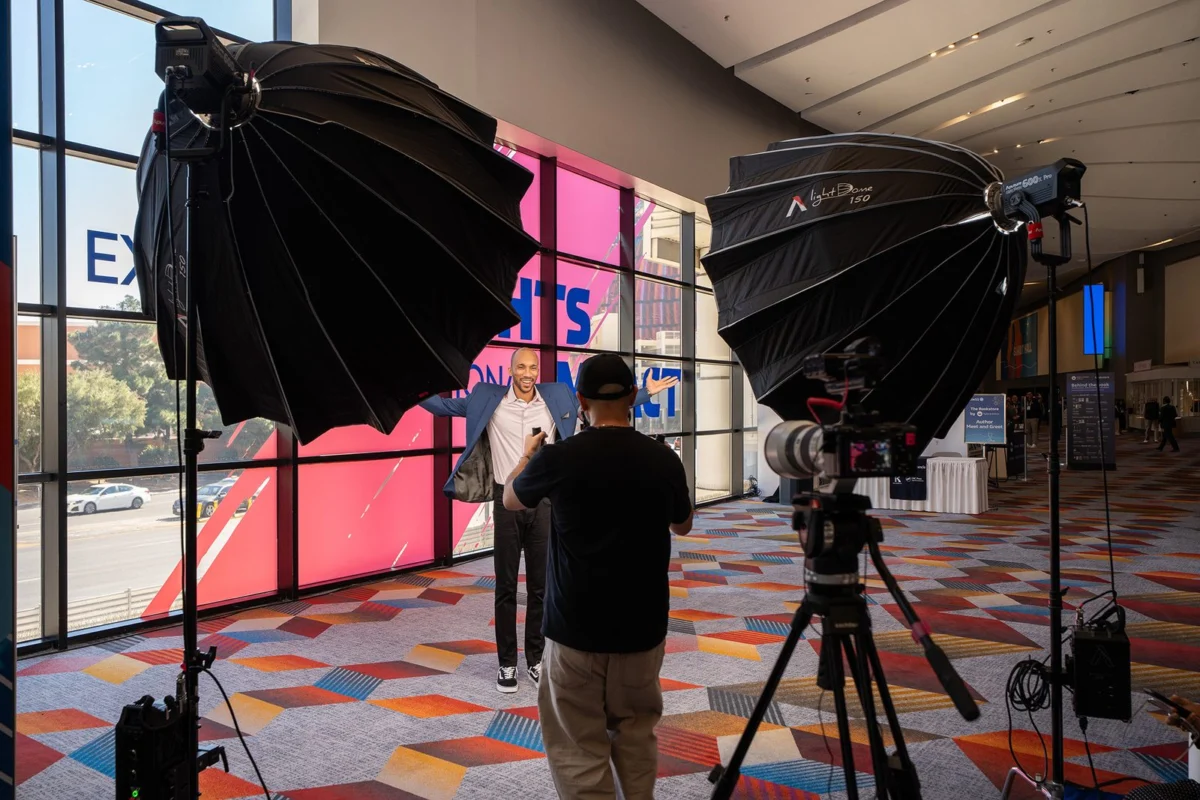
The first and arguably most technically demanding request was the "Glambot" style shot. A professional Glambot system, with its pre-programmed precision and high-speed capabilities, can cost tens of thousands of dollars to rent for a single event, far exceeding the allocated budget for an impromptu addition. Kim’s solution hinged on a clever improvisation: combining a high-performance camera on a handheld gimbal with a robust lighting setup to mimic the distinctive slow-motion, close-up aesthetic.
For the camera system, Kim opted for a Sony FX3 body, renowned for its low-light capabilities and high frame rate options, coupled with a DJI Ronin RS4 Pro gimbal. The choice of the Ronin RS4 Pro, particularly when augmented with Tilta dual handles, was crucial. While a single-handed gimbal operation might suffice for some shots, the smooth, controlled push-in motion required for the Glambot effect demands exceptional stability. The dual handles provided the necessary leverage and control, preventing the subtle tremors that can plague handheld high-speed footage and betray the absence of a robotic arm.
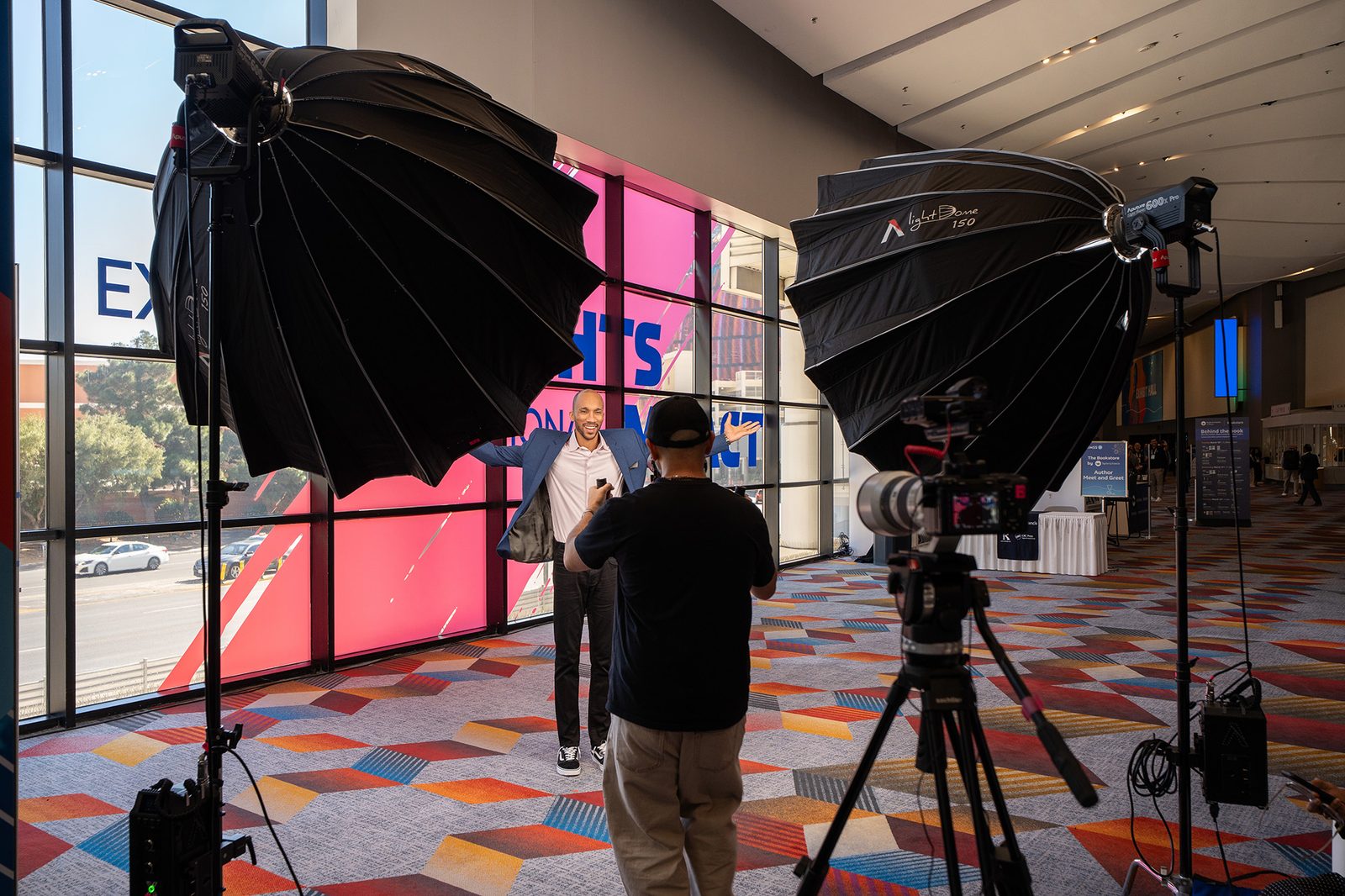
Achieving the characteristic slow-motion effect required shooting at a high frame rate. Kim configured the Sony FX3 to capture 120 frames per second (fps) in 4K resolution. This high frame rate, when conformed to a standard 24 fps timeline in post-production, yields the desired fluid, cinematic slow-motion look. A critical technical consideration for high-speed shooting is the shutter speed, which, to avoid motion blur and maintain a natural appearance, must be at least double the frame rate. Thus, Kim set his shutter speed to 1/240th of a second.
However, stopping down the aperture significantly to achieve a wide depth of field, essential for keeping subjects sharp during dynamic camera movements without a dedicated focus puller, presented a major lighting challenge. Kim chose an aperture of f/8, which offered sufficient depth of field to ensure subjects remained in sharp focus as the camera moved rapidly towards them. This narrow aperture, combined with the fast shutter speed and high frame rate, drastically reduced the amount of light reaching the sensor.
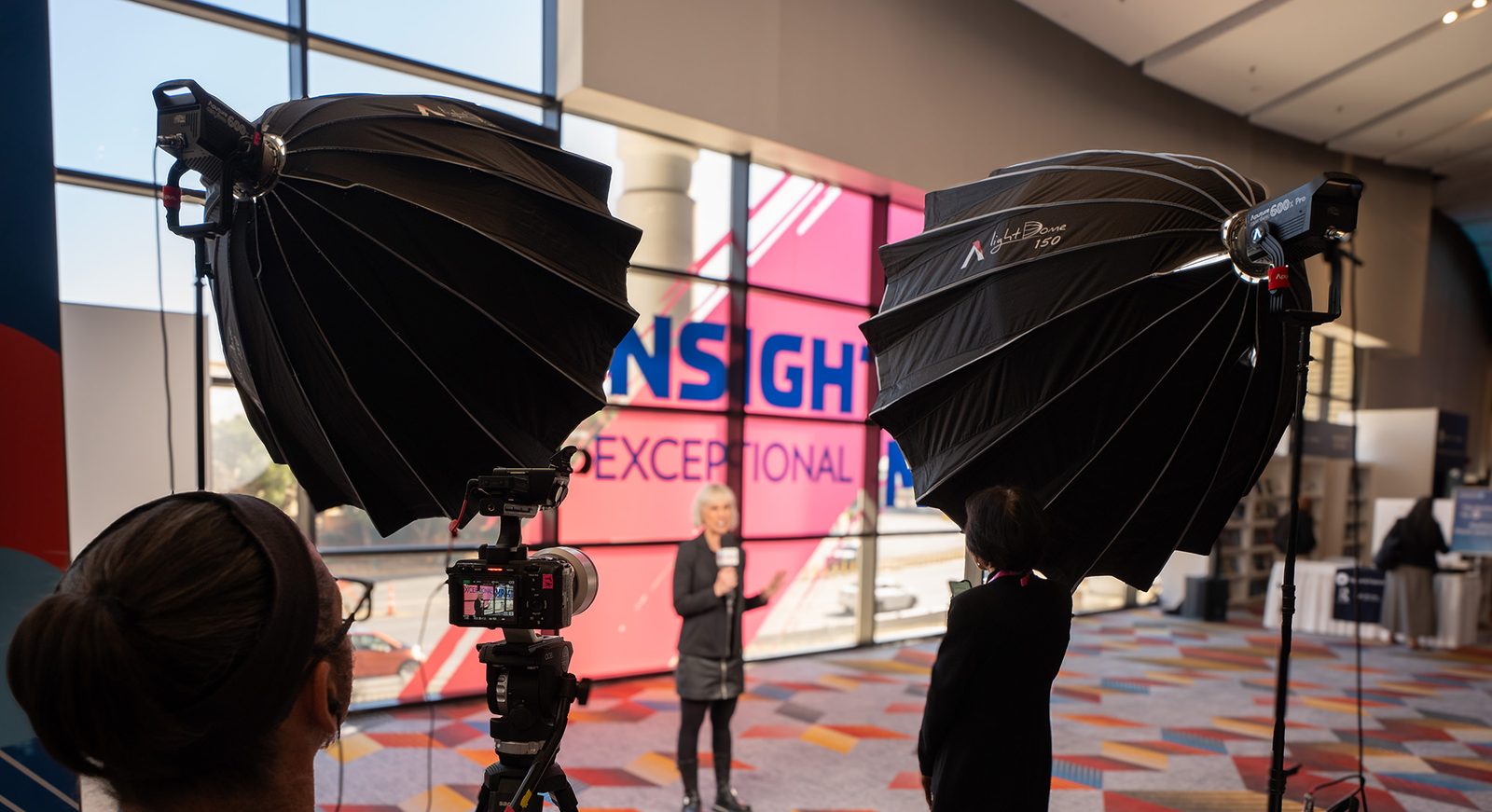
To compensate, Kim deployed two Aputure LS 600x Pro Bi-Color LED lights, each fitted with a 60-inch Light Dome 150 softbox. These powerful LED fixtures, known for their high output and adjustable color temperature, provided the immense light intensity needed to properly expose the scene even under these demanding technical parameters. The large softboxes ensured the light was broad and flattering, mimicking the controlled studio environment often associated with Glambot setups. The successful implementation of this improvised setup, after a few crucial practice runs, produced results that, on screen, convincingly replicated the desired high-end cinematic aesthetic, much to the client’s satisfaction.
Seamless Transition: Capturing Authentic Attendee Voices
Immediately following the high-intensity Glambot-style shots, the production pivoted to the second unexpected request: conducting quick "person-on-the-street" interviews with convention attendees. This segment demanded a rapid, efficient setup focused on clear audio capture and creating a comfortable environment for non-professional interviewees.
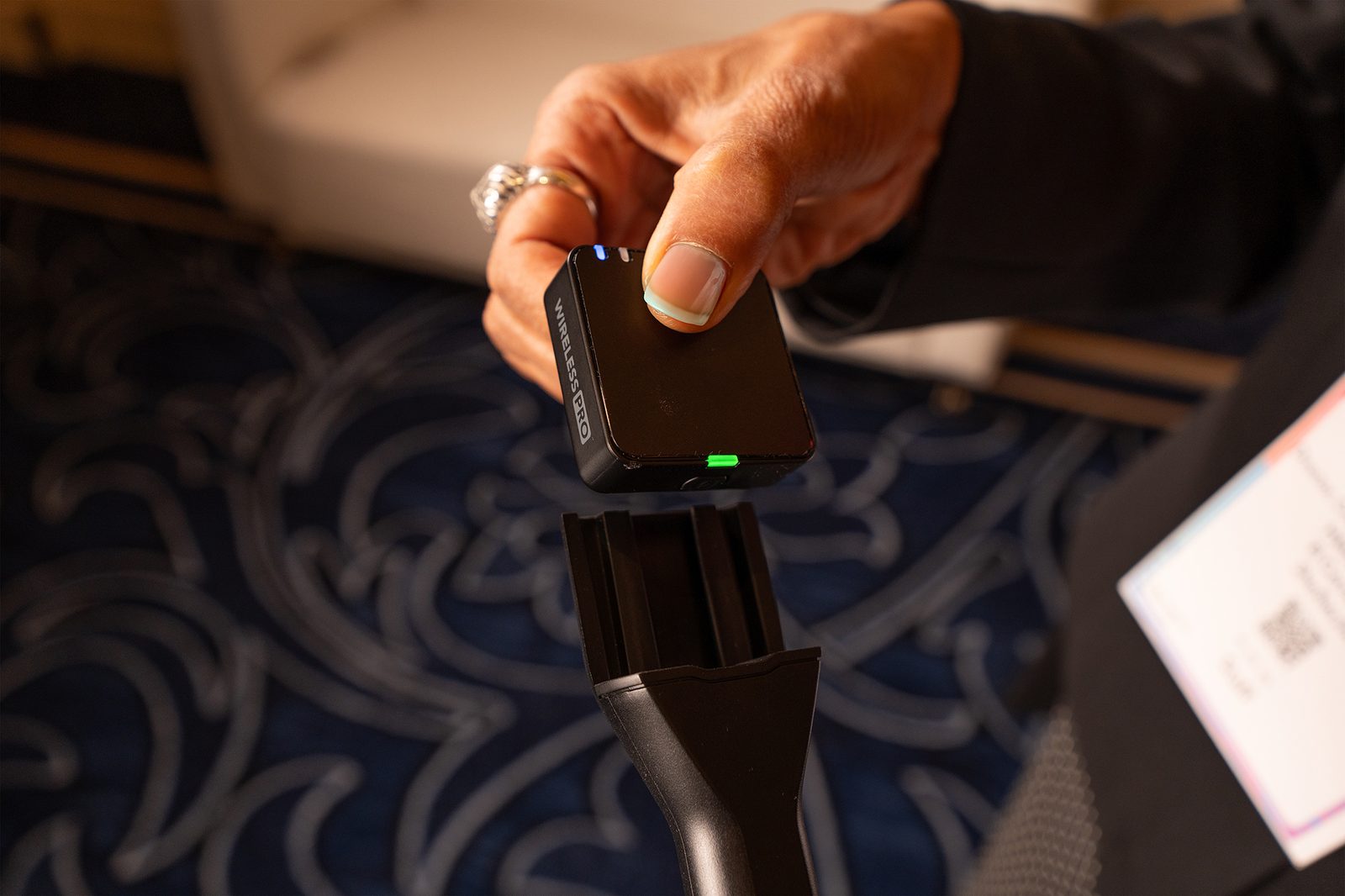
For the interviews, a second Sony FX3 was mounted on a tripod, providing a stable, consistent frame. Audio capture was handled by the Rode Wireless Pro 2-person lav mic system, a versatile and reliable solution for mobile interviews. Crucially, Kim utilized the Rode Interview GO Handheld Mic Adapter, which allowed for a seamless transition. This adapter enabled a transmitter from the Rode Wireless Pro system to be quickly snapped onto a handheld microphone, which could then be immediately handed to the interviewee. This eliminated the time-consuming and often awkward process of clipping lavalier microphones onto subjects, managing cables, or adjusting mic placement, allowing for more interviews within the tight five-minute per-attendee timeframe.
The choice of lens for the interviews was equally strategic. Instead of a wide-angle or standard prime, Kim selected a Sony FE 70-200mm f/4 G OSS lens. While a longer focal length might seem counterintuitive for close-up interviews, its primary benefit extended beyond image aesthetics to psychological comfort. Many attendees, unaccustomed to being on camera, visibly tensed up when a lens was perceived to be "in their face." By utilizing the 70-200mm lens, Kim could maintain a greater physical distance between the camera and the subject, creating a more relaxed and less intimidating environment. This physical separation allowed interviewees to loosen up, fostering more natural and engaging conversations, which ultimately yielded richer, more authentic content for the client.
Broader Implications: Adaptability as a Core Competency
This convention shoot serves as a compelling case study for the evolving demands placed on modern videographers. It highlights that true success in dynamic production environments often stems not from simply possessing the most expensive or specialized equipment, but from a profound understanding of technical principles, a creative problem-solving mindset, and the ability to adapt swiftly. The blend of sophisticated technical knowledge (e.g., shutter speed for high frame rates, depth of field management) with practical resourcefulness (e.g., using a gimbal to mimic a robotic arm, a long lens for psychological comfort) allowed for the seamless fulfillment of challenging client demands.
The episode also underscores the growing trend of agile production teams, capable of switching gears and delivering diverse content styles within a single project. This versatility is increasingly valued by clients who seek maximum return on their event investments through varied and engaging video assets. Furthermore, the ability to achieve high-production-value results with more accessible, albeit expertly deployed, equipment provides a cost-effective alternative to prohibitively expensive specialized rigs, democratizing access to premium cinematic aesthetics.
The Role of Equipment Accessibility and Support
A critical enabler in scenarios like Kim’s is the accessibility of specialized equipment through professional rental services. The ability to procure high-end cameras, robust lighting solutions, and sophisticated audio gear precisely when needed, without the burden of significant capital investment, offers unparalleled flexibility. For this particular shoot, the logistical advantage of having all necessary gear—from the Sony FX3 bodies and Aputure lights to the DJI Ronin RS4 Pro and Rode audio systems—delivered directly to the convention hotel the day before the shoot was invaluable. This ensured Kim was prepared for the initially planned tasks and, more importantly, had a diverse arsenal ready for any unforeseen client requests. Such services empower videographers to be truly adaptable, allowing them to scale their technical capabilities up or down based on specific project requirements and last-minute changes, without owning an exhaustive inventory of expensive, niche equipment.
In conclusion, Tony Kim’s experience at the convention exemplifies the modern videographer’s imperative: to be a master of both craft and improvisation. By expertly leveraging readily available technology, understanding the nuances of lighting and camera mechanics, and prioritizing the comfort of subjects, he transformed a potentially overwhelming "curveball" into a testament to professional agility and creative problem-solving. The resulting footage, spanning high-fashion flair and candid journalism, ultimately spoke volumes about the power of preparedness and adaptability in contemporary event production.