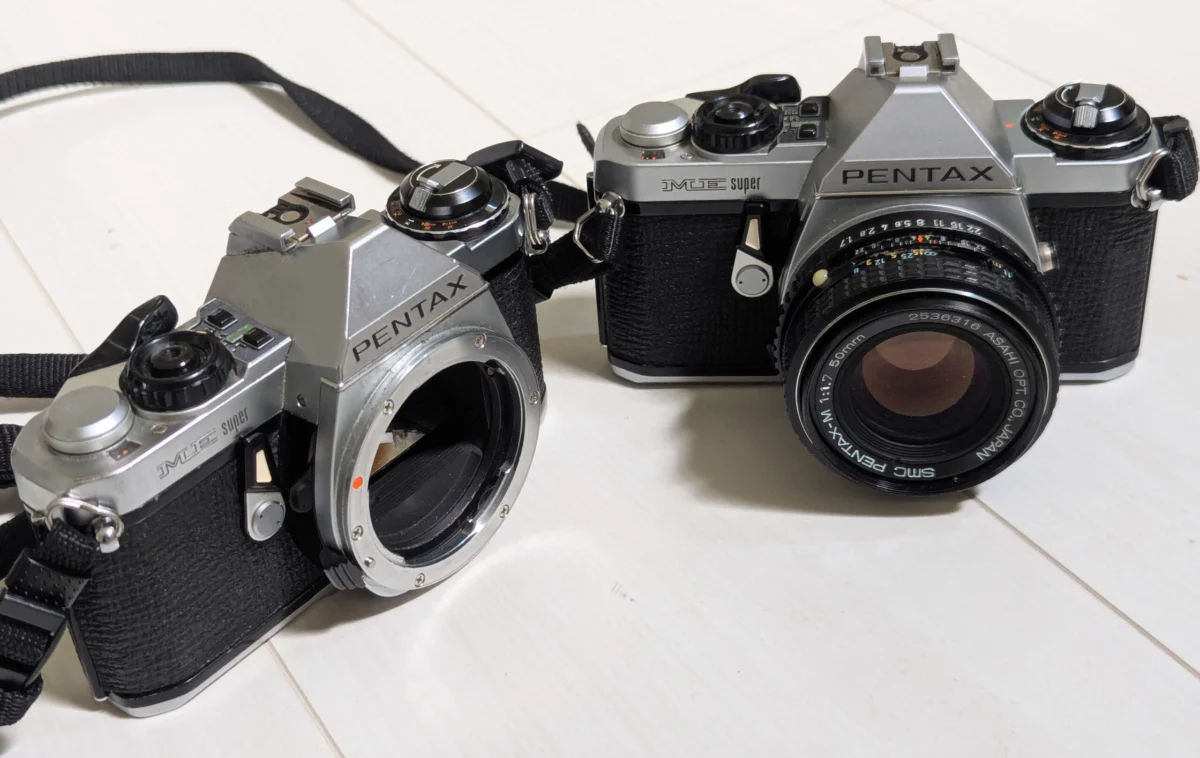
The Pentax ME Super, a cornerstone of the 35mm SLR market during the late 1970s and early 1980s, remains a significant subject for photographic equipment enthusiasts and technicians evaluating the longevity of vintage electronics. A recent technical assessment conducted by photographer Geoff Chaplin has highlighted both the enduring mechanical appeal and the inherent electronic vulnerabilities of these aging systems. By subjecting two distinct Pentax ME Super bodies—one an original unit owned since the mid-1980s and another acquired as a secondary backup—to a controlled field test, researchers can better understand the failure points of the M-series chassis. This evaluation focused on light meter calibration, film transport reliability, and the chemical resilience of expired photographic materials, providing a comprehensive look at the practicalities of maintaining analog hardware in the 21st century.
Evolution and Context of the Pentax M-Series
To understand the results of this field test, one must first consider the historical and technical context of the Pentax ME Super. Released in 1979 as an upgrade to the original Pentax ME, the ME Super was designed to compete in an increasingly crowded market that included the Canon AE-1 and the Olympus OM-2. Unlike its predecessor, which was strictly aperture-priority, the ME Super introduced a manual mode controlled by two innovative push-buttons—a departure from the traditional shutter speed dial.
The camera was built around the Seiko MFC-E2 metal focal plane shutter, offering speeds from 4 seconds to 1/2000th of a second. At the time of its release, it was one of the smallest and lightest full-frame 35mm SLRs available, a feat achieved through the extensive use of high-strength plastics and miniaturized electronic circuits. However, it is precisely this reliance on early electronic components that presents challenges for contemporary users. As capacitors age and solder joints oxidize, the precision of the electromagnetic shutter release and the Gallium Arsenide Phosphide (GaAsP) photo-diode metering system can begin to drift.
Technical Specifications and Field Test Parameters
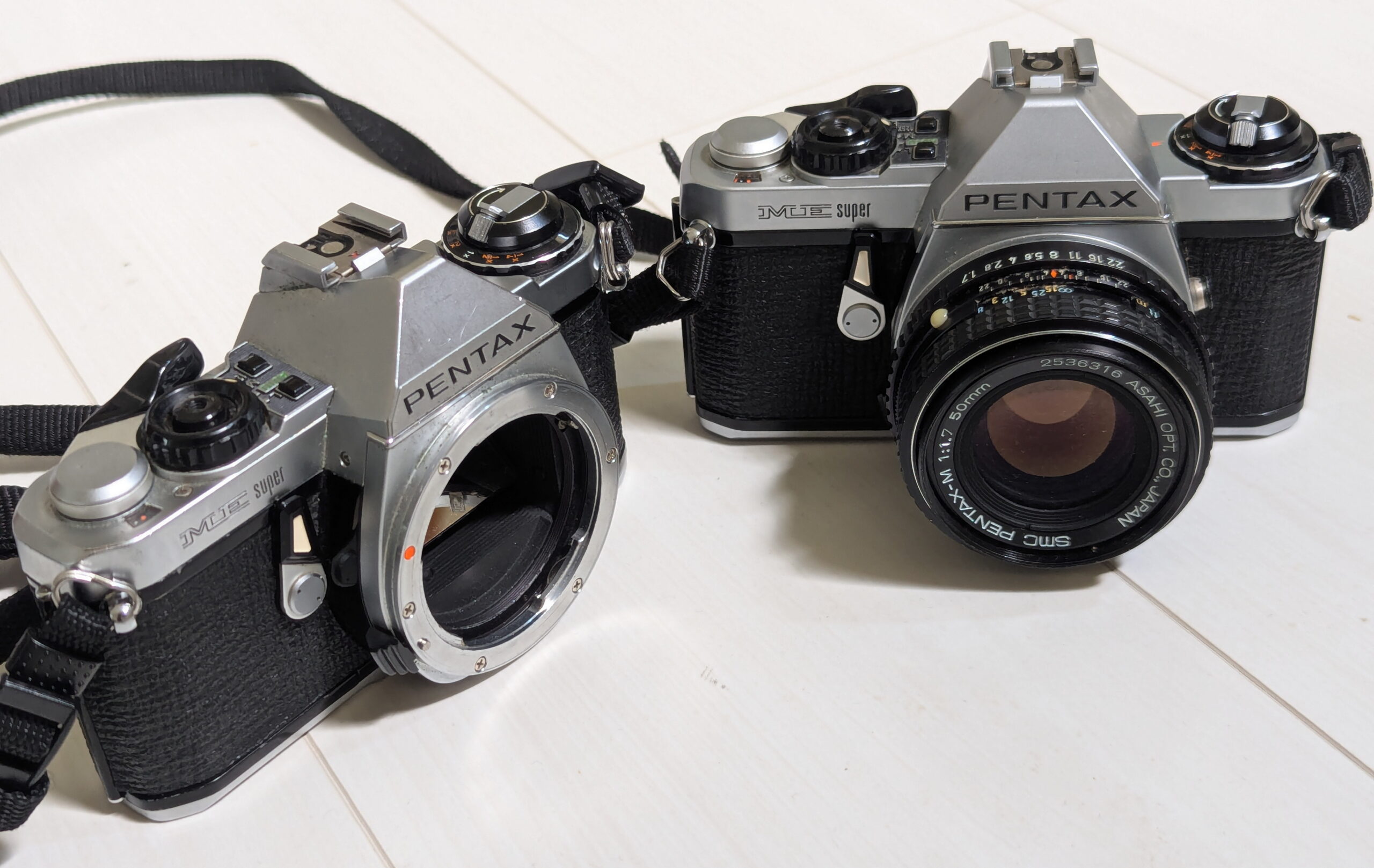
The field test utilized a standardized lens, the SMC Pentax-M 50mm f/1.7, known for its six-element, five-group construction and a minimum focusing distance of 0.45 meters. The test medium was Ilford SFX 200, an extended red-sensitivity film often used for near-infrared photography. To simulate the conditions of a budget-conscious or "found" equipment scenario, the film used was outdated, and the developer was seven-year-old Rodinal, diluted at a 1:50 ratio for a 10-minute development cycle.
The primary objective was to verify the operational integrity of two specific bodies:
- The Primary Unit: A late-production model with a high serial number, indicating it was manufactured near the end of the production run in the mid-1980s. This unit had a history of potential back-door latch failure.
- The Secondary Unit: A second-hand acquisition from the era when film cameras were frequently liquidated during the digital transition. This unit appeared to be in good cosmetic condition but lacked a documented service history.
Metering Discrepancies and Battery Voltage Dynamics
One of the most critical findings during the assessment involved the behavior of the center-weighted metering system. In the primary unit, the light meter exhibited significant underexposure—often by several stops—whenever the sky was included in the frame. Conversely, for scenes excluding the horizon or bright overhead light sources, the meter aligned closely with "Sunny 16" estimates (a manual method of estimating exposure without a meter).
Technical analysis suggests that this erratic behavior may be linked to the aging of the light-sensitive cells or, more likely, the voltage stability of the power source. The test utilized an older, though unused, battery measuring 2.8 volts. While the Pentax ME Super is designed to operate on two 1.5V LR44 or SR44 cells (totaling 3.0V), the circuitry is generally considered tolerant of slight drops. However, as the internal resistance of the camera’s electronics increases with age, a 2.8V output may fall below the threshold required for the Gallium Arsenide Phosphide sensors to provide a linear response, particularly in high-contrast scenarios where the sensor is required to process high-intensity light.

Interestingly, the secondary unit initially displayed similar underexposure tendencies before stabilizing. This suggests a "wake-up" period for vintage electronics, where capacitors may require a period of current flow to reform after years of dormancy in storage.
Mechanical Anomalies and Film Transport Integrity
The mechanical portion of the test revealed two distinct issues related to film transport and shutter cocking. In the secondary unit, a failure occurred where the film continued to wind while the shutter failed to fire. Upon inspection, this was identified as a common "user-error" mechanical bypass: if the film sprocket holes disengage from the take-up sprockets, the winding lever will advance the film without providing enough tension to cock the shutter mechanism. This highlights a quirk in the Pentax "Magic Needle" loading system, which, while intended to simplify loading, can occasionally allow for slippage if the film leader is not seated with absolute precision.
A more mysterious anomaly was observed in the primary camera: a double exposure affecting two consecutive frames. The Pentax ME Super does not have a dedicated double-exposure button, and the frame counter and winding mechanism are designed to prevent such occurrences. The "ghost" image extended into the inter-frame spacing, suggesting a momentary failure in the film tensioning or a slippage of the take-up spool. One hypothesis posed by the evaluator was a potential interaction between the lens cap and the winding sequence, though a mechanical intermittent fault in the winding gears remains a more plausible technical explanation for the overlap.
Chemical Processing and Image Quality Analysis
The choice of seven-year-old Rodinal (p-aminophenol) for development provided an additional layer of data regarding the shelf life of concentrated chemistry. Despite its age and the dull, low-contrast lighting conditions of the test day, the developer maintained sufficient activity to produce usable negatives. Rodinal is famous for its longevity due to its highly alkaline, concentrated nature, which resists oxidation far better than solvent-based developers like D-76.

The Ilford SFX film, being outdated, showed a predictable increase in base fog and a slight loss of sensitivity. However, for the purposes of a "functionality check," the results were deemed successful. The images required post-processing correction to restore contrast, but the sharpness of the 50mm f/1.7 lens remained evident, proving that the optical path of these cameras often outlasts their electronic and mechanical counterparts.
Ergonomic Considerations for Modern Users
The field test also addressed the ergonomics of the ME Super’s viewfinder. With a 0.95x magnification and 95% coverage, the viewfinder is remarkably large and bright compared to modern entry-level DSLRs. However, the assessment noted a significant drawback for users wearing spectacles. The high magnification makes it difficult to see the entire frame and the LED shutter speed display simultaneously without shifting one’s eye position. This "eye relief" issue is a common complaint among spectacle-wearing photographers using 1970s-era SLRs, which were often designed with a focus on maximum magnification rather than viewing comfort for those with corrective lenses.
Broader Impact and Implications for the Analog Community
The results of this assessment carry several implications for the growing community of analog photography enthusiasts. First, it reinforces the necessity of using fresh, high-quality silver oxide (SR44) batteries rather than alkaline (LR44) alternatives. Silver oxide batteries provide a much flatter discharge curve, ensuring that the light meter receives a consistent 1.55V until the battery is nearly exhausted, whereas alkaline batteries drop in voltage linearly, leading to the metering inaccuracies observed in this test.
Second, the "double exposure" and sprocket slippage incidents serve as a reminder that vintage cameras require a more tactile and attentive operating style than modern digital equipment. The "feel" of the winding lever and the visual confirmation of the rewind crank turning are essential diagnostic tools for the film photographer.

Finally, the success of the 40-year-old cameras—despite their minor flaws—speaks to the robust engineering of the Pentax M-series. While the electronics may be prone to drifting, the core mechanical structures remain viable for use decades after their intended lifespan. For collectors and hobbyists, the Pentax ME Super represents a bridge between the fully mechanical era and the computerized future, offering a compact, capable platform that, with proper maintenance and fresh power cells, continues to deliver professional-grade results in the modern era.
The test concludes that while both units remain functional, they require specific "operational hygiene":
- Verification of Film Loading: Ensuring the sprockets are fully engaged before closing the camera back.
- Battery Management: Replacing old cells regardless of their measured voltage to ensure electronic consistency.
- Exposure Awareness: Remaining vigilant of the center-weighted meter’s tendency to overreact to bright skies, a characteristic of the GaAsP sensors of that generation.
As the market for vintage cameras continues to expand, technical evaluations such as this provide vital data for preserving the history of photographic technology and ensuring that these mechanical marvels do not become mere shelf ornaments.