Southwestern Alaska’s dramatic coastline and rugged river valleys become the stage each year for one of the planet’s most awe-inspiring and ecologically vital events: the annual salmon run. As the mists recede from glacial peaks, brown bears emerge to participate in a millennia-old drama of survival and sustenance. This immense migration, involving an estimated 30 million salmon battling their way upstream to their natal streams, transforms the region into a vibrant feeding ground, offering a profound glimpse into the intricate web of life. The spectacle is not merely visually stunning; it is a critical period for the bears, a time of hyperphagia where they must amass the fat and nutritional reserves necessary to endure the long, harsh Alaskan winter.
The Unfolding Migration: A Five-Month Feast
The salmon run is not a singular event but a staggered procession of different species, each with its own timing. The sockeye salmon are the vanguard, followed by pink salmon, then coho, and finally the larger chinook. This aquatic marathon stretches across five months, commencing in late May and continuing through mid-October. For the brown bears, this period represents prime feeding opportunities, a crucial window for hyperphagia, the physiological state of excessive eating. During this time, bears consume hundreds of thousands of calories daily, diligently building the energy reserves needed for hibernation.
This period of intense feeding is a critical juncture in the life cycle of the brown bear population. Biologists estimate that a significant portion of a brown bear’s annual caloric intake is acquired during the salmon runs. The caloric density of salmon, rich in fats and proteins, makes them an ideal food source for this purpose. For instance, a single large salmon can contain upwards of 1,500 calories, and bears can consume multiple fish per day during the peak of the run. This nutritional boost is essential for the survival of both adult bears and their cubs, preparing them for a period of fasting and inactivity that can last for six to seven months.
A Hierarchy of Hunger: Bear Behavior at the River’s Edge
The annual salmon run is also a complex social arena for the bears. Each bear develops its preferred feeding grounds and establishes distinct feeding habits, influenced by factors such as size, age, and sex. The dominant males, often referred to as alpha males, are typically the first to claim the most advantageous fishing spots. These formidable animals can weigh up to 1,500 pounds (680 kg), and their sheer bulk and strength allow them to stand firm against strong river currents, intercepting fish as they pass. Their imposing presence often deters smaller or less dominant bears from challenging them for prime locations.
The Subordinates and the Mothers: Navigating Risk and Responsibility
Following the alpha males are the younger males and females, categorized as subordinate bears. While not always exhibiting the same level of dominance, these bears are strategically adept, understanding the importance of avoiding direct confrontation with larger, more aggressive males. They often seek out less contested areas or exploit opportunities that arise from the feeding activities of the dominant bears.
Perhaps the most poignant and challenging dynamic during the salmon run involves mother bears and their cubs. These maternal figures must maintain constant vigilance, their attention acutely focused on providing for their offspring while simultaneously safeguarding them from a myriad of dangers. The riverbanks, while offering a bounty of food, also present significant risks. Cubs, especially those aged five to six months, are still reliant on their mothers for nourishment and protection. During this vulnerable stage, they may still be nursing but also begin to explore solid food sources, such as protein-rich grasses.
The Shadow of Infanticide: A Stark Reality of the Wild
The presence of male bears, particularly the large, dominant individuals, poses a significant threat to cubs. Infanticide, the act of male bears killing cubs, is a grim but recognized aspect of brown bear behavior in the wild. While the exact motivations remain a subject of ongoing scientific research and observation, several theories have emerged. These include the reduction of competition for scarce food resources, the promotion of reproductive success through sexual selection (bringing females back into estrus sooner), and in some instances, cubs may even be consumed as a food source.
For a mother bear, the primary imperative is the protection of her young. Her actions are dictated by this primal instinct, requiring an unwavering alertness to the presence and movements of potential threats. The river’s edge, a place of sustenance, becomes one of the riskiest environments for mothers and their cubs. Their survival hinges on the mother’s ability to anticipate danger, evade threats, and effectively shield her vulnerable offspring. This constant state of heightened awareness is a testament to the immense responsibilities these mothers bear.

A Moment of Serene Observation: Encounter on the Riverbank
In late August, amidst the peak of the salmon run, a photographer, an observer of this natural drama, found himself on a tranquil stretch of a Alaskan riverbank. The air was filled with the distant sounds of salmon splashing, a symphony of nature punctuated by an almost eerie stillness. Upstream, several large bears were engaged in their focused pursuit of fish, seemingly oblivious to their surroundings.
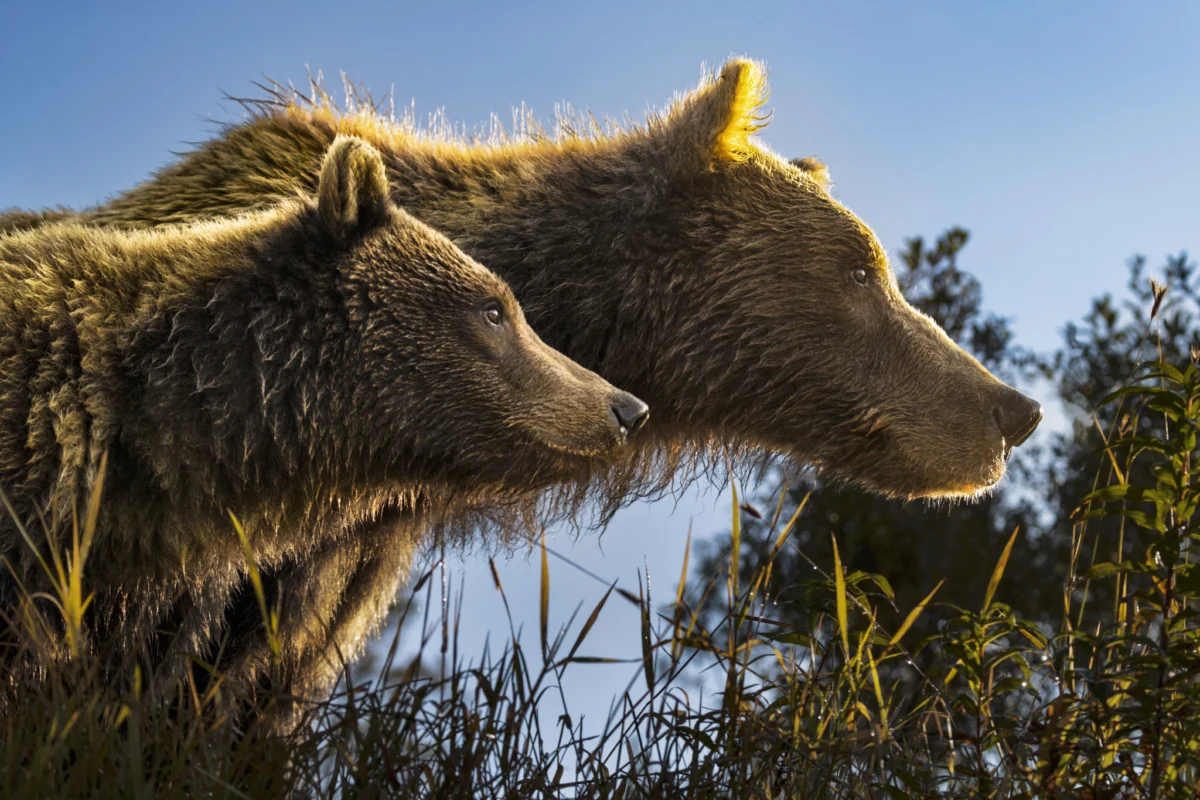
It was in this quiet interlude that the observer sensed a subtle shift in the underbrush, a rustling sound indicating a significant presence nearby. Approximately eight feet away, a mother brown bear and her cub emerged. The cub, estimated to be no more than eight months old, was small and still dependent, its young head peeking from the dense foliage. The observer, recognizing the sensitive nature of the encounter, instinctively slowed his breathing and avoided direct eye contact. He adopted a posture of humility, an unspoken acknowledgment of his intrusion into their world.
The Art of Coexistence: Respecting the Bear’s Domain
Without a telephoto lens, equipped only with a wide-angle zoom, the photographer was in a delicate position. The mother bear, her senses honed by the wild, stepped into the open. Her attention, however, was not directed at the observer but fixed on a large male bear fishing upstream. The male appeared unaware of her presence, and by extension, that of the photographer. Yet, the mother remained acutely aware, observing, listening, and learning, a masterclass in situational awareness.
This encounter underscored the profound respect required when observing wildlife in their natural habitat. The photographer’s approach, characterized by stillness and a non-threatening demeanor, allowed for a rare moment of proximity. The mother bear, sensing no immediate danger, continued her vigil, prioritizing the perceived threat of the dominant male over the passive presence of the human observer. This moment of mutual, albeit passive, acknowledgment highlights the delicate balance that can exist between humans and wild animals when respect and understanding are paramount.
Capturing the Ephemeral: A Photographer’s Perspective
The photographer, employing a technique akin to the slow, deliberate movements of Tai Chi, carefully raised his camera. The aim was to capture the essence of the moment without disrupting the fragile peace. Two quick shots were taken, with no immediate certainty of their success. However, one of these images would later emerge as a deeply satisfying capture, a testament to the serendipitous nature of wildlife photography.
The experience served as a profound reminder of the power of being accepted into an animal’s presence, of allowing the subject to dictate the terms of interaction. The bears, mother and cub, recognized the observer’s non-threatening nature. The true perceived danger lay upstream, in the form of the dominant male. This fleeting intersection of luck, timing, and circumstance allowed for the capture of a poignant moment as the day’s last light faded.
Broader Implications: Conservation and the Future of Alaska’s Wilds
The annual salmon run and the brown bear populations it sustains are inextricably linked to the health of the Alaskan ecosystem. The salmon, originating from the pristine waters that the photographer works to protect, are a keystone species, supporting a vast array of wildlife. The continued viability of these runs is dependent on the preservation of their natal streams and the overall health of the marine and freshwater environments.
The challenges faced by these bears, from the intense competition for resources during the feeding season to the inherent dangers of their social structure, highlight the complex realities of survival in the wild. Understanding these dynamics is crucial for effective conservation efforts. Protecting critical habitats, ensuring the purity of water sources, and mitigating human-wildlife conflict are all essential components in safeguarding this iconic Alaskan spectacle for future generations. The ongoing health of the salmon runs is a direct indicator of the broader environmental health of the region, making their preservation a matter of significant ecological concern. Furthermore, the economic and cultural significance of these natural phenomena to local communities and the tourism industry also underscores the importance of maintaining these delicate ecological balances.