The journey to the western edge of Oahu, a place locals often referred to as "the end of the road," was a deliberate act of defiance against common advice. For photographers Cristina Mittermeier and Paul Nicklen, the allure of the forbidden and the promise of authentic cultural narratives pulled them toward this ostensibly unwelcoming territory. Armed with professional camera equipment and a pressing deadline for National Geographic, they embarked on a mission to document one of the last bastions of traditional Hawaiian culture, bracing for the suspicion and potential hostility they had been warned about. Instead, they found an unexpected embrace, a profound generosity, and the formation of lifelong bonds that redefined their understanding of ‘ohana, or family.
The Hawaiian proverb, "E hele me ka puʻolo," meaning "Make every person, place, or condition better than before, always," served as an unspoken guiding principle for their exploration. This philosophy, deeply ingrained in the Hawaiian way of life, manifested in the interactions they experienced, particularly in the resilient community of Makaha.
Unveiling Makaha: A Cultural Enclave
Makaha, situated on Oahu’s leeward coast, has long been characterized by its raw beauty and a fiercely protected local identity. For generations, this area has been a stronghold for those deeply connected to the ocean and traditional Hawaiian practices. The warnings Mittermeier and Nicklen received likely stemmed from a history of the community being overlooked, misrepresented, and sometimes exploited by outsiders. The Makaha valley, with its dramatic cliffs and expansive beaches, has historically been a place where surf culture thrived, but it also faced significant socio-economic challenges.
Early mornings in Makaha are a spectacle of dedication and passion. Before the sun fully illuminates the horizon, surfers converge on the shores, their boards slicing through the nascent light. As the rest of the island awakens, the rhythm of Makaha intensifies. The scent of brewing coffee mingles with the blare of music and the rumble of cars navigating the single, often imperfectly maintained, road. Makeshift tent communities come alive, and the calls of roosters echo along the beach. It was in this vibrant, yet often misunderstood, setting that Mittermeier and Nicklen found themselves sharing shade with Brian Keaulana, a figure of significant stature in Hawaii – a celebrated surfer, accomplished stuntman, and a respected member of one of the islands’ most venerable families.

A Legacy of Tradition and Resilience
The community of Makaha is a living testament to the endurance of Hawaiian heritage. Here, surfboard shapers meticulously uphold the artistry of their craft, a deliberate counterpoint to the mass-produced boards flooding the global market. Wayfinders, descendants of ancient navigators, continue to hone their skills in reading the celestial bodies, a practice that connects them to their ancestors’ seafaring prowess. For the people of Makaha, surfing transcends mere sport or lifestyle; it is an intrinsic part of their identity, woven into the fabric of their being. The community is largely comprised of Polynesian descendants, many of whom are revered as watermen and women whose connection to the land and sea is profound and ineffable.
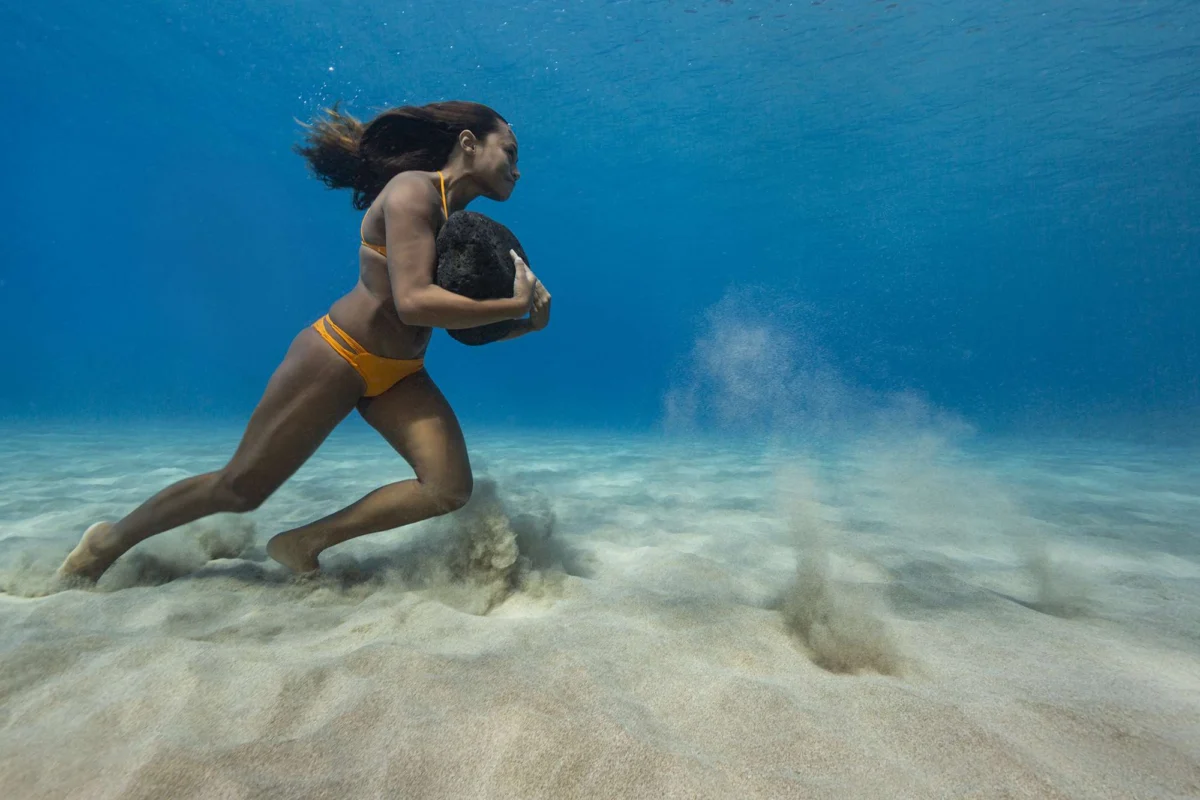
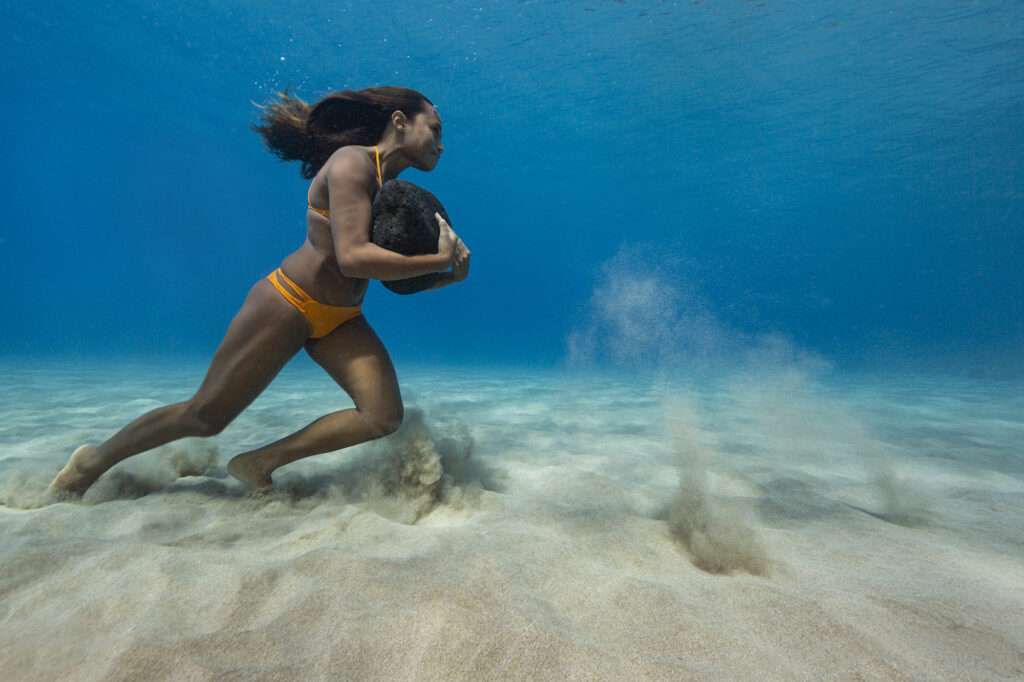
Through the generous guidance of Brian Keaulana, Mittermeier and Nicklen were granted access to individuals who embody the spirit of Makaha. They met Haʻa Keaulana, Brian’s daughter, a prodigious surfer and the granddaughter of the legendary Buffalo Keaulana. Her training regimen was a testament to the physical and mental fortitude demanded by this environment. Haʻa’s routine included carrying a fifty-pound boulder underwater for extended periods, with fellow surfers clinging to her in a human train. This practice, a modern iteration of ancient strength-building techniques, highlights the deep connection to the ocean and the commitment to passing down ancestral skills.
They also had the privilege of meeting Suluʻape Keone Nunes, a master traditional tattoo artist. Nunes imparted the profound symbolism embedded within each design, illustrating how Hawaiians proudly bear their lineage, stories, and cultural identity on their skin. These encounters underscored a critical understanding: the fierce protectiveness of the community was not born of animosity, but from a deep-seated desire to safeguard a precious and vulnerable heritage.
Historical Context and the Weight of Preservation
The history of Hawaii is marked by profound upheaval and the subsequent efforts of its people to preserve their identity. Following the annexation of Hawaii by the United States in 1898, the native Hawaiian population had dwindled dramatically, from an estimated 250,000 at the time of Captain Cook’s arrival to a mere 40,000. This decimation was largely attributed to introduced diseases to which native Hawaiians had no immunity, as well as the violent conflicts that ensued. Over the subsequent century, the remaining Hawaiian communities have meticulously nurtured the fragile links to their ancestors and their ancestral lands, ensuring the transmission of this cultural inheritance to each new generation.
The Makaha communities, in particular, have navigated a challenging modern landscape. They have grappled with issues such as addiction, violence, and homelessness, challenges that have tested the resilience of many families. Yet, at the core of their story lies an unwavering connection to the rhythms of the ocean. While they may appear guarded to outsiders, this reserve stems from the profound value they place on what they have managed to preserve.

A Decade Later: The Enduring Spirit of Aloha
When Mittermeier and Nicklen departed from Oahu, they carried with them not just powerful images and compelling stories, but also a deep sense of connection and a promise to return. Their recent revisit, ten years after their initial encounter, served as a poignant affirmation of the enduring strength of the bonds they had forged.
As their rental car crossed the bridge and approached the familiar coastline, it felt like a journey back in time. The beach, as vibrant as ever, teemed with local surfers and beachgoers, the air alive with the sounds of music carried on the golden shores. Nicklen recalled how, on their previous visit, the locals seemed to possess an innate sense of their presence, often ensuring a parking spot was reserved for them. As if summoned by his thoughts, Moki, a dear friend from their earlier stay and a resident of Makaha, emerged from the roadside and gestured with his baby stroller, effectively holding a space for their vehicle. This simple, yet profound, act of recognition and inclusion, a decade later, underscored the depth of the hospitality they had received.
Stepping out of the car, they were met with a torrent of "Alohas," warm embraces, laughter, and genuine smiles, all unfolding beneath the iconic lifeguard station at 47B. This immediate and heartfelt welcome, years after their initial departure, speaks volumes about the authenticity of the connections made and the unwavering nature of the aloha spirit.
The Aloha Spirit: Generosity Amidst Adversity
The aloha spirit, a cornerstone of Hawaiian culture, is more than a mere greeting; it is a philosophy of life characterized by love, peace, compassion, and mutual respect. In Makaha, this spirit is not an abstract ideal but a tangible force that shapes daily life, particularly in its demonstration of generosity and community care, even in the face of hardship. The act of ensuring that visitors, and indeed all members of the community, have a place to park and a shaded spot to rest is a powerful embodiment of this ethos.
The ability of the Makaha community to maintain such profound warmth and hospitality, despite the historical and ongoing socio-economic challenges they face, is a testament to their extraordinary resilience and the strength of their cultural values. It highlights a profound capacity for empathy and a commitment to ensuring that everyone feels welcomed and supported. This enduring generosity, particularly in a region that has often been marginalized, offers a powerful lesson in the true meaning of community and the enduring power of human connection.
Broader Implications and the Future of Cultural Preservation
The narrative of Makaha, as experienced by Mittermeier and Nicklen, offers a critical lens through which to examine the complexities of cultural preservation in the face of modernization and external pressures. The community’s determination to maintain its traditions, from surfboard shaping to wayfinding, while also confronting contemporary issues, demonstrates a dynamic approach to cultural continuity.
The challenges faced by Makaha are not unique to this particular community. Indigenous and culturally rich communities worldwide grapple with similar issues of economic disparity, cultural erosion, and the need to balance tradition with progress. The success of Makaha in preserving its identity, while fostering deep connections with those who approach with respect, offers a model for other communities seeking to safeguard their heritage.
The role of documentary photography and storytelling in this process cannot be overstated. By sharing the authentic experiences and the human stories of Makaha, Mittermeier and Nicklen contribute to a broader understanding and appreciation of Hawaiian culture, potentially fostering greater empathy and support for the community’s ongoing efforts. Their work serves to counter simplistic narratives and to highlight the depth, resilience, and enduring spirit of a people deeply connected to their ancestral lands and the powerful ocean that defines their existence. The commitment to "making better than before" is not just a proverb for Makaha; it is a lived reality, a continuous endeavor to nurture and protect their invaluable heritage for generations to come.