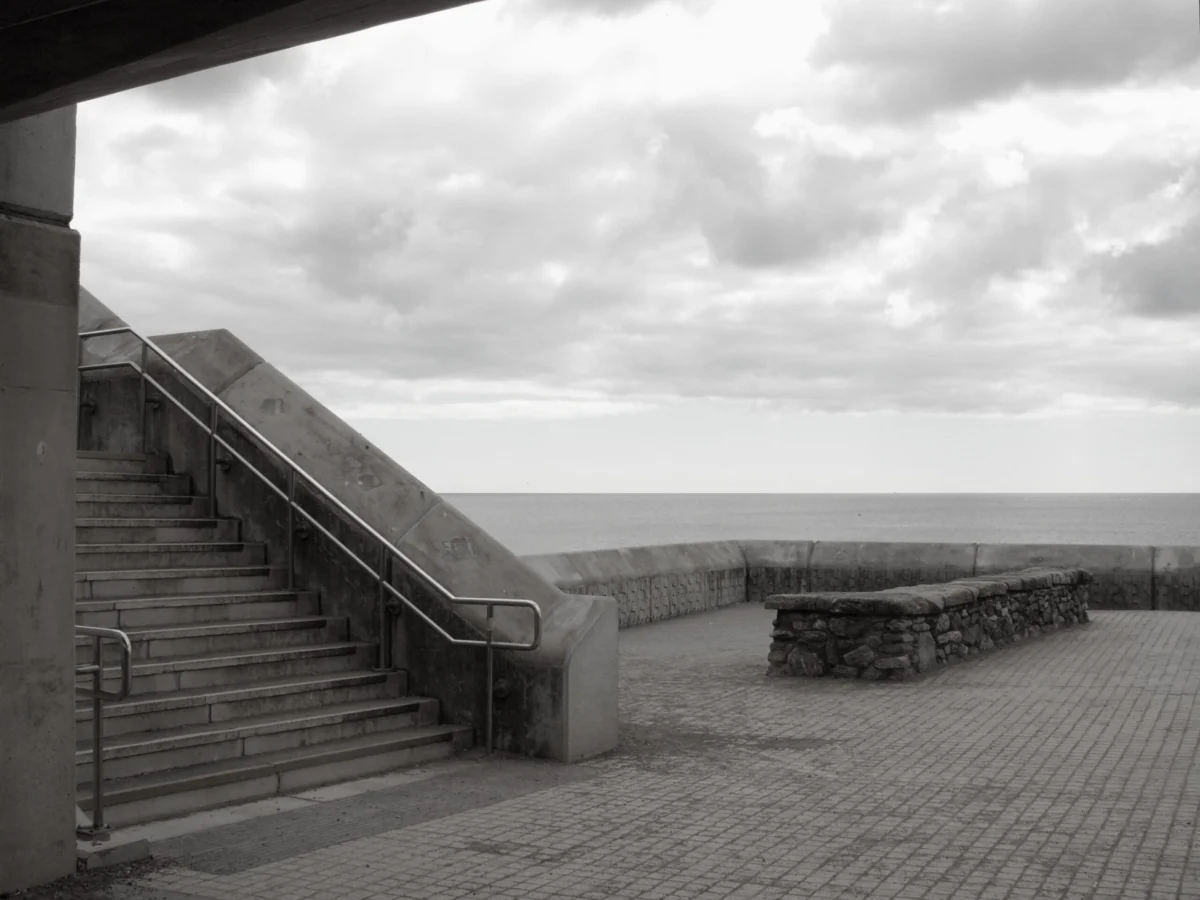
The English seaside town occupies a singular and evocative space within the national psyche, serving as both a repository for collective memory and a frontline in the escalating conflict between human infrastructure and the natural world. For generations of British citizens, the coast represents the quintessential setting for childhood holidays, defined by a specific visual language of piers, promenades, and the rhythmic ebb of the tide. For others, particularly the elderly, these coastal enclaves offer a serene environment for retirement, characterized by what the celebrated poet Philip Larkin described as the "miniature gaiety of seasides" in his 1969 poem, To the Sea. However, beneath this veneer of seasonal recreation and aesthetic charm lies a more harrowing reality: a relentless, intensifying confrontation between the structural permanence of human engineering and the destructive fluidity of the English Channel.
In Dawlish, Devon, this struggle is manifested in a complex network of sea defenses—a tiered landscape of concrete walls, ramparts, handrails, and the vital artery of the Great Western Main Line railway. While these structures are designed to provide security and connectivity, they are increasingly viewed as temporary measures against an ocean of overwhelming power. The task of maintaining this boundary has become arguably Sisyphean, requiring constant investment and reconstruction as winter storms grow in ferocity. This tension between the benign appearance of a calm summer sea and the catastrophic potential of the winter surge defines the modern existence of the English coastal town.
The Geography of Vulnerability: The Dawlish Corridor
The town of Dawlish is situated on the south coast of Devon, where the railway line—famously engineered by Isambard Kingdom Brunel—runs directly adjacent to the sea for several miles. This stretch of track is one of the most iconic and precarious pieces of infrastructure in the United Kingdom. It serves as the primary rail link connecting Cornwall and much of Devon to the rest of the country. Consequently, any breach in the sea defenses at Dawlish is not merely a local inconvenience but a significant disruption to the national economy and regional transport stability.
The sea defenses here are a hybrid of Victorian-era masonry and modern reinforced concrete. They include a public promenade that doubles as a protective barrier for the railway embankment. During periods of meteorological stability, such as the humid summer days often captured in landscape photography, the English Channel appears passive and contained. However, the geographic orientation of the Dawlish coast makes it particularly susceptible to "easterlies"—winds that drive massive swells directly against the sea wall, creating a hydraulic "hammer action" that can displace even the heaviest stone blocks.
A Chronology of Coastal Conflict
The history of Dawlish is punctuated by significant storm events that have tested the limits of human ingenuity. To understand the current state of the defenses, one must look at the timeline of major breaches and the subsequent engineering responses:
- February 2014: A catastrophic storm breached the sea wall under the railway line, leaving the tracks dangling in mid-air. This event severed the rail link to the South West for eight weeks and cost the regional economy an estimated £1.2 billion. This served as a "wake-up call" for the Department for Transport and Network Rail.
- 2019–2023: Network Rail embarked on a massive, multi-phase project to rebuild the sea wall. This involved the construction of a new, higher wall featuring a "re-curve" design intended to deflect wave energy back out to sea, rather than allowing it to overtop the defenses.
- January 2024: The region was struck by Storm Ingrid. Despite the newly completed sections of the defense, the sheer volume of water and the atmospheric pressure associated with the storm led to significant flooding. In this instance, parts of the promenade were inundated, the railway was temporarily closed as a safety precaution, and the town effectively entered a state of lockdown.
This chronology illustrates that while engineering has become more sophisticated, the environmental challenges are scaling at a proportional, if not faster, rate. Each "final" solution eventually faces a weather event that exposes new vulnerabilities.
Technical Specifications and Engineering Resilience
The modern sea wall at Dawlish is a marvel of civil engineering, but its existence is a testament to the fragility of the coast. The new structure, funded by a government investment of approximately £80 million, was designed using advanced wave-tank modeling to simulate the most extreme conditions predicted over the next 100 years.
Key features of the defense include:
- The Re-curve Profile: Unlike the vertical walls of the past, the new concrete panels are curved. When a wave hits the wall, the shape directs the water back towards the ocean, significantly reducing the amount of spray and water reaching the railway tracks.
- Depth of Foundation: The new defenses are anchored deep into the bedrock to prevent "scouring," where the sea washes away the sand and soft earth beneath the wall, leading to collapse.
- The Link Bridge: A 142-meter-long bridge was constructed to connect the two sections of the promenade, allowing for continuous public access while providing additional structural bracing for the cliffs and the track.
Despite these advancements, the inherent "otherness" of the sea remains an unpredictable variable. Engineering can mitigate risk, but as seen during the surges of early 2024, it cannot eliminate the possibility of nature reclaiming the land.
Supporting Data: The Rising Tide of Climate Change
The struggle at Dawlish is framed by broader environmental data regarding sea-level rise and storm frequency. According to the UK Climate Projections (UKCP18) provided by the Met Office, the sea levels around the UK could rise by over one meter by the end of the century if carbon emissions are not significantly curtailed.
Furthermore, data from the Environment Agency indicates that the frequency of "1-in-100-year" storm surges is likely to increase. In the English Channel, the combination of rising thermal expansion of the oceans and the increased intensity of North Atlantic depressions creates a high-risk profile for Devon’s coastal infrastructure. The "Shoreline Management Plan" (SMP) for the area currently adopts a policy of "Hold the Line," meaning the government intends to maintain the current defense position. However, experts warn that as costs escalate, some coastal regions may eventually transition to "Managed Realignment," where the sea is allowed to reclaim certain areas to create natural buffers.
Literary and Philosophical Reflections: The Larkin Perspective
The physical battle at Dawlish finds a poignant echo in the works of Philip Larkin. His poetry often explored the intersection of human artifice and the indifferent endurance of nature. In To the Sea, Larkin captures the nostalgic, almost ritualistic return of the English people to the shore, noting the "miniature gaiety" of the scene. Yet, in his later poem Going, Going, he adopts a more somber tone, warning of the eventual dissolution of the English landscape.
Larkin writes:
"Things are tougher than we are, just / As earth will always respond / However we mess it about; / Chuck filth in the sea, if you must: / The tides will be clean beyond."
These lines highlight a fundamental truth that engineers at Dawlish face daily: the environment is not a passive backdrop but an active, responsive force. The "clean tides" Larkin refers to represent a natural order that exists independently of human structures. The walls and handrails we build are, in the grander chronological scale of the earth, merely temporary. Larkin’s work reflects a sense of foreboding that mirrors the visual experience of standing on the Dawlish promenade; even on a calm day, the sheer scale of the horizon suggests a power that humans can mimic in strength but never truly master.
Stakeholder Reactions and Public Sentiment
The ongoing works and the frequent closures of the Dawlish line have drawn varied reactions from officials and the public.
A spokesperson for Network Rail recently stated: "The new sea wall at Dawlish is designed to protect the railway for the next century. While no defense is entirely ‘storm-proof’ in the face of unprecedented weather events, this infrastructure represents the best possible protection for the South West’s vital transport link."
Conversely, local environmental groups have raised concerns about the "grey infrastructure" approach. Some advocates argue that concrete walls, while necessary for the railway, can exacerbate erosion further down the coast by disrupting natural sediment flow. Residents of Dawlish remain divided; many welcome the increased safety and the modernized promenade, while others mourn the loss of the traditional "Brunel" aesthetic and express "doubt"—much like Larkin—about whether human ingenuity can truly hold back the Atlantic indefinitely.
The Broader Impact and Future Implications
The situation at Dawlish is a microcosm of the challenges facing coastal communities worldwide. As the climate enters a period of heightened volatility, the "Sisyphean task" of coastal defense will require not only more concrete but also a fundamental shift in how we perceive our relationship with the shoreline.
The economic implications are clear: the cost of defending the 1.5-mile stretch of track at Dawlish is a significant portion of the national rail maintenance budget. If the defenses fail, the cost of repair and the lost economic activity in Devon and Cornwall would be astronomical. This necessitates a continued commitment to the "Hold the Line" strategy, regardless of the difficulty.
Ultimately, the image of Dawlish—with its severe architecture framing a benign summer sea—serves as a powerful metaphor for the human condition in the 21st century. We build, we reinforce, and we rebuild, driven by a necessity for connectivity and a desire for permanence. Yet, as the tides continue to respond to a changing planet, the "foreboding" sensed by observers remains a rational response to the fragile ability of man-made structures to tame the vast, clean, and indifferent power of the sea. The defenses at Dawlish are a testament to our resilience, but they are also a reminder of our limitations. In the end, as Larkin suggests, the tides will remain, regardless of the ramparts we place in their path.