The 98th annual Academy Awards ceremony recently concluded, serving as a global platform to celebrate the paramount achievements in filmmaking over the past year. Among the most critically acclaimed aspects of the nominated features was their exceptional cinematography, showcasing a diverse array of visual storytelling techniques and technological innovations. This annual recognition underscores the vital role cinematographers play in translating narrative into compelling visual experiences, often pushing the boundaries of what is technically and artistically possible. The pursuit of iconic shots and memorable moments, meticulously crafted through a combination of cutting-edge gear and timeless artistic principles, remains a central fascination within the film industry and among enthusiasts. With the awards season drawing to a close, a closer examination of the tools and philosophies employed by this year’s top cinematographers offers profound insights into the artistry that defined some of the most celebrated films.
The Evolving Canvas: Cinematography’s Enduring Legacy at the Academy Awards
The Academy Award for Best Cinematography is one of the original awards presented since the first Oscars ceremony in 1929, reflecting the foundational importance of visual composition and photographic artistry in cinema. Over nearly a century, this category has chronicled the evolution of filmmaking technology, from the black-and-white silent era to the advent of Technicolor, widescreen formats, and the contemporary blend of film and digital capture. Each year, the nominated films represent a snapshot of the current state of the art, demonstrating how directors of photography (DPs) interpret scripts, collaborate with directors, and leverage their technical prowess to establish mood, guide audience perception, and enhance narrative depth. The 98th Academy Awards continued this tradition, presenting a lineup where innovation converged with a reverence for classical techniques, yielding a tapestry of visual styles that captivated audiences and critics alike.
Spotlight on Nominees: Technical Innovations and Artistic Visions
This year’s slate of nominated films for cinematography offered a masterclass in diverse approaches, each DP meticulously selecting cameras, lenses, and lighting strategies to serve their unique narrative and aesthetic goals.
Bugonia: Distorted Realities and Thematic Depth
Yorgos Lanthimos’s Bugonia emerged as a standout, continuing his distinctive collaboration with cinematographer Robbie Ryan. Known for their work on critically acclaimed features such as Poor Things and The Favourite, Lanthimos and Ryan have cultivated a visual language that frequently mirrors the psychological complexities of their narratives. In Bugonia, this approach manifests through cinematography designed to evoke themes of obsession and paranoia, drawing viewers into a subtly disorienting world.
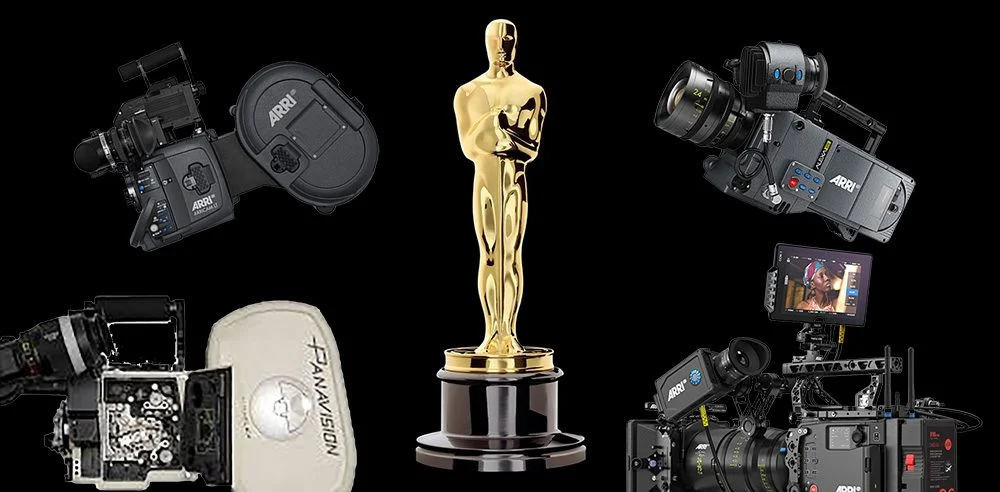
The film’s visual strategy prominently features extreme wide-angle and fisheye lenses, creating a distorted and often claustrophobic sense of reality. This deliberate choice is not merely stylistic; it serves to heighten the film’s thematic undertones, making the audience question perceptions and the subjective nature of truth within the narrative. The technical execution behind this vision involved a blend of classic and modern equipment. Cameras utilized included the Vistavision Wilcam W-11 and the ARRIFLEX 435 & 435 HS. VistaVision, a high-resolution, widescreen cinematic film format originally developed by Paramount Pictures in the 1950s, is renowned for its horizontal film travel, resulting in a larger negative area and superior image quality compared to standard 35mm. Its revival in films like Bugonia often signals a desire for a particular textural quality and depth of field, especially when combined with specialized optics. Complementing this, the ARRIFLEX 435 series cameras, celebrated for their reliability, high frame rate capabilities, and versatility in 35mm film production, provided the precision necessary for capturing the intricate visual nuances of Lanthimos’s world. The marriage of these formats and specialized lenses allowed Ryan to craft an expert level of filmmaking that playfully yet profoundly challenges audience reality, creating a signature aesthetic that is both unsettling and visually captivating.
F1: Redefining High-Speed Action Cinematography
F1 presented a significant leap forward in practical action filmmaking, particularly within the demanding genre of high-speed motorsports. Under the guidance of Oscar-winning cinematographer Claudio Miranda, renowned for his groundbreaking work on films like Top Gun: Maverick (for which he won an Academy Award), the production embarked on an ambitious endeavor: mounting real cameras to custom-modified Formula 2 cars. These vehicles, driven by actors Brad Pitt and Damson Idris, achieved speeds exceeding 150 mph during filming, necessitating unprecedented innovation in camera technology and mounting solutions.
The primary challenge was capturing dynamic, immersive footage without compromising the cars’ aerodynamics or the drivers’ visibility—critical factors in authentic racing. Miranda addressed this by collaborating directly with Sony to develop "Carmen," a bespoke, miniaturized 6K sensor-on-a-stick prototype. This custom unit, approximately a quarter of the size of a standard cinema camera, allowed for discreet integration into the high-performance vehicles, often mounted on the car’s exterior or within the cockpit, minimizing drag and visual obstruction. The cameras used included the Sony Venice 2, known for its exceptional image quality, wide dynamic range, and full-frame sensor, providing cinematic depth and color fidelity, alongside this Carmen (Custom Prototype), and the DJI Ronin 4D, a versatile integrated camera and gimbal system offering advanced stabilization. These high-tech rigs were strategically distributed across the cars’ "halo" protection systems and chassis, providing up to seven simultaneous camera angles. Crucially, these setups featured full remote-controlled pan and tilt capabilities, allowing for precise adjustments during high-speed sequences without interrupting the flow of the race. The resulting cinematography delivered spectacular, unprecedented immersion into the world of Formula 1 racing, setting new benchmarks for capturing authentic speed and adrenaline on screen and providing an unmatched visceral experience for the audience.
Hamnet: Intimacy Through the "Ghost Camera"
Chloé Zhao’s Hamnet showcased a strikingly intimate visual language, meticulously crafted by cinematographer Lukasz Zal. Zal, an Academy Award nominee recognized for his stark yet beautiful black-and-white work on films like Ida and Cold War, brought a signature sensibility to Hamnet. The cinematography here embraced what has been termed a "ghost camera" perspective—an observational, drifting lens that often assumes a quiet, non-judgmental weight, described by some as "death’s point of view." This stylistic choice imbued the narrative with a profound sense of introspection and melancholy, allowing the audience to witness events unfold with an almost ethereal detachment, as if observing spirits moving through a past life.
The film was primarily shot using the ARRI Alexa 35. The ARRI Alexa series is a ubiquitous choice in high-end cinema for its cinematic image quality, exceptional color science, and robust performance in various lighting conditions. The Alexa 35, in particular, offers enhanced dynamic range, improved low-light performance, and a native 4K Super 35 sensor, enabling Zal to achieve subtle gradations of light and shadow essential for Hamnet‘s nuanced visual palette. This camera’s ability to render delicate textures and tones, combined with its compact form factor, was crucial in supporting the film’s intimate, often somber, narrative, allowing the camera to move unobtrusively and making the "ghost camera" a powerful conduit for emotional resonance and historical reflection.
Frankenstein: Modernizing Gothic Horror with Large Format
Guillermo del Toro’s Frankenstein presented a bold modernization of the gothic horror aesthetic, primarily through the sweeping, large-format visual style orchestrated by cinematographer Dan Laustsen. Laustsen, a frequent collaborator with del Toro on films like The Shape of Water (for which he received an Oscar nomination), chose to shoot the film entirely on the ARRI Alexa 65 paired with Leitz THALIA 65 lenses. The ARRI Alexa 65, a large-format digital camera, is celebrated for its immense resolution (6.5K) and expansive sensor size, which yields images with incredible detail, an impressively shallow depth of field, and a unique, grand aesthetic often associated with traditional 65mm film.
Laustsen’s approach was notably minimalist in lens choice, relying heavily on a 24mm wide-angle lens for nearly 90% of the film’s shots. This specific wide-angle allowed for grand, encompassing views that emphasized the gothic architecture and expansive, foreboding landscapes, while still maintaining a sense of intimacy within close-ups due to the large format’s unique compression characteristics. To temper the inherent digital sharpness of the Alexa 65 and achieve a more organic, painterly feel aligned with gothic traditions, Laustsen employed custom Black Pro-Mist diffusion filters. These filters, strategically placed behind the lens, served to "burn out" highlights—softening intense light sources and creating a gentle bloom—while meticulously preserving the deep, rich blacks that were essential to the film’s moody and ominous atmosphere. This high-contrast, yet softened, visual language created a timeless horror aesthetic that felt both classical and strikingly contemporary, drawing viewers into a world of heightened drama and palpable dread.
Marty Supreme: The Painterly Texture of 35mm
Josh Safdie’s Marty Supreme saw cinematographer Darius Khondji deliberately eschew modern digital aesthetics in favor of a richly textured, "painterly" 35mm film look. Khondji, known for his masterful command of film stock and light in films like Se7en and Evita, utilized Arricam LT, ST, and SR cameras, primarily with Kodak Vision3 500T film. This choice of film stock is renowned for its versatility, fine grain structure, and excellent color rendition, particularly in low-light conditions, contributing to the film’s atmospheric depth and naturalistic feel. Further enhancing the retro aesthetic, the production employed vintage Panavision B and C Series anamorphic lenses. These lenses impart characteristic optical qualities such as oval bokeh, distinct horizontal lens flares, and a widescreen aspect ratio, all of which contribute to a unique