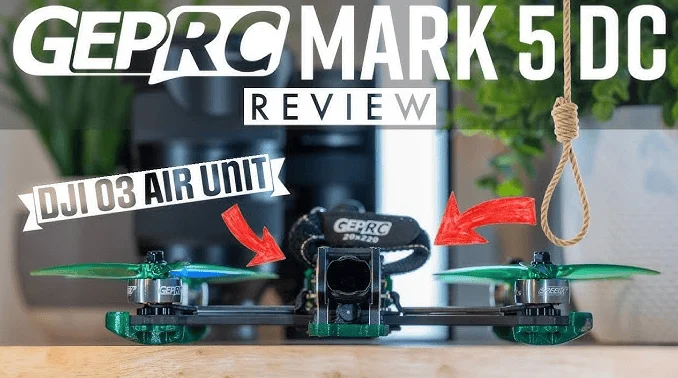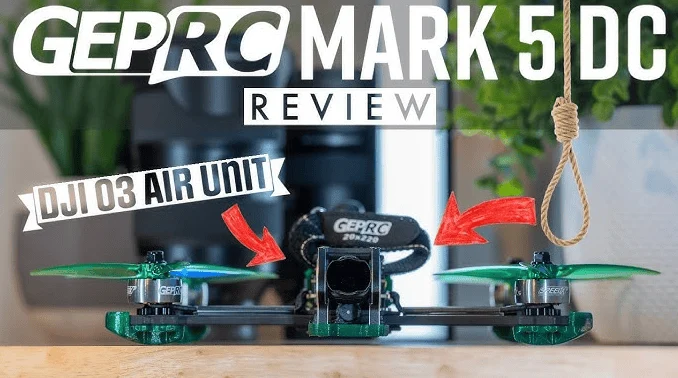
The evolution of First-Person View (FPV) drone technology has reached a significant milestone with the release and subsequent market dominance of the GEPRC MARK5 DC HD O3 FPV. This aircraft represents a sophisticated convergence of structural durability, high-end propulsion, and state-of-the-art digital imaging, positioning itself as a primary choice for both professional videographers and competitive freestyle pilots. As the FPV industry shifts toward integrated high-definition solutions, the MARK5 series has emerged as a benchmark for how modern unmanned aerial vehicles (UAVs) should balance the conflicting demands of weight, power, and visual fidelity.
The Evolution of the MARK Series and Historical Context
The journey toward the GEPRC MARK5 DC HD O3 FPV began over a decade ago as the FPV hobby transitioned from niche DIY projects to a global industry. GEPRC, established in 2011, has been at the forefront of this transition, moving through various iterations of the "MARK" frame series. While the MARK2 and MARK4 were praised for their simplicity and robustness, they were primarily designed for the analog era, where pilots prioritized low latency over image quality.
The introduction of the DJI Digital FPV System in 2019 changed the landscape, but it was the launch of the DJI O3 Air Unit in late 2022 that truly revolutionized the field. This unit allowed for 4K stabilized recording directly from the drone’s primary flight camera, largely eliminating the need for a secondary "action camera" like a GoPro. The GEPRC MARK5 DC (DeadCat) was specifically engineered to house this technology, providing a platform that could handle the increased thermal demands and specific mounting requirements of the O3 system. This chronology reflects a broader industry trend: the move toward "Ready-to-Fly" (RTF) and "Bind-and-Fly" (BNF) models that offer professional-grade performance out of the box.
Structural Engineering and the DeadCat Geometry
The "DC" in the drone’s nomenclature stands for "DeadCat," a specific frame geometry that is central to its cinematic capabilities. In a traditional "X" or "Squashed X" frame, the propellers are equidistant from the center, which is ideal for symmetrical flight physics and racing. However, this often results in the propellers appearing in the camera’s field of view (FOV), particularly when using ultra-wide lenses.
The MARK5 DC utilizes an offset arm configuration where the front arms are swept back and the rear arms are positioned further apart. This geometry ensures that the propellers remain completely invisible to the camera, even at low tilt angles. Beyond the visual benefits, the frame is constructed from high-tensile 3K carbon fiber. The side plates are reinforced with 7075 aluminum alloy—a material typically reserved for aerospace applications—to protect the sensitive internal electronics and the DJI O3 Air Unit from high-velocity impacts. This hybrid material approach provides a high strength-to-weight ratio, allowing the drone to withstand the rigors of freestyle maneuvers while maintaining the agility required for tight indoor or outdoor cinematic chases.
Technical Specifications and Propulsion Systems
The performance of the GEPRC MARK5 is underpinned by a carefully curated selection of electronic components. The drone is powered by SPEEDX2 2107.5-1960KV motors. These brushless motors are designed for 6S (six-cell) Lithium Polymer (LiPo) battery systems, which provide higher voltage and lower current draw compared to older 4S systems. This results in more "punch" during throttle-heavy maneuvers and better efficiency during long-range cruising.
Managing this power is the GEP-F722-45A AIO (All-in-One) flight controller and Electronic Speed Controller (ESC). The use of an F7 processor is significant; it offers faster processing speeds and more "Universal Asynchronous Receiver-Transmitter" (UART) ports than the older F4 chips, allowing for more complex flight algorithms and better integration with peripheral sensors like GPS or external receivers. The 45A ESC supports BLHeli_32 firmware, enabling features like "bidirectional DShot," which allows the flight controller to communicate with the motors in real-time to filter out electronic noise and vibrations. This technical synergy results in a flight experience that is often described by pilots as "locked-in" or "on rails."
The DJI O3 Air Unit: A Paradigm Shift in Imaging
The centerpiece of this specific model is the DJI O3 Air Unit. Traditionally, FPV pilots had to carry a heavy action camera (weighing 120g–160g) on top of the drone to record high-quality footage, while flying via a low-resolution analog signal. The O3 Air Unit integrates these two functions into a single 30g module.
The O3 system features a 1/1.7-inch CMOS sensor capable of recording 4K video at 60 frames per second (fps). It supports a 155-degree ultra-wide FOV, providing an immersive perspective that mimics human peripheral vision. Crucially for professional editors, the system supports the D-Cinelike color profile, which captures a wider dynamic range and allows for greater flexibility during color grading in post-production. Furthermore, the inclusion of RockSteady 2.0 and HorizonSteady electronic image stabilization (EIS) ensures that even the most violent freestyle shakes are smoothed out, producing footage that looks as though it were filmed on a stabilized gimbal.
Thermal Management and Endurance
One of the primary challenges identified during the development of the MARK5 DC was the heat generated by the DJI O3 Air Unit. When stationary or flying in high-temperature environments, the O3 unit can overheat, leading to a loss of signal or "thermal throttling" of the recording quality.
To combat this, GEPRC engineers designed a specialized CNC-machined aluminum heat sink and integrated it into the camera mount. This structure acts as a passive cooling system, drawing heat away from the core components. When the drone is in flight, the airflow directed by the propellers and the frame’s aerodynamic profile further dissipates this heat. This allows for extended flight sessions, provided the pilot uses the recommended 6S 1300mAh to 1500mAh batteries, which typically offer flight times ranging from 5 to 8 minutes depending on the aggressiveness of the flight.
Industry Reception and Professional Applications
The FPV community and industrial analysts have reacted positively to the MARK5 DC HD O3. Professional cinematographers have noted that the drone significantly lowers the "barrier to entry" for high-end aerial production. Previously, achieving this level of video quality required custom-built drones and significant technical expertise in tuning. The MARK5 offers a "turn-key" solution that meets the standards of commercial film sets.
Market analysts suggest that the success of models like the MARK5 is driving a shift in the drone industry. We are seeing a move away from "closed" consumer drones (like the DJI Mavic series) toward "open" FPV platforms that offer more creative freedom. The ability to fly at speeds exceeding 100 km/h while maintaining 4K stabilized video has opened new doors in automotive advertising, extreme sports coverage, and real estate marketing.
Regulatory Implications and Flight Safety
As high-performance drones like the GEPRC MARK5 become more accessible, they also come under increased regulatory scrutiny. In the United States, the Federal Aviation Administration (FAA) requires drones over 250 grams to be registered and equipped with Remote ID technology. The MARK5, with a battery, typically weighs between 600g and 800g, placing it firmly within these requirements.
Furthermore, the power of 6S-based 5-inch drones necessitates a high degree of pilot responsibility. The speed and weight of the aircraft mean that a collision can cause significant property damage or injury. Consequently, industry experts recommend that new pilots utilize FPV simulators such as Liftoff or Velocidrone before attempting to fly the MARK5 in the real world. This "simulation-first" approach is becoming a standard recommendation within the community to ensure safety and hardware longevity.
Future Outlook and Technological Trajectory
The GEPRC MARK5 DC HD O3 FPV is likely a precursor to even more integrated systems. Looking forward, the industry expects further miniaturization of the digital transmission systems and the potential integration of Artificial Intelligence (AI) for obstacle avoidance—a feature currently lacking in most freestyle FPV drones.
There is also a growing trend toward "sub-250g" drones that attempt to replicate the performance of the MARK5 while staying below the weight threshold for many global regulations. However, for the foreseeable future, the 5-inch class represented by the MARK5 remains the "sweet spot" for performance, as smaller drones struggle to carry the larger batteries and sensors required for professional-grade cinematic work.
In conclusion, the GEPRC MARK5 DC HD O3 FPV is more than just a hobbyist’s tool; it is a sophisticated piece of industrial design that reflects the current peak of FPV technology. By combining a durable DeadCat frame, a powerful 6S propulsion system, and the unrivaled imaging of the DJI O3 Air Unit, it has set a new standard for what a multi-rotor aircraft can achieve in the realms of both sport and cinema. As the technology continues to mature, the MARK5 will be remembered as the model that bridged the gap between enthusiast builds and professional production equipment.