The successful conclusion of NASA’s Artemis II mission on April 10, 2026, marked a pivotal moment in human spaceflight, reigniting humanity’s journey to the Moon after a hiatus of more than five decades. This ambitious endeavor, a critical test flight of the Orion spacecraft with a human crew, not only validated advanced technologies but also delivered a breathtaking photographic chronicle of the journey, inspiring billions worldwide. The four astronauts aboard Orion—Commander Reid Wiseman, Pilot Victor Glover, and Mission Specialists Christina Koch and Jeremy Hansen—captured a series of extraordinary images that transcend mere documentation, offering profound perspectives on Earth, the Moon, and the human spirit of exploration.
The Artemis Program: Charting a Course Beyond Low-Earth Orbit
The Artemis program represents NASA’s ambitious initiative to return humans to the Moon, establish a sustainable lunar presence, and prepare for future crewed missions to Mars. Building upon the foundational legacy of the Apollo program, which saw twelve astronauts walk on the lunar surface between 1969 and 1972, Artemis seeks to push the boundaries of space exploration further than ever before. Unlike Apollo’s flags-and-footprints approach, Artemis envisions a long-term human presence on and around the Moon, utilizing resources, conducting scientific research, and developing technologies for deep-space travel.
Artemis II was the crucial next step following the uncrewed Artemis I mission, which successfully orbited the Moon in late 2022. Artemis I, using the powerful Space Launch System (SLS) rocket, thoroughly tested the Orion spacecraft’s performance in deep space, including its trajectory, navigation, and re-entry systems, before its dramatic splashdown in the Pacific Ocean. Its success paved the way for Artemis II, the first crewed flight of the Orion capsule, designed to carry astronauts farther into space than any human has traveled since Apollo 17 in 1972.
The primary objectives of the Artemis II mission were multifaceted: to test Orion’s life support systems with a human crew onboard, evaluate critical communications and navigation capabilities in the deep-space environment, and assess crew performance during a complex lunar flyby trajectory. The mission also aimed to demonstrate Orion’s re-entry and splashdown procedures with astronauts. The selection of the Artemis II crew was historic: Reid Wiseman, Victor Glover, Christina Koch, and Jeremy Hansen. Victor Glover became the first person of color, and Christina Koch the first woman, to journey to the Moon, shattering long-standing barriers and underscoring the inclusive vision of modern space exploration.
A Chronology of Discovery: From Launchpad to Lunar Flyby
The meticulous preparations for Artemis II spanned years, involving countless engineers, scientists, and technicians from NASA and its international partners, including the Canadian Space Agency (CSA). The mission commenced with a flawless launch on April 3, 2026, from Launch Complex 39B at Kennedy Space Center, Florida. The towering 322-foot (98-meter) SLS rocket, the most powerful rocket ever built, majestically ascended, propelling the Orion spacecraft and its four-person crew toward their translunar injection.
After escaping Earth’s gravitational pull, Orion embarked on a meticulously planned trajectory that would take it approximately 253,000 miles (407,100 kilometers) from Earth. The journey included several critical maneuvers, including a translunar injection burn, to set the spacecraft on a free-return trajectory around the Moon. This path was designed to use the Moon’s gravity to sling Orion back toward Earth, minimizing fuel consumption and providing a safety net in case of propulsion issues.
The pinnacle of the mission occurred on April 6, 2026, as Orion executed its lunar flyby. During this critical phase, the spacecraft swung around the far side of the Moon, coming within a breathtaking 4,067 miles (6,545 kilometers) of the lunar surface. For approximately seven hours, the crew members took turns at Orion’s windows, meticulously capturing scientific data and photographic observations of the lunar landscape and Earth from an unparalleled vantage point. This period was not just about technical validation; it was a profound opportunity for human observation and connection with the cosmos.
Following the lunar flyby, Orion began its journey back to Earth. The return trip presented its own set of challenges, particularly the high-speed re-entry into Earth’s atmosphere. This phase was closely monitored, given the intense heat generated by atmospheric friction, which saw temperatures reach nearly 5,000 degrees Fahrenheit (2,760 degrees Celsius) on the spacecraft’s heat shield. The successful performance of Orion’s thermal protection system was paramount, building on lessons learned from the Artemis I mission, where the heat shield experienced expected but significant ablation. On April 10, 2026, the Orion capsule safely splashed down in the Pacific Ocean, off the coast of California, bringing its heroic crew home to a jubilant reception.
A Window to the Cosmos: The Art and Science of Artemis II Photography

The photographic output from Artemis II offers a compelling blend of scientific documentation and artistic expression, providing humanity with new perspectives on our home planet and its closest celestial neighbor. While autonomous probes and telescopes have long provided stunning cosmic imagery, the human element in Artemis II’s photographs lends an unparalleled intimacy and context. The images captured by Wiseman, Glover, Koch, and Hansen are more than just data points; they are visual testaments to human endeavor and the profound emotional impact of witnessing Earth from afar.
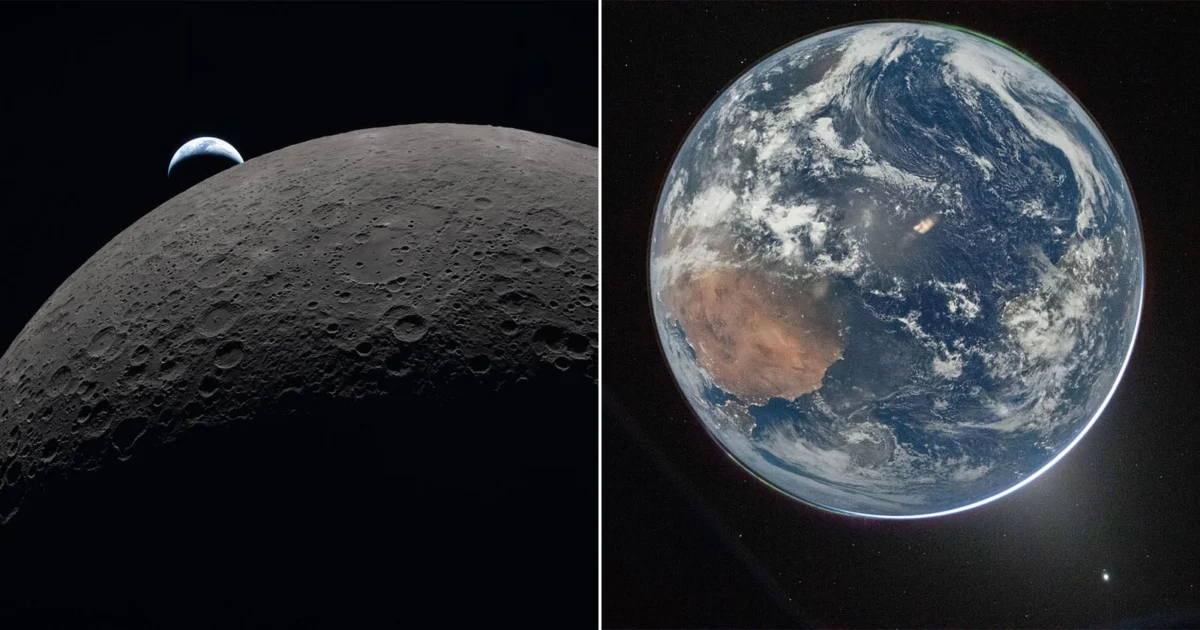
Among the most impactful images were those depicting Earth. Commander Reid Wiseman’s photograph, aptly titled "Hello, World," showcased our vibrant blue planet suspended in the blackness of space. This image, capturing continents, oceans, and swirling cloud formations, immediately drew comparisons to the iconic "Blue Marble" photograph taken by Apollo 17 astronaut Harrison Schmitt in 1972. Wiseman’s shot created a powerful 54-year throughline, reminding us of our shared home and the singular fragility of life. It encapsulates the "overview effect"—the cognitive shift in awareness reported by some astronauts when viewing Earth from space—highlighting its beauty, vulnerability, and the interconnectedness of all life. Another striking image, "A Crescent Earth," displayed an illuminated sliver of our planet, a delicate beacon against the infinite void, as seen through the Orion spacecraft’s window on the third day of their journey.
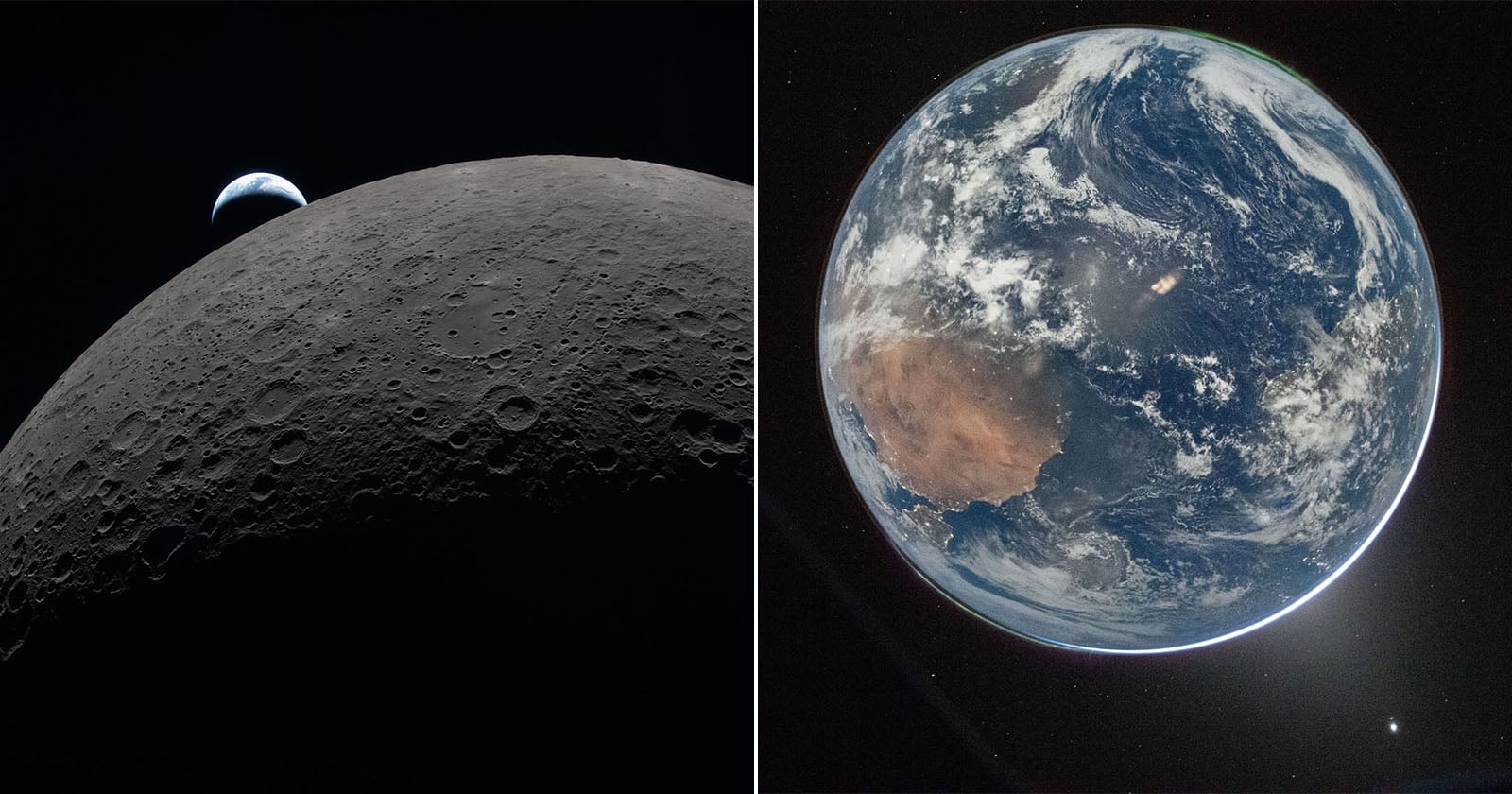
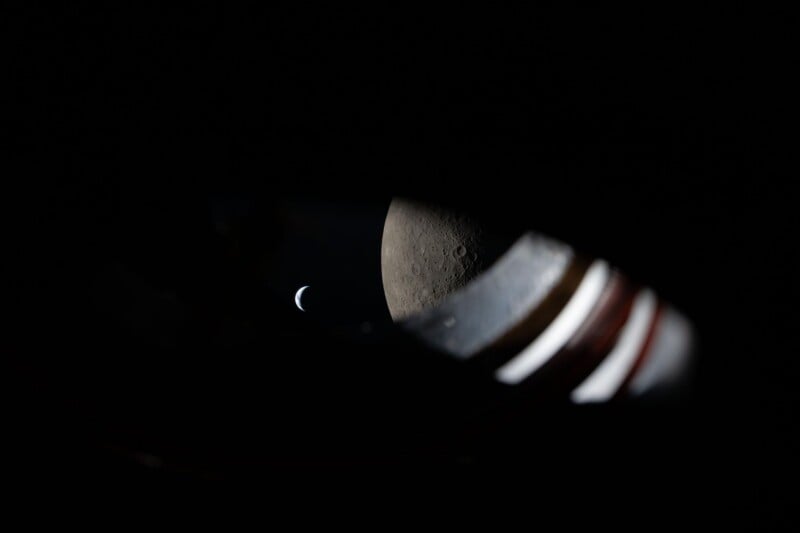
The lunar flyby provided unique opportunities to photograph the Moon’s rugged, cratered surface. Images like "Still Life" and one depicting Earth setting over the Moon’s limb offered intricate details of the lunar landscape, a desolate yet captivating world. These close-up views, framed by the spacecraft’s viewport, added a sense of immediate presence, allowing viewers to vicariously experience the astronauts’ vantage point. The meticulous planning by NASA extended even to photographic expectations. Matt Growcoot, a journalist who covered the crew’s photo training, highlighted how accurately NASA predicted the types of images the astronauts would capture, demonstrating the precision involved in every aspect of the mission, from orbital mechanics to visual documentation.
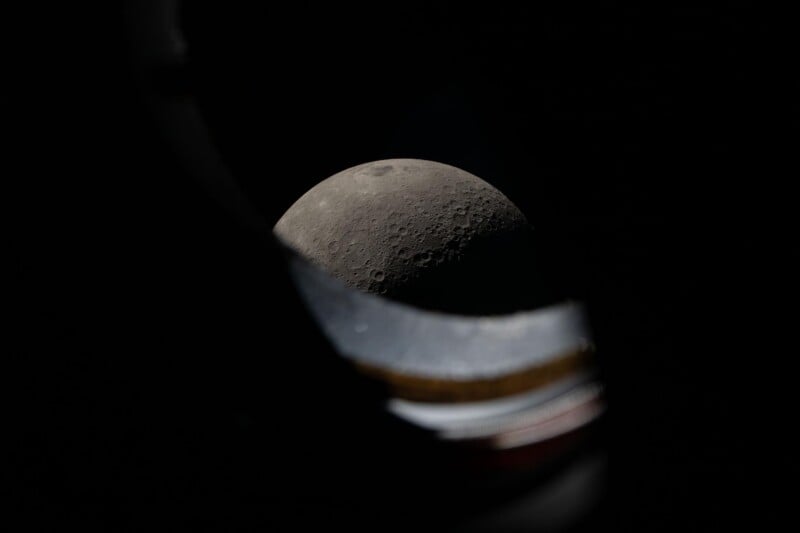
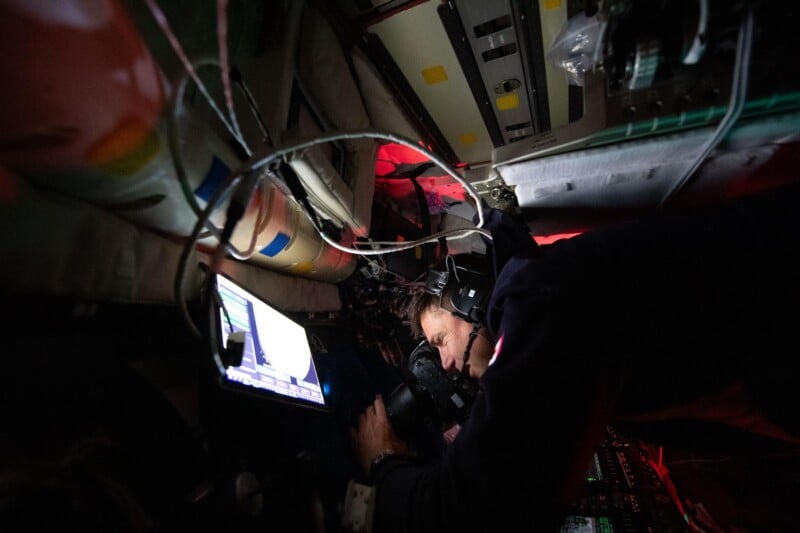
Perhaps most resonant for many were the photographs that emphasized the human presence in deep space. Images showing parts of the Orion spacecraft’s window frame, like in "A Room With a View," contextualized the vastness of space with the tangible reality of the human vessel. Photographs of Mission Specialist Jeremy Hansen operating cameras through the Orion window, or Commander Reid Wiseman silhouetted against the mesmerizing Moon, provided a powerful connection. These images allowed observers on Earth to feel the compulsion to capture such scenes, the waves of emotion, and the pressure to do justice to an experience beyond words. This "human touch" in photography, as observed by Jaron Schneider, served as a potent antidote to an increasingly digital and automated world, reminding us that collective human effort can achieve extraordinary feats.
The Orion Spacecraft: Guardian of Humanity’s Lunar Ambitions
The Orion spacecraft, the heart of the Artemis missions, proved its mettle during Artemis II. Designed for long-duration deep-space travel, Orion provides a safe and habitable environment for astronauts, equipped with advanced life support systems, robust communications arrays, and precise navigation capabilities. Its conical shape and advanced heat shield are engineered to withstand the extreme temperatures and forces of re-entry at lunar return velocities, which are significantly higher than those encountered during returns from low-Earth orbit.
The successful re-entry and splashdown on April 10, 2026, were critical validations of Orion’s design and operational protocols. The relief and joy were palpable, particularly for those who understood the inherent risks of spaceflight. Mission Specialist Christina Koch’s poignant embrace of the Orion capsule after it was recovered in the Pacific Ocean became an iconic image of the mission’s safe conclusion. This gesture symbolized not only the crew’s gratitude for their safe passage but also the collective sigh of relief from the thousands of individuals who had poured their expertise and dedication into building and operating the spacecraft. The successful return confirmed Orion’s readiness for future missions, including those that will carry humans to the lunar surface.
Implications and the Road Ahead: A Stepping Stone to Mars
The Artemis II mission’s success carries profound implications across scientific, technological, and societal domains. Scientifically, the crew’s observations and data collection, particularly during the lunar flyby, will contribute to a deeper understanding of the Moon’s geology, its environment, and the challenges of operating in deep space. The biomedical data collected from the astronauts will be invaluable for future long-duration missions, including those to Mars, providing insights into the effects of radiation and microgravity on the human body.

Technologically, Artemis II validated the integrated performance of the SLS rocket and the Orion spacecraft with a human crew. This critical test confirms that NASA and its partners have a reliable transportation system capable of sending astronauts safely to the Moon and beyond. The mission also refined operational procedures, ground support systems, and emergency protocols, enhancing the overall safety and efficiency of future deep-space endeavors.
On a societal level, Artemis II delivered a much-needed surge of inspiration. In an era marked by complex global challenges, the sight of humans venturing to the Moon once again reminded the world of humanity’s capacity for innovation, collaboration, and audacious exploration. The diverse crew, including the first woman and person of color to journey to the Moon, served as powerful role models, igniting interest in science, technology, engineering, and mathematics (STEM) fields among a new generation. The international collaboration inherent in the Artemis program, with partners like the CSA, also highlighted the potential for nations to unite in pursuit of common, ambitious goals.
The path ahead for the Artemis program is clearly defined. Artemis III, slated to launch in the coming years, aims to land the first woman and the next man on the lunar South Pole, a region believed to harbor significant water ice resources. This mission will utilize advanced landers and establish initial infrastructure for a sustained lunar presence. Beyond that, the Gateway lunar orbital outpost will serve as a multi-purpose space station orbiting the Moon, providing a staging point for lunar surface missions and a crucial testing ground for technologies and operations required for deep-space missions, including the ultimate goal of sending humans to Mars.

In conclusion, NASA’s Artemis II mission stands as a monumental achievement, successfully bridging the gap between the Apollo era and the future of human space exploration. The extraordinary photographs captured by its crew are more than just images; they are a legacy, a testament to humanity’s unyielding drive to explore, to understand, and to dream beyond the confines of our home planet. As the world looks toward Artemis III and beyond, the visual record of Artemis II will undoubtedly continue to inspire and remind us of what is possible when humanity unites in pursuit of the stars.
Image credits: NASA. The Artemis II crew comprises Reid Wiseman, Victor Glover, Christina Koch, and Jeremy Hansen. Although it is impossible to credit everyone who made Artemis II possible, it is important to recognize that hundreds, if not thousands, of people worked tirelessly behind the scenes to safely put the Artemis II astronauts into space, and more importantly, bring them home.