The adage "E hele me ka puʻolo," a Hawaiian proverb signifying the imperative to leave every person, place, or condition better than before, serves as a profound guiding principle for the residents of Makaha, a storied community on the western edge of Oahu. Far from being merely a picturesque coastline, Makaha represents a resilient bastion of Hawaiian culture, a place where tradition, community, and an unwavering connection to the ʻāina (land) and kai (sea) persist against the tide of modernization and external pressures. This article delves into the heart of Makaha, exploring its unique cultural landscape, the challenges it faces, and the enduring spirit of its people, as observed through the eyes of photographer Paul Nicklen and his partner Cristina Mittermeier, and corroborated by historical context and the inherent realities of coastal Hawaiian life.
The initial narrative of Makaha often begins with a warning: "Do not go to the end of the road on the West side of Oahu." This oft-repeated caution, intended to deter the uninitiated, hints at a place perceived as insular or unwelcoming to outsiders. However, for Nicklen and Mittermeier, driven by a photographer’s instinct to seek out the untold stories, this proscription became an irresistible lure. Their journey, fueled by a National Geographic assignment and a desire to document a significant holdout of Hawaiian culture, led them not to suspicion and hostility, but to an unexpected embrace. They discovered a community that, while fiercely protective of its heritage, welcomed genuine connection with open arms, forging lifelong bonds they refer to as "ohana."
A Glimpse into Makaha’s Cultural Tapestry
Mornings in Makaha unfold with a rhythm dictated by the ocean. Long before the sun breaches the horizon, surfers converge on the shores, their silhouettes etched against the pre-dawn sky. As the island awakens, the soundscape shifts: the brewing of coffee, the vibrant pulse of music, and the steady flow of vehicles navigating the island’s infrastructure towards jobs and schools. Amidst this daily hum, informal communities, often housed in makeshift tent structures, come alive, their existence a testament to resourcefulness and adaptability.

It is in this setting that individuals like Brian Keaulana, a figure of celebrity status within the surfing world, a seasoned stuntman, and a respected member of one of Hawaii’s most prominent families, embody the essence of Makaha. Keaulana, and others like him, are not just surfers; they are custodians of tradition. They are the surfboard shapers who painstakingly handcraft boards, a deliberate act of defiance against the impersonal efficiency of mass production. They are the wayfinders, meticulously studying the celestial bodies to navigate the seas, a skill passed down through generations. For these individuals, surfing is not merely a sport or a pastime; it is an intrinsic part of their lineage, a current that runs deep within their Polynesian heritage. The community is predominantly comprised of descendants of Polynesian voyagers and highly respected watermen and women whose connection to the land and sea is profound and ineffable.
The Legacy of Keaulana and the New Generation of Guardians
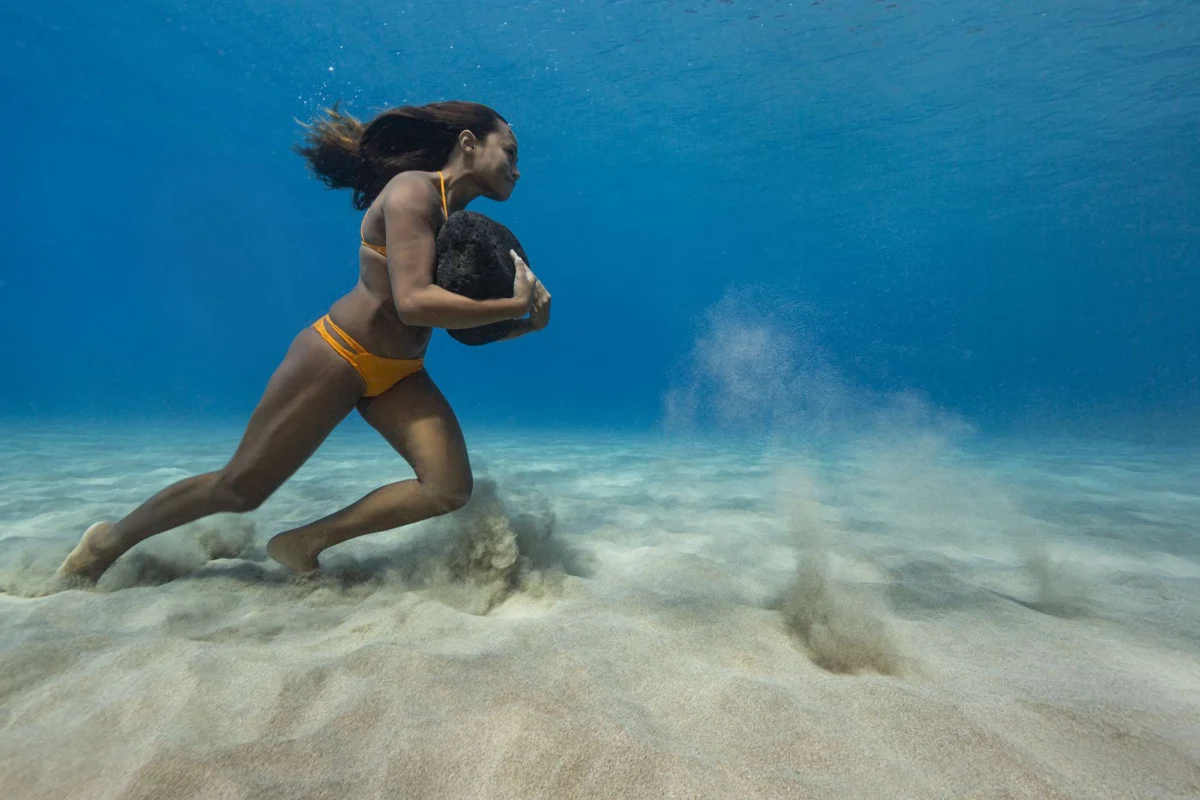
Nicklen and Mittermeier’s fortunate introduction to Makaha through Brian Keaulana provided them with unparalleled access to the island’s cultural luminaries. Among these was Haʻa Keaulana, Brian’s daughter and a burgeoning surfing prodigy, herself a granddaughter of the legendary Buffalo Keaulana. Haʻa’s rigorous training regimen offers a stark illustration of the dedication ingrained in Makaha’s youth. Her practice includes the arduous task of carrying a 50-pound boulder underwater for extended periods, while her fellow surfers cling to her in a unified chain. This form of training, demanding immense physical strength and mental fortitude, reflects a commitment to ancestral practices and a deep respect for the power of the ocean.
Beyond the realm of wave riding, the cultural preservation extends to other vital art forms. The encounter with Suluʻape Keone Nunes, a master traditional tattoo artist, offered insight into the sacred art of tatau. Nunes meticulously explained the profound meaning embedded within each design, illustrating how Hawaiians traditionally wear their ancestral stories, their genealogy, and their cultural identity etched onto their skin. These traditions, passed down through generations, serve as living testaments to a rich and complex history, forming the very fabric of the Makaha community.
Historical Context: Resilience in the Face of Adversity
The resilience of Makaha’s cultural practices is underscored by a turbulent history. The annexation of Hawaii in 1898 marked a devastating turning point for the native Hawaiian population, with numbers plummeting to an estimated 40,000, largely due to the introduction of foreign diseases and the violent conflicts that ensued. For over a century, the remaining communities have diligently worked to maintain fragile connections to their ancestors and ancestral lands, passing this invaluable cultural inheritance to each subsequent generation.

The Makaha community, in particular, has navigated a landscape fraught with significant challenges. The socioeconomic realities of the region have historically included struggles with addiction, violence, and homelessness, issues that have deeply impacted families and strained the community’s social fabric. Despite these persistent adversies, the core of Makaha’s identity remains inextricably linked to the natural rhythms of the ocean. Their guarded nature, often perceived by outsiders, stems not from animosity, but from a deep-seated understanding of the immense value and vulnerability of what they strive to protect.
The Enduring Aloha Spirit: A Decade Later
Upon their departure from the island after several weeks, Nicklen and Mittermeier carried with them tearful goodbyes and a solemn promise to return to their newfound family. This promise was recently fulfilled, marking a decade since their initial immersive experience. The return journey to Makaha felt like a passage back in time. The coastline remained vibrant, alive with the familiar sights and sounds of local surfers and beachgoers, the melodies of music carried on the ocean breeze across the sun-drenched shores.
Nicklen recalled a poignant observation made to Mittermeier: the locals’ uncanny ability to anticipate their arrival, consistently reserving a parking space for them. As if summoned by his words, Moki, a close friend and resident, emerged onto the road, his baby stroller strategically placed to guard a parking spot for their vehicle. This simple yet profound gesture, a decade later, encapsulates the enduring warmth and generosity of the Makaha community. Their welcome was immediate and effusive, a cascade of "Alohas," heartfelt hugs, joyous laughter, and genuine smiles, all unfolding beneath the iconic lifeguard station at 47B.
Analysis: The Power of Cultural Preservation and Community Bonds
The narrative of Makaha highlights a critical dynamic in contemporary society: the struggle for cultural preservation in the face of globalization and economic disparity. The community’s initial guardedness, while understandable given historical injustices and ongoing socioeconomic challenges, is ultimately superseded by an profound capacity for generosity and hospitality. This is not merely an isolated incident but a reflection of the "aloha spirit," a concept deeply embedded in Hawaiian culture that emphasizes love, compassion, and mutual respect.

The ability of the Makaha community to maintain such a strong sense of identity and to extend such genuine warmth, even amidst hardship, is a testament to the power of deeply rooted cultural values. The data on the historical decline of the native Hawaiian population underscores the immense importance of communities like Makaha in safeguarding cultural heritage. Their traditions, from surfboard shaping to wayfinding and the sacred art of tattooing, are not mere relics of the past; they are living practices that provide continuity, identity, and a sense of purpose for younger generations.
The act of reserving a parking spot, a seemingly minor detail, carries significant symbolic weight. It signifies a community that remembers, values, and actively makes space for those who have shown respect for their way of life. It illustrates a collective consciousness that prioritizes human connection and shared experience over individual convenience. This enduring practice, observed a decade after their initial visit, demonstrates a profound and sustained commitment to their values, reinforcing the notion that true hospitality is not a fleeting gesture but a deeply ingrained aspect of their cultural identity.
The implications of Makaha’s story extend beyond the shores of Oahu. In an increasingly homogenized world, the perseverance of distinct cultural enclaves like Makaha serves as a powerful reminder of the richness and diversity that indigenous traditions bring to the global tapestry. Their story underscores the importance of understanding and respecting the cultural nuances of local communities, particularly those with a history of marginalization. It also highlights the potential for genuine cross-cultural exchange when approached with humility, respect, and a willingness to learn. The "end of the road" in Makaha, far from being a place of exclusion, has become a beacon of enduring cultural resilience and a profound example of the aloha spirit in action.