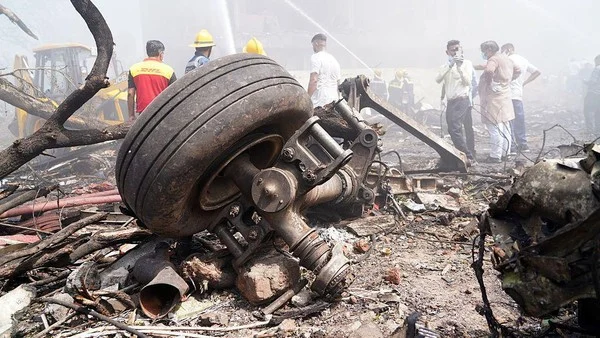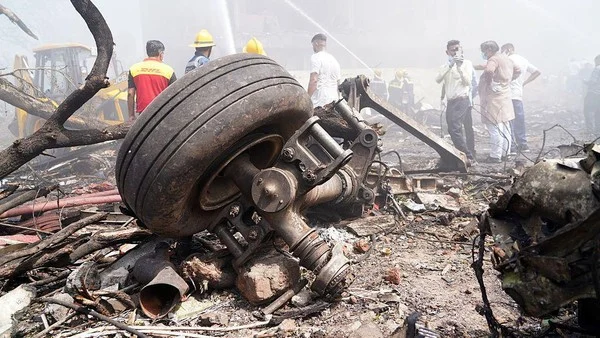
The global aviation community remains in a state of profound shock following the catastrophic loss of Air India flight AI-171 on June 12, 2025. The Boeing 787 Dreamliner, a cornerstone of modern long-haul travel, crashed during its final approach to Sardar Vallabhbhai Patel International Airport in Ahmedabad, India, after a scheduled flight from London Heathrow. Of the 245 passengers and crew members on board, the tragedy left a staggering death toll, with only one individual reported to have survived the impact. As the debris is cleared and the grieving process begins for hundreds of families, the focus of the international community has shifted toward the high-tech laboratory in New Delhi, where investigators have begun the painstaking process of analyzing the aircraft’s "black boxes." These devices—the Flight Data Recorder (FDR) and the Cockpit Voice Recorder (CVR)—hold the only definitive record of the mechanical failures or human decisions that led to the aircraft’s final, fatal descent.
The recovery of these devices marks the most critical phase of the investigation. In the immediate aftermath of the crash, search and rescue teams prioritized the location of the recorders amidst the scattered wreckage near the Ahmedabad airfield. Despite their name, these "black boxes" are painted a high-visibility international orange to ensure they can be located in charred debris or underwater. Their retrieval in relatively intact condition has provided a glimmer of hope for a swift resolution to the mystery of why a technologically advanced aircraft like the Dreamliner fell from the sky in seemingly manageable conditions.
A Chronology of the Final Flight
Flight AI-171 departed London Heathrow at its scheduled time, carrying a diverse manifest of international travelers, business professionals, and families returning to Gujarat. For the majority of the nine-hour journey, the flight was reported as routine. According to preliminary radar data and air traffic control (ATC) logs, the aircraft maintained its assigned altitude and heading across European and Middle Eastern airspace. It was only as the aircraft entered Indian airspace and began its descent into the Ahmedabad terminal maneuver area that the situation took a turn for the worse.
Witness accounts from the ground and preliminary reports from the Ahmedabad ATC suggest that the aircraft was on its standard arrival path. However, as the Boeing 787 approached an altitude of approximately 3,000 feet, observers noted an unusual pitch in the aircraft’s attitude. Shortly thereafter, communication between the cockpit and the tower became fragmented. The last recorded transmission from the pilots was not a standard distress call but a series of urgent, technical acknowledgments that suggested a struggle with the aircraft’s flight control systems. Seconds later, the aircraft disappeared from radar, impacting the ground several kilometers short of the runway.
Technical Analysis: The Role of the Black Boxes
The Flight Data Recorder (FDR) is designed to record thousands of parameters per second, including airspeed, altitude, vertical acceleration, and engine performance. Perhaps most importantly for this specific investigation, the FDR tracks the position of flight control surfaces, such as the rudder, elevators, and flaps. The Cockpit Voice Recorder (CVR), meanwhile, captures all audio within the cockpit, including the conversations between the captain and the first officer, radio transmissions, and ambient sounds like engine noise or system alarms.
The analysis in New Delhi is being conducted under the strictest protocols. Because the Boeing 787 is an American-manufactured aircraft, the Indian Ministry of Civil Aviation is working in close coordination with the United States National Transportation Safety Board (NTSB) and technical experts from Boeing. This tripartite cooperation is mandated by international aviation law (ICAO Annex 13) to ensure that the findings are objective and technically sound. The data extraction process involves "reading out" the solid-state memory chips within the recorders. If the chips were damaged by the force of the impact or the subsequent fire, specialized forensic techniques will be required to reconstruct the data bit by bit.
Preliminary Focus: The Flap System Failure
While official conclusions are months away, investigators have already identified a primary area of concern: the aircraft’s wing flap system. Flaps are movable panels on the trailing edge of the wings that increase lift and drag, allowing an aircraft to fly at the lower speeds required for landing. Preliminary evidence suggests that the flaps may have failed to deploy symmetrically or may have retracted unexpectedly during the approach.

An asymmetric flap condition—where one wing has more lift than the other—can cause a violent and uncontrollable roll, especially at low altitudes where the pilot has little time to recover. If the AI-171 crew was battling a "flap-slat" malfunction, it would explain the erratic flight path reported by ground witnesses. The FDR data will be scrutinized to see if the mechanical actuators for these flaps responded correctly to the pilot’s inputs, or if a software glitch or mechanical fatigue caused them to jam.
Official Responses and the Lone Survivor
The Indian government has declared a period of national mourning. The Minister of Civil Aviation, in a press briefing held in the capital, emphasized that "no stone will be left unturned" in the pursuit of the truth. "We owe it to the victims and their families to understand exactly what transpired in those final minutes. The safety of our skies is non-negotiable," the Minister stated.
Boeing has also issued a formal statement, expressing deep condolences and affirming their commitment to the investigation. "We are providing full technical assistance to the investigating authorities. Our focus is on supporting the NTSB and the Indian Bureau of Civil Aviation Safety as they examine the data," a company spokesperson said.
Amidst the tragedy, the story of the lone survivor has captured the world’s attention. While the identity of the survivor has been withheld for privacy and medical reasons, hospital sources in Ahmedabad indicate that the individual is in stable but critical condition. This survivor represents a miracle of physics and a potential source of information. Once the individual is medically cleared, investigators hope that their account of the cabin environment—such as unusual noises, vibrations, or the nature of the crew’s announcements—will provide context to the digital data recovered from the black boxes.
Broader Implications for the Aviation Industry
The crash of AI-171 has sent ripples through the global aviation market. The Boeing 787 Dreamliner is one of the most widely used long-haul aircraft in the world, praised for its fuel efficiency and passenger comfort. However, this incident has prompted several international regulators to issue emergency airworthiness directives.
- Fleet Inspections: Several airlines operating the 787 have initiated "precautionary inspections" of their wing flap and slat assemblies. While no grounding order has been issued yet, the industry is on high alert for any signs of systemic mechanical issues.
- Safety Protocols: The International Air Transport Association (IATA) is reportedly reviewing the approach procedures for Ahmedabad airport to determine if environmental factors, such as "bird strikes" or localized weather patterns (common during the June monsoon transition), played a contributing role.
- Stock Market Impact: Shares of Boeing and Air India’s parent company saw significant volatility in the days following the crash, reflecting investor anxiety over potential liabilities and the cost of future safety modifications.
The Path Forward: Finding Answers in the Data
The process of deconstructing a major air disaster is a marathon, not a sprint. Once the raw data is extracted from the black boxes, it must be synchronized with radar plots and weather reports to create a comprehensive "flight animation." This allows investigators to see exactly what the pilots saw on their displays and how the aircraft responded to their commands.
The CVR will be particularly telling. Investigators will listen for "master caution" alarms or specific mechanical sounds that might indicate an engine flameout or a structural failure. The tone and content of the pilots’ dialogue will also be analyzed to determine if "crew resource management" (CRM) was maintained or if the pilots were overwhelmed by a rapid succession of system failures.
As the investigation enters its second week, the world waits for the preliminary report, which is expected within 30 days. This report will not assign blame but will provide the factual framework of the accident. For the families of the 244 who perished, the technical data from the black boxes may offer little comfort in the face of such loss, but for the millions who fly every day, that data is the key to ensuring that such a tragedy is never repeated. The lessons learned from the wreckage of AI-171 will eventually be written into flight manuals and safety regulations, serving as a somber reminder of the constant vigilance required to maintain the safety of modern aviation.