The pre-dawn chill of the Pacific, a familiar companion during the SeaLegacy 1’s trans-Pacific journey from Mexico to Tahiti, held an electric undercurrent this particular morning. The crew and I, bundled against the nascent Antarctic air, were poised for what was anticipated to be the most extraordinary dive of our expedition. Under the ethereal glow of a full moon, which painted a luminous path across the star-dusted canvas of the night sky, we donned our masks and slipped into the inky blackness of the ocean. What initially appeared as a deceptively serene abyss would soon erupt into one of the ocean’s most profound and awe-inspiring spectacles.
The Fakarava Atoll: A Natural Sanctuary Undergoing a Cyclical Transformation
Located approximately 700 nautical miles north of Papeete, the Fakarava atoll, a UNESCO Biosphere Reserve, is a jewel of the Tuamotu Archipelago. Renowned for its exceptionally clear lagoons, pristine beaches, and vibrant coral reefs, Fakarava serves as a crucial habitat for an astonishing array of marine life. For most of the year, countless species of fish, seabirds, sea turtles, and majestic manta rays navigate these waters in a state of relative equilibrium. However, the ecological rhythm of Fakarava shifts dramatically during the warmer months with the onset of the annual grouper spawning. This event, a critical reproductive phenomenon, transforms the atoll’s predictable tranquility into a crucible of life and predation, drawing a significant congregation of marine predators.
The Annual Grouper Spawning: A Chronology of Life’s Urgency
The lead-up to the spawning is a months-long prelude. As the ocean temperatures rise, thousands of resident groupers, their bodies laden with reproductive potential, begin their slow migration. These fish converge at the mouth of the channel connecting the atoll’s expansive lagoon to the open sea, an area roughly spanning 10 by 30 nautical miles. The tidal dynamics of Fakarava are pivotal to this process. Every six hours, the deep, nutrient-rich waters of the ocean surge into the lagoon, followed by a six-hour outflow. This constant exchange not only flushes essential nutrients but also creates the ideal conditions for the dispersal of fertilized eggs.

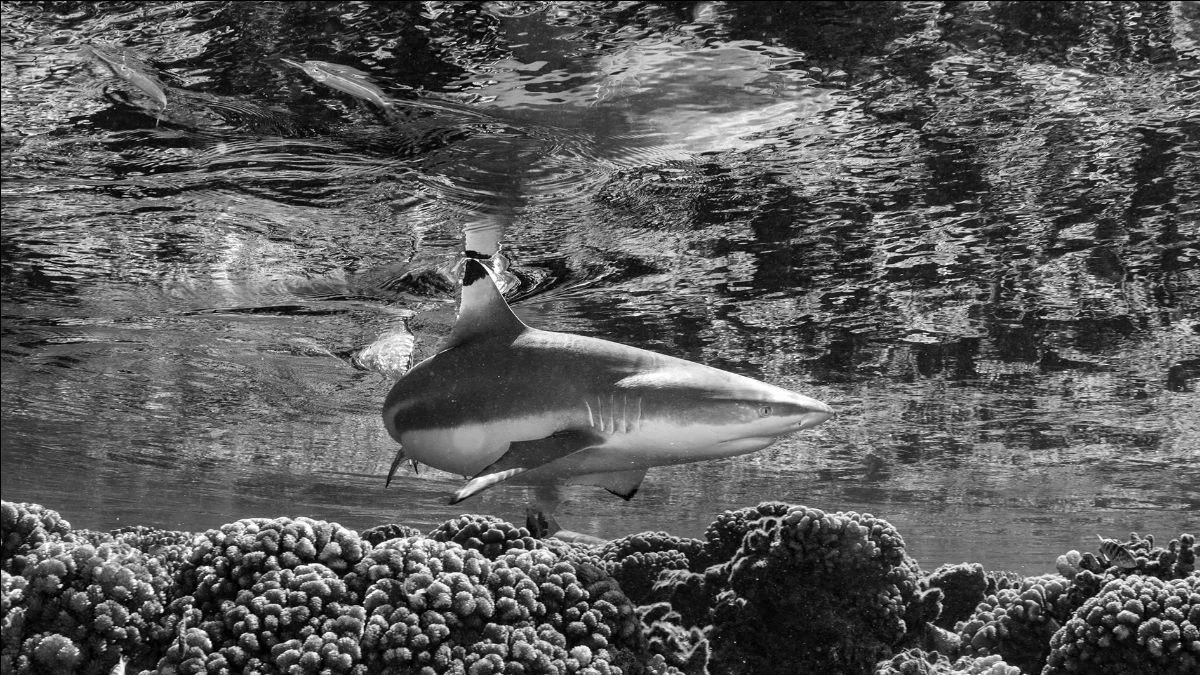
The apex of this reproductive cycle is meticulously timed with the full moon. As the tide reaches its highest point, the stage is set. The females, heavy with eggs, and the males, poised to fertilize them, initiate their synchronized dance. However, they are not alone in their anticipation. Following in their wake, like an unstoppable force, is a formidable armada of hundreds, sometimes thousands, of sharks. These apex predators, drawn by the promise of an abundant food source, patrol the reefs with an unwavering focus, transforming the channel into a scene of unparalleled natural drama.
Witnessing the Spectacle: A Descent into the Frenzy
Our team had strategically positioned ourselves on the edge of the atoll, seeking the most advantageous vantage point. As we descended along the steep drop-off at the channel’s mouth, the initial sight was one of astonishing stillness. Thousands of groupers were observed nestled amongst the coral heads, their natural camouflage an effective defense against casual predators. Their large eyes, however, betrayed their awareness, slowly tracking the movements of the circling sharks. The prevailing silence was punctuated periodically by the resonant crunch of a successful hunt, a stark reminder of the predatory undercurrent beneath the surface.
The true intensity of the event unfolded at approximately 100 feet below the surface. As the female groupers began releasing their eggs, the water transformed into a swirling vortex of activity. With each upward surge of a female to release her precious cargo, a throng of males would follow, their milt clouding the water. This synchronized release triggered a cascade effect, with thousands of groupers simultaneously participating in this vital act of perpetuation. The scene was a breathtaking, albeit visceral, testament to the relentless drive of life, a spectacular ballet of reproduction and survival played out before our eyes. The entire event, from the initial release of eggs to the subsequent evasion of the sharks, was over in a matter of moments, a fleeting yet profound display.
The Ecological Imperative: Sharks as Guardians of Equilibrium
The raw, seemingly chaotic nature of such events often prompts human observers to question their purpose. However, as marine biologists and ecologists consistently highlight, these spectacles are the culmination of millennia of evolutionary fine-tuning. Every element, from the cryptic coloration of a grouper to the fate of each individual egg – whether fertilized or consumed – plays an integral role in maintaining the delicate balance of the ecosystem.

Predators, far from being mere destroyers, are essential architects of this equilibrium. Sharks, in particular, fulfill a critical role. Their predatory activities, while appearing violent, serve to regulate prey populations, preventing overgrazing of marine flora and fauna. Furthermore, their movements across vast oceanic distances facilitate the redistribution of vital nutrients, enriching the marine environment. Scientific studies, such as those conducted by the Shark Trust, consistently emphasize that healthy shark populations are indicative of a healthy marine ecosystem. For instance, the presence of numerous sharks in an area like Fakarava suggests that the fish stocks are robust enough to support them, a positive indicator of ecological well-being.
Redefining Human-Ocean Coexistence: A Call for Protection
The notion of "learning to live with" sharks and other wildlife is, in essence, a misnomer. Our very existence is inextricably linked to the health and vitality of these marine ecosystems. For eons, before humanity’s impact began to significantly alter ocean dynamics through overfishing and habitat destruction, these natural systems have operated with a profound efficiency. The role of apex predators like sharks has been fundamental to this enduring balance.
The photographs and experiences captured in places like Fakarava are not merely aesthetic records; they are potent tools for advocacy. By showcasing the intrinsic beauty, the dramatic ecological processes, and the vital importance of these wild and essential ecosystems, the hope is to galvanize local and global efforts towards their protection. The future of these underwater realms, and indeed our own, hinges on our ability to recognize our interdependence and to act as stewards rather than exploiters. The continued existence of these natural wonders, like the Fakarava grouper spawning, is a stark reminder of what we stand to lose if we fail to protect them.
Broader Implications: Conservation in a Changing World
The Fakarava event serves as a microcosm of the broader challenges facing marine conservation worldwide. The increasing pressures of climate change, pollution, and unsustainable fishing practices threaten the delicate balance of ocean ecosystems. The annual grouper spawning, while a natural phenomenon, is vulnerable to these external factors. Declining fish stocks due to overfishing can disrupt the aggregation patterns, and changes in ocean temperature and acidity can impact reproductive success.

Conservation initiatives in areas like Fakarava are therefore crucial. The designation of marine protected areas, the implementation of sustainable fishing quotas, and the strict regulation of tourism are vital steps in safeguarding these critical habitats. International cooperation and scientific research are essential to understanding and mitigating the threats to these complex ecosystems. The success of such efforts not only preserves biodiversity but also supports local economies that rely on healthy marine resources for livelihoods. The awe-inspiring display witnessed in Fakarava underscores the urgent need for a paradigm shift in our relationship with the ocean, moving from exploitation to a profound respect for its intricate workings and vital role in sustaining life on Earth.