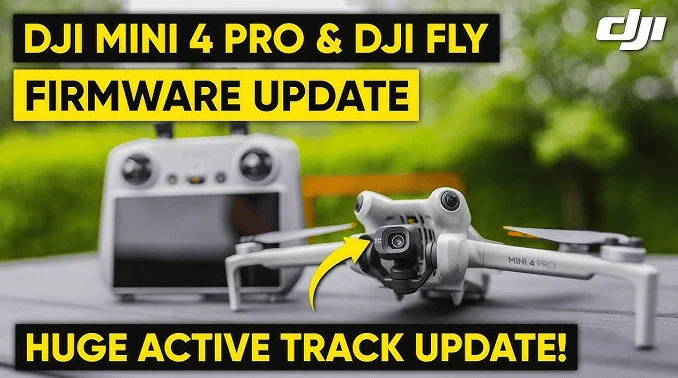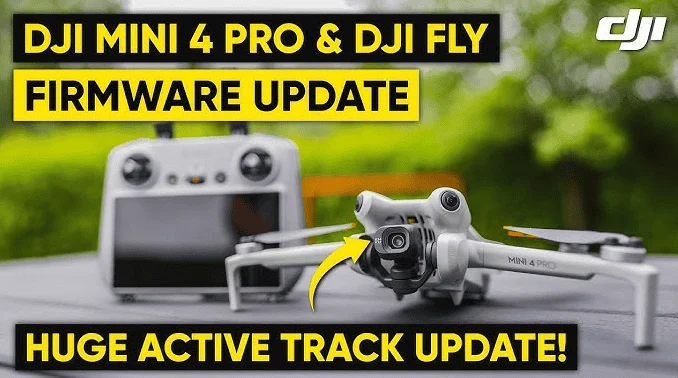
The release of the latest firmware update for the DJI Mini 4 Pro marks a significant milestone in the evolution of sub-250-gram drones, reinforcing DJI’s commitment to maintaining its flagship mini-drone as a leader in both professional and hobbyist categories. This update is not merely a routine patch but a comprehensive enhancement of the aircraft’s flight dynamics, imaging capabilities, and regulatory compliance features. As the drone industry faces increasing scrutiny from global aviation authorities, these software iterations ensure that hardware remains functional, safe, and technologically relevant in a rapidly shifting landscape.
Technical Overview of the DJI Mini 4 Pro Update
The DJI Mini 4 Pro, since its global debut in late 2023, has set the benchmark for what is possible within the ultra-lightweight category. The latest firmware update—typically delivered via the DJI Fly app or the DJI Assistant 2 (Consumer Drones Series)—targets several core pillars of the drone’s ecosystem. Primary among these are improvements to the Vision Positioning System (VPS), optimizations for the O4 video transmission system, and the expansion of compatibility with peripheral hardware such as the DJI Goggles 3 and the DJI RC Motion 3.
One of the most critical aspects of this update cycle is the refinement of the ActiveTrack 360° functionality. While the Mini 4 Pro launched with omnidirectional obstacle sensing, the software governing how the drone maneuvers around obstacles while tracking a subject has been further tuned. This allows for smoother transitions and more "cinematic" movement patterns, reducing the jerky adjustments that sometimes plagued earlier versions of the software. For creators, this means the drone can now handle complex environments, such as dense forests or urban architecture, with a higher degree of autonomy and safety.
Chronology of Development and Release
To understand the importance of the current update, one must look at the timeline of the Mini 4 Pro’s lifecycle. Launched as the successor to the highly successful Mini 3 Pro, the Mini 4 Pro was designed to bridge the gap between entry-level portability and professional-grade features like D-Log M color profiles and Waypoint Flight.
- September 2023: Initial launch of the DJI Mini 4 Pro, introducing omnidirectional sensing to the Mini series for the first time.
- Early 2024: Firmware updates introduced support for the DJI Goggles 2 and DJI RC Motion 2, allowing for a more immersive "FPV-lite" experience.
- Mid-2024: Major updates focused on European regulatory compliance (C0 certification) and Remote ID (RID) stability in the United States.
- 2025 Current Update: The current iteration focuses on flight stability in high-wind conditions and enhanced metadata encryption for professional users who require secure data handling.
This chronology demonstrates DJI’s strategy of "continuous improvement," where the hardware purchased on day one becomes significantly more capable over its eighteen-to-twenty-four-month primary lifecycle.
Enhanced Imaging and Camera Functionality
The camera remains the centerpiece of the Mini 4 Pro experience. With its 1/1.3-inch CMOS sensor and Dual Native ISO Fusion, the drone already punches well above its weight class. The latest firmware enhances the image processing pipeline, particularly in high-contrast scenarios.
Improvements in the HDR (High Dynamic Range) algorithm allow for better detail retention in highlights and shadows when shooting in 4K/60fps. Furthermore, the update addresses minor color consistency issues reported by users when switching between the standard color profile and the 10-bit D-Log M profile. This is crucial for professional editors who need to match footage from the Mini 4 Pro with larger platforms like the DJI Mavic 3 Pro or the Inspire 3.
Another notable addition in the recent update cycle is the "Vision Positioning Toggle." This allows experienced pilots to disable certain downward-facing sensors in specific low-altitude scenarios where the sensors might become confused by reflective surfaces like water or glass. This level of granular control was previously reserved for higher-end Enterprise or Air series drones.
Regulatory Compliance and Global Standards
The drone industry is currently navigating a complex web of international regulations. In the United States, the Federal Aviation Administration (FAA) requires Remote ID (RID) for drones over 250 grams or those used for commercial purposes. In the European Union, the European Union Aviation Safety Agency (EASA) enforces strict "C-class" labeling.
The DJI Mini 4 Pro update ensures that the drone’s internal Remote ID broadcasts remain compliant with the latest FAA signal protocols, preventing potential grounding of fleets. For European users, the firmware includes the necessary software hooks for C0 certification, which allows the drone to be flown in the A1 subcategory (over people, but not over assemblies of people). This compliance is vital for the resale value of the drone and the legal protection of the pilot.
Step-by-Step Procedure for Firmware Installation
To ensure a successful update and prevent the "bricking" of the device, users are encouraged to follow a standardized protocol. Industry experts recommend the following steps:
- Battery Preparation: Ensure that the drone, the remote controller, and the intelligent flight batteries are all charged to at least 75%. Firmware updates can be power-intensive, and a shutdown during the writing process can cause system failure.
- App Synchronicity: Update the DJI Fly app to the latest version via the App Store or Google Play (or the DJI website for Android users) before attempting to update the drone.
- The Update Process: Connect the mobile device to the remote controller, power on both the controller and the drone, and follow the on-screen prompts. The drone may restart several times during this process; this is normal.
- Calibration Post-Update: After a major firmware overhaul, it is considered best practice to recalibrate the IMU (Inertial Measurement Unit) and the compass to ensure flight telemetry remains accurate.
Market Implications and Competitive Analysis
The consistent updating of the Mini 4 Pro serves as a defensive moat for DJI against emerging competitors such as Autel Robotics and Potensic. By offering features like Waypoint Flight and 360-degree ActiveTrack in a sub-250g package, DJI makes it difficult for other manufacturers to compete on value.
Market analysts suggest that these updates also serve to extend the product’s shelf life. In an era where consumers are becoming more conscious of "planned obsolescence," DJI’s commitment to providing new features to existing hardware builds significant brand loyalty. For instance, the addition of compatibility with FPV goggles transformed the Mini 4 Pro from a standard photography drone into a hybrid tool, effectively giving users "two drones in one."
Professional and Safety Reactions
Safety organizations and professional pilot associations have generally lauded the update. The improvement in obstacle sensing latency is a significant safety win. According to telemetry data shared by various flight-testing groups, the "Time to React" for the drone’s APAS (Advanced Pilot Assistance Systems) has seen a measurable decrease, allowing the aircraft to stop or bypass obstacles at higher speeds than previously possible.
However, some users have expressed concerns regarding the increasing "restrictiveness" of firmware updates, particularly regarding geofencing. As DJI updates its Precise Fly Safe Database alongside firmware, some pilots find that previously accessible areas are now marked as "Enhanced Warning Zones" or "Restricted Zones." DJI maintains that these updates are necessary to comply with local laws and to prevent unauthorized flights near airports or sensitive government installations.
Impact on the Future of the Mini Series
Looking ahead, the refinements seen in the Mini 4 Pro firmware provide a roadmap for what to expect from the rumored DJI Mini 5. Features that are currently being "stress-tested" via software on the Mini 4 Pro—such as enhanced AI subject recognition and more efficient power management—will likely be baked into the hardware of the next generation.
The broader implication for the drone industry is clear: the hardware is only half of the equation. In the modern era, the software defines the capability of the sensor and the safety of the flight. For the Mini 4 Pro, these updates ensure that it remains a "pro" tool despite its "mini" stature.
Conclusion
The DJI Mini 4 Pro firmware update represents a holistic approach to product maintenance. By addressing technical bugs, enhancing creative tools, and ensuring legal compliance, DJI provides a robust ecosystem for its users. Whether it is a professional cinematographer using the drone as a "crash cam" or a hobbyist capturing vacation footage, the benefits of this update are tangible. As the drone continues to evolve through software, it maintains its position as the most versatile and capable drone in the sub-250g category, proving that in the world of modern technology, the most important flight path is the one that leads toward constant improvement. Through these updates, DJI not only supports its current user base but also sets a high standard for the future of unmanned aerial vehicles.