The landscape of industrial drone operations is undergoing a transformative shift as the DJI Matrice 30 (M30) series gains the technical and regulatory clearance to fly over crowds, facilitated by the integration of the PRS-M30 parachute system developed by Aerial Vehicle Safety Solutions (AVSS). This development represents a critical milestone for the commercial Unmanned Aircraft Systems (UAS) industry, effectively removing one of the most significant operational barriers for drone pilots: the risk and legal prohibition of flying over unprotected human beings in densely populated areas. By combining DJI’s advanced airframe with a third-party safety solution that meets international standards, the M30 series is positioned as the primary tool for urban public safety, emergency response, and infrastructure management.
The Evolution of Flight Over People Regulations
For years, the Federal Aviation Administration (FAA) in the United States and similar regulatory bodies worldwide, such as EASA in Europe, have maintained strict limitations on drone operations over people (OOP). Under the FAA’s Part 107 rules, flying a drone directly over individuals who are not involved in the operation is generally prohibited unless the drone meets specific safety criteria categorized by weight and kinetic energy.
The DJI M30, weighing approximately 3.7 kg (8.2 lbs) without accessories, falls into a category where its kinetic energy upon impact would exceed the safety thresholds for Category 2 or 3 operations without mitigation. Therefore, to operate legally and safely over crowds, an active recovery system is required. The partnership between DJI and AVSS addresses this by providing a validated parachute system that satisfies the ASTM F3322-18 standard. This standard requires rigorous testing, including dozens of successful deployments in various failure scenarios, to ensure that the parachute will deploy reliably and reduce the drone’s descent velocity to a non-lethal level.
Technical Architecture of the PRS-M30 Parachute System
The PRS-M30 is not merely a passive accessory but a sophisticated, integrated safety suite designed specifically for the DJI M30 and M30T. The system consists of three primary components: the parachute pod, the electronic module, and the flight termination system (FTS).
- Automatic Trigger System (ATS): The PRS-M30 features an onboard sensor suite that monitors the drone’s telemetry in real-time. If the system detects a critical failure, such as a motor loss, excessive tilt, or a free-fall state, it autonomously deploys the parachute in less than a fraction of a second. This autonomy is vital because human reaction time is often too slow to prevent an accident during a low-altitude failure.
- Flight Termination System (FTS): A critical requirement for ASTM compliance is the ability to stop the drone’s propellers before the parachute is deployed. The AVSS system includes a "plug-and-play" FTS that cuts power to the M30’s motors instantly. This prevents the parachute lines from becoming entangled in spinning rotors, which would lead to a catastrophic failure of the safety device.
- Independent Power Supply: The parachute system operates on its own dedicated battery. This ensures that even if the drone’s main flight batteries fail or the aircraft suffers a total power loss, the safety system remains operational and capable of deploying the chute.
- Manual Triggering: While the ATS handles unexpected failures, the pilot-in-command (PIC) also has access to a dedicated remote trigger. This allows the operator to manually deploy the parachute if they observe a hazard that the sensors might not yet have detected, such as a bird strike or an approaching aircraft.
Strategic Capabilities of the DJI M30 Platform
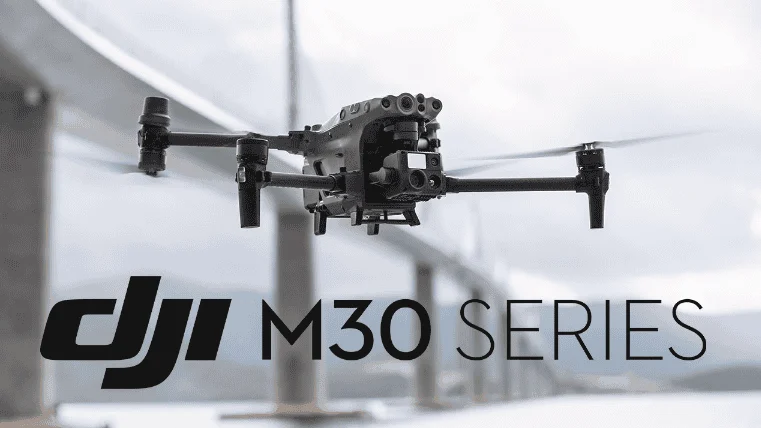
The M30 series was designed by DJI to bridge the gap between the compact, portable Mavic 3 Enterprise and the large, heavy-lift Matrice 300 RTK. Its folding design allows it to be deployed rapidly, making it a favorite for "Drone as a First Responder" (DFR) programs.
Equipped with a multi-sensor camera payload, the M30 (standard) and M30T (thermal) offer a 48 MP 1/2" CMOS zoom camera with 5x to 16x optical zoom, a 12 MP wide-angle camera, and a laser rangefinder capable of measuring distances up to 1,200 meters. The M30T variant adds a 640×512 resolution radiometric thermal camera. When these imaging capabilities are combined with the ability to fly over crowds, the operational utility increases exponentially. For example, in a search and rescue mission within a crowded park or a music festival, the drone can now maintain an optimal overhead vantage point that was previously illegal or too risky to occupy.
Furthermore, the M30’s IP55 rating ensures that it can operate in inclement weather, including rain and snow, and in temperatures ranging from -20°C to 50°C. The addition of the PRS-M30 does not compromise this weather resistance, allowing for all-weather safety during critical missions.
Impact on Public Safety and Emergency Services
The ability to fly over crowds has immediate implications for law enforcement and emergency medical services (EMS). Traditionally, police departments monitoring large protests or public gatherings had to position drones at an offset angle to avoid flying directly over the public. This often resulted in "blind spots" created by buildings or trees.
With the AVSS parachute system, a DJI M30 can now hover directly over a site of interest. If a medical emergency occurs in the middle of a dense crowd, the drone can provide real-time thermal and high-zoom visual data to ground units, guiding them through the fastest path to the victim.
"The integration of the PRS-M30 changes the calculus for urban drone operations," notes a veteran UAS flight examiner. "We are moving away from a ‘hope for the best’ approach to a ‘fail-safe’ engineering approach. This builds the social license required for drones to become a permanent fixture in our city skies."
Chronology of Development and Certification
The path to enabling flight over crowds for the M30 has been a multi-year journey of engineering and regulatory collaboration:
- March 2022: DJI officially launches the Matrice 30 series, highlighting its portability and industrial-grade sensors.
- Late 2022: AVSS begins the development of a dedicated PRS (Parachute Recovery System) for the M30, recognizing the drone’s potential for urban operations.
- 2023: Rigorous testing is conducted to meet ASTM F3322-18 standards. This involves 45 successful deployment tests across different scenarios, including hover, full-speed forward flight, and manual deployment.
- 2024: The FAA accepts the Declaration of Compliance (DOC) for the DJI M30 equipped with the AVSS PRS-M30, officially categorizing the combination as safe for flight over people under specific operational waivers or category rules.
Supporting Data and Safety Metrics
Data from drone safety studies indicate that a parachute system can reduce the impact energy of a falling drone by over 90%. For a drone the size of the M30, a free-fall from 50 meters could result in a terminal velocity capable of causing fatal injuries. With the PRS-M30, the descent rate is slowed to approximately 3.2 to 3.5 meters per second. At this speed, the impact is comparable to a small sports ball, significantly reducing the probability of serious injury.
Furthermore, the M30 itself features redundant systems that complement the parachute. It utilizes six-directional binocular vision and ToF (Time of Flight) sensors for obstacle avoidance, ensuring that the drone does not collide with structures while navigating complex environments. It also features dual IMUs, barometers, and antennas to maintain flight stability even if one sensor fails.
Broader Industry Implications and Analysis
The success of the DJI M30 and AVSS integration is a harbinger of a broader trend toward "Safety-by-Design" in the UAS industry. As urban air mobility (UAM) and drone delivery services continue to expand, the requirement for redundant safety systems will become the standard rather than the exception.
This development also has significant economic implications. Commercial drone service providers can now offer expanded services to event organizers, city planners, and news agencies. Insurance companies are also expected to look favorably upon the use of parachute systems, potentially leading to lower premiums for operators who utilize ASTM-certified safety equipment.
However, challenges remain. The weight of the parachute system (approximately 300-400 grams) slightly reduces the total flight time of the M30. Operators must balance the 41-minute maximum flight time against the safety requirements of the mission. Additionally, the initial cost of the parachute system and the specialized training required to maintain and repack the device represent an additional investment for drone programs.
Conclusion
The confirmation that the DJI M30 can fly over crowds via the AVSS PRS-M30 parachute system marks a turning point in the professionalization of drone technology. It transitions the M30 from a high-end tool for isolated industrial sites to a versatile asset capable of operating in the heart of modern society. By prioritizing safety through rigorous testing and integrated engineering, DJI and AVSS have provided a blueprint for how technology can coexist with public safety regulations. As more agencies adopt this certified hardware, the sight of a drone overhead will increasingly be viewed not as a risk, but as a reliable guardian of public security.