The landscape of rangefinder photography is currently undergoing a significant shift as third-party manufacturers challenge the long-standing dominance of established German and Japanese brands. Among these emerging "challenger" brands, Thypoch has garnered attention with its Simera line, specifically the 28mm f/1.4. This lens represents a critical juncture where high-speed optical performance meets the specialized ergonomic demands of the Leica M system. The 28mm focal length, long a staple of street and documentary photography, presents unique challenges for rangefinder users, particularly regarding viewfinder magnification, framing accuracy, and physical portability. As photographers increasingly integrate modern Chinese-manufactured optics into legacy systems, the industry is observing a democratization of high-performance glass that was once the exclusive domain of luxury brands.

The Evolution of the 28mm Focal Length in Photojournalism
The 28mm focal length occupies a distinct position in the history of photography. Traditionally viewed as a "moderate wide-angle," it offers a field of view that closely mimics the peripheral vision of the human eye, providing a sense of immersion without the extreme distortion characteristic of wider lenses. In the digital age, the 28mm perspective became ubiquitous through mobile telephony, as early smartphone models, such as the iPhone 4, utilized optics equivalent to this focal length.

For professional practitioners, the 28mm lens has been popularized by iconic hardware such as the Ricoh GR series, both in its film and digital iterations, and the Leica Q. These fixed-lens systems optimized the 28mm experience by pairing it with dedicated viewfinders or electronic displays. However, adapting this focal length to the interchangeable Leica M rangefinder system introduces complexities. Unlike the Contax G system—which utilizes an electronic, zooming viewfinder that adjusts to the mounted lens—the Leica M relies on mechanical framelines. For photographers who wear spectacles, the 28mm framelines often fall at the extreme edges of the viewfinder, making precise composition a logistical challenge.

Chronology of Modern Rangefinder Adaptation
The resurgence of interest in 28mm rangefinder lenses can be traced through a series of technical developments and shifts in user requirements. In 2024, the market saw a notable increase in photographers returning to automated systems like the Contax G2 following physical injuries that hampered the use of manual focus rangefinders. The Contax G system’s 28mm f/2.8 Biogon remains a benchmark for optical perfection, offering a distortion-free rendering that many modern lenses strive to emulate.
By mid-2025, a trend emerged where practitioners began reintroducing manual focus M-mount systems into their workflows as physical dexterity recovered. This transition created a demand for lenses that could bridge the gap between the clinical perfection of the Zeiss Biogon and the high-speed requirements of low-light documentary work. The release of the Thypoch Simera 28mm f/1.4 addressed this need, offering a maximum aperture two stops faster than the traditional f/2.8 alternatives.
Technical Analysis of the Thypoch Simera 28mm f/1.4
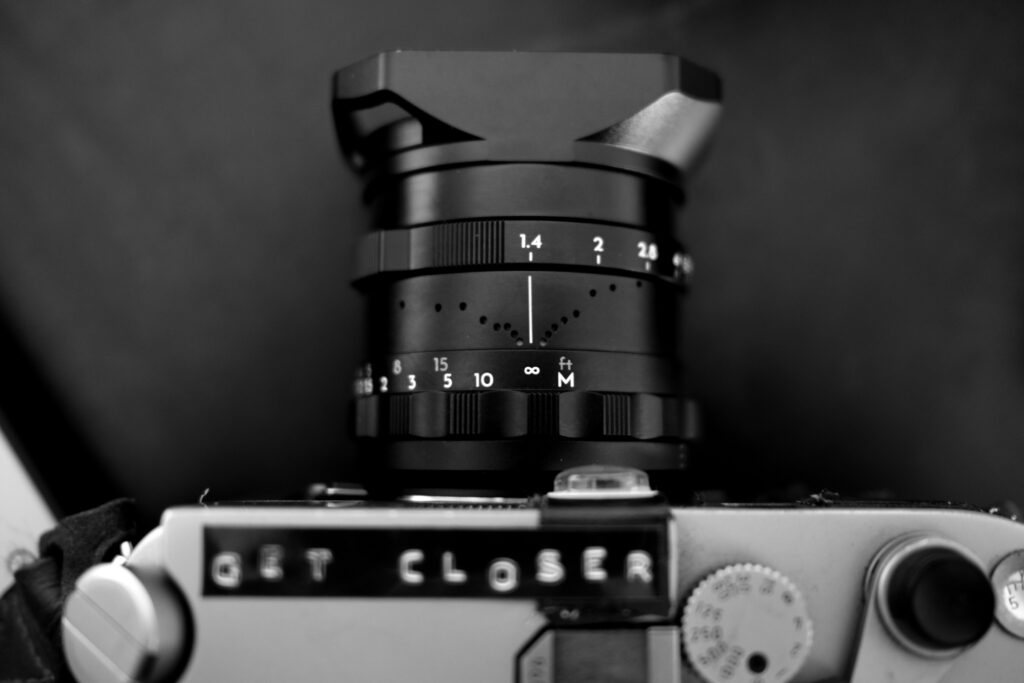
The Thypoch Simera 28mm f/1.4 is an ambitious entry into the high-speed wide-angle market. To achieve an f/1.4 aperture while maintaining image quality, the lens incorporates advanced optical elements that influence its physical footprint and handling characteristics.

Optical Construction and Rendering
The lens features a Floating Lens Element (FLE) design, which optimizes performance at close-focus distances, and at least one aspherical element to reduce monochromatic aberrations. Data suggests that the rendering of the Simera is competitive with the Leica 28mm f/1.4 Summilux-M, providing high contrast and sharpness across the frame even when shot wide open. Unlike vintage lenses that rely on "character" derived from optical flaws, the Simera is designed for modern, high-resolution sensors and fine-grained film stocks.
The Visifocus Depth-of-Field Scale
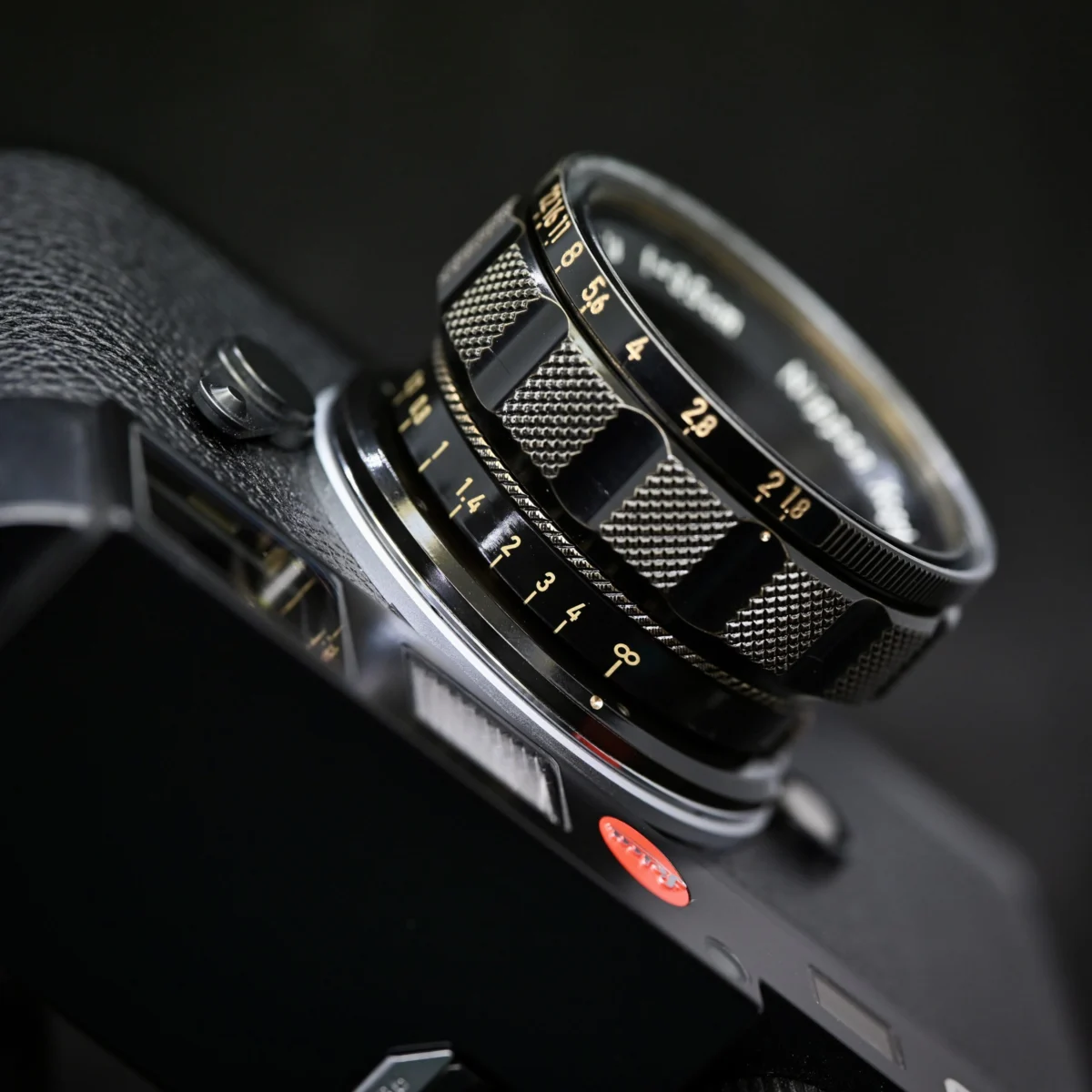
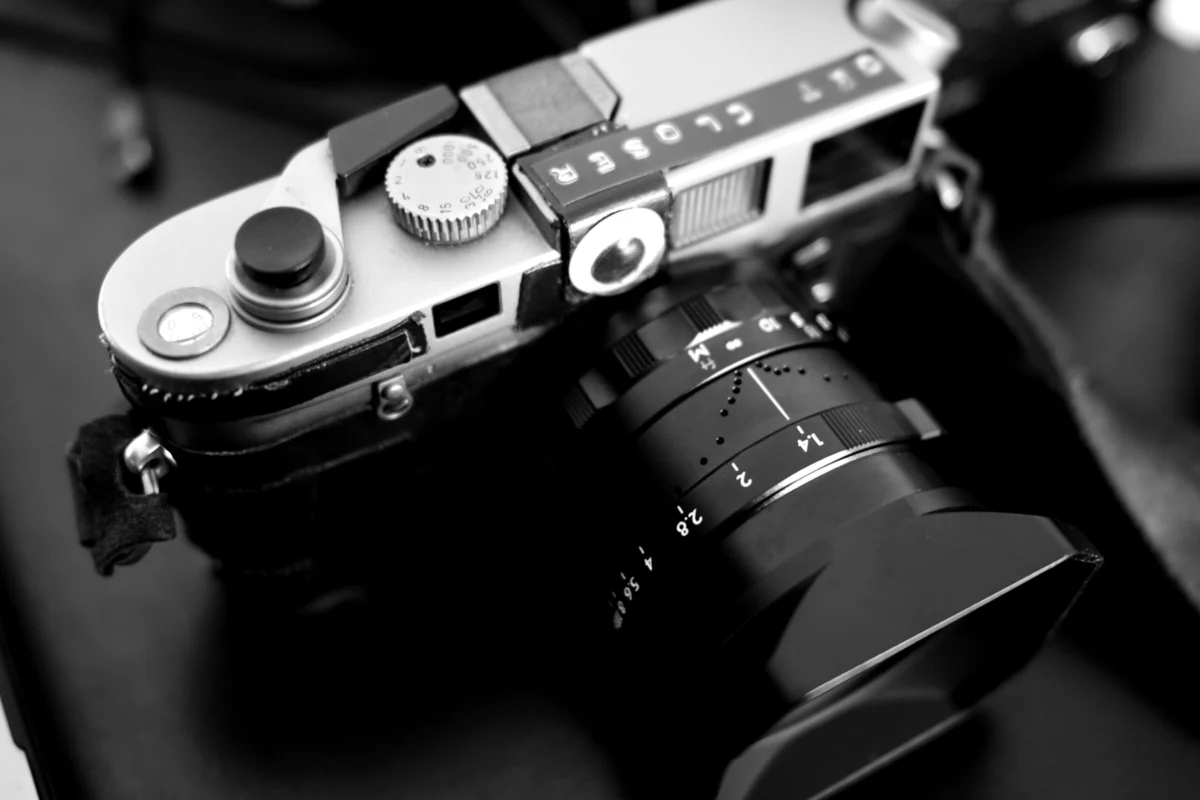
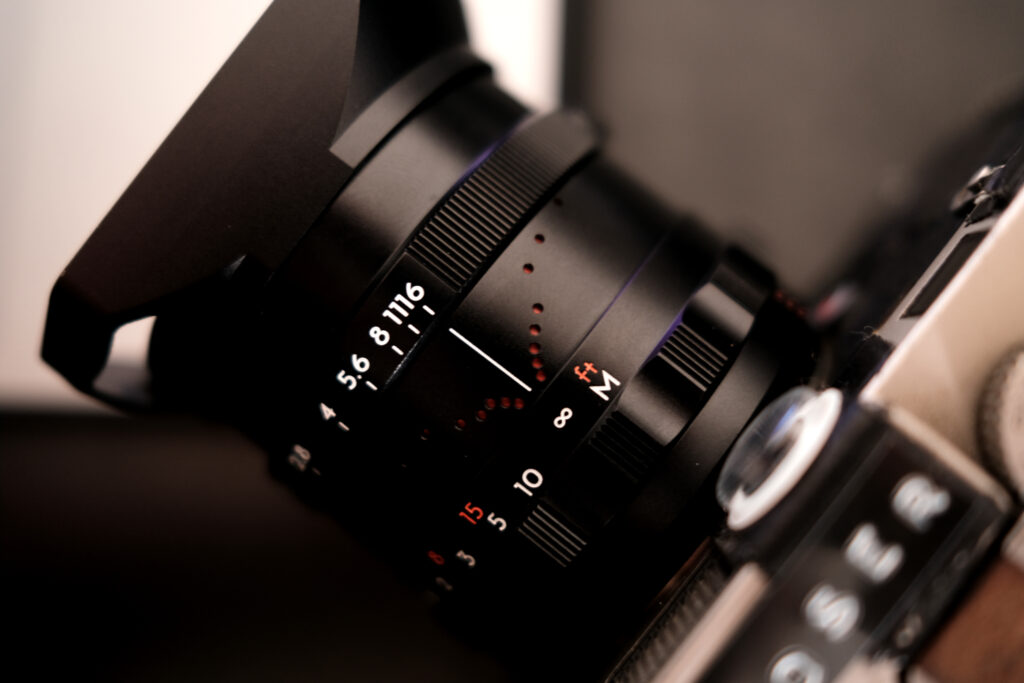
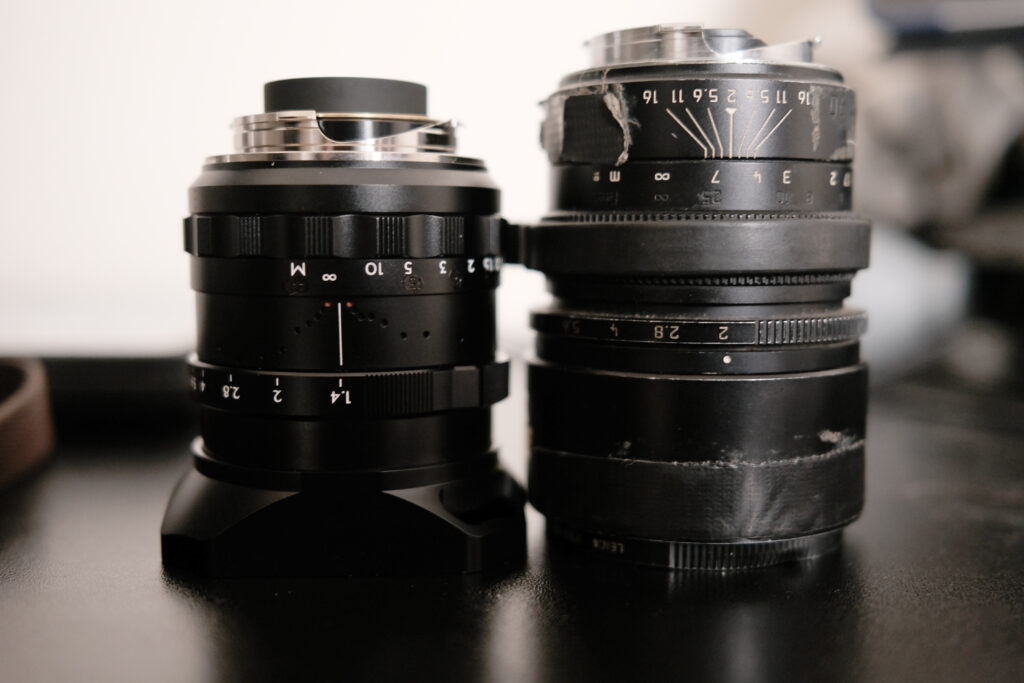
One of the most distinctive features of the Simera line is the "Visifocus" depth-of-field indicator. Inspired by historical Alpa lenses, this system uses a series of red dots that appear and disappear as the focus and aperture rings are adjusted. This visual representation allows for rapid hyperfocal distance setting, a technique essential for street photographers who often "zone focus" to capture fleeting moments. However, industry feedback indicates that while the red dots are aesthetically pleasing, they can be difficult to discern in low-light conditions, leading to suggestions for higher-contrast markings such as white or luminescent paint.

Weight and Mass Comparison
The trade-off for the f/1.4 aperture is physical mass. Journalistic field tests indicate that the Simera 28mm f/1.4 weighs approximately 100g more than the Voigtlander 50mm f/2.5 Color-Skopar and nearly 200g more than the 35mm f/2.5 Color-Skopar II.
| Lens Model | Maximum Aperture | Approximate Weight |
|---|---|---|
| Thypoch Simera 28mm | f/1.4 | ~350g |
| Leica Summilux-M 28mm | f/1.4 | ~440g |
| Voigtlander Ultron II 28mm | f/2.0 | ~230g |
| Zeiss Biogon (Contax G) | f/2.8 | ~170g |
While the Simera is roughly 100g lighter than the equivalent Leica Summilux, it remains significantly bulkier than f/2 or f/2.8 alternatives. This added mass affects the "pocketability" of the camera, a factor highly valued by commuters and documentary photographers who prefer to keep their equipment discreet.
Ergonomic Challenges and Viewfinder Obstruction
A recurring theme in the evaluation of wide-angle rangefinder lenses is the "viewfinder experience." The Leica M6 and subsequent models provide framelines for 28mm, but the magnification of the standard 0.72x viewfinder makes these lines difficult to see in their entirety. Photographers often report a "blind spot" in the lower right corner where the lens barrel and hood obstruct the view.

The Simera 28mm f/1.4 utilizes an internal focusing mechanism, meaning the physical length of the lens does not change during focusing. While this provides a consistent balance, the overall length of the lens (especially with the included hood) results in significant viewfinder blockage. Thypoch has addressed this by including a corner cutout in the lens hood, a design choice intended to allow a partial view of the obscured framing area. Despite this, users often find themselves "prophesizing" the edges of the frame rather than seeing them clearly, leading to a reliance on instinct and post-development cropping.

Market Dynamics: The Rise of Third-Party M-Mount Optics
The success of brands like Thypoch, Voigtlander, and Laowa in the M-mount space indicates a broader shift in consumer behavior. Historically, Leica owners were hesitant to mount non-Leitz glass on their cameras due to concerns regarding rangefinder coupling accuracy and build quality. However, modern manufacturing tolerances in China have reached a level where third-party lenses often provide 90% of the performance of native lenses at less than 20% of the cost.
Industry analysts suggest that we are entering an era where the majority of rangefinder users may utilize Leica bodies paired exclusively with third-party lenses. This trend is driven by:
- Economic Accessibility: The Simera 28mm f/1.4 is priced as a professional tool but remains accessible to hobbyists, unlike the luxury-priced Leica Summilux.
- Innovation in Design: Challenger brands are more willing to experiment with niche features like internal focusing, close-focus capabilities down to 0.4m, and unique haptic feedback systems.
- Availability: Second-hand markets for popular lenses like the Voigtlander Ultron II often suffer from low inventory, driving buyers toward new, readily available alternatives from Thypoch.
Official Responses and User Feedback
While Thypoch has not issued formal rebuttals to specific ergonomic criticisms, the company has shown agility in its product iterations. Early versions of the Simera featured an "infinity lock" on the focusing tab, a feature that divided the community. Responding to user feedback, the company shifted to a standard focusing tab for later production runs, making the infinity lock a special-order option.

Another point of contention in professional circles is the non-linear spacing of the aperture dial. On the Simera 28mm, the physical distance between aperture clicks varies: three clicks per stop at wider apertures, reducing to one click between f/8 and f/16. Professional photographers accustomed to "clicking" their aperture by feel without looking at the lens find this inconsistency detrimental to their workflow, as it necessitates a visual check of the settings, thereby breaking the rhythm of the shoot.
Broader Impact on Documentary Workflow
The integration of a lens like the Simera 28mm f/1.4 into a professional workflow often requires a period of psychological and technical adjustment. For practitioners accustomed to the "What You See Is What You Get" (WYSIWYG) nature of SLRs or mirrorless systems, the rangefinder’s inherent parallax and framing ambiguities are amplified by the wide 28mm field of view.
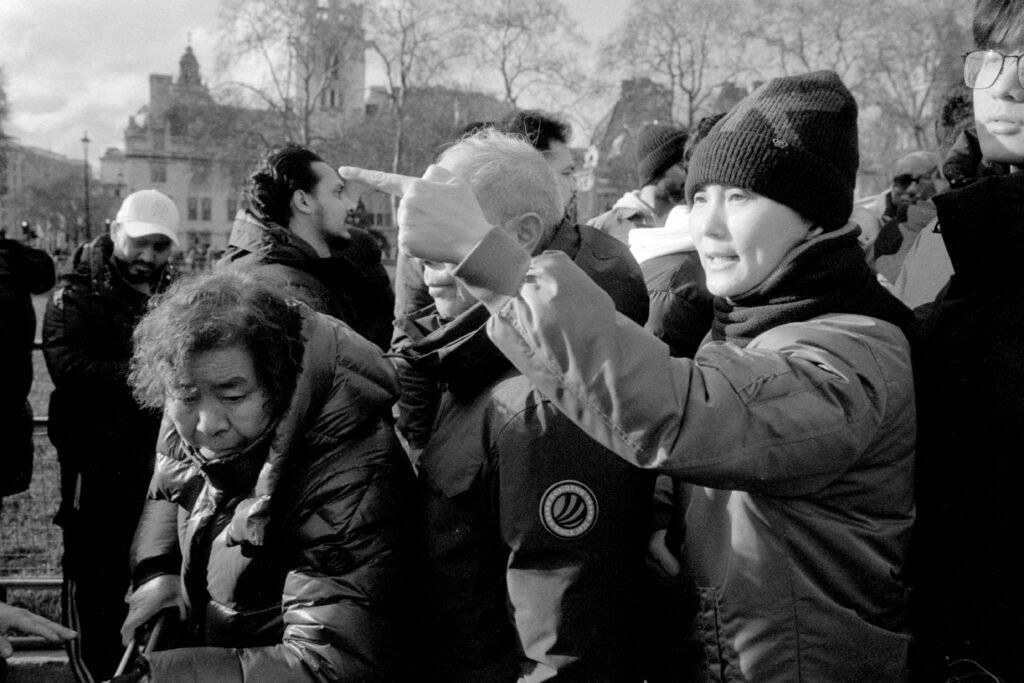
Recent documentary projects, such as coverage of the Thaipusam celebrations in East London, have highlighted the benefits of the f/1.4 aperture in low-light temple environments. The ability to shoot at ISO 400 or 800 film speeds in dim interiors without a flash is a significant advantage. However, the loss of "pocketability" means the camera must be carried in hand or on a heavy strap, altering the photographer’s physical presence and mobility within a crowd.
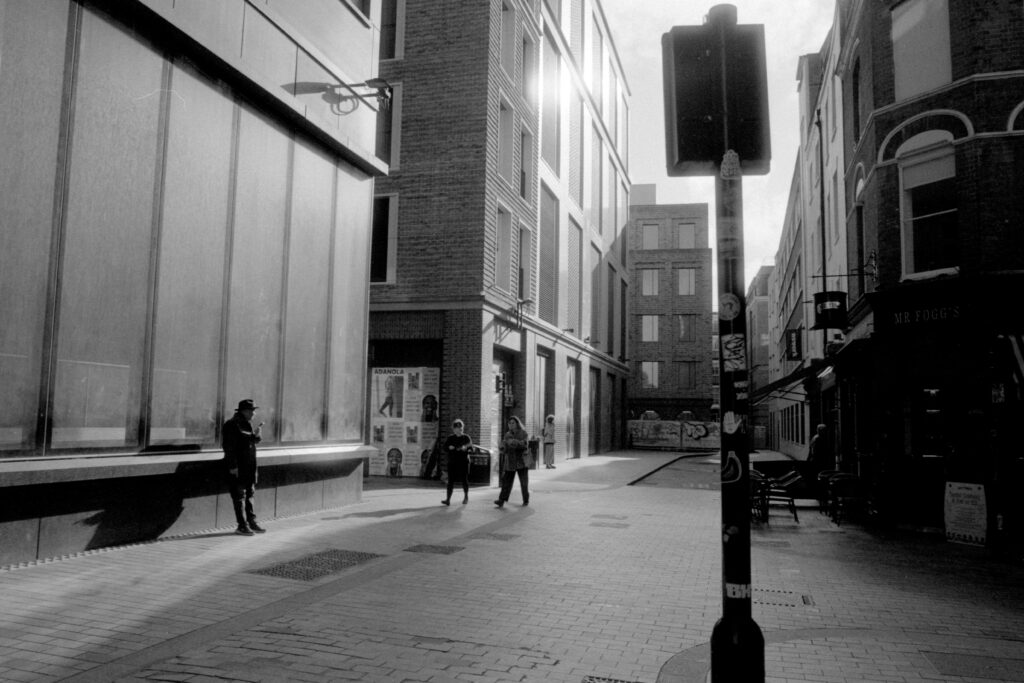
Ultimately, the Thypoch Simera 28mm f/1.4 represents a sophisticated compromise. It offers world-class optical rendering and high-speed capabilities for a fraction of the traditional cost, but it demands that the user accept the ergonomic hurdles of a large, wide-angle lens on a rangefinder body. As the market for third-party M-mount lenses continues to expand, the choice for photographers will increasingly depend on whether they prioritize the purity of the rangefinder experience—characterized by compact size and clear framing—or the raw performance of modern, high-speed optics.