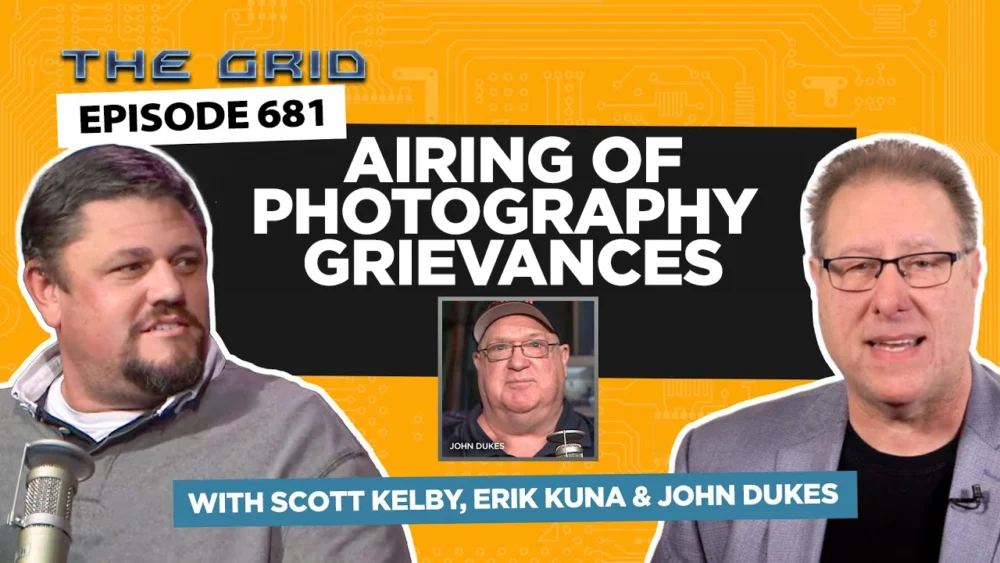
This week, Episode 681 of The Grid, a prominent online photography talk show, became a crucial forum for addressing the pervasive frustrations and professional dilemmas facing contemporary photographers. Hosted by industry veterans Scott Kelby and Erik Kuna, and featuring special guest John Dukes, the episode delved into an "old-fashioned airing of photography grievances," offering a candid and often humorous exploration of the industry’s quirks and challenges. The extensive discussion covered a range of topics, from ethical business practices and client interactions to technological advancements and community dynamics, providing both therapeutic relief and practical insights for its global audience.
The Grid: A Forum for Photography’s Unspoken Truths
The Grid, broadcast weekly, has established itself as a cornerstone within the photography community, offering a blend of technical tips, industry news, and spirited discussions. Produced by KelbyOne, a leading online educational platform for photographers and creatives, the show is renowned for its unscripted banter and the deep expertise of its hosts. Scott Kelby, a best-selling author, publisher of Photoshop User magazine, and CEO of KelbyOne, brings decades of experience and a keen understanding of photography education and software. Erik Kuna, a seasoned photographer, educator, and COO of KelbyOne, complements this with his extensive knowledge of lighting, studio work, and business acumen. Their dynamic ensures that discussions are not only informative but also highly engaging and reflective of real-world experiences.
The decision to dedicate an entire episode to grievances underscores a growing recognition within the professional photography sector of the need to openly address issues that impact livelihoods, creative integrity, and professional standards. These discussions are vital for fostering a healthier, more transparent industry where both photographers and clients operate with mutual respect and understanding.
The Esteemed Panel: Scott Kelby, Erik Kuna, and John Dukes
The episode’s success in resonating with viewers largely stemmed from the authentic perspectives shared by its panel. Scott Kelby and Erik Kuna, with their extensive backgrounds in commercial photography, publishing, and education, provided a macro view of industry trends and common pitfalls. Their insights are informed by interactions with thousands of photographers through KelbyOne’s workshops, conferences, and online forums.
Joining them was John Dukes, a distinguished photographer known for his compelling imagery and practical approach to the craft. Dukes’ presence as a working professional added an essential layer of relatable, on-the-ground experience to the conversation, validating many of the frustrations expressed by the hosts and, by extension, the wider photographic community. His personal anecdotes and professional observations served to anchor the discussion in the realities faced by individuals striving to make a living and a name for themselves in a competitive creative field.
Unpacking the Grievances: A Deep Dive into Industry Frustrations
The core of the episode was a comprehensive exploration of several recurring frustrations that plague photographers, serving as a collective "therapy session" for many viewers. These grievances, while often discussed in informal settings, rarely receive such a prominent public platform for detailed examination.
The Scourge of Unsolicited Critiques: A pervasive issue in the age of social media, the panel discussed the often-unwanted and frequently unhelpful critiques received by photographers. While constructive criticism from trusted peers can be invaluable for growth, unsolicited and often harsh feedback from strangers can be demoralizing and counterproductive. The discussion highlighted the lack of etiquette prevalent online, where individuals feel empowered to dissect others’ work without understanding the context, intent, or effort involved. This phenomenon not only impacts a photographer’s morale but can also stifle creative experimentation if artists become overly cautious to avoid public scrutiny. The consensus was that critiques should be sought, not imposed, and delivered with empathy and a genuine desire to assist, rather than merely to assert an opinion.
The Non-Negotiable RAW File Request: One of the most contentious points raised was the frequent request from clients for unedited RAW files. The panel emphatically reiterated that RAW files are the digital negatives of a photographer’s work—unfinished and often unrepresentative of the final artistic vision. Professional photographers consider post-processing an integral part of their creative process, akin to a chef’s final seasoning or an author’s editing. Releasing RAW files undermines this artistic control, potentially misrepresents the photographer’s brand, and can infringe upon intellectual property rights. Under U.S. copyright law, a photographer generally owns the copyright to their images from the moment of creation, and delivering only finished JPEGs or TIFFs is a standard industry practice, unless a specific, often costly, agreement for RAW files is made beforehand. The discussion served as a vital educational moment for both photographers needing to assert their boundaries and clients needing to understand the scope of professional services.
"Paid in Exposure": The Devaluation of Creative Labor: Perhaps the most universally recognized grievance, the expectation that photographers should work for "exposure" rather than monetary compensation, was a central point of discussion. The panel articulated the economic realities: professional photography is a business with significant overheads, including expensive equipment, software licenses, insurance, studio rent, marketing, and continuous education. The U.S. Bureau of Labor Statistics reported a median annual wage for photographers in 2022 at approximately $40,170, a figure that highlights the financial pressures many face, especially when dealing with clients who undervalue their work. "Exposure" does not pay bills, nor does it compensate for the years of skill development, artistic vision, and technical expertise required. The discussion emphasized the importance of clear contracts, professional pricing, and the collective responsibility of the creative community to resist the normalization of unpaid labor. This grievance is not unique to photography, affecting many creative industries in the burgeoning gig economy.
Gear Tribalism and the Cult of Equipment: The panel also tackled "gear tribalism"—the often-heated debates and fierce loyalty to specific camera brands (e.g., Canon vs. Nikon vs. Sony vs. Fuji). This phenomenon often distracts from the fundamental principle that the photographer, not the camera, makes the photograph. While quality equipment is essential for professional work, the relentless pursuit of the "best" or "newest" gear often overshadows the development of essential skills like understanding light, composition, and storytelling. This consumerist mindset, fueled by aggressive marketing and online forums, can lead to unnecessary financial strain and divert focus from genuine artistic growth. The hosts shared anecdotes about photographers attributing their shortcomings to their equipment rather than their technique, reinforcing the myth that better cameras automatically make better photographers.
The Instant Pro Phenomenon: Navigating a Crowded Market: With the democratization of high-quality cameras, from advanced smartphones to affordable mirrorless systems, the barrier to entry into photography has significantly lowered. This has led to an "instant pro" phenomenon, where individuals with minimal experience or training can declare themselves professional photographers. While accessibility is positive, it has saturated the market with varying levels of quality and professionalism, making it harder for seasoned professionals to differentiate themselves and maintain fair pricing. The discussion highlighted the importance of genuine skill development, building a robust portfolio, understanding business ethics, and continuous learning as hallmarks of true professionalism, contrasting these with the superficial branding often adopted by newcomers.
The Enduring Myth: Better Cameras, Better Photographers?: Directly related to gear tribalism, this persistent myth suggests that simply owning expensive or advanced camera equipment will automatically elevate one’s photographic abilities. The panel unequivocally debunked this notion, stressing that photographic excellence is a culmination of artistic vision, technical mastery, understanding of light, compositional skills, and post-processing expertise. A high-end camera in the hands of an inexperienced individual will not produce superior results to a basic camera wielded by a skilled artist. This point served as a call to action for photographers to invest in education and practice rather than solely in hardware.
A Glimpse into the Future: Lightroom’s AI-Powered Search
Amidst the grievances, Scott Kelby provided an exciting sneak peek at an unreleased Adobe Lightroom cloud feature: a powerful natural-language search tool. This innovation represents a significant leap forward in photo management, leveraging artificial intelligence and machine learning to enable users to find specific images using detailed, conversational phrases. Instead of relying on manual tagging or keyword entry, users can describe elements within their photos—such as "a person wearing a red shirt," "a group of people engaged in an activity," "stormtroopers at a convention," or "rows of olive oil"—and the software will intelligently identify and retrieve relevant images.
Enhancing Workflow and Asset Management: This feature, currently available only for cloud-stored images, promises to revolutionize how photographers manage their vast digital archives. The implications for efficiency are enormous. Professionals often spend countless hours sifting through thousands of images to locate specific shots for clients or projects. An AI-powered search capability can drastically reduce this time, allowing photographers to focus more on creative work and less on administrative tasks. It also democratizes sophisticated image organization, making advanced search capabilities accessible to a broader range of users without requiring meticulous manual metadata input. This development aligns with broader industry trends of integrating AI to automate tedious tasks, enhance creative workflows, and unlock new possibilities for image manipulation and organization. The eventual integration of this technology into desktop versions or for locally stored files would further amplify its impact across the entire professional photography ecosystem.
Beyond the Grievances: Community, Education, and Upcoming Events
Beyond the serious discussions, The Grid episode maintained its characteristic lively atmosphere with unscripted banter and community engagement, including giveaways for viewers. These elements reinforce the show’s role as not just an educational platform but also a community hub.
The KelbyOne iPhone Photography Conference: The episode also included a plug for the upcoming iPhone Photography Conference, an event that highlights another significant trend in modern photography: the increasing capabilities and professional acceptance of smartphone cameras. This conference, hosted by KelbyOne, caters to a growing segment of photographers who use their iPhones for everything from casual snaps to professional assignments. It underscores the idea that powerful tools are becoming more accessible, further challenging the "better camera" myth and emphasizing skill and vision over sheer equipment cost. Such events provide valuable resources for photographers adapting to evolving technologies and expanding their creative repertoire.
Broader Implications: Fostering Professionalism and Innovation
Episode 681 of The Grid was more than just an airing of frustrations; it was a crucial dialogue that contributes significantly to the ongoing professionalization of the photography industry. By openly discussing common grievances, the hosts and guest provided validation for countless photographers who face similar challenges. This collective acknowledgement fosters a stronger sense of community and encourages unified action in advocating for fair practices and ethical client relationships.
The insights shared serve as an educational resource for emerging photographers, equipping them with knowledge about industry standards, client management, and the true value of their creative work. For established professionals, it’s a reminder that they are not alone in their struggles and that collective advocacy can lead to positive change.
Furthermore, the sneak peek at Lightroom’s AI-powered search feature illustrates the dynamic nature of the industry, where technological innovation constantly reshapes workflows and opens new creative avenues. This duality—addressing long-standing professional frustrations while simultaneously embracing cutting-edge tools—encapsulates the contemporary photography landscape. The episode ultimately underscored the importance of resilience, continuous learning, and community support in navigating the complexities and embracing the opportunities within this vibrant creative field. Viewers are encouraged to watch the replay to experience the full breadth of the discussion and identify with the grievances that hit closest to home.