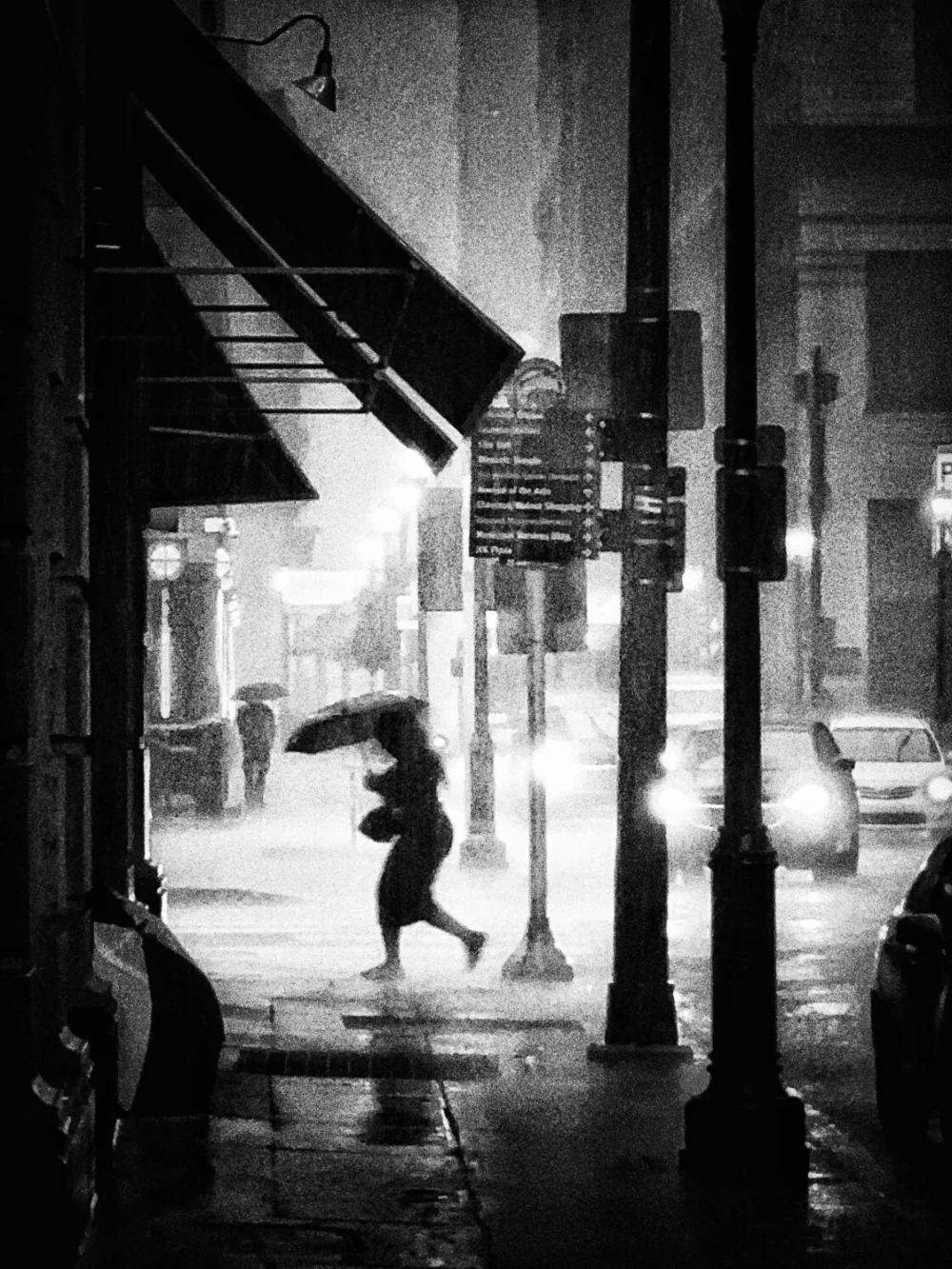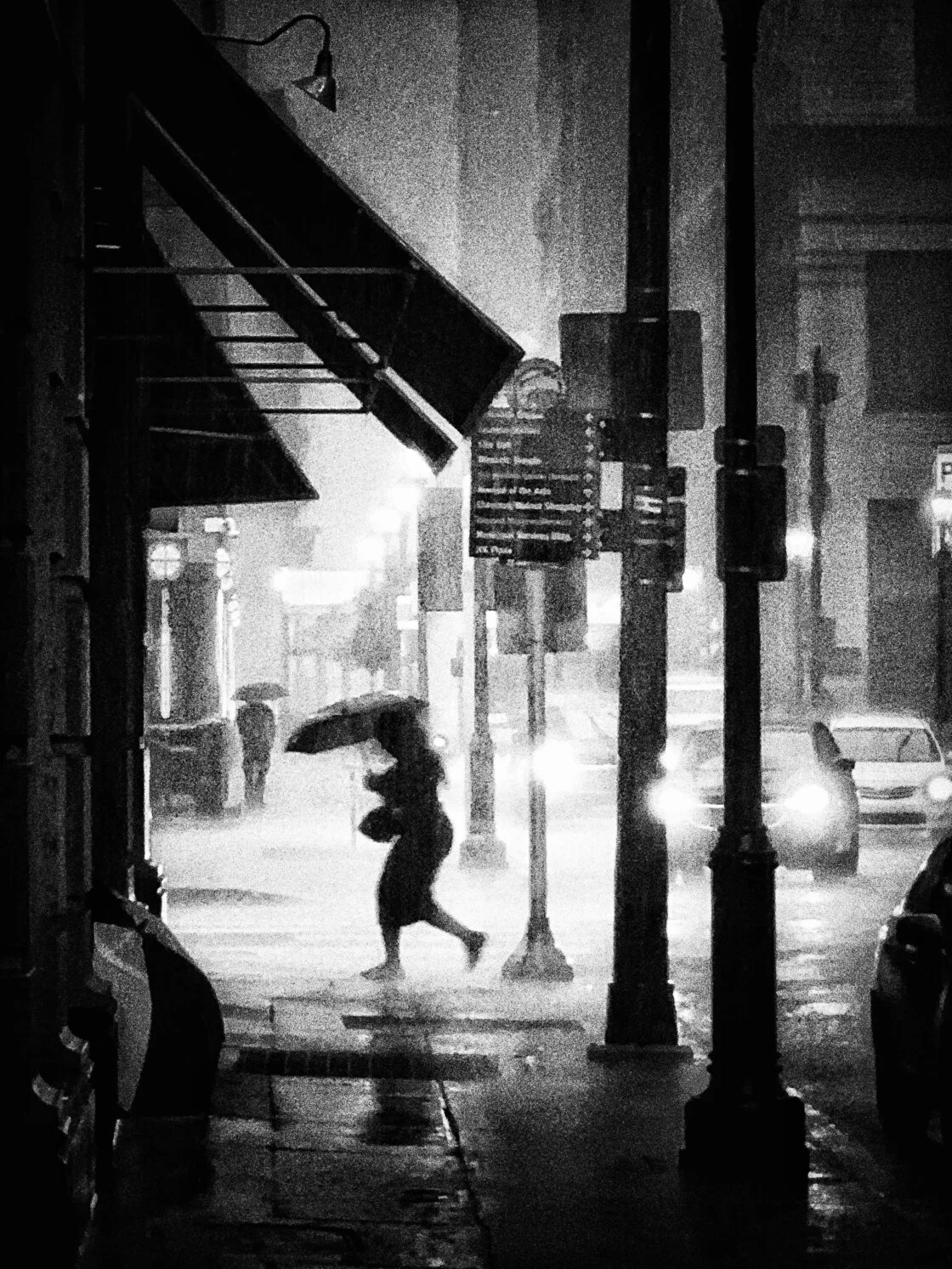
The evolution of mobile imaging technology has fundamentally altered the landscape of contemporary street photography, transforming the iPhone from a mere communication device into a sophisticated tool for fine art. While traditional photographers often retreated during periods of inclement weather, a growing movement of mobile photographers, including Philadelphia-based fine art specialist Andrew Gimblet, has begun to view rain, snow, and fog as essential atmospheric components rather than obstacles. This shift in perspective is supported by the increasing technical capabilities of smartphone sensors, which now offer high dynamic range (HDR) and advanced low-light processing, allowing for professional-grade captures in conditions that were once considered prohibitive for non-professional gear.
The Technical Shift in Urban Documentation
The rise of "bad weather" photography is not merely a stylistic choice but a response to the homogenization of urban imagery on social media platforms. According to industry data, the "Shot on iPhone" campaign has generated millions of user-contributed images, leading to a saturation of sunny, high-contrast cityscapes. Consequently, professional street photographers have identified inclement weather as a primary differentiator that provides unique textures, reflections, and emotional depth. The following analysis details the strategic methodologies employed to capture compelling urban narratives when meteorological conditions are at their most challenging.
1. Tactical Utilization of Rain for Visual Narrative
Rainfall serves as a natural filter that alters the behavior of light and the movement of city dwellers. From a journalistic perspective, the introduction of rain into an urban environment creates a "forced narrative" where subjects interact with their surroundings in more dramatic ways. Photographers are encouraged to utilize "fishing holes"—specific locations such as bus stops, awnings, and archways—which provide both physical protection for the device and a static frame through which to observe the moving world.
The umbrella, a ubiquitous accessory in rainy conditions, functions as a powerful geometric focal point. Its bold colors and circular shapes provide a stark contrast to the linear, often grey architecture of a city. By positioning themselves in a dry, covered area, photographers can wait for subjects to enter the frame, using the umbrella to anchor the composition and add a sense of isolation or protection to the human element of the story.
2. Macro-Environmental Perspectives Through Glass
Inclement weather allows for the exploration of layers within a single frame. Shooting through windows—whether in a cafe, a bus, or a train station—introduces a macro element to street photography. By setting the focus manually on raindrops clinging to the glass, the background is rendered into a soft, impressionistic blur. This technique leverages the iPhone’s "Portrait Mode" algorithms or manual focus-lock features to create a sense of depth that mimics the shallow depth of field found in high-end DSLR lenses. This approach effectively turns a mundane transit scene into an abstract study of light and moisture, providing a voyeuristic yet artistic perspective on the city.
3. The Optics of Puddle Reflections and Symmetry
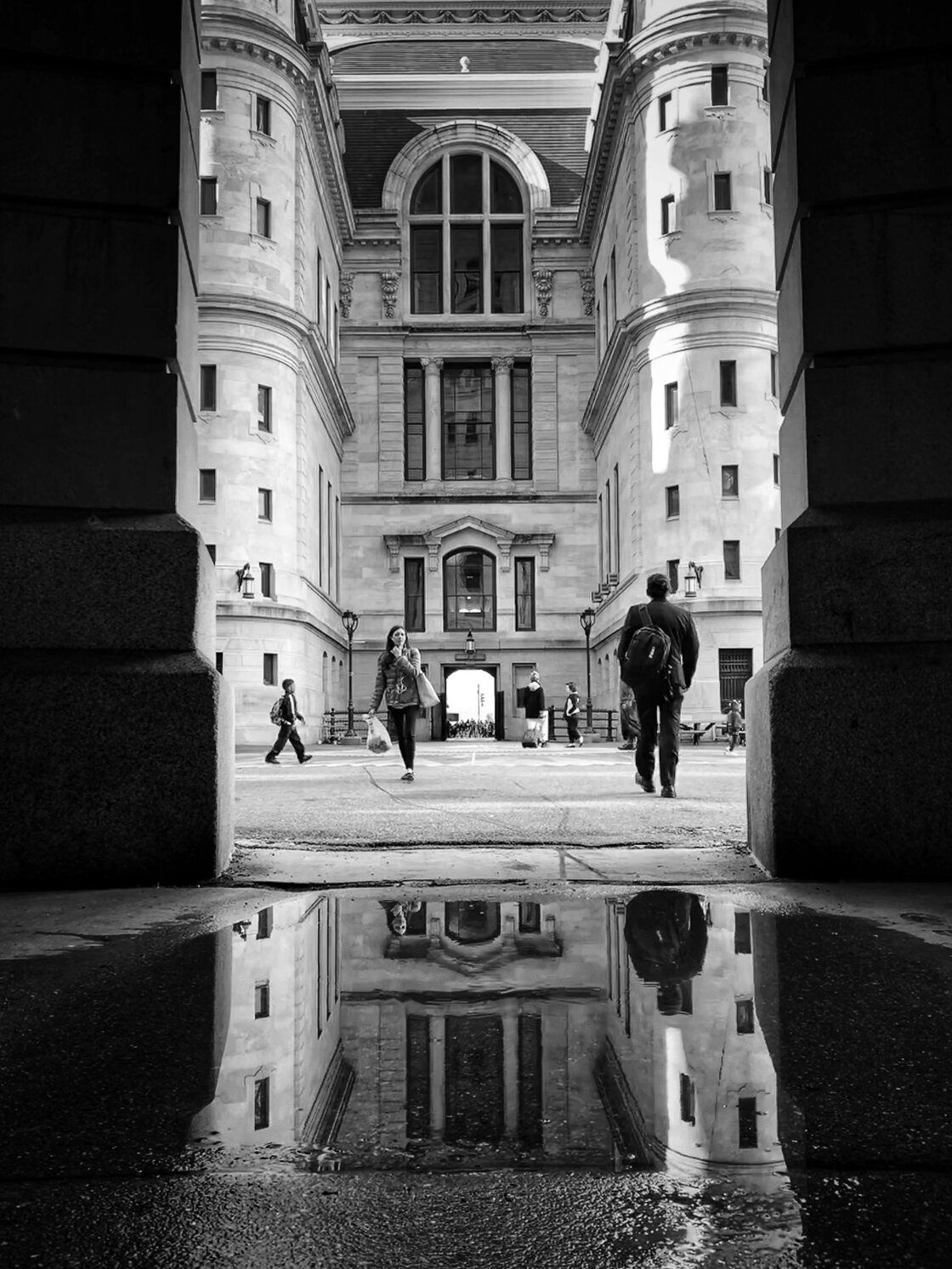
Once the precipitation ceases, the urban environment is left with temporary mirrors in the form of puddles. This phase of the weather cycle offers some of the most profound opportunities for symmetrical composition. To maximize the impact of a reflection, the photographer must lower the camera’s physical position. Inverting the iPhone so that the lens is as close to the water’s surface as possible allows for a near-perfect 50/50 split between the physical world and its reflected counterpart.
Data from composition studies suggests that symmetry is one of the most effective ways to capture viewer attention in a digital feed. By incorporating architectural elements—such as the spire of a building or the neon of a street sign—into the reflection, the photographer creates a complex visual puzzle. The "upside-down" editing trick, where the final image is rotated 180 degrees in post-processing, further enhances this effect, challenging the viewer’s perception of reality and orientation.
4. Chronology of the Snowy Shoot: Preparation and Execution
Snowfall transforms the color palette of a city into a high-key environment, often simplifying complex scenes into minimalist compositions. However, snow photography requires a specific chronological approach to be successful:
- Phase 1: Pre-Shoot Monitoring: Professionals monitor the National Weather Service for "heavy accumulation" or "flurry" forecasts, as different types of snow produce different visual textures.
- Phase 2: Identifying Contrast Zones: Because snow is white, it requires a dark background—such as a brick wall, a dark bridge, or a tunnel—to be visible as individual flakes.
- Phase 3: Capturing Human Interaction: The focus shifts to subjects whose body language reflects the struggle against the elements—bent shoulders, heavy coats, or the act of clearing snow.
The broader impact of snow photography lies in its ability to document the "quieting" of a city. The acoustic and visual dampening caused by snow provides a rare opportunity to capture the metropolis in a state of relative stasis.
5. Exposure Calibration in High-Albedo Environments
One of the primary technical hurdles in bad-weather photography is the iPhone’s internal light meter. In snowy or foggy conditions, the abundance of white or grey can "trick" the sensor into underexposing the image, resulting in "muddy" or greyish tones. To counter this, photographers must use the manual exposure compensation tool.
By tapping the subject on the screen and swiping upward, the photographer can force the camera to overexpose slightly, ensuring the snow remains bright and the fog retains its ethereal glow. This adjustment is crucial for maintaining the "high-key" aesthetic that defines professional winter photography. Conversely, reducing exposure in rainy or night-time conditions can deepen shadows, creating a "low-key" moody atmosphere.
6. Atmospheric Fog and the Science of Mystery
Fog acts as a natural "depth fader," where objects lose contrast and detail the further they are from the lens. This meteorological phenomenon is highly prized for its ability to create "leading lines" that disappear into a white void. A bridge or a row of streetlamps fading into the fog provides a clear path for the viewer’s eye, creating a sense of infinite scale.
From a compositional standpoint, fog is the ideal backdrop for silhouette photography. By positioning a subject against the bright, diffused light of the fog and lowering the exposure, the photographer can reduce the subject to a pure black shape. This removes identifying details and transforms the individual into a universal symbol of the urban wanderer, heightening the mystery and emotional resonance of the image.
7. The Rationale for Black and White Conversion
While modern iPhones capture millions of colors, inclement weather often results in a "flat" color profile where various hues of grey and brown dominate. Journalistic standards often suggest that when color does not add to the story, it should be removed to emphasize form, texture, and light.
Black and white conversion is a strategic choice for bad-weather photography because it:
- Enhances Contrast: It forces the viewer to look at the relationship between the brightest highlights and the deepest shadows.
- Emphasizes Texture: The grit of wet pavement or the crystalline structure of snow becomes more apparent.
- Conveys Timelessness: B&W imagery strips away modern color cues, making a contemporary street scene feel like a historical document.
8. Post-Processing and the Role of Mobile Applications
The workflow of a mobile street photographer does not end with the shutter click. The use of specialized applications such as Adobe Lightroom Mobile, Snapseed, and Blackie allows for the refinement of the "mood" captured in the field. Professional reactions to these tools have been overwhelmingly positive, with many noting that the ability to edit RAW files directly on an iPhone has closed the gap between mobile and traditional photography.
In these apps, photographers can add "grain" to emulate the look of high-speed film, adjust "clarity" to make raindrops pop, or use "selective masking" to brighten a subject’s face amidst a dark, rainy background. This level of control ensures that the final output meets the standards of fine art galleries and editorial publications.
9. Broader Impact and Implications for Urban Documentation
The trend toward documenting cities in "bad" weather has broader implications for how we perceive urban life. It moves away from the "postcard" version of a city and toward a more honest, visceral representation of the human experience. As climate patterns become more unpredictable, these photographic records serve as important cultural artifacts, documenting the resilience of urban populations and the changing aesthetics of our environments.
Furthermore, the democratization of these techniques through the iPhone means that high-quality urban documentation is no longer the exclusive domain of those with expensive equipment. Anyone with a smartphone and the willingness to brave the elements can contribute to the global archive of street photography. This inclusivity has led to a richer, more diverse visual history of our cities, captured one rainy, snowy, or foggy day at a time.
In conclusion, the mastery of iPhone street photography in inclement weather requires a combination of technical knowledge, compositional patience, and a shift in artistic philosophy. By viewing rain, snow, and fog as collaborators rather than adversaries, photographers can unlock a world of creative potential that remains hidden to those who only shoot when the sun is shining. As demonstrated by practitioners like Andrew Gimblet, the most compelling stories are often told when the weather is at its worst.