For three decades, the author, a seasoned wildlife photographer, has resided on Vancouver Island, an area renowned for its high density of cougars, yet has only managed fleeting glimpses of these elusive felines. This long-held fascination with the stealth and power of big cats, exemplified by cougars and pumas – nature’s perfectly evolved hunters, their movements masked by potent muscles, padded paws, and calculated grace – fueled a persistent dream of a profound encounter. It was this enduring desire that led the photographer to the rugged, windswept landscapes of Chilean Patagonia, specifically to the periphery of Torres del Paine National Park, with the singular objective of photographing its famed pumas.
The journey, however, began with unexpected challenges. A lost passport necessitated a detour to a Brazilian embassy, delaying the commencement of the expedition. Upon arrival in Chile, the chosen accommodation was a converted estancia, a traditional Patagonian ranch, still equipped with functional farming and livestock apparatus. This setting underscored the evolving relationship between human habitation and the natural world in the region.
The Rise of Ecotourism and Coexistence
Torres del Paine National Park, with its iconic granite peaks, has become a significant draw for international tourism. The surge in visitors, drawn by the park’s pristine natural beauty, has propelled ecotourism into a thriving industry. The owners of the estancia where the photographer stayed are emblematic of a local shift, having embraced a philosophy of living in harmony with the wildlife that was once perceived as a threat to their livestock. This transition reflects a broader trend in conservation, where economic incentives are increasingly aligned with the protection of natural habitats and their inhabitants.
The estancia’s staff, a vibrant group of local individuals, embody the enduring values of gaucho culture – a heritage rooted in honesty, diligent work, and open-hearted generosity. This cultural backdrop provided a unique context for the photographer’s immersion into the Patagonian wilderness.
Into the Heart of Puma Territory
Central to the photographic expedition was Rodrigo, a guide renowned for his expertise in puma tracking and his intimate knowledge of the local feline population, whom he reportedly knew "like family." Under Rodrigo’s guidance, the photographer ventured deep into the heart of the pumas’ domain. The transition from cultivated lands to the dramatic geological formations of the Andes, punctuated by crystalline, snow-fed lakes and vast expanses of grassland, marked the increasing wildness of the landscape. As they journeyed further, the majestic granite peaks of the Andes loomed larger, forming a breathtaking backdrop to their pursuit.
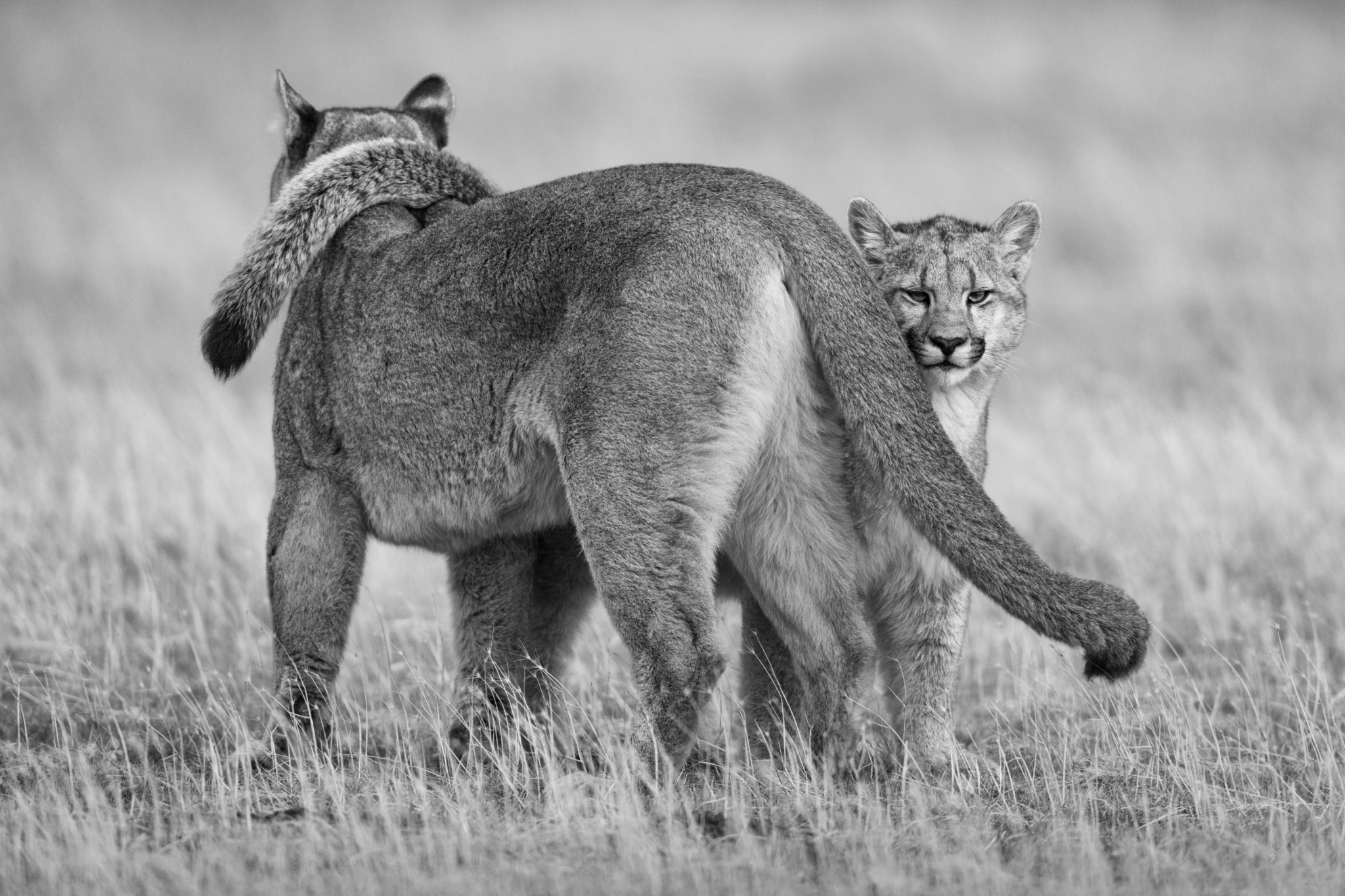
It was in the formidable shadow of these mountains that the first significant encounter occurred. The subject was Petaka, a female puma of considerable local renown, accompanied by her two young kittens. Petaka’s reputation preceded her: a creature of serene authority, her apparent indifference to human presence had elevated her to a legendary status among visitors to Torres del Paine and its environs.
A Protected Species, A Calmer Predator
Unlike in neighboring Argentina, where puma populations have faced different pressures, pumas in Chile are classified as a protected species, with hunting activities largely prohibited. This legal protection has, in certain areas, fostered a degree of acclimatization among some puma populations. These cats have learned to navigate their environment and carry out their natural behaviors in the proximity of humans, often by simply ignoring them. For the photographer, witnessing this coexistence was deeply moving, a profound affirmation of allowing wild animals the space to exist without undue disturbance. The opportunity to observe Petaka’s maternal care, as she interacted with her tumbling kittens in the grass, was described as a moment of silent, emotional overwhelm.
The Fury of the Patagonian Storm
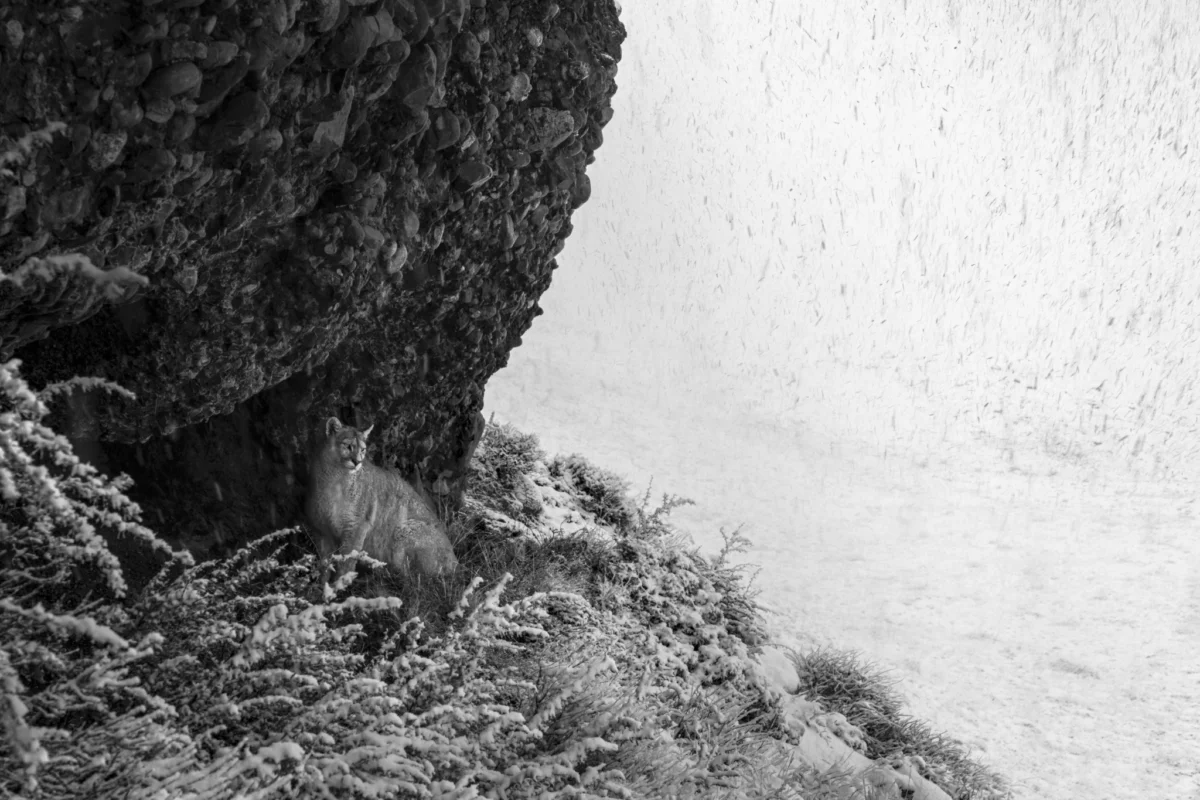
Following these initial observations and further explorations within the park to document other resident pumas, the typically unpredictable Patagonian weather took a dramatic turn. The winds intensified, and the first snowflakes began to fall, escalating into a full-blown blizzard that enveloped the landscape in a hushed, close embrace. Seeking refuge from the inclement weather, the photographer found shelter within the natural alcoves of the mountainside.
It was within this sheltered space that an extraordinary event unfolded. A large puma, emerging from the swirling snow, appeared and settled mere feet away, also seeking respite from the storm. The photographer instinctively froze, controlling their breath and attempting to steady the camera, a surge of adrenaline and awe coursing through them.
A Shared Moment of Solitude
For an extended period, the photographer and the puma shared a profound silence, the world outside blanketed by rapidly accumulating snowdrifts that obscured the willow thickets below. The wild cat remained entirely unperturbed by the human presence, its attention fixed on its surroundings. It was only when the storm finally abated and the landscape began to reveal itself anew that the emotional impact of the encounter became palpable. As the puma silently moved away across the fresh snow, the photographer allowed the pent-up emotions of awe and gratitude to surface.
This unexpected shared solitude, a moment of quiet camaraderie between human and wild animal in the face of elemental forces, underscored a fundamental principle of wildlife observation: when nature is afforded the space and protection it needs to thrive, humanity can become a witness to the profound and untamed beauty of the natural world. The experience was characterized as a gift, a fleeting but deeply meaningful connection within one of Earth’s most breathtaking ecosystems.
Data and Context: Pumas in Patagonia
- Species: Puma concolor (also known as cougar or mountain lion).
- Distribution: The puma has the largest range of any wild terrestrial mammal in the Western Hemisphere, stretching from the Canadian Yukon to the southern Andes of South America.
- Conservation Status: While globally listed as "Least Concern" by the IUCN, specific populations and regional subspecies can face localized threats and varying conservation statuses. In Chile, the puma is a protected species.
- Torres del Paine National Park: Established in 1959, this UNESCO World Biosphere Reserve spans approximately 181,000 hectares (447,000 acres). It is renowned for its dramatic landscapes, including granite spires, glaciers, lakes, and diverse wildlife.
- Puma Population in Torres del Paine: While precise figures fluctuate, the park is considered a stronghold for pumas. Estimates suggest a healthy and stable population, contributing to the area’s ecological integrity. Researchers and guides often identify and track individual animals, contributing to a deeper understanding of their behavior and social structures.
- Diet and Hunting: Pumas are apex predators, primarily preying on guanacos (a South American camelid) in Patagonia. They are also known to hunt other mammals, including birds and rodents. Their hunting strategy relies on stealth, speed, and powerful bursts of energy.
- Human-Wildlife Conflict: Historically, pumas have been persecuted due to perceived threats to livestock. However, with the rise of ecotourism and increased conservation efforts, the economic benefits derived from observing these animals often outweigh the perceived threat, fostering a shift towards coexistence. The adaptation of pumas in Torres del Paine to human presence is a testament to successful conservation policies and the resilience of the species.
Implications for Conservation and Ecotourism
The photographer’s experience highlights the profound impact of protected areas and robust conservation policies on wildlife populations. The relative safety and protection afforded to pumas in Chilean Patagonia have allowed for the development of a unique ecological dynamic where humans can observe these magnificent predators in their natural habitat with minimal disruption. This model of coexistence is crucial for the long-term survival of species like the puma and serves as a powerful argument for continued investment in protected landscapes and anti-poaching initiatives.
Furthermore, the economic viability of ecotourism, driven by the allure of observing wildlife like the Patagonian puma, provides a tangible incentive for local communities and governments to prioritize conservation. The photographer’s narrative underscores the ethical and emotional rewards of such encounters, reinforcing the intrinsic value of wild nature and the importance of preserving it for future generations. The ability to witness such moments of raw, untamed life is, as the author suggests, "beyond all imagination," a testament to the enduring power and majesty of the natural world.