The global marketing landscape in 2026 has reached a critical inflection point where the sheer volume of required visual content often outpaces traditional production capabilities. As brands navigate an ecosystem defined by multi-channel presence, hyper-personalization, and the rapid-fire demands of social commerce, the strategic selection of visual assets has evolved from a simple budgetary line item into a sophisticated operational decision. The choice between stock photography, custom shoots, and hybrid models now dictates not only the aesthetic of a brand but its ability to remain competitive in a high-velocity digital economy.
Recent industry data suggests that the average consumer is exposed to between 6,000 and 10,000 advertisements daily, making visual distinctiveness more valuable than ever. However, the rise of "content fatigue" necessitates a constant stream of fresh imagery to maintain engagement. This environment has forced a re-evaluation of how companies utilize resources like Shutterstock alongside bespoke photography sessions to maximize Return on Investment (ROI) and maintain brand integrity.
The Evolution of Visual Marketing: A 20-Year Chronology
To understand the current tension between stock and custom imagery, one must look at the trajectory of commercial photography over the last two decades. In the early 2000s, stock photography was often criticized for being "generic" or "plastic," characterized by overly enthusiastic office workers in sterile environments. During this era, custom photography was the only viable path for brands seeking premium positioning.
By 2015, the "lifestyle" movement in stock photography began to take hold. Agencies like Shutterstock started prioritizing authentic, candid-style imagery that mirrored the aesthetics of burgeoning social media platforms. This shift narrowed the quality gap between stock and custom work.
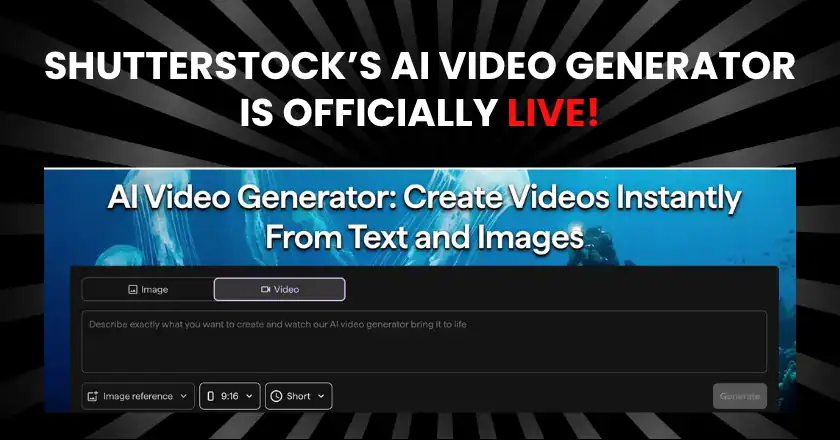
Entering 2024 and 2025, the integration of Artificial Intelligence (AI) fundamentally altered the landscape. AI-generated imagery introduced a new layer of efficiency but also a "trust deficit" among consumers. By 2026, the market has stabilized into a tiered approach. Brands now use custom photography to anchor their identity and build trust, while leveraging high-quality, ethically sourced stock libraries and AI-enhanced stock tools to fill the massive gaps in their daily content calendars.
Production Costs: Analyzing the Real-World Investment
The financial disparity between these two avenues remains the most immediate factor for marketing departments. In 2026, the cost of stock photography is largely dictated by volume and licensing breadth. Subscriptions and prepaid download packs remain the industry standard, offering a predictable cost-per-image that can be as low as $0.20 for high-volume users or up to $350 for specialized, high-resolution assets with extended commercial rights.
In contrast, custom photography requires a significant upfront capital commitment. A professional session in 2026 involves a complex web of expenses, including:
- Creative Fees: Senior photographers often command $1,500 to $5,000 per day.
- Production Staff: Stylists, lighting assistants, and digital techs add $500 to $1,000 each per day.
- Talent and Licensing: Professional models and the rights to use their likeness can range from $500 to several thousand dollars depending on the campaign’s reach.
- Logistics: Location permits, studio rentals, equipment insurance, and catering.
- Post-Production: High-end retouching often costs $50 to $200 per final image.
A single-day custom shoot can easily exceed $10,000, producing perhaps 20 to 50 "hero" images. For a brand requiring 500 unique assets per year across various regions and platforms, relying solely on custom photography would require a budget exceeding $100,000, whereas a comprehensive stock subscription might provide the same volume for under $5,000.

Speed as a Competitive Advantage
In the 2026 marketplace, timing is often as important as quality. The lifecycle of a social media trend or a reactive marketing opportunity is measured in hours, not weeks. Stock photography offers near-instantaneous turnaround. A designer can identify, license, and integrate a professional-grade image into a campaign within minutes. This agility allows brands to participate in real-time cultural conversations—a feat impossible with the 2-to-6-week lead time required for custom shoots.
Custom photography involves a lengthy workflow: creative brief development, talent casting, location scouting, the shoot itself, and several rounds of post-production. While this process ensures the final product is perfectly aligned with the brand’s DNA, it is inherently incompatible with the "always-on" requirements of modern digital advertising.
Scalability and the Challenge of Global Localization
For multinational corporations, scalability is a primary concern. A campaign launched in 2026 must often be localized for dozens of different demographic groups and geographical regions. Custom photography struggles to scale at this level; a brand would need to conduct shoots in multiple countries to ensure cultural relevance, exponentially increasing costs.
Large-scale stock libraries like Shutterstock provide a solution through their vast repositories of diverse, globally sourced content. Marketing teams can pull imagery that reflects local customs, architecture, and demographics in seconds. Furthermore, the 2026 iteration of stock platforms includes advanced AI-driven search and customization tools. These allow users to modify existing stock photos—changing a background or adjusting a color palette—to fit a specific regional aesthetic without the need for a new photoshoot.

The Authenticity Premium and the Trust Deficit
Despite the efficiency of stock, custom photography holds a unique "authenticity premium" in 2026. As AI-generated content becomes ubiquitous, consumers have developed a heightened sensitivity to "faked" or "synthetic" visuals. Industry surveys indicate that 72% of consumers are more likely to trust a brand that features real employees, actual products, and authentic customer environments.
Custom photography serves as a "proof of existence." It signals to the audience that the company has invested in its own narrative. This is particularly crucial for:
- Product Pages: Customers need to see the exact item they are purchasing from multiple angles.
- About Us Pages: Showing real founders and team members builds human connection.
- High-Ticket Services: Real-world examples of projects (e.g., architecture, medical procedures) provide necessary social proof.
ROI Analysis: A Segmented Approach
The Return on Investment for visual assets is no longer viewed as a monolithic figure. Instead, 2026 marketing analysts segment ROI based on the "funnel" position of the content.
High ROI for Stock Photography:

- Top-of-Funnel (TOFU): Social media ads, blog headers, and educational content where the goal is broad reach and high-frequency visibility.
- A/B Testing: Using stock allows teams to test multiple visual concepts at a low cost before committing to a final creative direction.
- Background Visuals: Website banners or presentation slides where the image supports the message but isn’t the primary focus.
High ROI for Custom Photography:
- Bottom-of-Funnel (BOFU): Landing pages, product descriptions, and "Buy Now" prompts where the specific details of the offering are the deciding factor for the consumer.
- Brand Identity: The "Hero" images on a homepage or a flagship billboard campaign that define the brand’s visual signature for the year.
- Public Relations: High-stakes media kits and executive profiles.
The Rise of the Hybrid Model
The most successful marketing organizations in 2026 have abandoned the "either/or" mentality in favor of a hybrid strategy. This model utilizes custom photography for "Core Brand Assets" and stock photography for "Operational Content."
In a typical hybrid workflow, a brand might conduct two major custom photoshoots per year to capture its primary products and key personnel. These images form the foundation of the brand’s visual identity. Simultaneously, the brand maintains a high-volume subscription to a service like Shutterstock. These stock assets are used for daily Instagram stories, email newsletters, and programmatic display ads.
Technological advancements have made this blending more seamless. In 2026, many brands use "Style Transfer" AI tools to apply the color grading and lighting characteristics of their custom "hero" shots to their licensed stock images, ensuring a unified visual language across all platforms.

Implications for the Creative Industry
The shift toward strategic use has profound implications for photographers and agencies. The "middle market" of commercial photography—photographers who produced generic, high-volume work—has largely been absorbed by premium stock libraries. To survive in 2026, professional photographers have pivoted toward high-concept, specialized work that stock cannot replicate, such as intricate product styling, high-end fashion, and documentary-style brand storytelling.
For agencies like Shutterstock, the focus has shifted from being a mere image repository to becoming a comprehensive "creative workflow" partner. By offering 25% discounts on bulk image packs and integrating AI editing tools directly into the browser, these platforms have positioned themselves as essential infrastructure for the modern marketing department.
Conclusion: Strategic Visual Management in 2026
As we look toward the remainder of 2026, the debate between stock and custom photography has been settled by a pragmatic middle ground. The "visual economy" demands a level of output that custom photography cannot meet alone and a level of authenticity that stock photography cannot always provide in isolation.
The brands that will thrive are those that recognize photography as a strategic resource rather than a simple expense. By leveraging the speed and scalability of stock libraries for the "content treadmill" while reserving custom budgets for high-impact, trust-building "hero" assets, companies can achieve a balanced, high-ROI visual strategy that resonates with the modern consumer. In this landscape, the question is no longer which resource to use, but how to deploy both with maximum tactical precision.