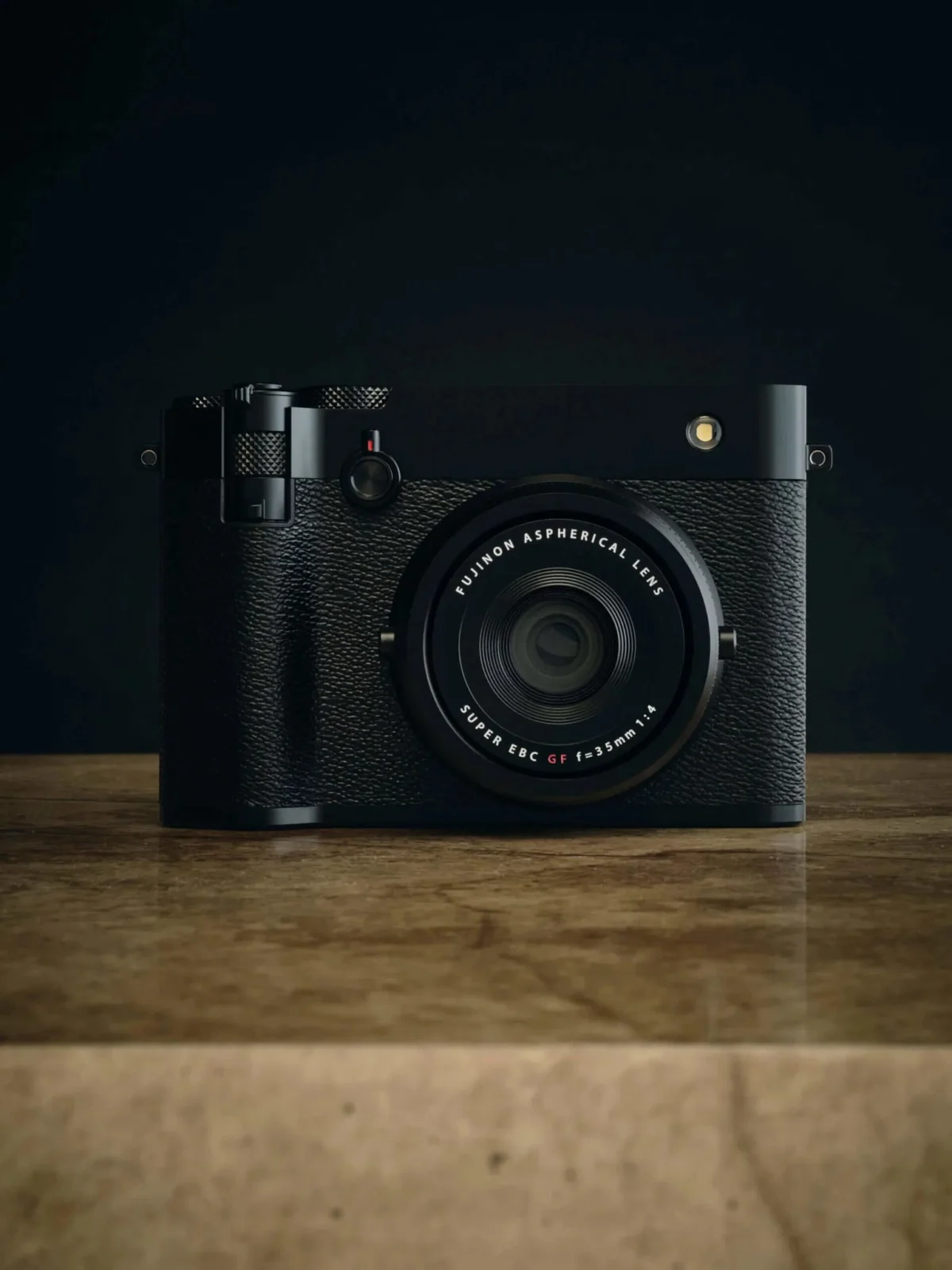
The Fujifilm GFX 100RF has emerged as a distinctive entry in the high-end mirrorless camera market, challenging conventional perceptions of medium format photography through its deliberate emphasis on portability and a fixed-lens design. Upon its initial assessment, the camera immediately impresses with its unexpectedly compact form factor, a stark contrast to the typically robust build of other GFX series models. Its svelte profile places it closer in handling and heft to a full-frame mirrorless camera like the Nikon Z7 equipped with a modest 35mm lens, rather than its medium-format brethren. This design philosophy, which some observe evokes a modern digital interpretation of classic rangefinder cameras such as the Plaubel Makina 67, underscores Fujifilm’s strategic intent to carve out a unique niche within an already specialized segment.
Design Philosophy and Portability
Fujifilm’s primary objective with the GFX 100RF appears to be the fusion of a high-resolution medium format sensor with an unprecedented level of portability. This design choice, however, has not been without its detractors, sparking considerable debate within the photographic community. Many critics have focused on the camera’s omissions, particularly the absence of in-body image stabilization (IBIS) and a faster, wider aperture lens. These features are often considered standard in high-end mirrorless systems, especially those designed for professional use. However, including IBIS and a larger, faster lens would inevitably lead to a bulkier and heavier camera, directly contradicting Fujifilm’s core design brief for the 100RF.
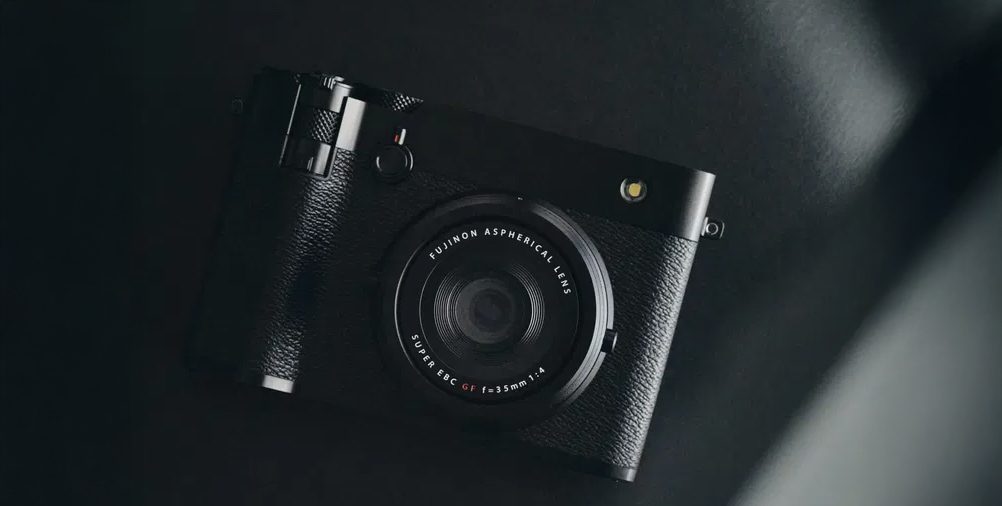
The GFX 100RF integrates the formidable Sony 33x44mm 100-megapixel sensor, a component revered for its exceptional image quality, dynamic range, and resolution. To achieve the desired reduction in size and weight while retaining this sensor, Fujifilm made calculated trade-offs. The result is a camera positioned squarely within a "niche within a niche" – fixed-lens, high-end digital cameras already cater to a specific audience, and the 100RF further refines this by prioritizing extreme portability in medium format. This makes it an ideal tool for photographers who value a lightweight, agile, and precise instrument for capturing 100MP medium format images, particularly those who appreciate a field of view equivalent to a 28mm lens on a full-frame system.
Technical Performance and Image Fidelity
The GFX 100RF leverages the same cutting-edge 100-megapixel Sony sensor found in its larger siblings, such as the GFX 100 II. This ensures that the image quality delivered by the 100RF is consistently excellent, characterized by its remarkable detail, rich tonal gradations, and impressive color reproduction. Photographers familiar with the GFX 100 II will find the sensor’s output and characteristics largely identical, including Fujifilm’s distinct ISO 80 black-point subtraction methodology.
Autofocus performance on the GFX 100RF also mirrors that of the GFX 100 II. While entirely competent and robust by medium format standards, it does not achieve the blistering speeds or advanced tracking capabilities often found in contemporary full-frame mirrorless cameras. This reflects a broader characteristic of medium format systems, which typically prioritize resolution and image fidelity over high-speed action photography.
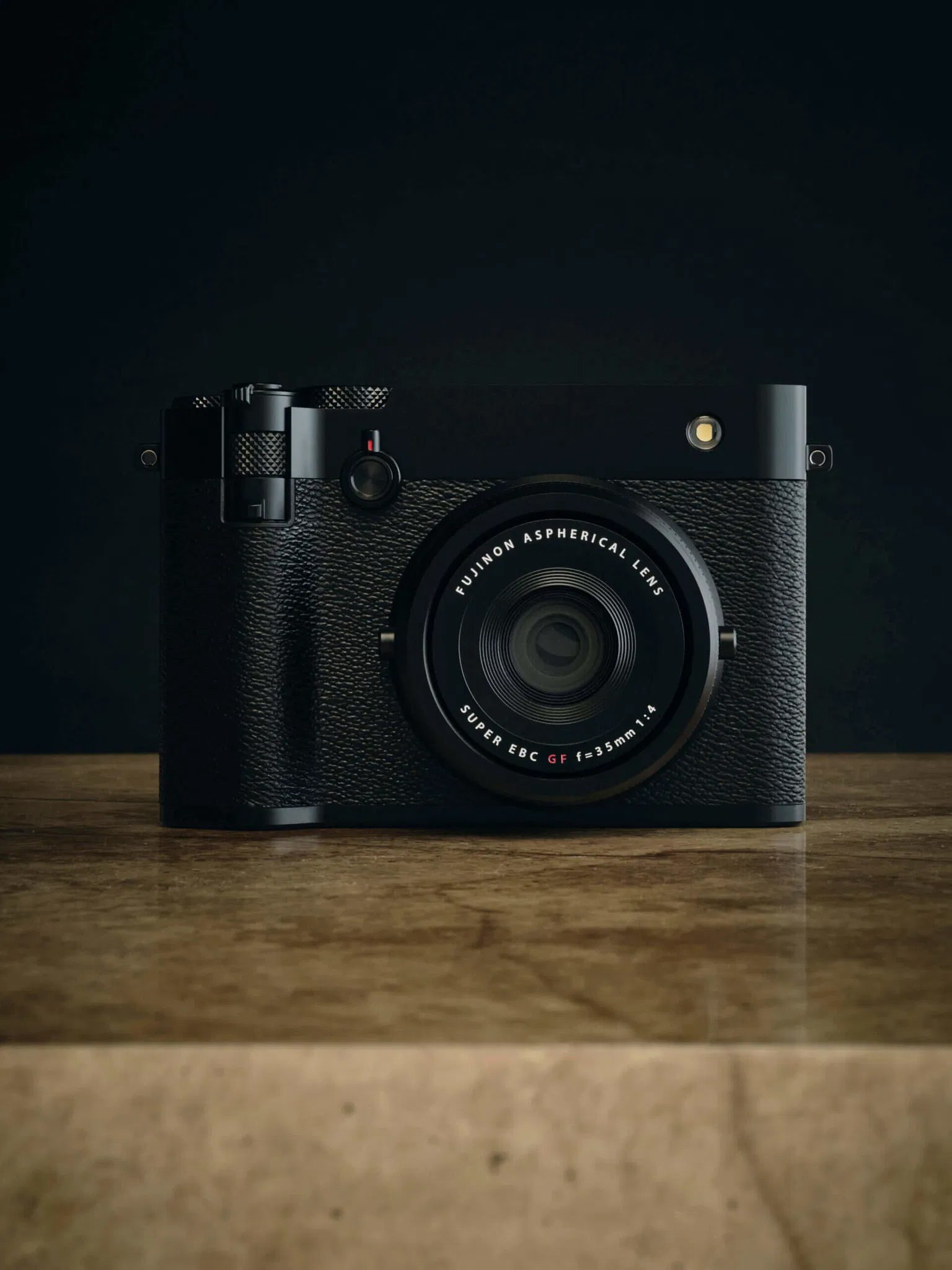
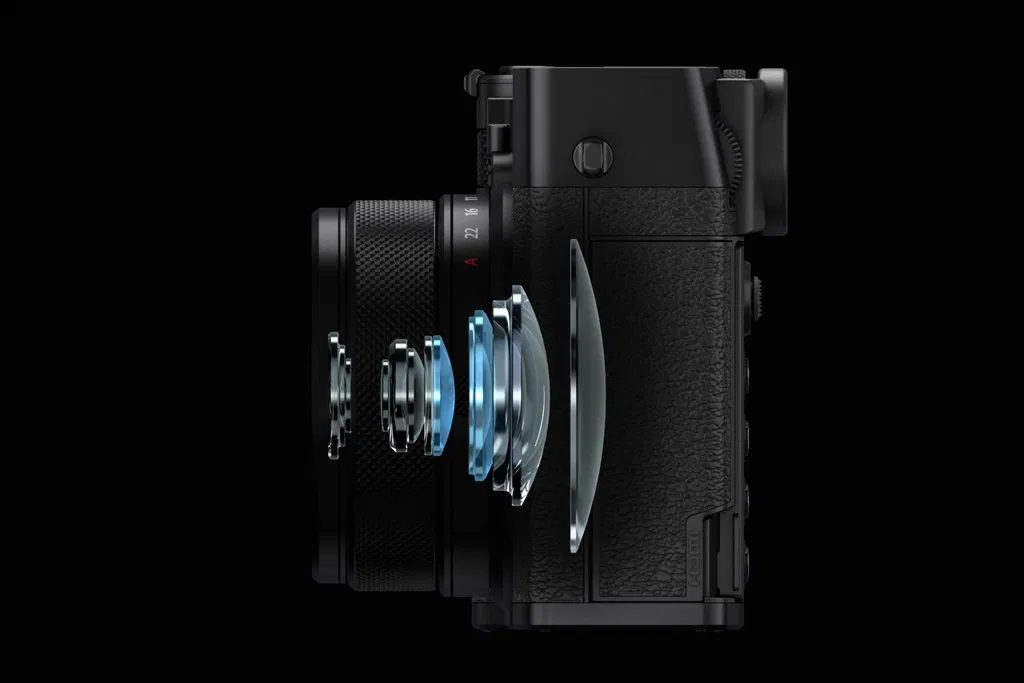
A significant component of the 100RF’s design is its integrated lens, a 35mm optic that delivers a field of view approximately equivalent to a 28mm lens on a full-frame camera. Despite its relatively compact size, the lens exhibits strong optical performance. On-axis sharpness is excellent, maintaining high fidelity until diffraction effects become noticeable at smaller apertures. There is only a modest falloff in sharpness towards the edges of the frame. Field curvature, a common optical aberration, is remarkably well-controlled, being essentially absent, which contributes to consistent sharpness across the image plane.
Distortion, while discernible in uncorrected raw files, is effectively mitigated through digital corrections, which are seamlessly applied during post-processing and result in negligible loss of sharpness. Vignetting is moderate but also disappears once corrections are applied. The inclusion of a leaf shutter within the lens contributes to the camera’s quiet operation, a significant advantage in sensitive shooting environments. However, the leaf shutter introduces a unique characteristic: at shutter speeds of 1/500 second and above, it can manifest subtle bokeh artifacts. These become more pronounced at 1/4000 second but are generally considered less objectionable than similar artifacts observed in competing medium format lenses, such as the Hasselblad XCD 38V and 90V.
Ergonomics and User Interface
The GFX 100RF presents a mixed ergonomic experience, largely positive but with a few areas that could benefit from refinement. The camera’s on/off switch, for instance, has a very light action, raising concerns about accidental activation when stored in a camera bag. Users have reported inadvertently turning the camera on multiple times, a minor but persistent inconvenience. In a welcome improvement, the Q button, which provides quick access to frequently used settings, has been redesigned to sit flush with the body, significantly reducing accidental presses that plagued earlier Fujifilm models.
Fujifilm’s signature exposure control system remains highly flexible, featuring dedicated ‘A’ (auto) positions for both aperture and shutter speed dials. ISO adjustment is elegantly handled via a collar surrounding the shutter dial. While conceptually sound, the absence of tactile detents when adjusting ISO means photographers cannot confidently operate it by feel, requiring visual confirmation. The exposure-compensation dial, however, is a highlight, being generously sized and perfectly positioned for intuitive thumb access.
Conversely, some tactile elements, such as the knurled dials and the joystick, have been noted for their somewhat vague or "mushy" feedback, indicating an area where Fujifilm still lags behind competitors like Nikon in terms of haptic quality. Other minor disappointments include a battery door latch that does not self-engage and a card slot door that feels less robust compared to Nikon’s designs. The camera features two SD card slots, a practical choice, though some professional users might express a preference for the faster and more durable CFExpress format.
Battery Life and Power Management
The battery performance of the GFX 100RF demonstrates a slight improvement over its counterparts, the GFX 100 II and GFX 100S II, when utilizing the same battery unit. This enhanced efficiency is largely attributed to the absence of IBIS, which is a significant power consumer, and the lower power demands of the leaf shutter integrated into the 100RF’s lens compared to the focal plane shutters found in the other two cameras. This contributes to the 100RF’s viability as a travel camera, where extended battery life is often a crucial consideration.

Market Positioning and Comparative Analysis
The GFX 100RF is designed as a highly specialized, purposeful tool for medium format photography. Its compact size and robust build quality lend it well to travel and street photography, where a smaller footprint is advantageous without compromising on image resolution. However, its unique characteristics also necessitate a thorough understanding of its intended use and limitations.
The camera’s fixed 35mm lens, which provides a field of view equivalent to a 28mm lens on a full-frame sensor, is a critical factor for potential buyers. For photographers whose primary vision aligns with this specific wide-angle perspective in medium format, the 100RF offers an unparalleled blend of quality and portability. However, if a photographer desires the "look" of a 35mm lens on a full-frame sensor (which would require cropping the 100RF’s output), the effective resolution drops to approximately 60 megapixels. In such scenarios, alternative fixed-lens, high-resolution full-frame cameras become compelling options.
Notable competitors in this specific segment include the Leica Q3 and the Sony RX1R III. The GFX 100RF weighs approximately the same as the Leica Q3, while the Sony RX1R III offers a considerably smaller and lighter package. From a pricing perspective, the Fujifilm GFX 100RF and the Sony RX1R III are positioned similarly, with the Leica Q3 typically commanding a higher price point. This suggests that opting for a full-frame alternative might not offer significant cost savings but could provide a substantial reduction in weight, particularly with the Sony. Of these three high-end fixed-lens cameras, only the Leica Q3 incorporates IBIS, which can be a decisive advantage for handheld shooting in low-light conditions.

While high-resolution cameras without IBIS have been successfully utilized for years, the presence of IBIS can undeniably enhance usability in certain challenging situations. For photographers frequently encountering such scenarios, the Leica Q3 presents a strong argument for consideration.
Fujifilm has also emphasized the cropping capabilities of the GFX 100RF’s 100-megapixel sensor. It is true that a 100MP sensor with a given pixel pitch allows for more aggressive cropping while maintaining acceptable image quality compared to a 60MP sensor of the same pixel pitch. This means the GFX 100RF can offer a cropped image at the same angle of view as a Leica Q2 (60MP) with superior detail retention. However, when comparing it to the Sony RX1R III, the GFX 100RF offers similar cropped image quality at the same angles of view. The distinct advantage for the GFX 100RF in cropping lies specifically within the angular range equivalent to a 28mm to 35mm full-frame lens.
Advanced Characteristics and Visual Examples
The leaf shutter’s interaction with bokeh at high shutter speeds is a notable characteristic. As demonstrated by comparative images, bokeh balls exhibit a departure from their perfectly round shape at speeds like 1/4000 second, appearing more oblong or angular. This is due to the shutter acting somewhat like a secondary diaphragm, influencing the aperture shape during the exposure cycle. Concurrently, a minor increase in effective depth of field can also be observed at these very high shutter speeds.
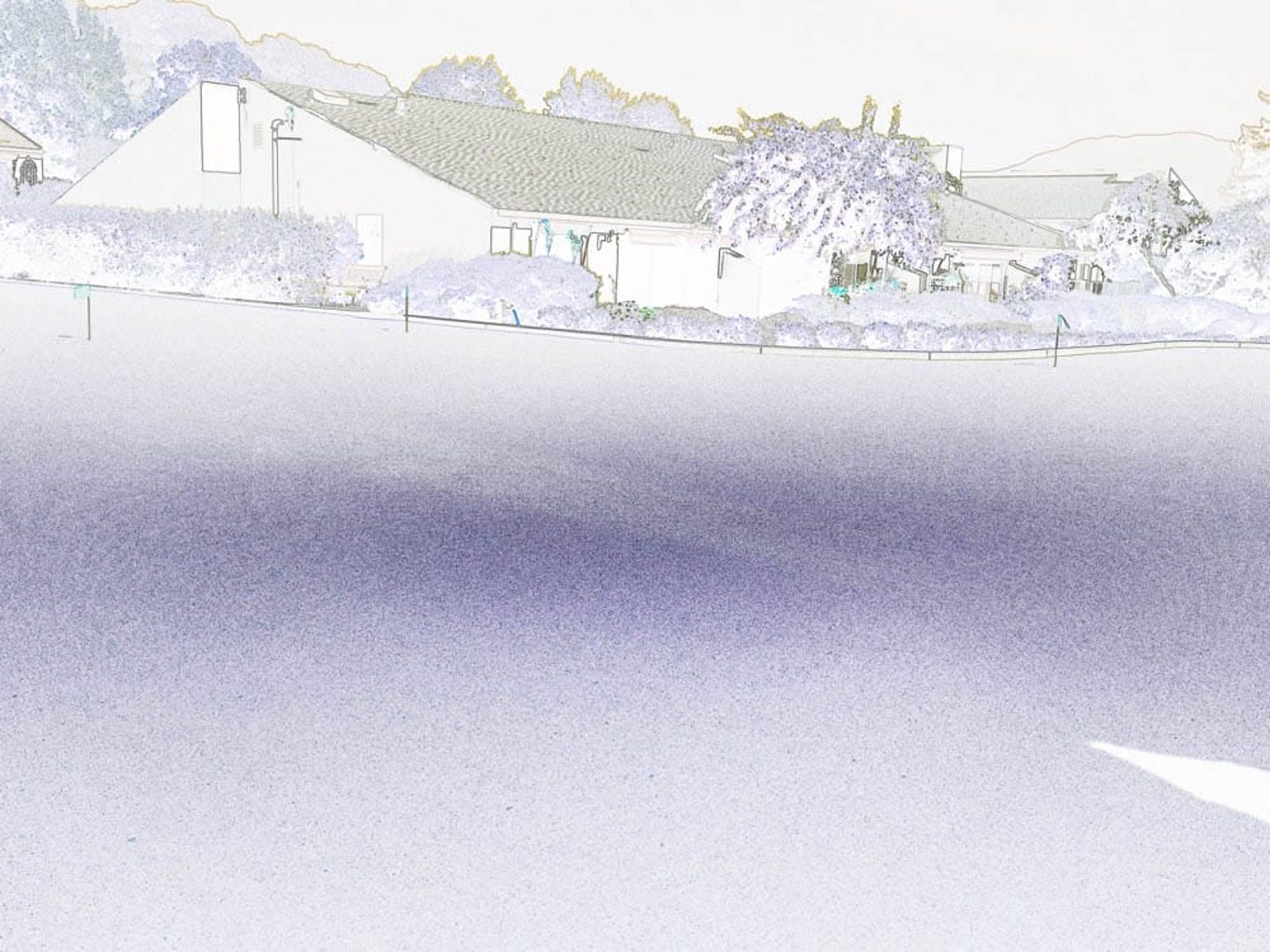
The lens integrated into the GFX 100RF showcases exceptional optical flatness, with field curvature being negligible across the frame. This attribute is crucial for maintaining consistent sharpness from the center to the edges of an image, particularly in architectural or landscape photography.
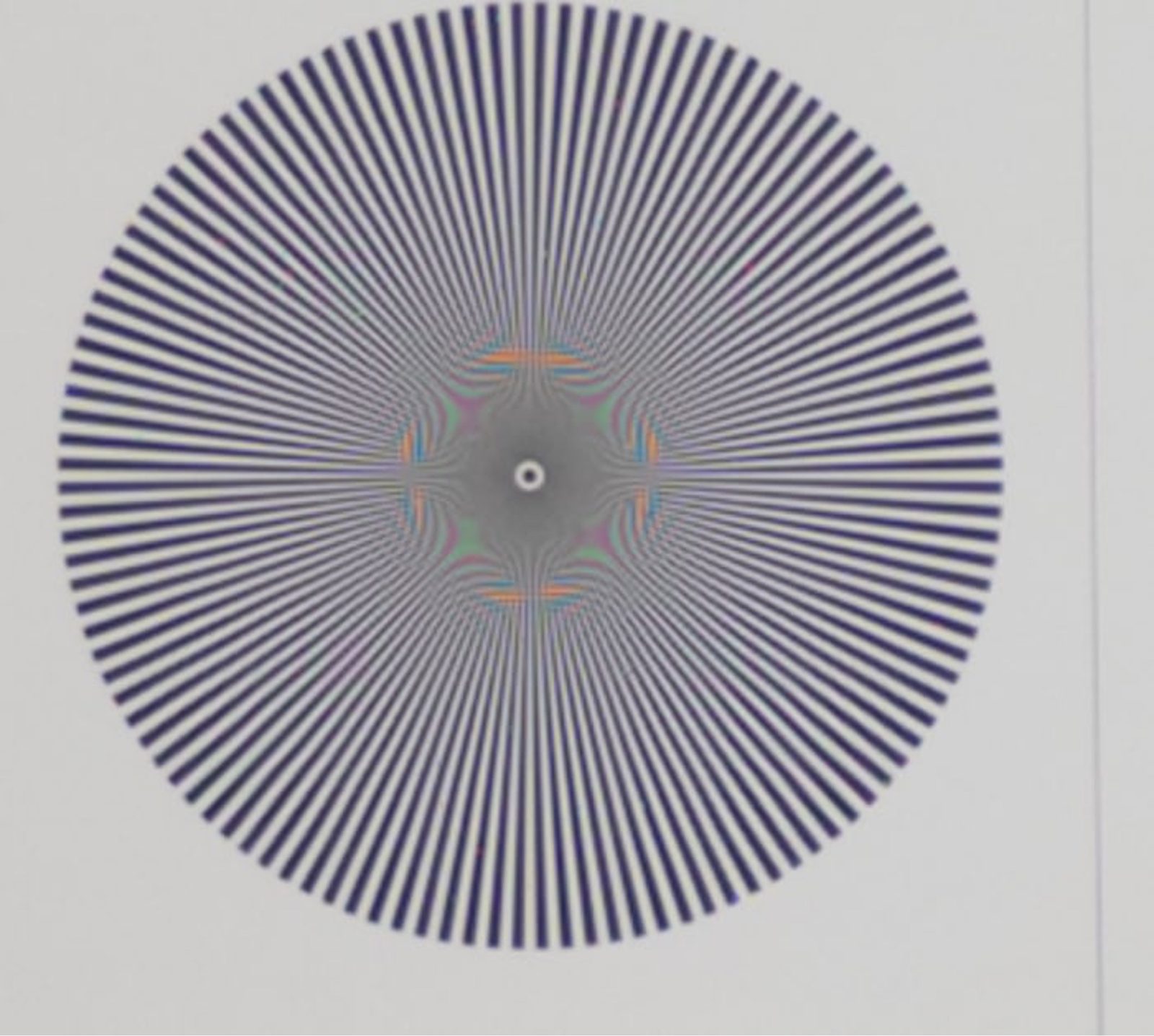
Regarding resolution, the lens itself is capable of outresolving the 100-megapixel sensor on-axis when wide open at f/4, indicating a very high level of optical performance. Even in the corners of the frame, the sharpness remains commendable with lens corrections applied. Without digital corrections, the illumination falloff (vignetting) becomes visible, and barrel distortion is evident, particularly with straight lines near the frame edges. However, modern post-processing software like Lightroom effectively corrects these aberrations, transforming the raw output into a clean, rectilinear image with uniform illumination.
Flash synchronization with the GFX 100RF is generally reliable, especially with a direct hot shoe connection. Some users have reported challenges with wireless triggers at high shutter speeds, but testing with a "dumb" flash on the hot shoe reveals stable performance. A minor loss in light output can occur at the fastest shutter speed of 1/4000 second, primarily because the flash duration at full power may exceed the very short shutter curtain travel time. Adjusting flash power to reduce its duration can mitigate this effect.
Conclusion and Target Audience
The Fujifilm GFX 100RF stands as a highly specialized and technically proficient medium format camera. It is not designed to be a universal solution but rather a precise instrument for a particular kind of photographer. Its primary appeal lies in its unparalleled combination of a 100-megapixel medium format sensor and a remarkably compact, travel-friendly body.
For photographers deeply embedded in the GFX ecosystem, the 100RF will feel immediately familiar and intuitive, building upon Fujifilm’s unique user interface. Newcomers to the brand may find the interface somewhat unconventional initially, but many eventually appreciate its logical and tactile layout.
Ultimately, the decision to invest in the GFX 100RF hinges on a photographer’s specific needs and aesthetic preferences. If the desire is for a truly portable medium format camera delivering 100-megapixel files with the field of view equivalent to a 28mm full-frame lens, the GFX 100RF is arguably without peer. However, for those who prefer the perspective of a 35mm full-frame equivalent lens or require features like IBIS, competing full-frame fixed-lens cameras offer compelling alternatives that warrant careful consideration in terms of size, weight, and overall photographic utility. While the GFX 100RF presents a formidable technical package, its fixed 35mm lens (28mm FF equivalent) might be the decisive factor for many, leading some to desire a slightly longer focal length for their ideal portable medium format solution.