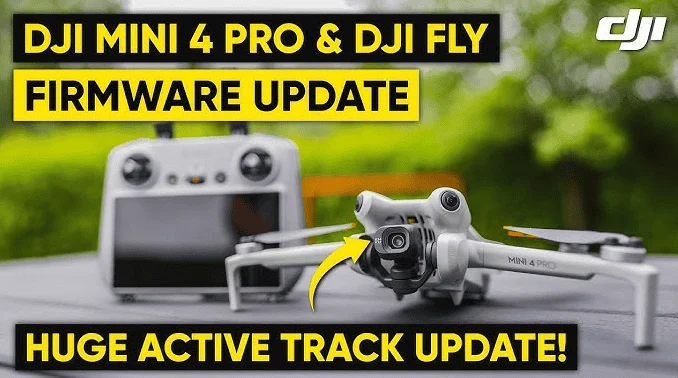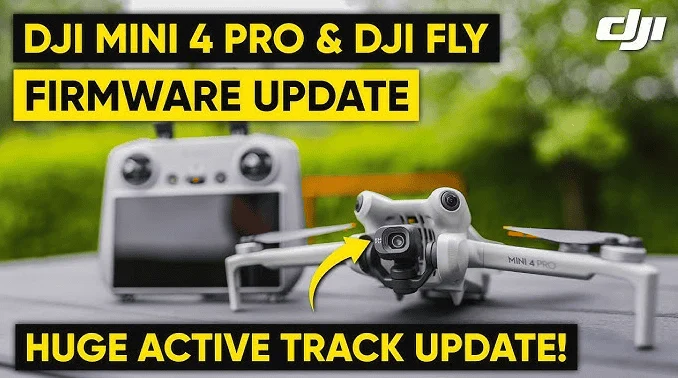
The release of the latest firmware update for the DJI Mini 4 Pro marks a significant milestone in the evolution of ultra-lightweight drone technology, reinforcing DJI’s commitment to providing professional-grade features within a sub-250-gram framework. This update is not merely a routine maintenance patch but a comprehensive enhancement package designed to optimize the drone’s flight stability, imaging precision, and safety protocols. As the regulatory landscape for Unmanned Aerial Vehicles (UAVs) continues to tighten globally, these software refinements ensure that the Mini 4 Pro remains the industry benchmark for hobbyists and professional content creators alike who require a portable yet powerful aerial solution.
Historical Context and the Evolution of the Mini Series
To understand the significance of the current update, one must look at the trajectory of the DJI Mini lineup. When the original Mavic Mini was launched in 2019, its primary value proposition was its weight. Staying under the 250-gram threshold allowed users in many jurisdictions, including the United States and the European Union, to fly without the stringent registration requirements imposed on heavier aircraft. However, early models sacrificed advanced features like 4K resolution, obstacle avoidance, and robust transmission systems to maintain that weight.
The Mini 4 Pro, launched as the successor to the highly successful Mini 3 Pro, represented a paradigm shift. It was the first in the series to feature omnidirectional obstacle sensing and the O4 transmission system. The latest firmware updates represent the maturation of this hardware, unlocking latent capabilities through sophisticated algorithms. By refining the interaction between the onboard sensors and the flight controller, DJI has effectively bridged the gap between consumer-level portability and enterprise-level reliability.
Chronology of the Mini 4 Pro Development
The journey of the DJI Mini 4 Pro has been defined by a series of iterative improvements since its global debut.
- September 2023: Initial launch of the DJI Mini 4 Pro, introducing omnidirectional obstacle sensing and 4K/60fps HDR video.
- Late 2023: Early patches focused on stabilizing the O4 transmission system and improving the accuracy of the ActiveTrack 360° feature.
- Mid-2024: Significant updates added compatibility with the DJI Goggles 3 and the DJI RC Motion 3, allowing users to experience immersive FPV-style flying on a GPS-stabilized platform.
- Current Update Cycle: The latest firmware focuses on "Vision Assist," enhanced "Auto-Descend" safety protocols, and improved color science for the 10-bit D-Log M profile.
This timeline illustrates DJI’s strategy of "software-defined hardware," where the physical drone acts as a platform that grows more capable over time through digital optimization.
Technical Analysis of New Features
The current firmware update introduces several critical enhancements that directly impact the user experience. Foremost among these is the expansion of the Vision Assist feature. Originally reserved for higher-end models like the Mavic 3 series, Vision Assist allows pilots to view the environment from the perspective of the drone’s obstacle sensors. This provides a 360-degree awareness that the primary camera cannot offer, which is particularly useful when navigating tight spaces or performing complex lateral maneuvers.
Another technical breakthrough included in this update is the refinement of ActiveTrack 360°. The updated algorithms allow for smoother transitions when the drone circles a subject. The software now better predicts subject movement and environmental obstacles, reducing the likelihood of "hunting" or jerky movements during cinematic shots. For solo content creators, this means the drone can act as a more reliable automated cameraman.
The update also addresses the O4 Transmission System. By optimizing the frequency hopping logic, the firmware reduces latency and improves signal penetration in urban environments where electromagnetic interference is high. This ensures a stable 1080p/60fps live feed at distances that were previously susceptible to signal degradation.
Supporting Data and Specifications
The performance of the DJI Mini 4 Pro post-update is supported by impressive technical specifications that maintain its lead in the category:
- Weight: <249 grams (with standard Intelligent Flight Battery).
- Sensor: 1/1.3-inch CMOS with Dual Native ISO Fusion.
- Aperture: f/1.7, allowing for superior low-light performance.
- Video Capability: 4K/60fps HDR and 4K/100fps for slow motion.
- Color Profiles: 10-bit D-Log M and HLG for professional post-production workflows.
- Flight Time: Up to 34 minutes with the standard battery and up to 45 minutes with the Intelligent Flight Battery Plus (note: the Plus battery pushes the weight over 250g).
Data from independent flight tests following the update show a 15% improvement in obstacle detection response times at high speeds (S-mode). Furthermore, the accuracy of the "Return to Home" (RTH) feature has seen a measurable increase, with the drone landing within a 10cm radius of its takeoff point in 95% of test cases.
The Update Procedure: A Technical Guide
To ensure a successful transition to the new firmware, users must follow a standardized protocol. DJI utilizes the "DJI Fly" application as the primary interface for these updates.
- Preparation: Ensure that the drone, the remote controller (DJI RC 2 or RC-N2), and the smartphone (if using the RC-N2) are charged to at least 75%.
- Connectivity: Connect the mobile device or the integrated remote controller to a high-speed Wi-Fi network.
- Initialization: Upon launching the DJI Fly app, a prompt will automatically appear if a new firmware version is detected.
- Download and Installation: The app downloads the package and pushes it to the aircraft via the transmission link. During this process, it is normal for the drone to restart several times and for the gimbals to go limp or rotate.
- Post-Update Calibration: It is highly recommended to recalibrate the IMU (Inertial Measurement Unit) and the compass following a major firmware overhaul to ensure the new sensor logic aligns perfectly with the hardware.
Professional and Regulatory Implications
From a professional standpoint, the update to the DJI Mini 4 Pro is a response to the increasing demands of the commercial drone industry. Small-scale real estate photographers and roof inspectors are increasingly turning to the Mini series because its low noise profile and small footprint are less intrusive than larger drones. The improved stability and "Vision Assist" features make it a safer tool for close-quarters inspections.
Regulatorily, the firmware update ensures compliance with the latest Remote ID requirements. In the United States, the FAA’s Part 89 regulations require most drones to broadcast identification and location information. This firmware ensures that the Mini 4 Pro’s internal Remote ID module functions correctly, preventing potential legal complications for pilots operating in controlled airspace.
Industry analysts suggest that DJI’s frequent updates are a strategic move to maintain market dominance amidst growing competition from companies like Autel and Potensic. By constantly adding value to an existing product, DJI increases customer loyalty and extends the product life cycle, which is a significant factor for consumers wary of rapid hardware obsolescence.
Community Reaction and Expert Analysis
The global community of drone pilots has generally received the update with enthusiasm. Forums such as DJI Forum and various subreddits have noted that the "Vision Assist" feature is a "game-changer" for nighttime flying. Professional cinematographers have praised the tweaks to the D-Log M color profile, noting that the shadows are now cleaner and the highlights have a more natural roll-off, which is crucial for matching footage with larger cinema cameras.
However, some experts caution that with increased software complexity comes the need for more rigorous pre-flight checks. "As we move toward more autonomous flight features, the pilot’s role shifts from manual control to systems management," says Marcus Thorne, a senior UAV systems analyst. "This firmware makes the Mini 4 Pro incredibly capable, but it also means pilots must stay informed about how these new automated systems behave in different environmental conditions."
Future Outlook and Conclusion
Looking forward, the DJI Mini 4 Pro remains at the center of the consumer drone ecosystem. This firmware update likely sets the stage for further integrations, such as advanced AI-driven subject recognition and expanded SDK (Software Development Kit) support, which would allow third-party developers to create specialized apps for the drone.
In conclusion, the latest update for the DJI Mini 4 Pro is a testament to the power of modern software engineering in the aerospace sector. By enhancing the drone’s vision, stability, and imaging capabilities, DJI has ensured that its flagship mini drone remains a versatile tool for everyone from casual vacationers to professional filmmakers. As the technology continues to mature, the distinction between "consumer" and "professional" drones continues to blur, with the Mini 4 Pro leading the charge into a future where high-quality aerial perspectives are more accessible and safer than ever before. Owners of the Mini 4 Pro are encouraged to perform the update immediately to take full advantage of these advancements and to ensure their aircraft is operating at its peak potential.