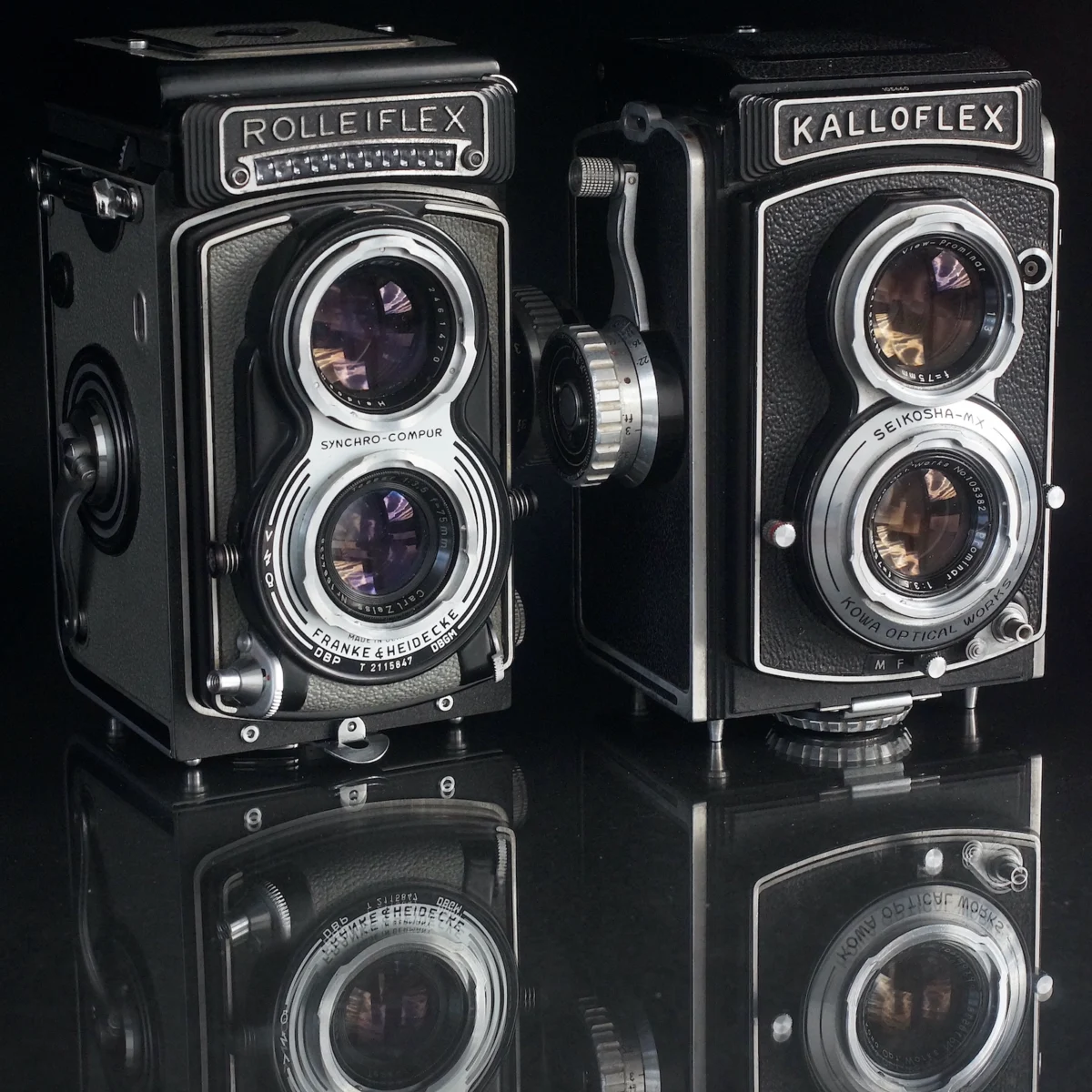
The evolution of medium format photography in the 20th century was defined largely by the Twin Lens Reflex (TLR) design, a format that dominated professional and serious amateur circles for decades before the ascension of the 35mm Single Lens Reflex (SLR). Among the myriad of manufacturers that sought to perfect this design, two cameras stand out as representative of diverging philosophies: the Rolleiflex T, produced by the venerable German firm Franke & Heidecke, and the Kalloflex Automat K2, a Japanese contender from Kowa. While both cameras share a common lineage rooted in the original 1928 Rolleiflex, they represent distinct approaches to engineering, market positioning, and ergonomic utility.
The Historical Genesis of the TLR Format
To understand the significance of the Rolleiflex T and the Kalloflex, one must look back to the origins of the format. The TLR design was born from the Heidoscope and Rolleidoscope stereo cameras of the early 1920s. Paul Franke and Reinhold Heidecke, the founders of Franke & Heidecke, recognized that the precision of their stereo cameras could be applied to a single-lens format using the newly available 120 roll film. In 1928, the first Rolleiflex was introduced, revolutionizing photography by providing a handheld camera that offered a large 6x6cm negative with the convenience of a bright, waist-level viewfinder.
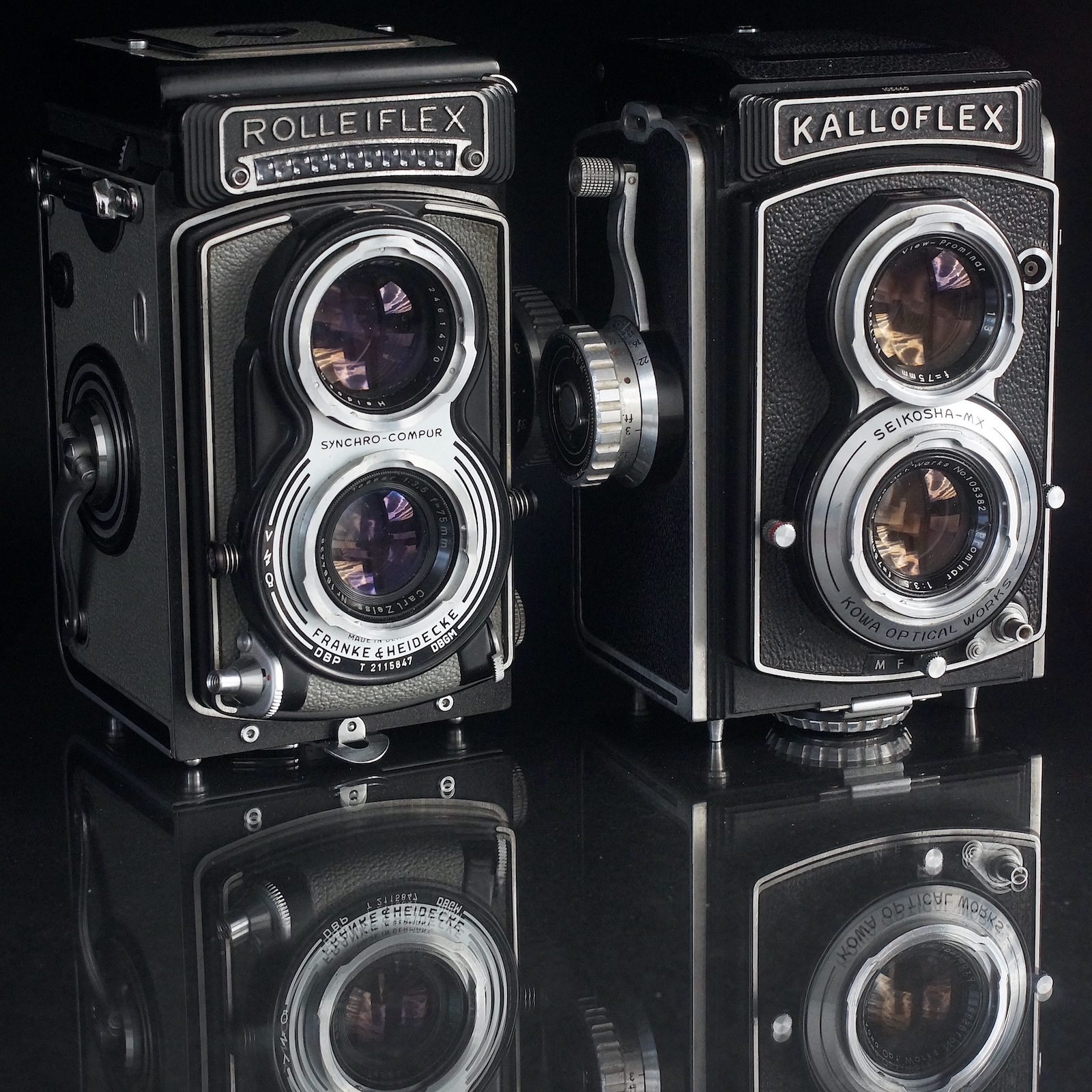
The post-World War II era saw a proliferation of TLR designs as manufacturers globally attempted to emulate the success of the Rolleiflex. This period, often referred to as the "Golden Age of the TLR," saw the emergence of the Yashica-Mat, the Minolta Autocord, and the Czech-made Flexaret. It was within this competitive landscape that the Rolleiflex T and the Kalloflex Automat K2 were brought to market, each aiming to capture a specific segment of a rapidly diversifying photographic community.
The Rolleiflex T: A Strategic Mid-Market Innovation
Introduced in 1958, the Rolleiflex T (often referred to as the "T" for its designer, Theodore Uhl) was a response to the widening price gap between the professional-grade Rolleiflex Letter series (such as the 3.5F and 2.8F) and the more economical Rolleicord line. Franke & Heidecke intended the "T" to be a high-quality alternative for the serious amateur, incorporating several modern features while utilizing more cost-effective manufacturing processes.
The Rolleiflex T is unique within the Rollei family for its departure from traditional control layouts. Most notably, it introduced a single-lever system for setting exposure. This system utilized the Light Value (LV) scale, a popular concept in the late 1950s designed to simplify exposure by coupling the shutter speed and aperture. By pulling the lever out, the photographer could adjust settings independently; leaving it in allowed the user to shift the shutter-aperture combination while maintaining the same overall exposure value.
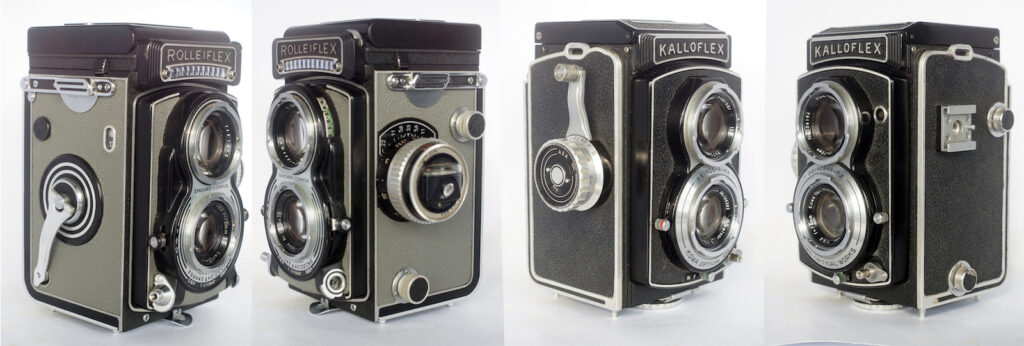
However, the "T" was not merely a budget version of its predecessors. It featured the world-renowned 75mm f/3.5 Zeiss Tessar lens, known for its exceptional sharpness and contrast. Despite its quality, the camera’s production history was marked by internal friction. Historical records suggest that the designer’s tenure at Franke & Heidecke was shortened due to the high costs associated with the "T’s" unique parts, which did not share the same interchangeability as the standard Rolleiflex catalog.
The Kalloflex Automat K2: The Professional’s Utility Tool
While the Rolleiflex T sought to bridge the gap for amateurs, the Kalloflex Automat K2, produced by Kowa in Japan, was engineered with the professional and press photographer in mind. Often colloquially termed the "poor man’s Rolleiflex," the Kalloflex was anything but a cheap imitation. It was a rugged, heavy-duty instrument designed to withstand the rigors of daily professional use.
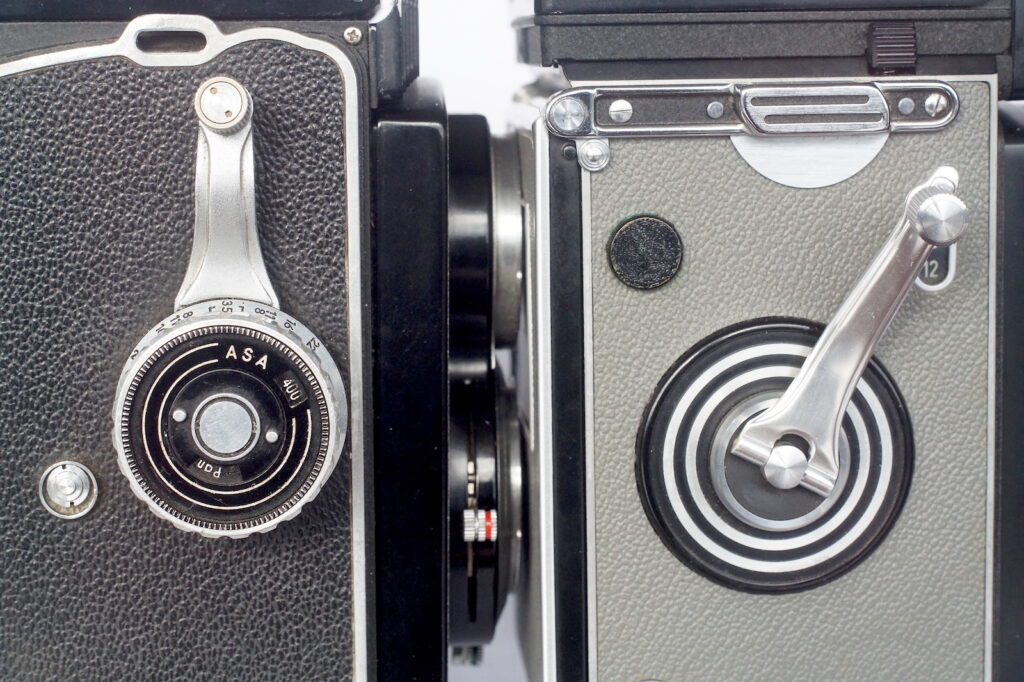
The Kalloflex’s primary claim to fame was its innovative ergonomic layout. Unlike the Rolleiflex, which placed the focus knob on the left and the film wind crank on the right, the Kalloflex combined both functions into a single coaxial hub on the right side of the camera. This allowed the photographer to focus and advance the film without ever changing their grip or removing their eye from the viewfinder—a critical advantage for action and press photography.
The K2 was equipped with a 75mm f/3.5 Prominar lens, which many contemporary testers found to be equal, if not superior, to the German Tessar in terms of edge-to-edge resolution. The build quality was equally impressive, featuring a Seikosha-MX shutter with speeds ranging from 1 second to 1/500th of a second, and a robust accessory shoe with a dedicated securing thread—a feature frequently omitted on German TLRs of the era.
Ergonomic Divergence: A Comparative Analysis
The most significant difference between these two systems lies in their handling. The traditional Rolleiflex design requires a "hand-shuffle" during the photographic process. A right-handed photographer typically supports the camera with the right hand to fire the shutter, uses the left hand to focus, and then must switch hands or move the right hand to the wind crank to advance the film.
In contrast, the Kalloflex, along with other innovators like the Minolta Autocord and the Flexaret Va, sought to streamline this workflow. The Kalloflex’s unified right-side control system allowed for a fluid motion that supported continuous shooting. This was particularly beneficial when using the flip-down magnifier for critical focus. The ability to maintain focus while winding meant that the photographer could track a subject through the frame with minimal interruption.
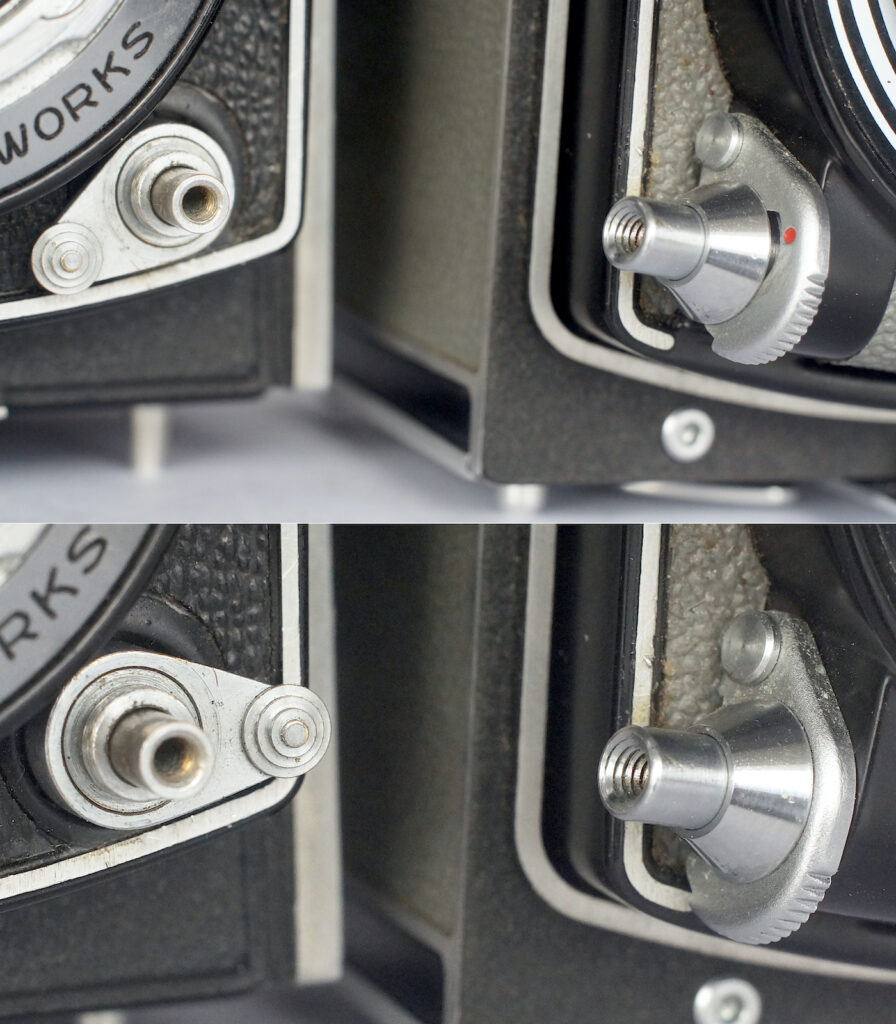
The Rolleiflex T, however, focused on "refinement" rather than "speed." Its design expressed a modern aesthetic, characterized by its grey leatherette (in early models) and streamlined levers. The strap attachment system on the Rollei was also more sophisticated, utilizing the "alligator" clips that allowed for quick detachment, whereas the Kalloflex relied on a more traditional, and often more cumbersome, fixed-slot design.
Technical Specifications and Construction
Data collected from historical service manuals and user benchmarks highlight the following technical distinctions:
- Lens Composition: Both cameras utilized a four-element, three-group "Tessar-type" lens. The Zeiss Tessar on the Rollei T provided a classic "3D" rendering, while the Kowa Prominar on the Kalloflex was noted for its modern coatings and reduced flare.
- Shutter Reliability: The Synchro-Compur shutter in the Rolleiflex T is widely regarded as the pinnacle of mechanical shutter design, though it is more complex to service. The Seikosha shutter in the Kalloflex is considered more robust and easier to maintain for working professionals.
- Film Loading: The Rolleiflex T utilized a semi-automatic loading system where the user aligned the film start marks. This was a step down from the "Automat" system found on higher-end Rolleis, which used a sensing roller to detect the thickness of the film and start the counter automatically. The Kalloflex used a similar mark-alignment system, prioritizing reliability over automation.
- Viewfinder Brightness: The Rolleiflex T benefited from Franke & Heidecke’s advanced ground-glass technology, which often included a Fresnel lens (Rolleigrid) to brighten the corners. The Kalloflex viewfinder, while clear, often required aftermarket brightening for use in low-light environments.
The Market Transition and the Decline of the TLR
The late 1950s and early 1960s represented a period of massive transition in the photographic industry. The introduction of the Hasselblad 500C in 1957 proved that a modular 6×6 SLR could offer the same negative size as a TLR but with the added benefits of interchangeable lenses and film backs. Simultaneously, the Nikon F, released in 1959, signaled the beginning of the 35mm SLR’s dominance in press and reportage photography.
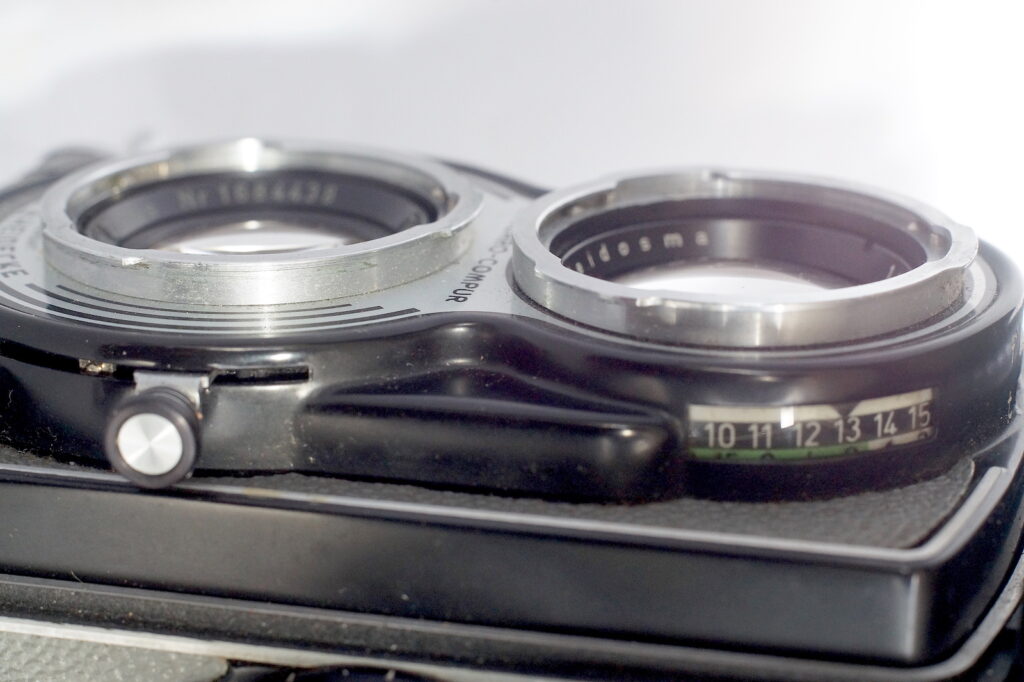
The Rolleiflex T and the Kalloflex were both victims of this shift. The Kalloflex, despite its superior ergonomics for press work, could not compete with the versatility of the emerging 35mm systems. Production of the Kalloflex ceased in the early 1960s as Kowa shifted its focus to other optical products and the medium-format SLR market (with the Kowa Six).
The Rolleiflex T enjoyed a longer production run, lasting until the mid-1970s, largely due to the prestige of the Rollei brand and the camera’s popularity among high-end enthusiasts and studio photographers who did not require the rapid-fire capabilities of an SLR.
Legacy and Contemporary Implications
Today, the Rolleiflex T and the Kalloflex Automat K2 are highly prized by film photography enthusiasts. The Rolleiflex T is celebrated for its compact design and the legendary Zeiss optics, often serving as an entry point for photographers into the "Rollei experience." The Kalloflex has gained a cult following among those who appreciate its over-engineered construction and its unique, efficient handling.
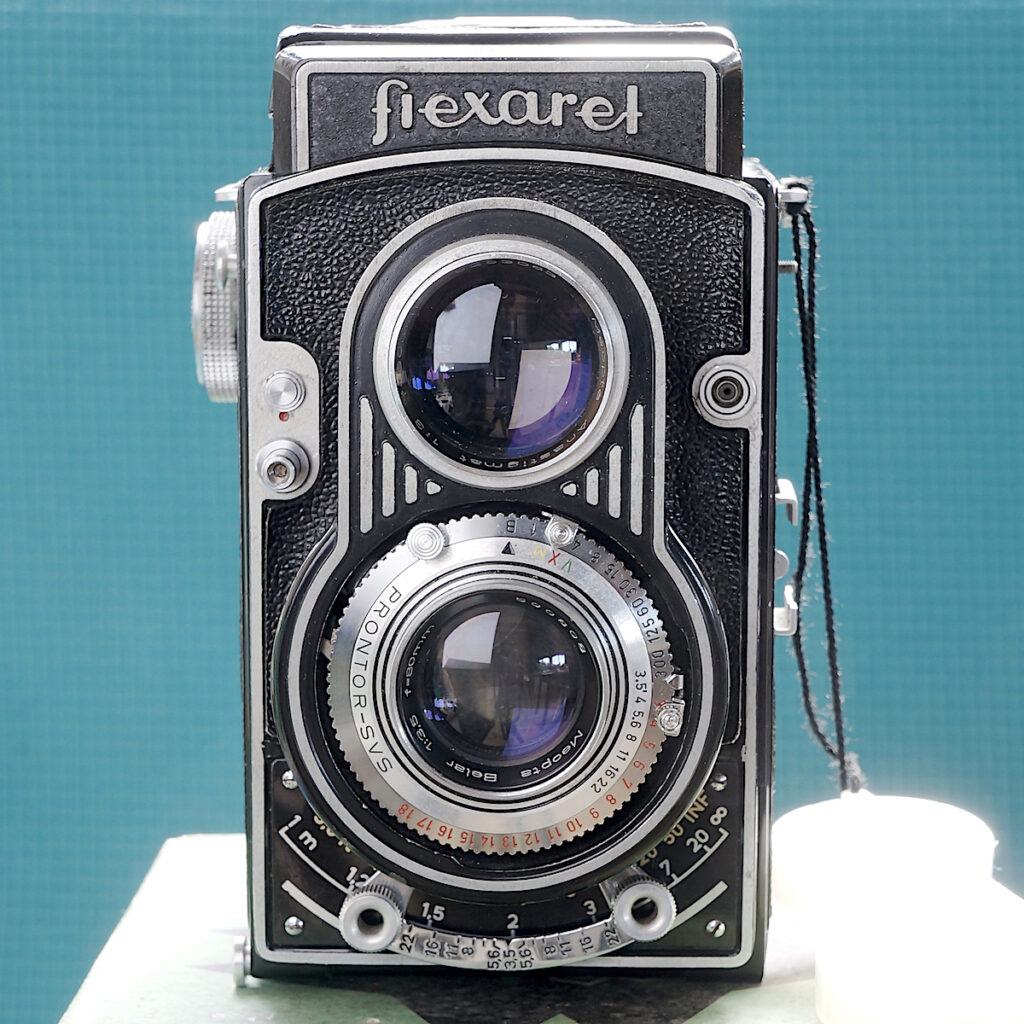
From an industrial design perspective, these cameras represent the peak of mechanical analog engineering. They were built in an era when longevity was a primary design goal, evidenced by the fact that many of these units remain fully functional over 60 years after their manufacture.
The divergence between the "refined" German approach of the Rolleiflex T and the "functional" Japanese approach of the Kalloflex continues to be a subject of study for historians of technology. It illustrates a moment in time when two different cultures looked at the same problem—how to capture a 6×6 image on roll film—and arrived at two equally valid, yet functionally different, solutions. As modern photography becomes increasingly digitized and automated, the tactile, considered approach required by these twin-lens reflex cameras remains a testament to the enduring appeal of mechanical precision.