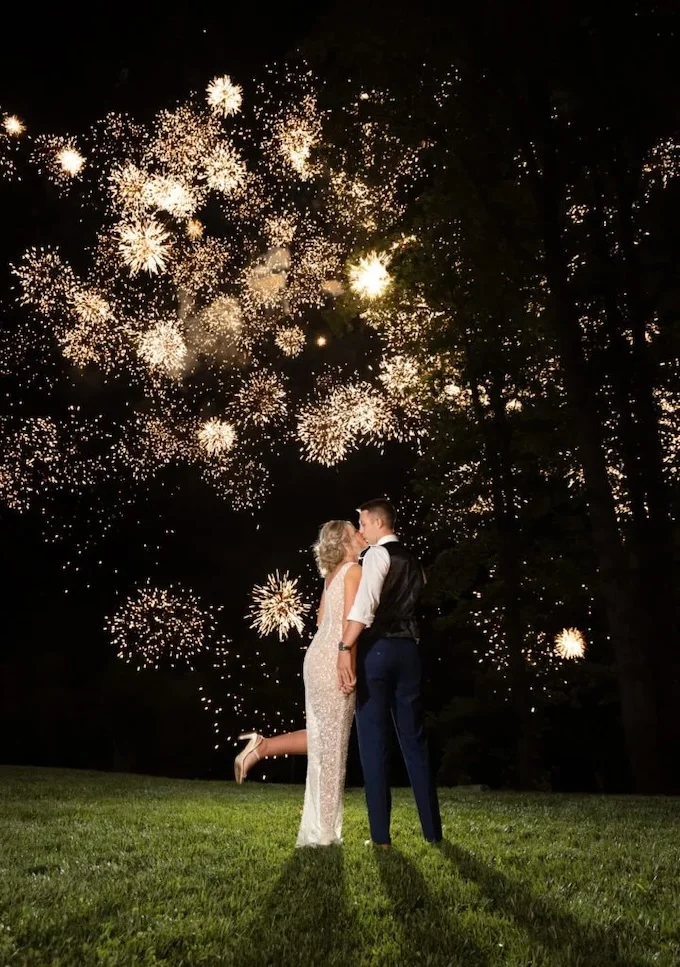
Fireworks are no longer confined to the Fourth of July or national holidays. Their dazzling displays have become a sought-after element at theme parks, sporting events, and increasingly, at the heart of romantic celebrations – weddings. For photographers, fireworks offer an unparalleled opportunity to create breathtaking, epic couples portraits against a truly unique and dynamic backdrop. However, achieving these stunning shots requires more than just pointing a camera at the sky; it demands meticulous planning, a deep understanding of photographic principles, and a strategic approach to capturing the fleeting brilliance of pyrotechnics alongside the intimacy of a couple. This guide delves into the essential tips and creative ideas for photographers looking to infuse their couples’ sessions with the explosive excitement of a grand finale.
The ephemeral nature of fireworks, with their typical display windows lasting a mere five to eight minutes, necessitates extreme efficiency. Photographers must be prepared to set up and execute their shots with precision. This requires advance planning, knowing precisely where to position themselves and what technical settings to employ the moment the first rocket ignites. The following guidelines are designed to help photographers master the art of capturing these spectacular moments, ensuring couples’ portraits are imbued with the same flash and excitement as the fireworks themselves.

Strategic Location Scouting: Setting the Stage for Spectacle
The foundational step in any successful fireworks photography session is securing the optimal vantage point. If a wedding timeline includes a fireworks display, photographers should proactively engage with the couple, wedding planner, and venue staff to ascertain the exact location and trajectory of the pyrotechnics. This crucial information allows for thorough scouting of potential shooting locations, identifying angles that will best frame both the couple and the celestial show.
The definition of the "best" angle is subjective and depends on the desired photographic outcome. An expansive, open area might be ideal for capturing the full grandeur of the fireworks filling the sky, with the couple silhouetted or gazing in wonder. Conversely, a location offering foreground elements—such as trees, architectural features, or even natural landscapes—can provide a sense of depth and context, framing the couple and the explosive artistry above. Effective composition is paramount. Photographers should dedicate ample time to scouting, meticulously assessing the scene to ensure the chosen location will contribute to a compelling narrative within the final image. This proactive approach can significantly elevate the final photographs from mere snapshots to artistic interpretations of a couple’s celebration.

Maximizing Dynamic Range: The Power of RAW and Precise Exposure
Photographing fireworks presents a formidable lighting challenge: the ambient environment is inherently dark, while the brilliant bursts of light can easily overexpose and obliterate detail if exposure settings are not carefully managed. To preserve the maximum amount of visual information, especially crucial for retaining detail in both the shadowy depths and the bright highlights of the scene, photographers must prioritize capturing images in the RAW file format.
Understanding RAW vs. JPEG:

The distinction between RAW and JPEG files is critical in low-light, high-contrast scenarios like fireworks displays. RAW files are uncompressed and contain a wealth of image data, offering unparalleled flexibility during post-processing. This allows for significant recovery of detail in both shadows and highlights without substantial degradation of image quality. JPEG files, on the other hand, are compressed, resulting in a loss of data and a reduced dynamic range. Relying on JPEGs for fireworks photography severely limits the ability to correct exposure or retrieve subtle details, potentially leading to blown-out highlights and muddy shadows.
Essential Exposure Settings for Fireworks Portraits:
A recommended starting point for exposure settings when photographing fireworks with couples involves balancing the need to capture the ambient darkness with the intensity of the fireworks. While specific settings will vary based on the camera, lens, and the intensity of the fireworks, a general guideline is as follows:

- Aperture (f-stop): Aim for an aperture between f/8 and f/11. This range offers a good balance between depth of field, ensuring both the couple and the fireworks are acceptably sharp, and diffraction, which can soften images at extremely small apertures.
- Shutter Speed: This is perhaps the most critical setting for fireworks. A slow shutter speed, typically ranging from 5 to 10 seconds, is essential. This extended exposure allows the camera sensor to gather enough light to render the fireworks’ trails and bursts effectively, creating a sense of motion and capturing their full brilliance. Shorter exposures (2-5 seconds) will capture less detail and appear more like static flashes.
- ISO: Keep the ISO as low as possible, ideally between 100 and 400. While a higher ISO can brighten the scene, it also introduces digital noise, which can detract from the image quality, especially in the darker areas of the frame. The longer shutter speed will compensate for the need for higher ISO in most cases.
Crucially, photographers should frequently consult their camera’s histogram. This visual representation of the tonal distribution in the image is invaluable. A histogram that is heavily weighted towards the right indicates that highlights are being blown out, leading to a loss of detail in the brightest parts of the fireworks. Conversely, a histogram skewed too far to the left suggests underexposure, resulting in lost detail in the shadows. The goal is to achieve a balanced histogram, capturing the full spectrum of light without clipping either the highlights or the shadows.
Mastering White Balance: Achieving Accurate Color Representation
Color accuracy is vital in wedding photography, and fireworks introduce unique challenges to white balance settings. The "Tungsten" white balance preset on most cameras often serves as an excellent starting point for fireworks photography. This setting is designed to counteract the warm, orange cast typically emitted by tungsten lighting, which can mimic the ambient color temperature during a fireworks display.

If external lighting is being used to illuminate the couple, such as flashes or continuous lights, photographers may need to adjust their white balance accordingly. Employing a CTO (Color Temperature Orange) gel on the light source and setting the camera’s white balance to approximately 3200 Kelvin can help synchronize the artificial light with the ambient color temperature. Continuous fine-tuning is often necessary to achieve the desired aesthetic and ensure the colors of the fireworks and the couple’s attire appear natural and pleasing. The ultimate goal is to create a harmonious color palette that enhances the overall mood and visual appeal of the portrait.
Selecting the Right Lens: Perspective and Communication
The choice of lens plays a significant role in composing effective fireworks couples portraits. The desired field of view will dictate whether a wide-angle or a telephoto lens is more appropriate. For couples portraits, maintaining communication with the subjects is paramount. Using an extremely wide-angle lens, while capable of capturing expansive scenes, can sometimes make it challenging to maintain a clear line of sight and engage with the couple, especially if they are positioned at a distance.

However, a zoom lens can be advantageous in certain situations. If the photographer is positioned further from the couple, a zoom lens can help compress the scene, making the fireworks appear larger and more prominent in the frame. Conversely, a wide-angle lens is often the preferred choice for capturing epic shots that encompass both the couple and the grandeur of the fireworks in their entirety. It’s important to remember that even if a slightly tighter shot is initially desired, shooting wider and cropping in post-production is a viable strategy to ensure all elements are captured. The key is to select a lens that facilitates both effective composition and clear communication with the couple.
Embracing Long Exposure: Painting with Light in the Night Sky
To adequately capture the intricate details and vibrant trails of fireworks, photographers will invariably need to utilize slower shutter speeds. Long exposures are the cornerstone of capturing dynamic light trails and the ephemeral beauty of pyrotechnics. Exposures ranging from 5 to 10 seconds allow for the capture of multiple bursts and the creation of flowing light paths across the night sky. Shorter exposures, while still useful, will reveal less detail and may present the fireworks as more static, less dynamic elements.

Regardless of the precise exposure duration, the use of a tripod is non-negotiable. A sturdy tripod is essential to prevent camera shake, which would otherwise result in blurred and unusable images. To further mitigate any unwanted movement, photographers should employ a cable release, a remote control, or the camera’s built-in timer (a two-second delay is generally sufficient). These tools help eliminate the subtle vibrations that can occur when pressing the shutter button manually, ensuring the sharpness and clarity of the final long-exposure shots.
Illuminating Your Subjects: Strategic Lighting for Couples
Traditionally, fireworks photography focuses solely on the aerial display, with subjects often left in darkness or excluded from the frame. However, in the context of couples portraits, the subjects are central. Therefore, intentional and skillful lighting of the couple is crucial. The advantage with wedding fireworks is that, if time permits, photographers can pre-plan and set up their lighting before the display begins, meticulously adjusting flash power and exposure settings.

The approach to lighting the couple should mirror standard portrait lighting techniques, with the added consideration of balancing the artificial light with the ambient light of the fireworks. A common and effective setup involves placing the light source at approximately a 45-degree angle to the couple and camera, positioned slightly above and directed downwards. This creates a flattering, slightly top-lit effect. Adding a backlight can further define the couple’s silhouettes against the night sky, adding depth and dimension. For precise control over light spill and to ensure the light is focused exclusively on the couple, the use of modifiers like snoots or grids is highly recommended. The specific lighting setup will ultimately depend on the photographer’s creative vision and the desired mood of the portrait.
The Precision of Manual Focus: Eliminating Autofocus Errors
Autofocus systems can struggle significantly in low-light conditions and when faced with the rapidly changing light patterns of fireworks. To ensure sharp focus on the couple, it is imperative to switch the lens to manual focus mode. If the camera offers a Live View function, this can be invaluable for precisely focusing on the couple. A common technique is to use autofocus to achieve initial sharpness on the couple before the fireworks begin, and then immediately switch to manual focus and lock it. This prevents the camera from hunting for focus during the critical moments of the fireworks display.

The Art of the Composite: Building a Masterpiece in Post-Production
For photographers seeking ultimate control over the final image, creating a composite offers a powerful solution. This technique involves combining multiple exposures to achieve a perfectly lit portrait of the couple and a spectacular fireworks display within a single image. The process begins with capturing a well-composed, perfectly lit, and posed portrait of the couple. This forms the foundation of the composite. Subsequently, several separate exposures of the fireworks are captured.
Post-Processing Workflow: Lightroom and Photoshop Integration

The composite creation process typically starts in photo editing software like Adobe Lightroom. It is essential to edit all the images intended for the composite in a consistent manner to ensure a seamless blend. A workflow recommendation is to first edit the portrait of the couple to satisfaction. Then, apply these exact edits to the batch of fireworks images using Lightroom’s synchronization features. This ensures consistency in color balance, exposure, and tone across all layers.
The edited images are then transferred to Adobe Photoshop. Within Photoshop, the images are stacked into a single document. The blend mode of the top layers containing the fireworks is set to "Lighten." This blend mode selectively reveals the brightest pixels of each layer, effectively combining the fireworks from multiple exposures while retaining the couple’s portrait as the base layer. Layer masks are then utilized to meticulously mask out unwanted elements from each layer, allowing only the desired fireworks and the perfectly exposed couple to remain visible. This iterative process allows for the creation of a truly spectacular and technically flawless image that might be impossible to achieve in a single exposure.
Capturing the Charm of Sparklers: An Extension of the Fireworks Theme

While not technically fireworks, sparklers are a frequent and beloved element in wedding celebrations, particularly for grand exits. They fall under the broader umbrella of pyrotechnic photography and offer their own unique set of challenges and rewards.
The Advantage of Larger Sparklers:
When advising couples on their wedding photography needs, photographers can suggest opting for larger sparklers, such as the 36-inch variety, over smaller 10-inch versions. The extended burn time of larger sparklers provides photographers with more flexibility, allowing ample time for posing the couple and capturing a greater number of shots without the pressure of a rapidly expiring light source.

Balancing ISO and Aperture for Sparkler Shots:
Sparklers, while providing light, do not offer the intensity of professional lighting equipment. Photographers must adapt their settings to capture these scenes effectively, especially in dim lighting conditions. Whether the subjects are moving or stationary, boosting the ISO and utilizing a wide aperture (e.g., f/2.8 or wider) are crucial starting points for achieving a brighter exposure.
For moving subjects, such as during a sparkler exit, settings might include:

- ISO: 800-3200 (or higher, depending on ambient light and desired effect)
- Aperture: f/1.8 – f/2.8
- Shutter Speed: 1/60 sec – 1/200 sec (to freeze motion)
For static subjects or when deliberately creating light trails with sparklers, adjustments can be made:
- ISO: 400-1600
- Aperture: f/4 – f/8 (for greater depth of field)
- Shutter Speed: 1 second – 10 seconds (to capture light trails and ambient light)
In both scenarios, lowering shutter speeds and adjusting other exposure parameters accordingly will be necessary to achieve the desired look.
Prioritizing Safety: The Essential Fire Bucket

Handling sparklers inherently involves working with fire. Therefore, safety must be a paramount concern. A large bucket filled with water should be readily accessible to safely extinguish used sparklers. This simple yet crucial safety measure ensures the well-being of the couple, the wedding party, and the photographer, and prevents potential hazards.
Conclusion: A Symphony of Light and Love
Photographing fireworks and sparklers at weddings presents a unique opportunity for photographers to create truly memorable and artistic portraits. By understanding the technical demands of low-light photography, mastering exposure settings, strategically utilizing location, and employing creative post-processing techniques, photographers can deliver images that capture not only the dazzling spectacle of pyrotechnics but also the profound connection and joy of a couple’s special day. The inspiration drawn from these techniques and the visual examples provided underscores the potential for creating images that are both technically brilliant and emotionally resonant, turning fleeting moments into enduring memories.