In an illuminating installment of our "From Amateur to Professional" interview series, we delve into the remarkable trajectory of Rowan Dear, an acclaimed nature photographer whose profound connection to the natural world, cultivated since childhood on a Welsh farm, has blossomed into a distinguished career in underwater photography. Dear’s evolution from a nascent enthusiast to a globally recognized professional, marked by significant competition victories and a unique visual storytelling style, offers invaluable insights into the dedication, technical mastery, and intrinsic passion required to excel in this specialized field. His journey, which notably includes confronting and overcoming a deeply ingrained fear of water in 2017 to pursue dive courses in Sydney, stands as a testament to the transformative power of pursuing one’s true calling, ultimately leading him to embrace underwater photography in 2020 and carve out an exciting and impactful career.

The Genesis of a Passion: From Welsh Fields to Ocean Depths
Rowan Dear’s formative years, spent amidst the verdant landscapes of a Welsh farm, laid the foundational stones for his lifelong appreciation of nature. His childhood was characterized by an immersive engagement with the local ecosystem, a daily exploration of fields teeming with British wildlife. "My days would often be spent running around the fields and finding all the amazing creatures we have in the UK, like badgers, foxes, hedgehogs, and all the beautiful birdlife we have to offer," Dear recounts. This early exposure fostered a deep reverence for the natural world, shaping his perception and igniting a nascent curiosity that would eventually define his professional path.
Like many of his generation, Dear’s imagination was further captivated by the seminal nature documentaries presented by Sir David Attenborough. These broadcasts, which brought the planet’s most exotic and mysterious environments into living rooms worldwide, fueled a powerful ambition within him. He harbored a profound desire to witness the spectacular animals showcased on screen, a dream that prominently featured the enigmatic underwater world. This aspiration, however, was initially perceived as an insurmountable barrier, given the perceived exclusivity and expense associated with professional wildlife photography during his youth.

His first forays into photography were humble, utilizing disposable cameras to document the familiar faces of his dogs and cats. Attempts to photograph wild animals proved largely unsuccessful, a common hurdle for budding wildlife photographers lacking specialized equipment and technique. At that time, the pursuit of professional wildlife photography appeared to be an exclusive domain, "something so unattainable for me, and was really for people with money and privilege." This sentiment reflects a widespread perception, particularly before the advent of more accessible digital photography and social media platforms, that professional nature photography was an elite endeavor. However, Dear’s intrinsic drive, combined with evolving technology and increasing accessibility to specialized equipment, would eventually challenge and overcome these early limitations.
Diving In: Conquering Fears and Capturing the Subaquatic World
A pivotal turning point in Rowan Dear’s journey occurred in 2017, when he consciously decided to confront a long-standing fear of water. This courageous step led him to enroll in dive courses in Sydney, Australia, an environment far removed from his pastoral Welsh upbringing. This decision was not merely about acquiring a new skill; it was a profound personal triumph that unlocked an entirely new realm of photographic possibility. The underwater world, once a distant dream from Attenborough’s documentaries, was now within reach, promising a boundless new canvas for his artistic aspirations.

The transition to underwater photography truly began in 2020. This specialized discipline presents a unique array of technical and environmental challenges, from managing buoyancy and navigating currents to mastering complex lighting conditions and protecting sensitive camera equipment from immense water pressure. The equipment itself is a significant investment, requiring specialized underwater housings, external strobes, and ports to correct for optical distortions caused by water. Despite these complexities, Dear rapidly adapted, demonstrating a natural aptitude for the subaquatic environment and its visual demands. His commitment quickly yielded results, culminating in several prestigious competition wins that validated his burgeoning talent and confirmed his place among emerging underwater photographers. This rapid ascent from amateur diver to award-winning professional in just three years underscores his innate skill and relentless dedication, highlighting how a focused passion can accelerate mastery. The growing global interest in marine conservation has also fueled demand for high-quality underwater imagery, positioning photographers like Dear at the forefront of visual advocacy.
Evolution Through the Lens: Early Attempts vs. Masterful Compositions
Examining Rowan Dear’s photographic evolution reveals a significant progression in technical prowess and artistic vision. He candidly shares one of his earliest "proper" underwater images, captured with a dedicated dive camera rather than a simple GoPro. The subject was a giant cuttlefish, encountered at a dive site near Sydney – an animal he had long yearned to photograph. The result, however, fell short of his ambitious vision. "Unfortunately, it didn’t quite work out how I had pictured it, and I was left with a quite flat, uninteresting, and not very colourful image," he recalls. While initially satisfied and sharing it on social media, he soon recognized its shortcomings when compared to the caliber of professional work. This critical self-assessment marked a crucial step in his development, highlighting the gap between aspiration and execution, and fueling his determination to refine his craft. This iterative process of capture, critique, and refinement is fundamental to artistic growth in any visual medium.

In stark contrast to this early attempt, Dear now consistently produces images that embody depth, vibrancy, and profound narrative. Among his most cherished works is a photograph of two male giant cuttlefish engaged in a dramatic dominance display for a female. This image, a testament to his evolved skill, captures the dynamic energy and vivid coloration of these cephalopods, which are renowned for their rapid and complex color changes. "This image has so much colour, shows off the cuttlefish’s character, behaviour, and has so many layers to it when you look closer," Dear explains. It exemplifies his ability to not only document but to interpret and convey the intricate behaviors of marine life, inviting viewers into the underwater drama and providing a rare glimpse into the secret lives of these intelligent invertebrates. The challenge of capturing such dynamic interactions, where timing and composition must align perfectly, speaks volumes about his refined technique.
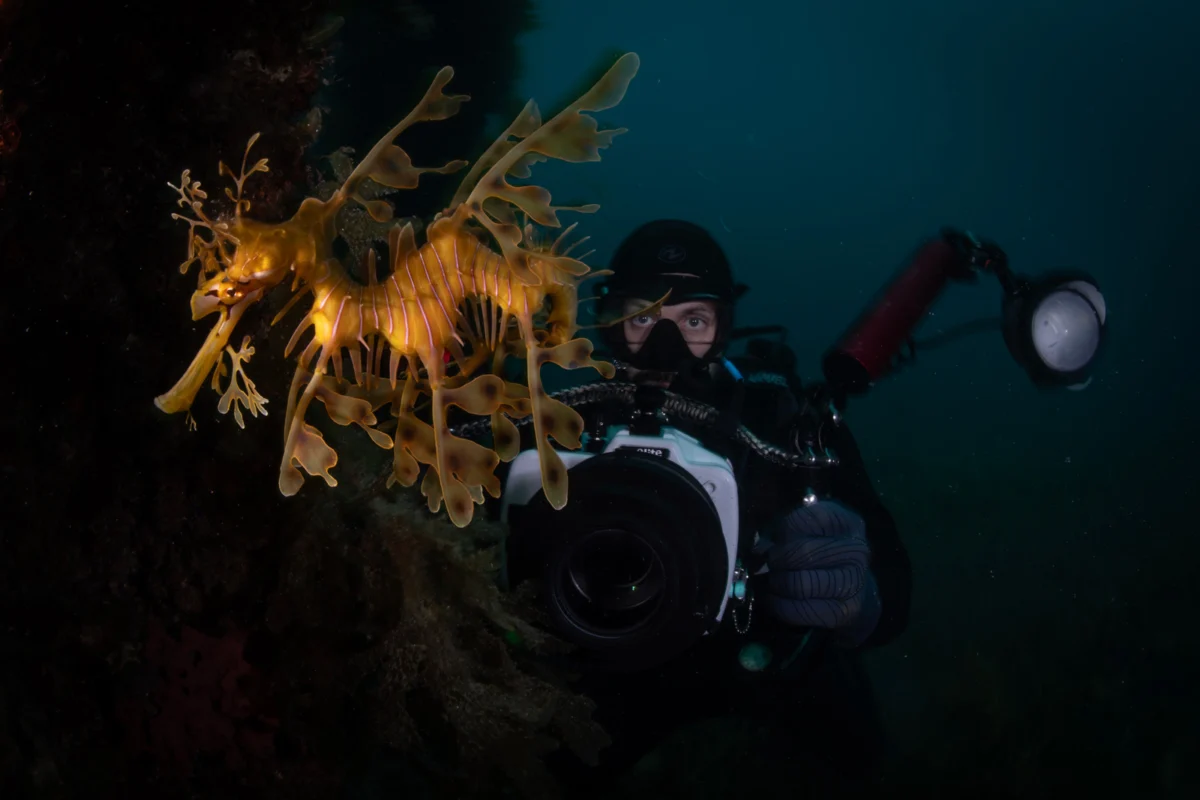
Another striking example of his refined artistry is a portrait of a leafy seadragon. This image is lauded for its exquisite symmetry and the sheer difficulty involved in its creation. Captured at night, using a red focus light to minimize disturbance to the delicate creature—a crucial ethical consideration in wildlife photography—the shot required immense patience and precise timing. Dear waited for the seadragon to orient itself perfectly, allowing him to capture a full, front-on headshot with an ideal tilt, showcasing its intricate, leaf-like appendages that provide camouflage. This meticulous approach, combining technical skill with an understanding of animal welfare, underscores his commitment to ethical and impactful photography. The leafy seadragon, an iconic and elusive species native to Australian waters and listed as Near Threatened by the IUCN, benefits immensely from such sensitive portrayal, raising vital awareness for its conservation status and the delicate ecosystems it inhabits.

Strategic Returns: Understanding Species and Habitats
Rowan Dear emphasizes that truly exceptional wildlife photography necessitates an intimate understanding of the subject. "When photographing an animal, you need to get to understand the species, their habitat, behaviours, and so on to capture them properly, which will then help the viewer see the full beauty of the animal," he states. This philosophy underpins his strategy of repeatedly revisiting specific locations and species, a practice that allows him to build a comprehensive visual narrative over time, capturing nuanced behaviors and seasonal variations that a single visit would miss. This long-term engagement fosters a deeper connection with his subjects and their environments, enriching his storytelling.
One such significant destination is Whyalla in South Australia, a renowned aggregation site where over 10,000 giant cuttlefish (Sepia apama) converge annually for their mating season, typically between May and August. This unique natural spectacle offers an unparalleled